

Table of Contents
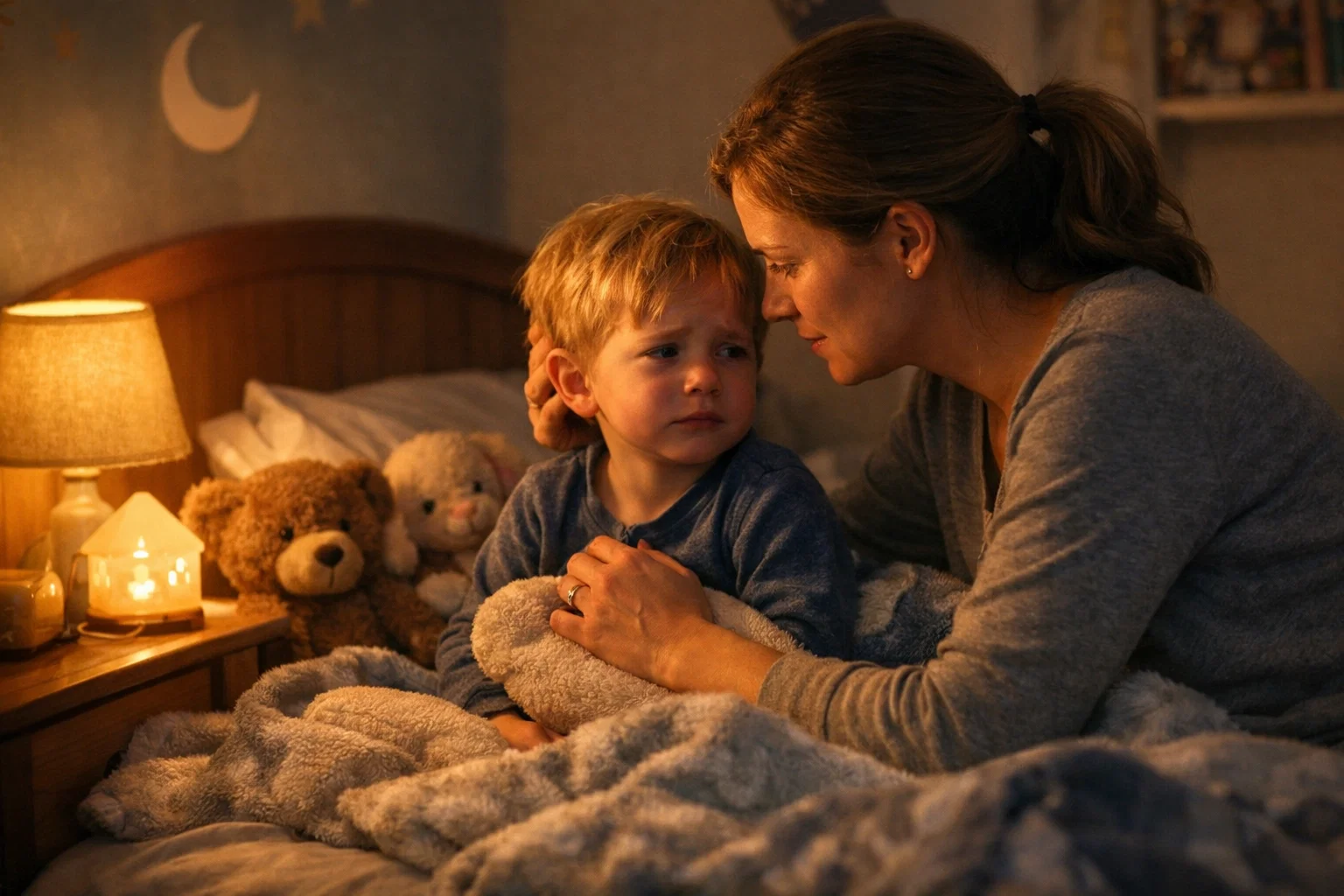
Night terrors can feel frightening for both toddlers and parents. These sudden episodes often occur during deep sleep and cause screaming, confusion, and intense fear. Sleep terrors affect about 1–6% of children, most commonly between ages 3 and 7. Unlike nightmares, toddlers usually do not remember the event the next morning.
Parents often look for natural remedies for night terrors in toddlers before considering medical treatment. The good news is that most night terrors are harmless and improve with age. Sleep terrors usually disappear by age 10 in over 80% of children. That means parents can often manage episodes using gentle lifestyle changes.
Understanding what triggers night terrors helps reduce their frequency. Common triggers include sleep deprivation, stress, illness, and irregular bedtime routines. Because toddlers’ nervous systems are still developing, deep sleep disturbances can easily occur.
This guide explains five natural remedies for night terrors in toddlers that are safe and practical. Each remedy focuses on improving sleep quality, calming the nervous system, and creating a predictable bedtime environment.
Establish a Consistent Bedtime Routine
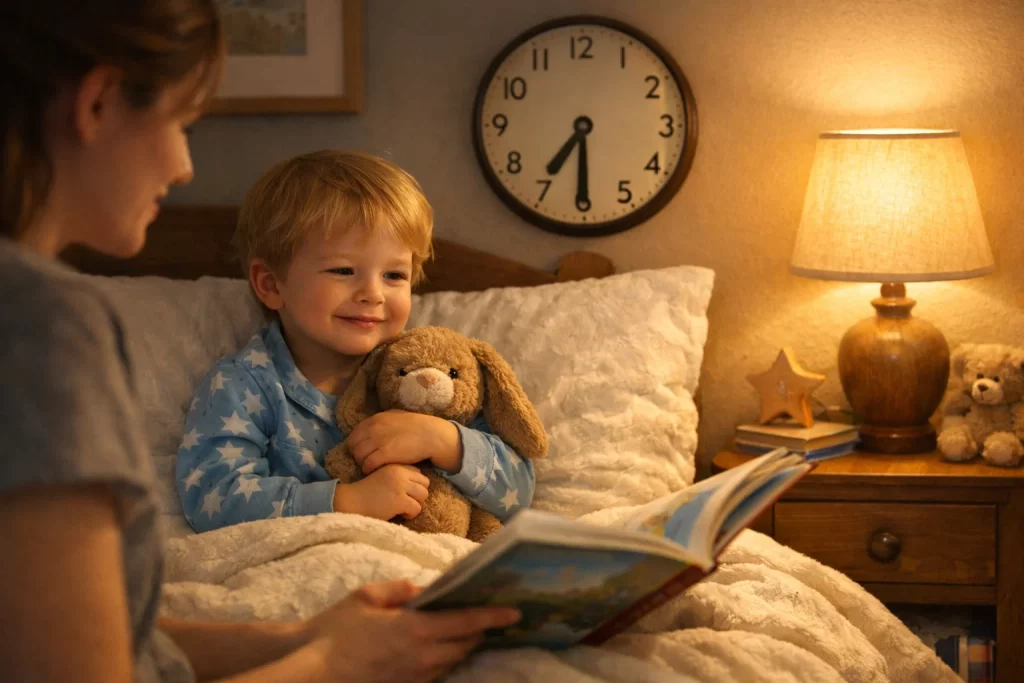
A stable bedtime routine is one of the most effective natural remedies for night terrors in toddlers. Consistency signals the brain that it is time to rest.
Why Routine Supports Deep Sleep
Children’s circadian rhythms develop rapidly between ages 2 and 5. A predictable schedule helps regulate hormones such as melatonin and cortisol. Sleep deprivation increases the risk of night terrors by up to 60% in young children.
A bedtime routine should last 20–30 minutes and include calming activities.
Recommended routine elements include:
- Warm bath to relax muscles
- Quiet reading or storytelling
- Soft lighting to stimulate melatonin
- Gentle music or lullabies
- Consistent bedtime each night
These cues prepare a toddler’s nervous system for uninterrupted sleep.
How to Build a Toddler-Friendly Routine
Parents should maintain the same bedtime every night, even on weekends. The National Sleep Foundation recommends 11–14 hours of daily sleep for toddlers aged 1–3.
A simple routine example:
| Time | Activity |
|---|---|
| 7:00 PM | Warm bath |
| 7:10 PM | Pajamas and brushing teeth |
| 7:15 PM | Storytime |
| 7:25 PM | Lights dimmed |
| 7:30 PM | Bedtime |
Reduce Stress and Overstimulation Before Bed
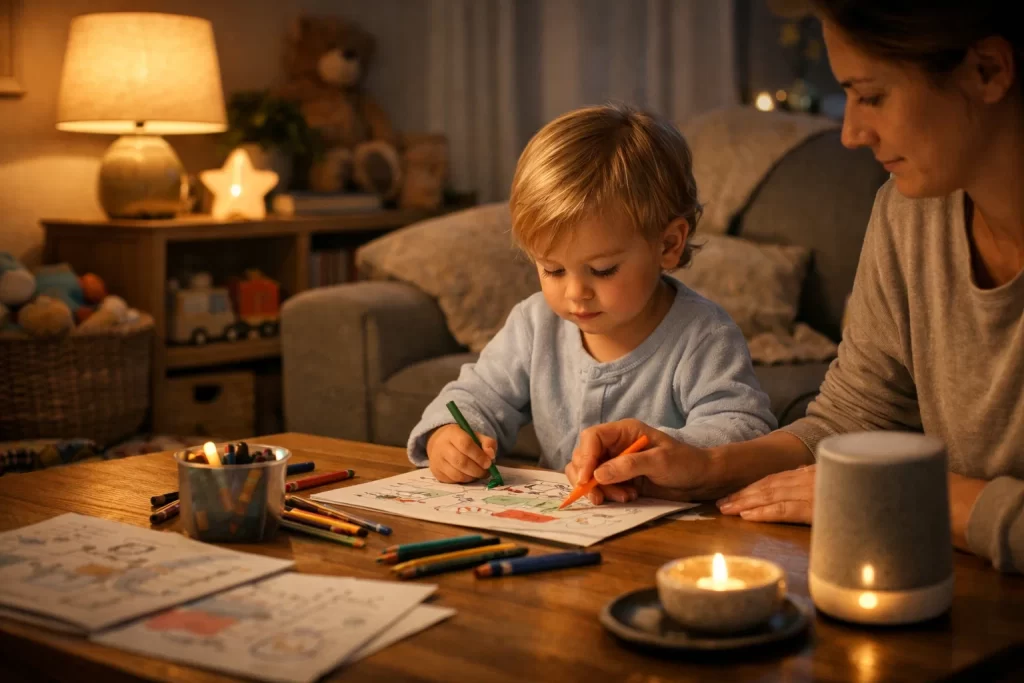
Even small stressors can disrupt a toddler’s sleep cycle. Managing evening stimulation is a powerful approach when applying natural remedies for night terrors in toddlers.
How Stress Triggers Night Terrors
Sleep terrors typically occur during stage N3 deep sleep, about 90 minutes after falling asleep. If the brain becomes overstimulated before bedtime, it struggles to transition smoothly between sleep stages.
High evening stimulation significantly increases parasomnia episodes, including sleep terrors.
Common stress triggers include:
- Loud television or tablets
- Sugary snacks late at night
- Intense play right before bedtime
- Bright room lighting
- Emotional upset
Reducing these triggers helps toddlers enter deeper sleep more smoothly.
Calming Activities That Promote Relaxation
Parents can replace stimulating activities with calming alternatives.
Effective pre-sleep activities include:
- Gentle stretching or toddler yoga
- Quiet coloring
- Listening to soft music
- Reading picture books
- Guided breathing exercises
Improve the Sleep Environment
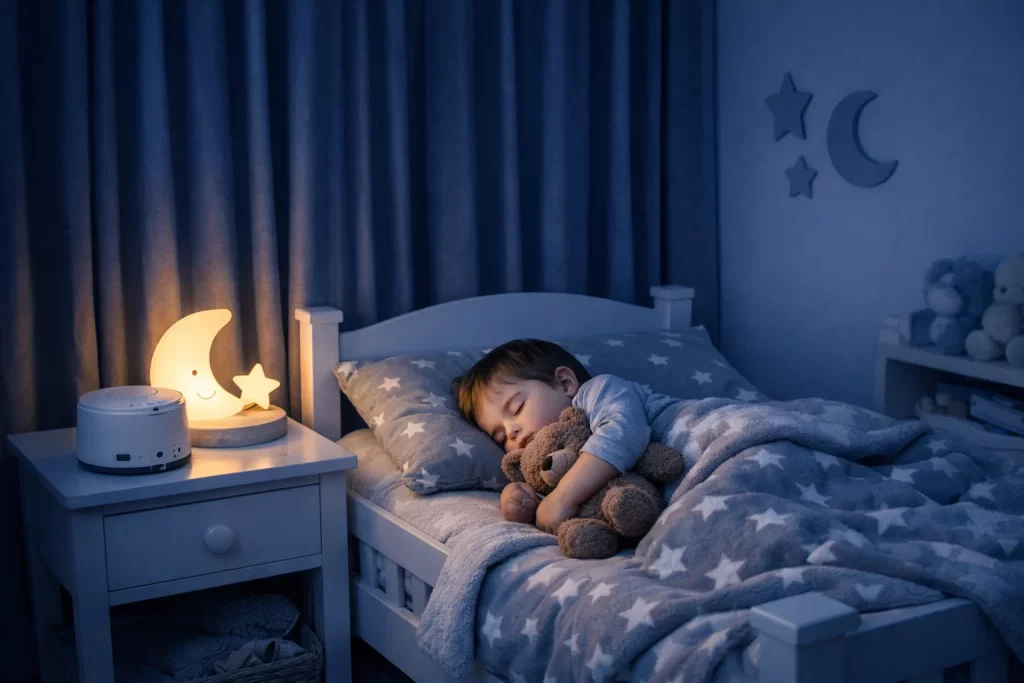
The bedroom environment strongly influences toddler sleep quality. Optimizing the room is one of the simplest natural remedies for night terrors in toddlers.
Ideal Sleep Conditions for Toddlers
Sleep experts recommend a bedroom temperature between 65°F and 70°F (18–21°C). Cooler temperatures support deeper sleep.
Environmental factors that support better sleep include:
- Blackout curtains to reduce light
- Comfortable mattress and bedding
- Minimal noise or white noise
- Soft nightlight if needed
A consistent sleep environment reduces night awakenings by nearly 30% in young children.
Safe Comfort Objects
Comfort objects can help toddlers feel secure during sleep.
Examples include:
- Favorite blanket
- Stuffed animal
- Familiar pillow
- Gentle white noise machine
Security items create emotional comfort, which can prevent sudden nighttime fear responses. Wondering about safe sleep? Read our guide on when toddlers can sleep with a blanket to understand the right age and safety tips.
Try Scheduled Awakenings
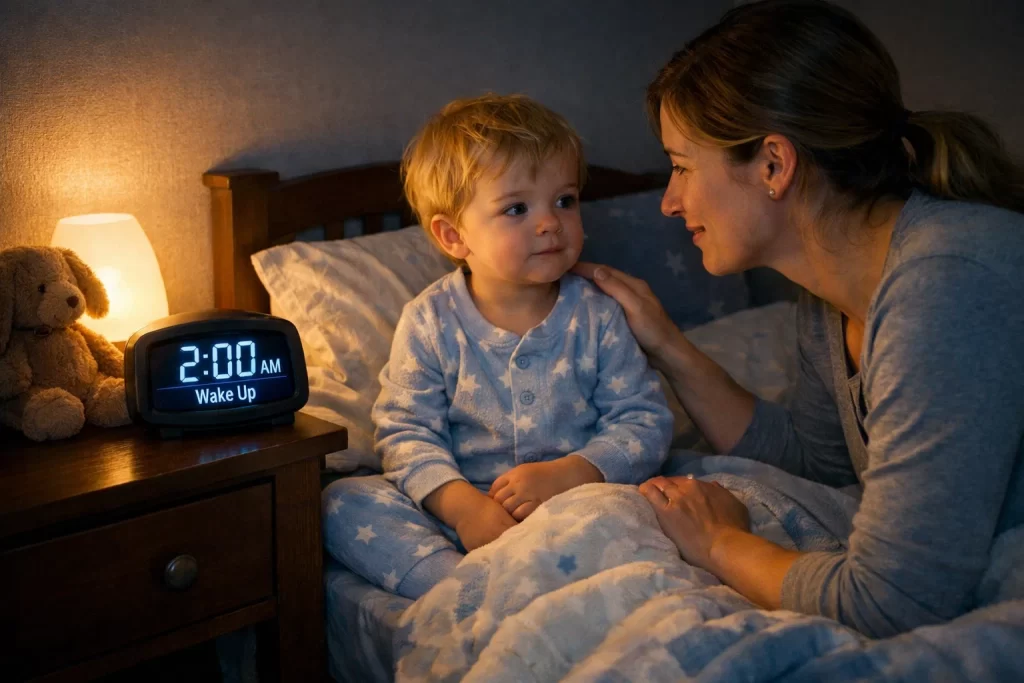
Scheduled awakenings are a clinically recommended method for managing frequent night terrors. This technique is widely suggested by pediatric sleep specialists.
How Scheduled Awakenings Work
Night terrors often occur at predictable times during the night. Waking a child 15–30 minutes before the usual episode can interrupt the sleep cycle.
Steps to follow:
- Track night terror timing for 5–7 nights.
- Wake the child gently before the expected episode.
- Keep them awake for 3–5 minutes.
- Allow them to return to sleep.
This method gradually re-trains the brain’s sleep pattern.
When This Technique Works Best
Scheduled awakenings are most effective when:
- Night terrors occur several times per week
- Episodes happen at a predictable time
- Sleep routines are already stable
Many families report improvement within 2–3 weeks of consistent use.
Encourage Healthy Daily Habits

Healthy daytime habits strongly influence nighttime sleep quality. Supporting overall health remains a key strategy in natural remedies for night terrors in toddlers.
The Role of Physical Activity
Active toddlers sleep more deeply at night. The Centers for Disease Control and Prevention recommends at least 180 minutes of daily physical activity for children aged 1–5.
Physical activity helps regulate:
- Body temperature cycles
- Energy balance
- Hormonal rhythms
- Sleep pressure
Outdoor play also increases natural light exposure, which strengthens circadian rhythms.
Nutrition and Hydration for Better Sleep
Certain foods support healthy sleep patterns.
Helpful evening snacks include:
- Banana slices
- Warm milk
- Oatmeal
- Yogurt
Quick Comparison of Natural Remedies For Night Terrors In Toddlers
| Remedy | Main Benefit | Best For |
|---|---|---|
| Bedtime routine | Regulates sleep cycle | All toddlers |
| Stress reduction | Calms nervous system | Sensitive sleepers |
| Sleep environment | Improves sleep quality | Light sleepers |
| Scheduled awakenings | Interrupts sleep terror cycle | Frequent episodes |
| Healthy habits | Strengthens circadian rhythm | Calms the nervous system |
Bottom Line
Night terrors can be distressing, but they are usually a normal part of childhood development. Pediatric sleep specialists emphasize that most children naturally outgrow these episodes as their nervous systems mature. Still, parents can significantly reduce the frequency and intensity by applying proven natural remedies for night terrors in toddlers.
Start by establishing a consistent bedtime routine and reducing stimulation before sleep. Then optimize the bedroom environment to support deep, uninterrupted rest. For frequent episodes, scheduled awakenings can help reset sleep cycles. Finally, maintain healthy daytime habits such as physical activity and balanced nutrition.
Want better sleep and healthier nights for your child? Discover more expert tips in our Child Health guides to support your toddler’s growth and well-being.