


Table of Contents
Starting daycare is a major milestone for both parents and children. Many families search for how to prepare your child for daycare because the transition can feel overwhelming. According to the US Bureau of Labor Statistics, about 63.8% of families with children under age six had both parents working in 2025, making childcare programs essential for daily routines.
Experts agree that preparation reduces separation anxiety and supports early emotional development. Consistent routines and familiar environments improve children’s ability to manage stress during transitions. These small steps help children feel safe while adapting to new caregivers, schedules, and social groups.
Parents also benefit from preparation. Clear routines reduce morning stress and build trust between caregivers and families. When children understand what daycare looks like, they feel more secure on the first day.
In this guide, we explain how to prepare your child for daycare with practical tips backed by child development research.
1. Start Talking About Daycare Early
Explain the New Environment
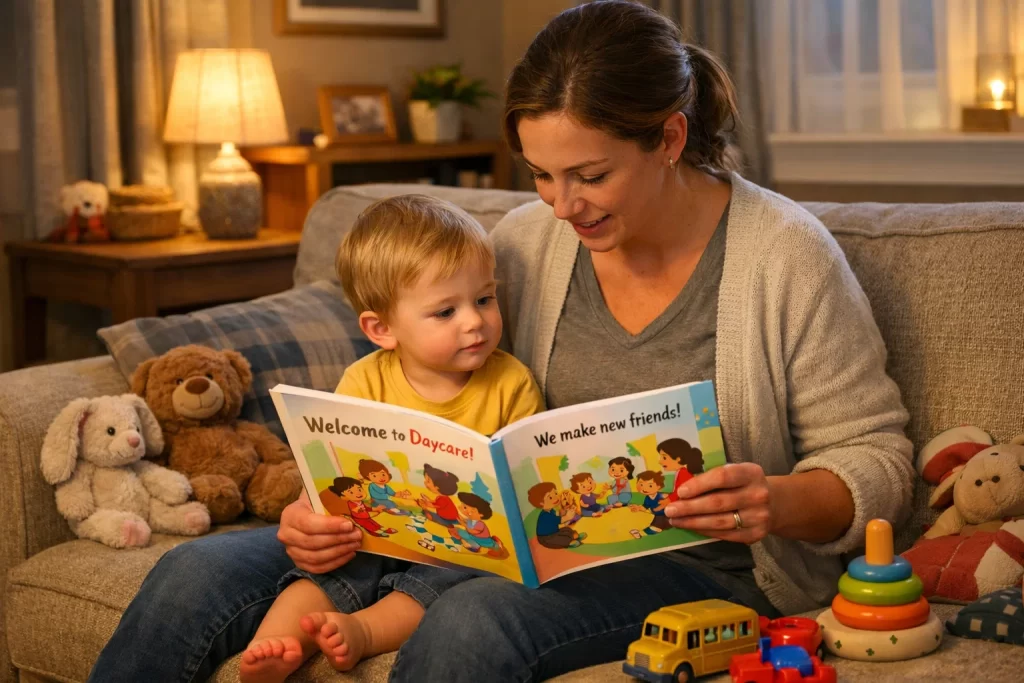
Children feel more comfortable when they know what to expect. Start discussing daycare two to three weeks before the first day. Explain that they will play, learn, and meet new friends.
Use simple language. For example, describe daycare as a place with toys, story time, and snacks. According to the American Academy of Pediatrics, toddlers handle transitions better when adults introduce new experiences gradually.
Stories also help children imagine the experience. Reading books about starting daycare builds familiarity and reduces fear.
Use Positive Language
Children read emotional cues from parents. Speak about daycare with excitement and confidence. Avoid phrases like “Don’t cry” or “You’ll be fine.” These can signal that daycare is something to fear.
Instead, try statements such as:
- “You’ll meet new friends.”
- “Your teacher will read fun stories.”
- “You’ll play with new toys.”
Positive framing creates curiosity rather than anxiety. Children who hear encouraging messages approach daycare with confidence.
2. Visit the Daycare Before the First Day
Familiarity Builds Confidence
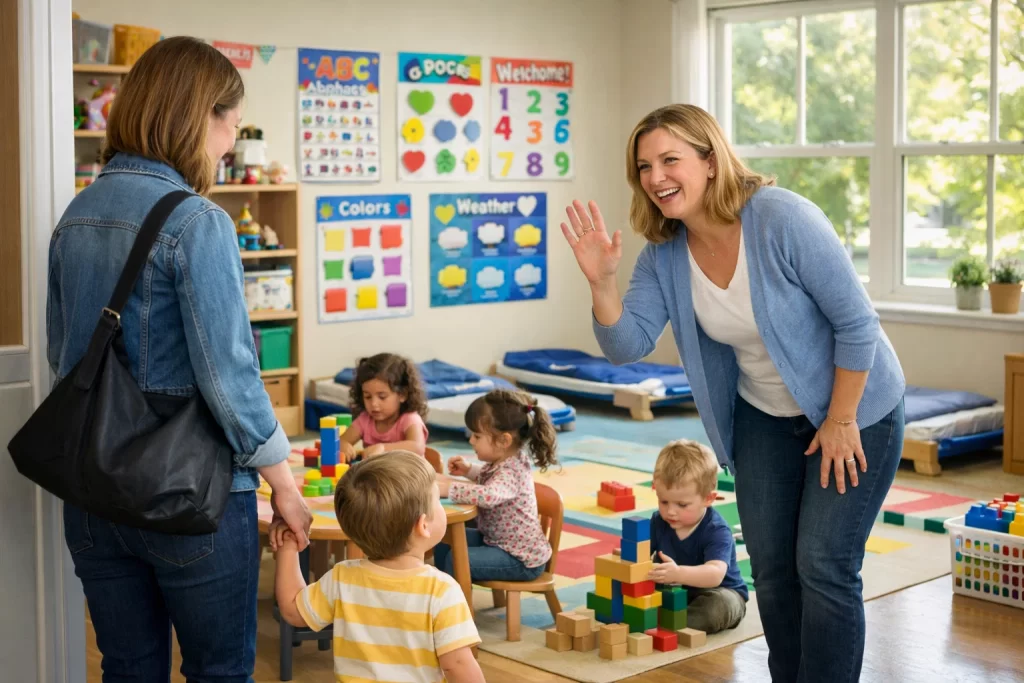
A daycare center can feel overwhelming if it is completely unfamiliar. Schedule one or two short visits before enrollment. Many childcare providers offer orientation sessions or classroom tours.
During the visit, show your child:
- The play area
- Snack tables
- Nap spaces
- Outdoor playground
Seeing the environment ahead of time reduces uncertainty. Children often remember familiar spaces and recognize them later.
Meet Teachers and Caregivers
Meeting caregivers early helps children form initial trust. Encourage your child to say hello or play briefly during the visit.
Research from the National Association for the Education of Young Children shows that positive early interactions with caregivers increase a child’s sense of security.
When children recognize a friendly face on their first day, the transition feels smoother.
3. Establish a Consistent Daily Routine

Build the Daycare Schedule at Home
Young children thrive on predictable routines. Begin following a daycare-style schedule one week before the start date.
Typical daycare routines include:
- Morning drop-off between 7:30 and 9:00 a.m.
- Snack time mid-morning
- Lunch around noon
- Nap between 12:30 and 2:30 p.m.
Why Routines Matter
Predictable routines support emotional stability. According to research published by the Harvard Center on the Developing Child, consistent schedules lower stress hormones in young children.
Children who practice daycare routines at home enter their new environment already comfortable with the daily flow.
4. Practice Short Separations

Start With Small Goodbyes
Separation anxiety is common in toddlers. Practicing brief separations helps children understand that parents always return.
Start with short periods away from your child, such as:
- Leaving them with a trusted relative for one hour
- Hiring a babysitter for a short visit
- Allowing playdates without parents nearby
Gradually increase separation time.
Teach the Goodbye Routine
Create a simple goodbye ritual. For example:
- Hug
- High five
- A clear statement: “I’ll pick you up after snack time.”
5. Encourage Social Skills Through Play

Practice Group Activities
Daycare introduces children to group learning and shared activities. Practicing social interaction beforehand makes the transition easier.
Arrange playdates with one or two children. Visit parks or parent-child activity groups. Encourage sharing toys and taking turns.
These experiences teach essential skills:
- Communication
- Cooperation
- Patience
Early practice helps children feel comfortable around peers.
Support Emotional Skills
Children entering daycare often encounter new emotions. They may feel excitement, frustration, or nervousness.
Parents can support emotional development by:
- Naming emotions during play
- Encouraging problem-solving
- Modeling calm communication
6. Prepare a Comfort Kit for the First Week
Pack Familiar Items
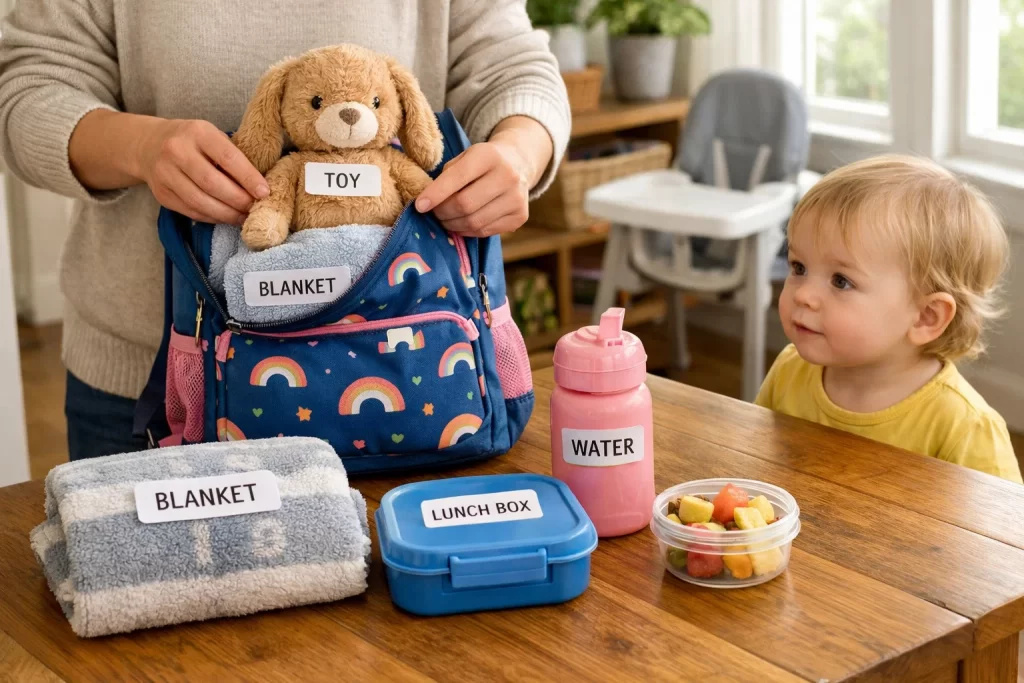
Familiar objects provide emotional security in new environments. Many daycare centers allow small comfort items during the adjustment period.
Common comfort items include:
- A favorite stuffed toy
- A small blanket
- Family photos
- A familiar water bottle
Label Everything Clearly
Daycare centers manage belongings for many children. Clearly labeled items prevent confusion and loss.
Use waterproof labels for:
- Lunch boxes
- Clothing
- Bottles
- Blankets
Preparation keeps daily routines organized and stress-free. Parents who prepare comfort kits report smoother first-week transitions.
Daycare Preparation Checklist
| Preparation Step | When to Start | Why It Matters |
|---|---|---|
| Talk about daycare | 2–3 weeks before | Builds familiarity |
| Visit the daycare center | 1–2 weeks before | Reduces fear |
| Adjust routines | 1 week before | Improves sleep and meals |
| Practice separation | 1–2 weeks before | Reduces anxiety |
| Encourage playdates | Ongoing | Builds social skills |
| Pack comfort items | First week | Provides emotional security |
Quick Tips for How To Prepare Your Child For Daycare

- Stay calm during drop-offs. Children mirror parental emotions.
- Keep goodbyes short and consistent. Long departures increase anxiety.
- Maintain evening routines for sleep and meals.
- Communicate daily with caregivers about progress.
- Celebrate small successes after daycare days.
These habits strengthen trust between families, caregivers, and children.
Bottom Line
Learning how to prepare your child for daycare is one of the most valuable steps parents can take before the first day. Preparation reduces anxiety, builds confidence, and helps children adapt to new environments faster. When parents introduce routines, practice separation, and encourage social interaction, children develop emotional readiness for daycare.
Small actions make a measurable difference. Visiting the center early, discussing daily activities, and providing comfort items all improve the transition experience. Research consistently shows that predictable routines and supportive caregivers help children thrive in group learning environments.
If you found this guide helpful, explore our other parenting tips to support your child’s growth and development. From toddler routines to emotional development activities, we share practical advice backed by child development research.