

Table of Contents
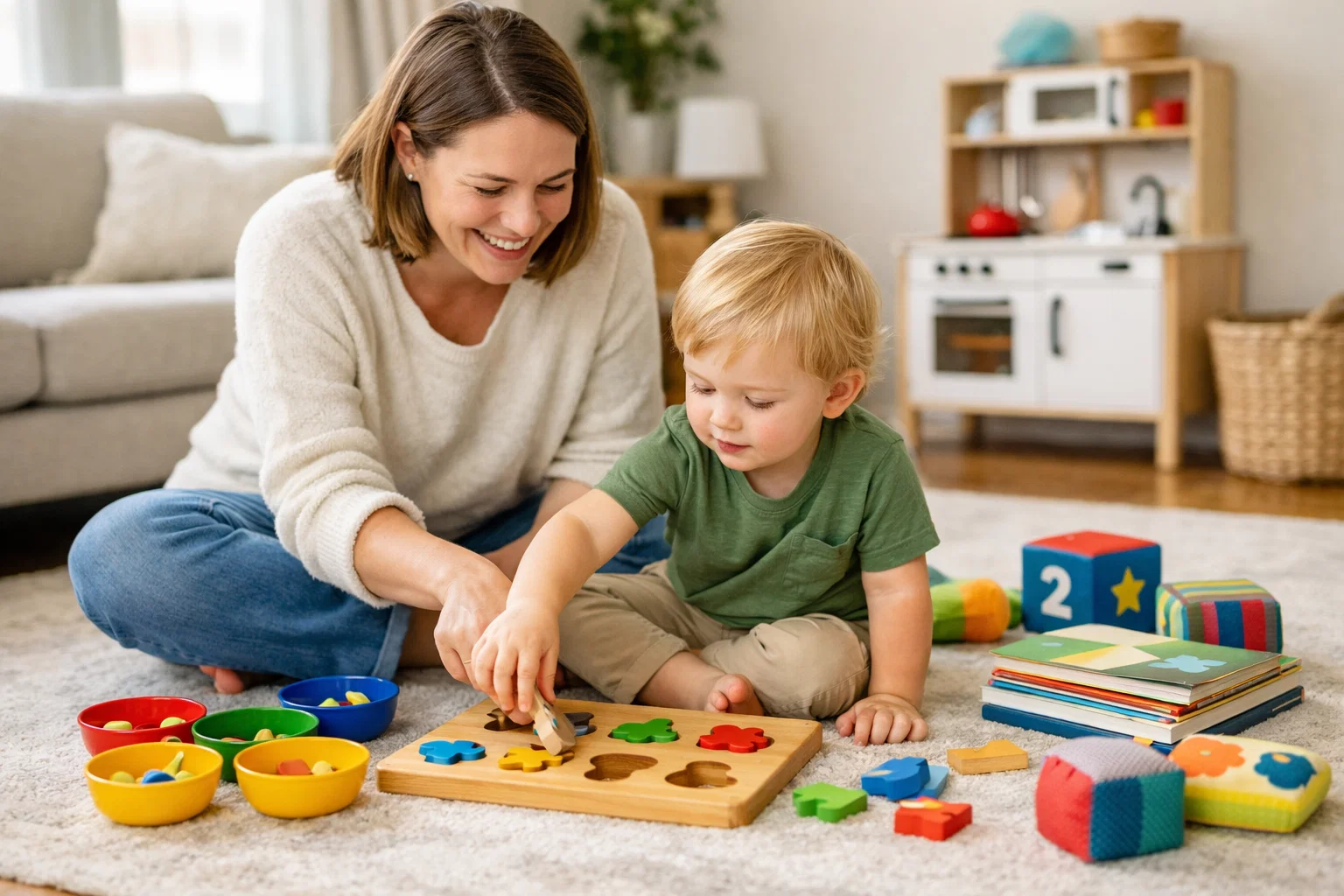
Educational Activities for Toddlers build brain connections faster than any other life stage. By age three, a child’s brain reaches nearly 80% of adult size. That fact alone shows why daily play matters. Research from UNICEF confirms that play-based learning improves language, motor, and emotional skills in children under five. Structured but simple activities at home can boost vocabulary by up to 30% before preschool.
We do not need expensive tools to support early learning. In 2026, most early childhood experts still recommend hands-on play over screen time. The American Academy of Pediatrics suggests limiting screen use for ages two to five to one hour daily. That means active, guided play fills the learning gap at home.
Below, we share seven proven Educational Activities for Toddlers. Each game strengthens specific skills and fits into daily routines.
1. Color Sorting Game
How It Works
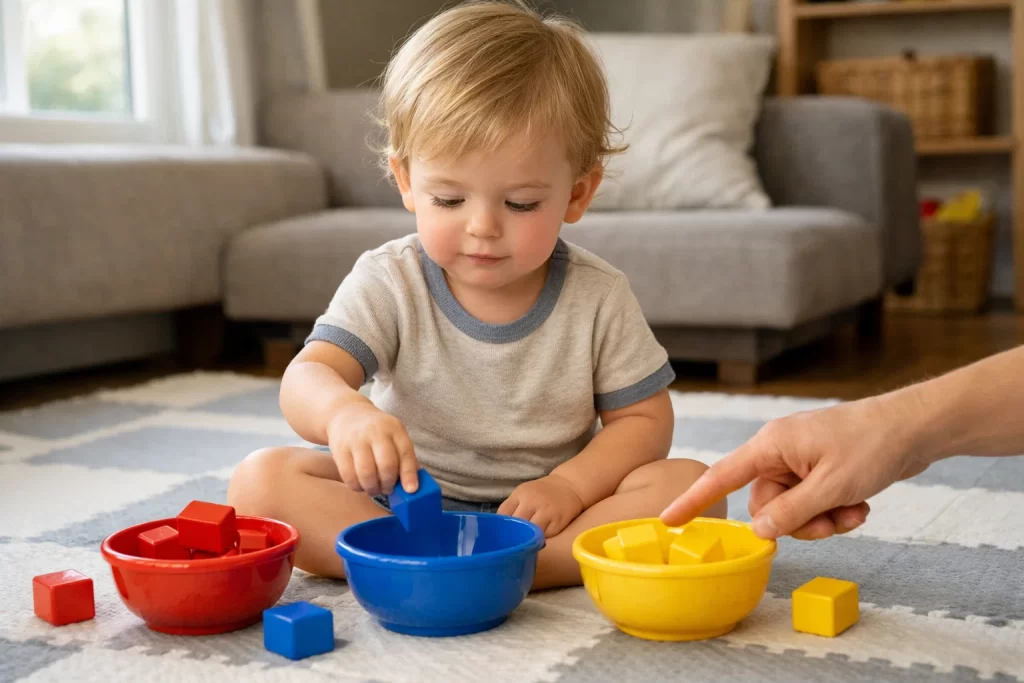
Color sorting strengthens visual discrimination and early math thinking. We place colored blocks, cups, or toys on the floor. Then we ask toddlers to group items by color. Start with two colors. Add more as skills improve.
At age two, children begin identifying basic colors like red and blue. By age three, most toddlers can recognize six primary colors. Sorting builds classification skills, which later support reading and math patterns.
Keep sessions short. Ten minutes is enough for this activity. Consistency matters more than length.
2. Sensory Bin Exploration
How It Works
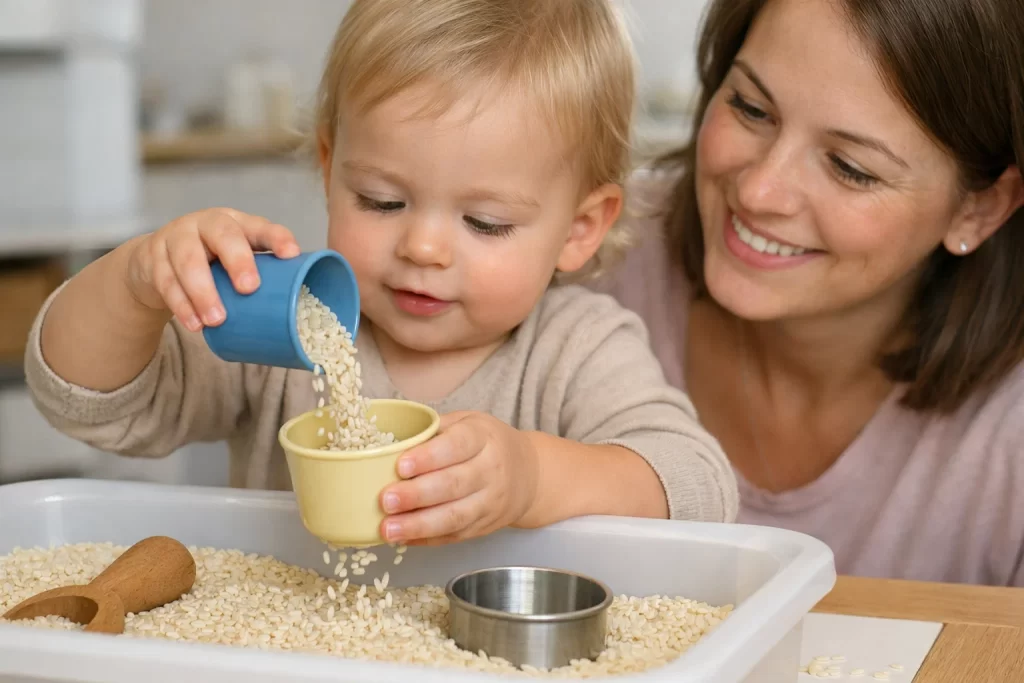
Sensory play stimulates brain development. We fill a plastic bin with rice, beans, sand, or safe water beads. Add spoons or small cups. Let toddlers scoop, pour, and explore textures.
According to Raising Children Network, sensory experiences support fine motor growth and problem-solving. Children who engage in regular sensory play show stronger hand coordination by age four.
Always supervise closely. Avoid small choking hazards for children under three.
3. Storytime With Picture Prompts
How It Works
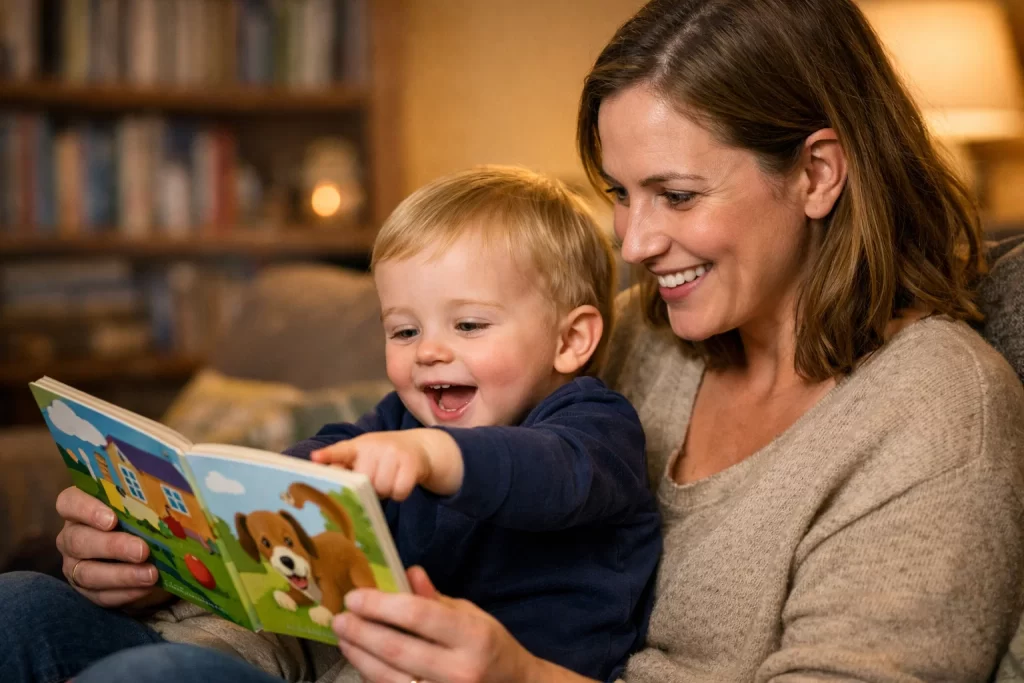
Daily reading increases vocabulary exposure dramatically. Children hear about 1.4 million more words by kindergarten when read to consistently. We choose picture books and pause to ask simple questions.
Point to images. Ask, “What is this?” or “What color is the dog?” Encourage pointing and repeating. This builds expressive language.
Oxford Owl notes that interactive reading improves listening skills and attention span in toddlers. Reading together builds bonding and communication strength. It prepares toddlers for structured learning.
4. Shape Hunt Around the House
How It Works
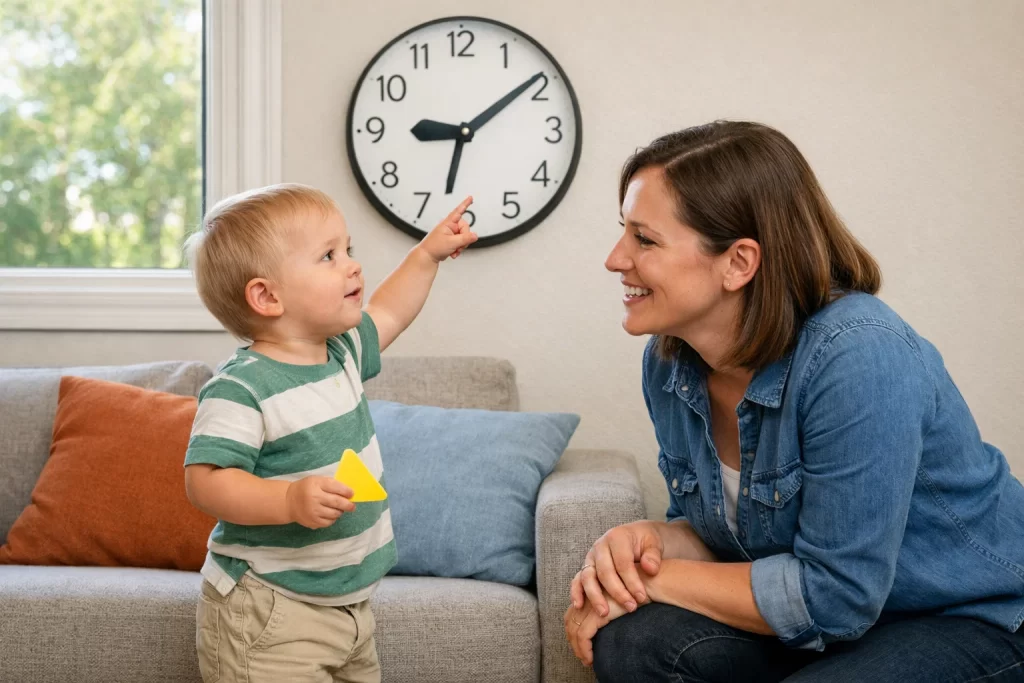
Shape recognition begins around age two. We walk around the house and identify circles, squares, and triangles. A clock becomes a circle. A window becomes a rectangle.
Physical movement reinforces learning. When toddlers connect shapes to real objects, retention improves. KinderCare reports that movement-based learning strengthens memory pathways.
Limit the hunt to five objects per session. Repetition builds mastery.
Skills Developed
- Spatial awareness.
- Critical thinking.
- Gross motor activity.
- Real-world application.
Shape hunts turn everyday items into learning tools. They make education active and engaging.
5. Music and Movement Time

How It Works
Music supports brain rhythm and language timing. Studies show rhythm training improves speech clarity in young children. We play simple songs and encourage clapping or dancing.
Follow basic actions like “jump” or “spin.” Toddlers love repetition. Keep sessions under 15 minutes to maintain focus.
UNICEF highlights that play-based movement strengthens emotional resilience. Music transforms learning into joyful movement. It strengthens both body and brain.
6. Simple Puzzle Play
How It Works
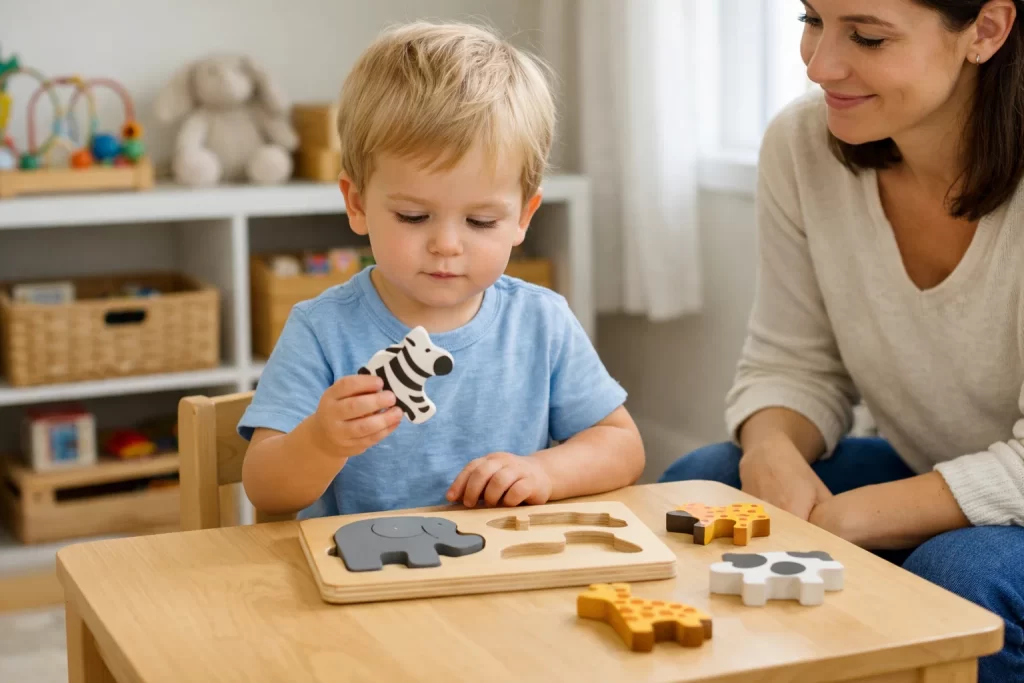
Puzzles develop logical reasoning. Start with large wooden shape puzzles. Two- to three-piece puzzles work best for beginners.
Completing puzzles improves spatial reasoning by age four. It also builds patience and perseverance. We guide gently but allow independence.
Success builds self-esteem quickly. Toddlers gain confidence after finishing even small challenges. Puzzle play strengthens early math and logic foundations.
7. Pretend Play Corner

How It Works
Pretend play boosts imagination and social skills. We create a small corner with toy food, dolls, or doctor kits. Encourage storytelling.
By age three, toddlers begin role-playing daily experiences. This strengthens empathy and language expression. Research shows imaginative play supports emotional intelligence growth.
Join occasionally, but let toddlers lead. Autonomy improves creativity. Pretend play connects learning to real-life understanding. It strengthens cognitive flexibility.
Quick Comparison Table: Educational Activities for Toddlers
| Activity | Time Needed | Primary Skill | Age Range |
|---|---|---|---|
| Color Sorting | 10 min | Visual logic | 2-3 |
| Sensory Bin | 15 min | Fine motor | 2-4 |
| Storytime | 15 min | Language | 1-4 |
| Shape Hunt | 10 min | Spatial skills | 2-3 |
| Music & Movement | 15 min | Coordination | 2-4 |
| Puzzles | 10 min | Problem-solving | 2-4 |
| Pretend Play | 20 min | Social skills | 2-4 |
Bottom Line
Educational Activities for Toddlers do not require expensive programs or complex materials. What matters most is consistency and interaction. In 2026, research still confirms that play-based learning strengthens cognitive, emotional, and physical growth before age five. When we dedicate just 30 to 45 minutes daily to guided play, we support lifelong learning habits.
Choose two activities each day and rotate weekly. Observe your toddler’s interests and adjust accordingly. Celebrate small achievements. Encourage curiosity. Stay involved but allow independence.