

Table of Contents
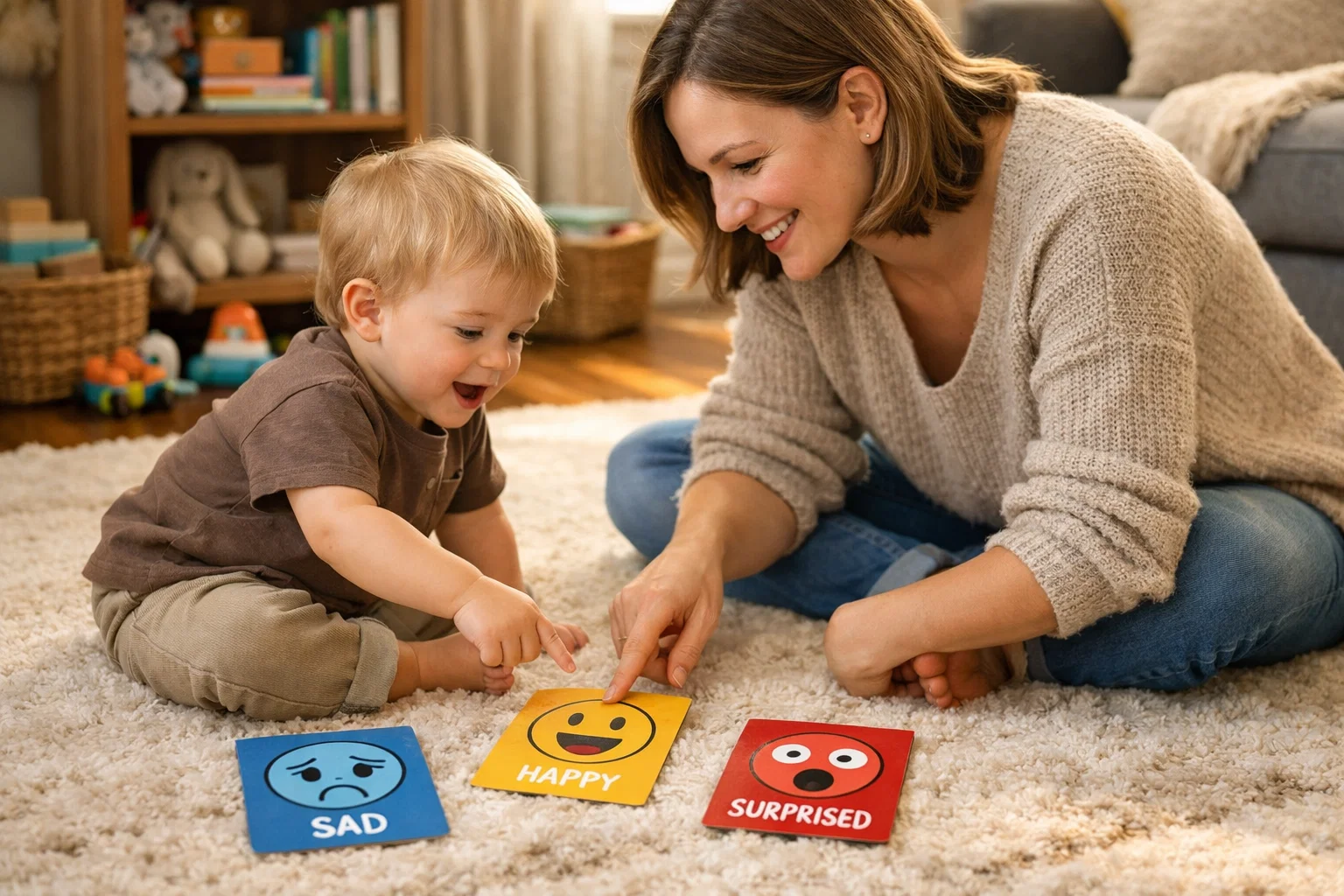
Strong emotions shape a toddler’s world every day. Between ages one and three, children experience rapid brain growth that affects emotional awareness and social skills. According to the US (CDC), more than 90% of brain development occurs before age five. This period makes toddler emotional development activities for parents especially important in daily routines.
Parents play the most influential role in teaching toddlers how to recognize and manage emotions. Simple play-based activities can help children express feelings, understand empathy, and build self-regulation skills. Research published in 2025 by Harvard’s Center on the Developing Child confirms that responsive interaction with caregivers improves emotional regulation and long-term social competence.
The best toddler activities combine play, conversation, and emotional labeling. These strategies help children connect words with feelings and behaviors. Over time, toddlers learn to identify frustration, happiness, sadness, and excitement.
In this guide, we explore seven evidence-based toddler emotional development activities for parents. Each activity supports emotional awareness, communication, and relationship building.
Why Emotional Development Matters in Toddlers
Brain Growth and Emotional Learning
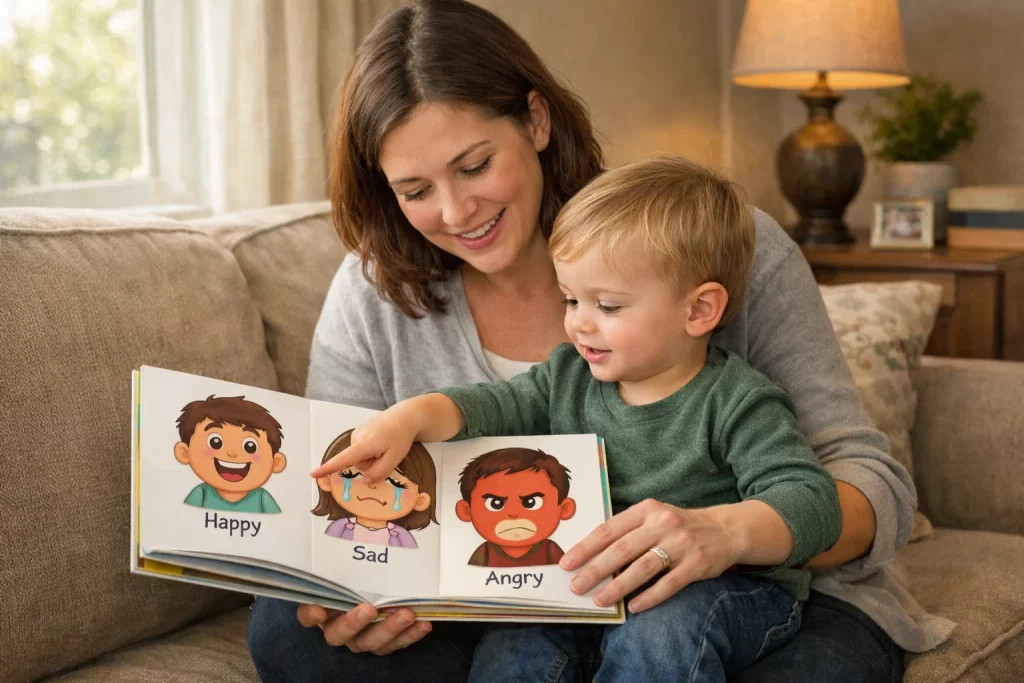
Early childhood emotional learning affects future behavior and relationships. Studies from Harvard University (2025) show toddlers who learn emotional regulation early display stronger social skills in preschool.
Toddlers cannot control their emotions independently yet. Their brains are still developing the prefrontal cortex, responsible for self-control and decision-making. Parents guide this process through supportive interactions and play.
Consistent toddler emotional development activities for parents help children practice identifying emotions. These experiences gradually teach toddlers how to pause, communicate feelings, and respond appropriately.
Signs of Healthy Emotional Development
Parents often wonder what normal emotional growth looks like. Developmental experts highlight several milestones between ages one and three.
Common signs include:
- Recognizing familiar caregivers.
- Showing affection through hugs or smiles.
- Expressing frustration or joy clearly.
- Beginning to label simple emotions.
- Seeking comfort from trusted adults.
| Age | Emotional Milestone | Example Behavior |
|---|---|---|
| 12–18 months | Attachment awareness | Seeks comfort from parents |
| 18–24 months | Emotion recognition | Shows happiness or frustration |
| 24–36 months | Early empathy | Comforts another child crying |
| 36 months | Emotion labeling | Says “I’m sad” or “I’m happy.” |
1. Emotion Face Matching Game
Teaching Toddlers to Recognize Feelings
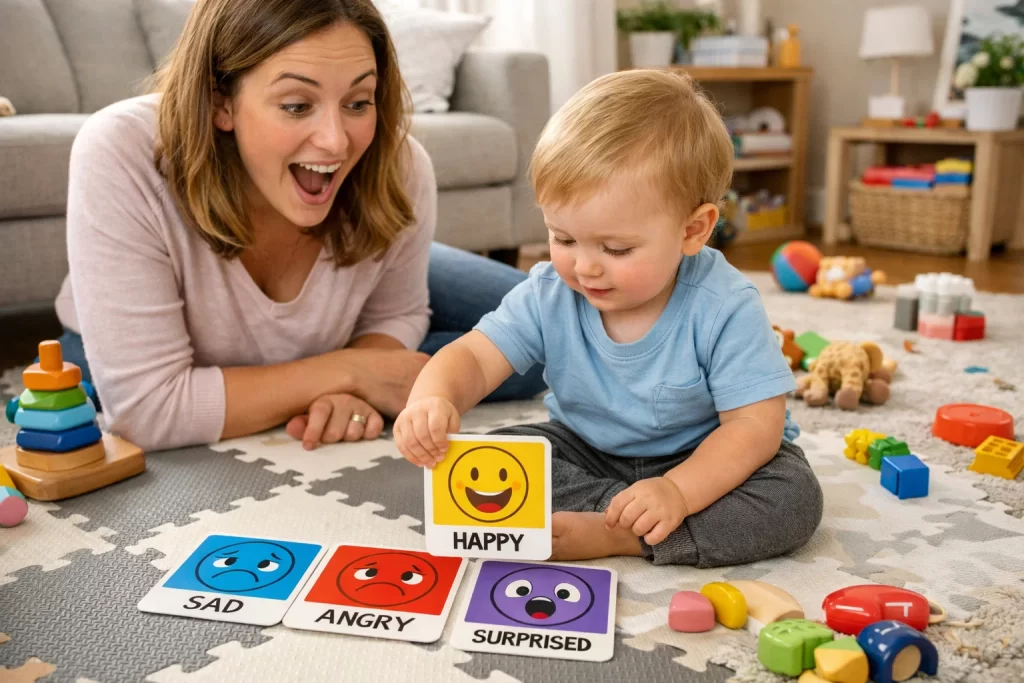
Emotion recognition is the foundation of emotional intelligence. Toddlers first learn emotions by observing facial expressions. This activity strengthens that skill through visual play.
Create simple cards showing faces with different emotions: happy, sad, angry, surprised, and calm. Ask your toddler to match the face with your own expression.
For example, make a “happy face” and ask the child to find the matching card. This simple game teaches toddlers that facial cues communicate feelings.
2. Feelings Storytime
Using Books to Explore Emotions
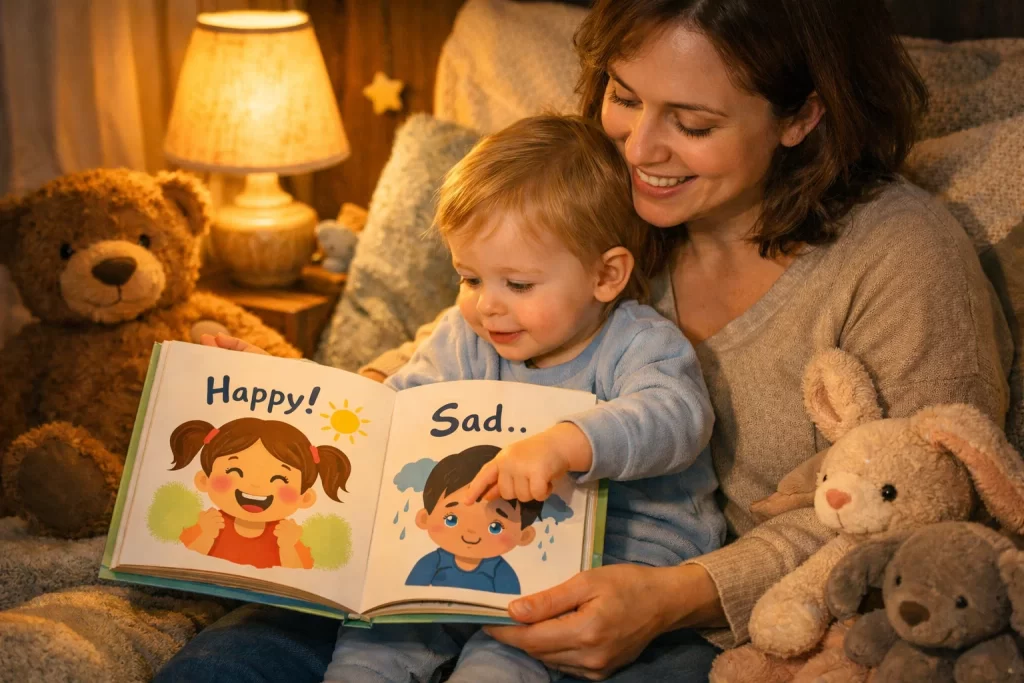
Reading stories offers powerful emotional learning opportunities. Books introduce characters experiencing different feelings and situations.
Choose toddler books that clearly show emotional expressions. Pause during reading and ask questions such as:
- “How do you think the character feels?”
- “Why is the character sad?”
- “What could help them feel better?”
These conversations help toddlers connect emotions with causes and solutions.
Studies from the National Association for the Education of Young Children (2024) found that emotion-focused storytime increases empathy and emotional vocabulary in children under four.
Regular story discussions remain one of the most effective toddler emotional development activities for parents.
3. Pretend Play with Toys
Practicing Emotional Scenarios
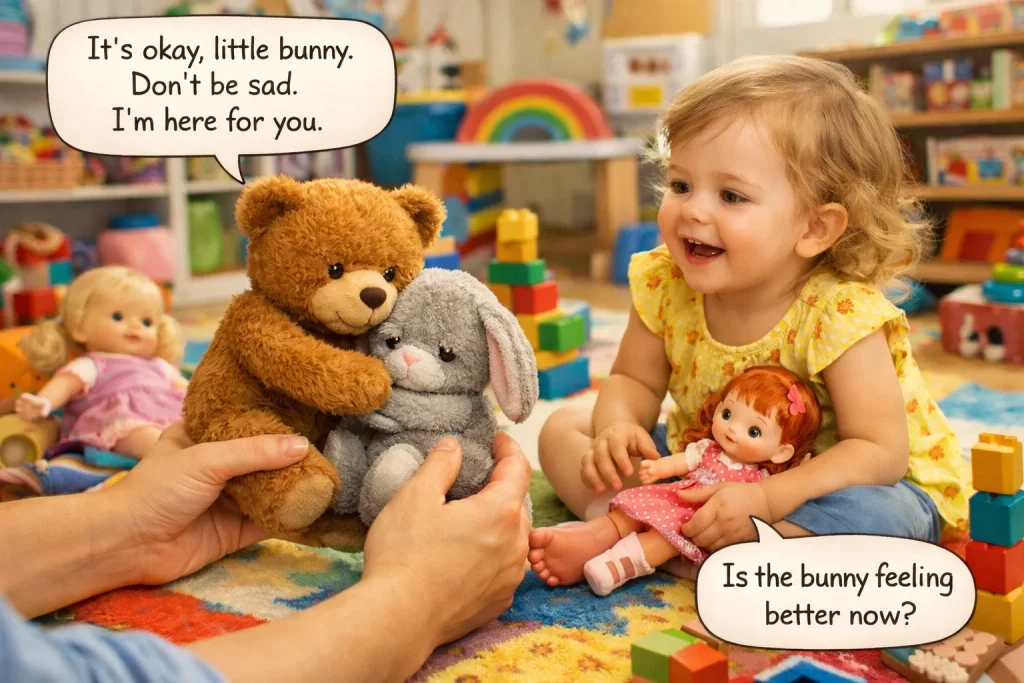
Pretend play allows toddlers to experiment with social interactions safely. Dolls, stuffed animals, or toy figures become tools for emotional exploration.
Parents can create simple scenarios:
- A doll feels sad after falling.
- A teddy bear feels excited about a birthday.
- A toy friend needs comfort.
Ask your toddler what the toy might feel like and how to help. This encourages empathy and problem-solving.
Developmental psychologists report that pretend play strengthens emotional reasoning and perspective-taking skills.
4. Daily Emotion Check-In
Building Emotional Awareness
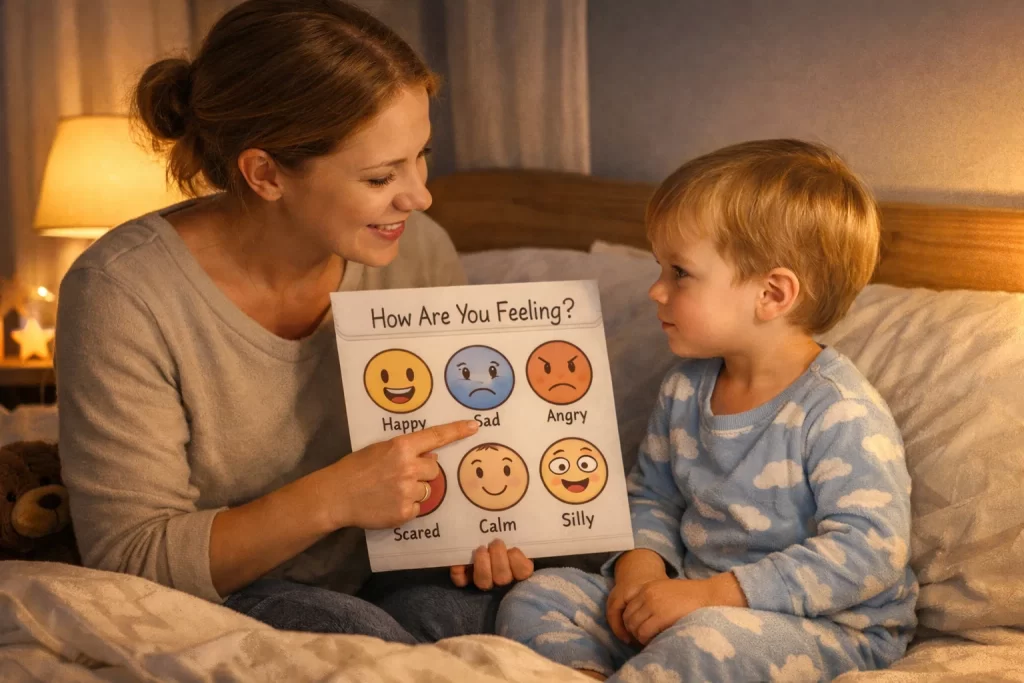
A daily emotion check-in helps toddlers reflect on feelings. This activity works best during calm moments, such as bedtime or morning routines.
Ask simple questions:
- “How do you feel today?”
- “What made you happy?”
- “Did anything make you upset?”
Parents should model emotional expression as well. Saying “I felt happy playing with you today” demonstrates healthy communication.
Consistency matters. Repeating these conversations daily builds emotional vocabulary and trust.
Over time, toddlers begin sharing feelings without prompting. This skill supports stronger emotional regulation later in childhood.
5. Calm-Down Corner
Teaching Self-Regulation Skills
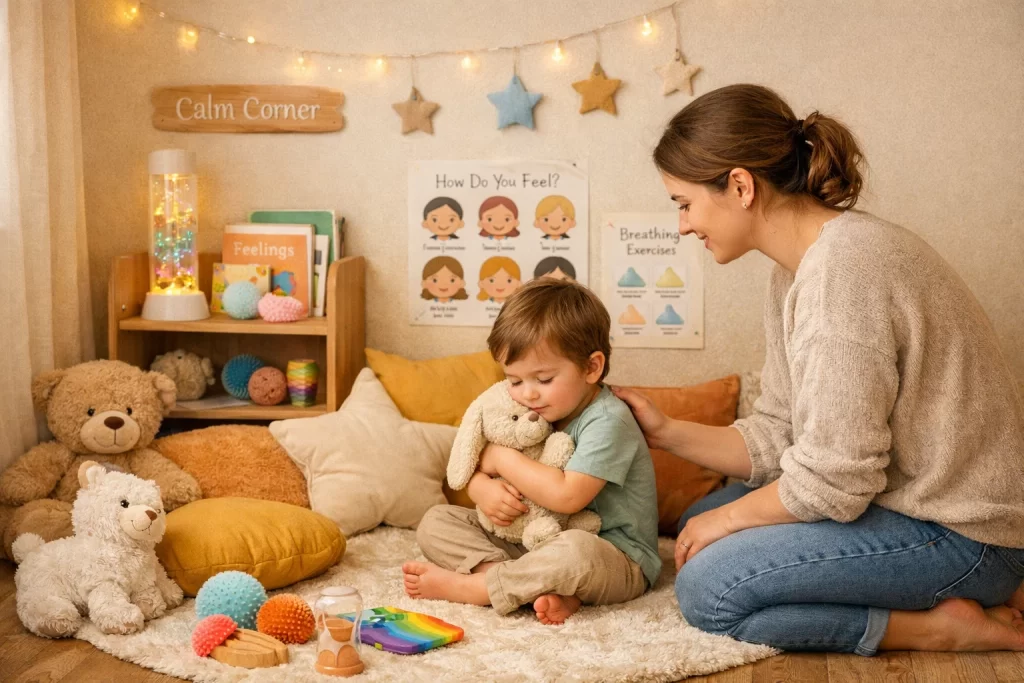
Toddlers experience strong emotions but lack coping strategies. A calm-down corner provides a safe place for emotional regulation.
Set up a small area with:
- Soft cushions
- Stuffed toys
- Sensory objects
- Picture books
When emotions escalate, guide the child to this area gently. Encourage deep breaths or quiet play until calm returns.
6. Music and Movement Activities
Expressing Feelings Through Motion
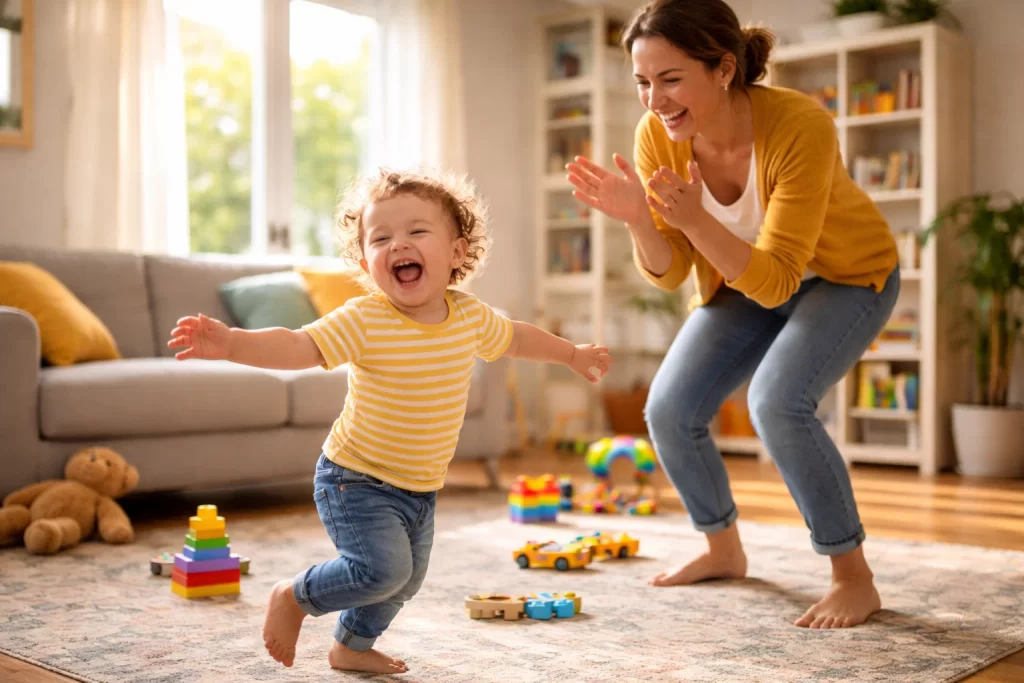
Music activates emotional processing areas in the brain. Toddlers naturally respond to rhythm and movement.
Play songs representing different moods:
- Upbeat music for happiness.
- Slow music for calmness.
- Dramatic rhythms for excitement.
Encourage toddlers to dance or move in ways matching the emotion.
Parents can ask, “Does this music feel happy or sad?”
Regular music play remains one of the most enjoyable toddler emotional development activities for parents. Support your child’s communication skills with simple toddler speech delay activities at home designed to encourage language and daily interaction.
7. Emotion Role-Play with Parents
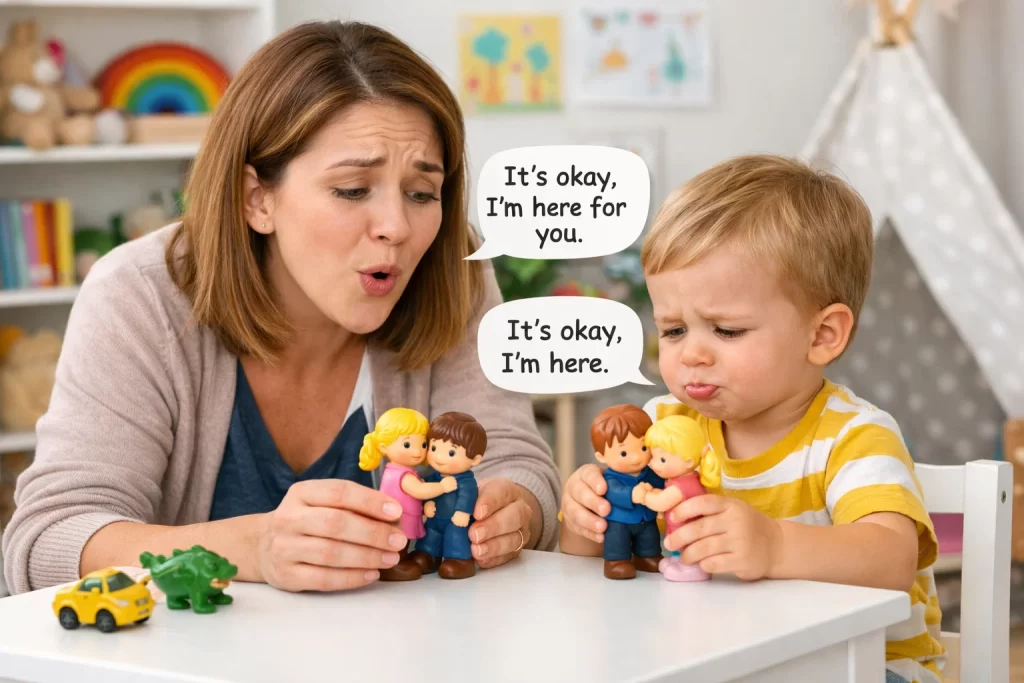
Modeling Healthy Emotional Responses
Role-playing everyday situations teaches toddlers how to handle feelings. Parents can act out simple scenarios involving emotions.
Examples include:
- Sharing toys with a friend.
- Feeling frustrated while building blocks.
- Celebrating success after completing a puzzle.
During role-play, demonstrate calm problem-solving strategies. Use phrases like:
- “I feel frustrated, so I will take a deep breath.”
- “I feel happy because we finished together.”
Toddlers learn emotional behavior by imitation. Seeing parents manage feelings calmly provides a powerful example.
Key Benefits of Emotional Activities
Regular emotional learning activities support multiple developmental areas.
Benefits include:
- Improved emotional vocabulary.
- Stronger empathy and social awareness.
- Reduced tantrums and frustration.
- Better parent-child communication.
- Increased confidence and independence.
Consistent toddler emotional development activities for parents build the foundation for lifelong emotional health.
Bottom Line
Emotional development during toddler years shapes how children communicate, build relationships, and manage challenges later in life. Between ages one and three, toddlers rapidly learn emotional awareness through observation and interaction with caregivers.
Parents influence this growth more than any toy or program. Simple daily activities such as emotion games, storytelling, pretend play, and music help toddlers understand feelings in meaningful ways. These experiences teach children how emotions work and how to express them safely.
Explore more expert tips and milestones in our Toddler Development guides to help your child grow emotionally, socially, and confidently every day.