


Table of Contents
Learning how to manage toddler tantrums without yelling is one of the biggest parenting challenges today. Tantrums are common between the ages of 1 and 4, when children lack emotional regulation skills. According to Mayo Clinic, toddlers may experience one tantrum per day on average, often lasting 2–15 minutes. These emotional outbursts usually occur when children feel frustrated, tired, or unable to communicate their needs clearly.
Understanding tantrums helps parents respond calmly and effectively. consistent, calm responses reduce tantrum frequency by up to 40% within several weeks. Yelling, however, can escalate emotional distress and teach children to react aggressively.
Parents often search for strategies that protect a child’s emotional development while maintaining boundaries. That is exactly where practical guidance on how to manage toddler tantrums without yelling becomes valuable.
This guide explains eight proven methods backed by pediatric experts. Each strategy supports healthy child development and builds stronger parent-child communication.
1. Understand Why Tantrums Happen

Developmental limits in toddlers
The first step in how to manage toddler tantrums without yelling is understanding why tantrums occur. Toddlers experience rapid brain development but lack full emotional control. The prefrontal cortex, responsible for impulse control, continues developing through adolescence.
When toddlers feel overwhelmed, they often cry, scream, or throw objects. These reactions reflect frustration rather than intentional misbehavior.
Common triggers for tantrums
Recognizing triggers helps parents prevent many outbursts before they begin.
Common triggers include:
- Hunger or fatigue
- Sudden changes in routine
- Limited vocabulary to express needs
- Overstimulation in busy environments
- Desire for independence
A 2024 pediatric behavioral review reported that over 70% of tantrums occur during transitions, such as leaving the playground or bedtime routines. When parents anticipate triggers, they reduce emotional escalation.
2. Stay Calm and Control Your Reaction

Why calm responses matter
Remaining calm is the core principle of how to manage toddler tantrums without yelling. Children mirror adult emotional reactions. When a parent shouts, the child’s stress response increases.
Calm parental responses shorten tantrum duration by 30–50%. Emotional regulation begins with the caregiver’s behavior.
Practical ways to stay calm
Parents can practice simple techniques during a tantrum:
- Take three slow breaths before responding.
- Lower your voice instead of raising it.
- Maintain neutral facial expressions.
- Avoid long lectures during the tantrum.
3. Validate Your Child’s Feelings
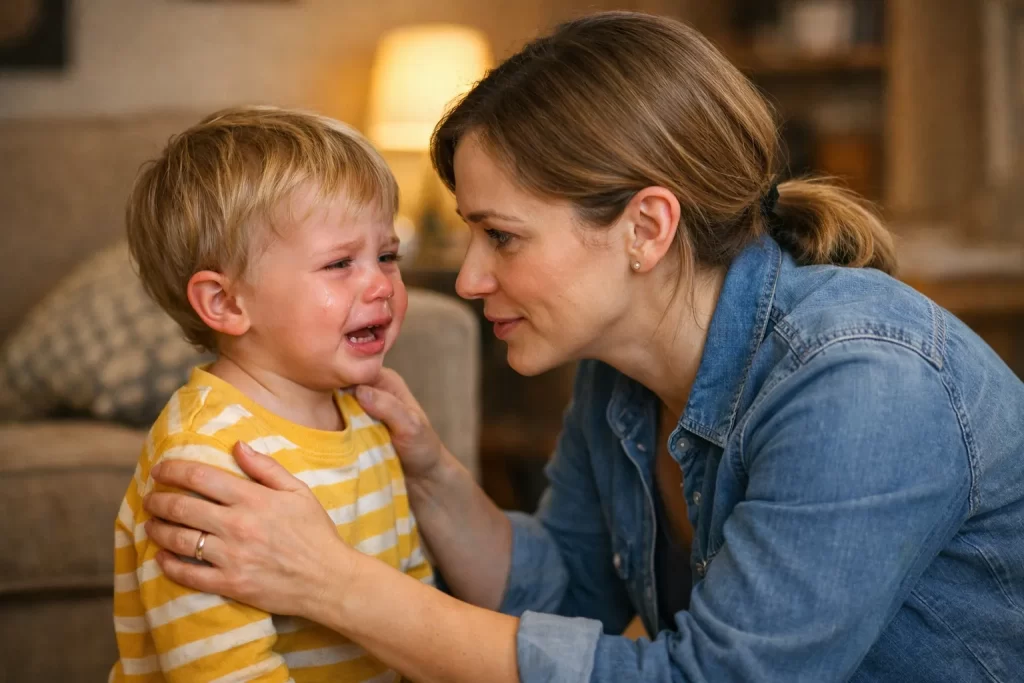
Emotional acknowledgment helps toddlers learn
Validating feelings is a powerful technique in how to manage toddler tantrums without yelling. Toddlers need to know their emotions are understood, even when behavior is inappropriate.
Acknowledgment reduces emotional intensity because children feel heard.
Simple validation phrases
Parents can use short statements during emotional moments:
- “I see you are upset.”
- “You wanted the toy, and that’s frustrating.”
- “It’s okay to feel angry.”
Children who receive emotional validation develop better emotional vocabulary by age five. This helps them express frustration through words instead of tantrums.
4. Offer Choices to Build Independence
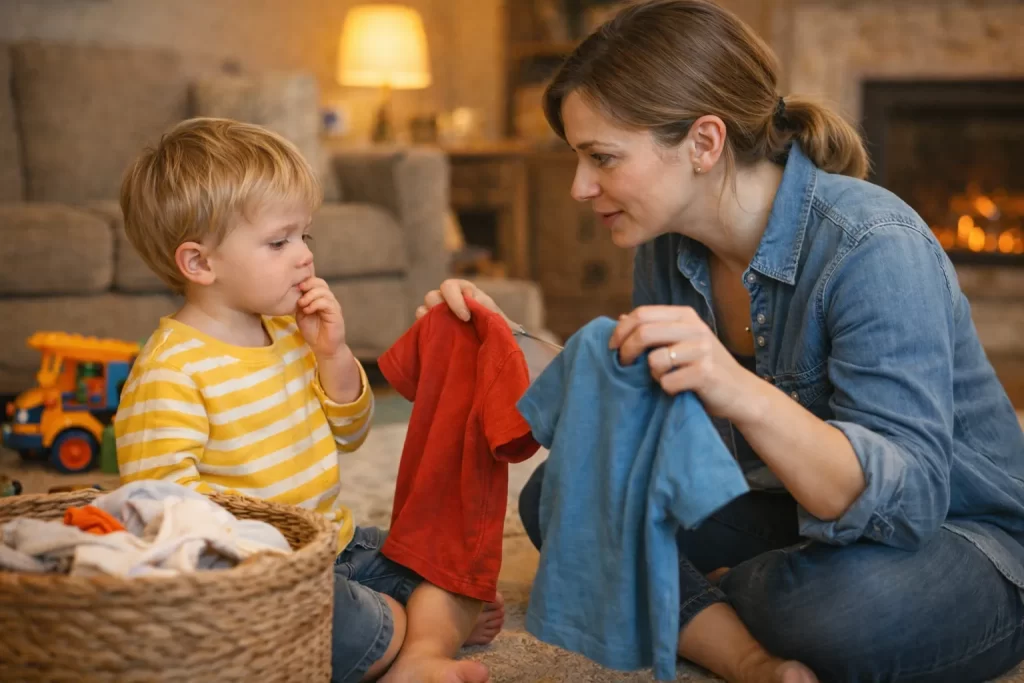
Toddlers crave control
Offering limited choices is another effective strategy for how to manage toddler tantrums without yelling. Toddlers naturally seek independence as they develop autonomy.
When children feel powerless, frustration often turns into tantrums.
Examples of helpful choices
Parents can guide behavior by offering two acceptable options:
| Situation | Choice Option 1 | Choice Option 2 |
|---|---|---|
| Getting dressed | Red shirt | Blue shirt |
| Snack time | Apple slices | Yogurt |
| Leaving the park | Walk to the car | Hold parent’s hand |
Giving choices helps toddlers feel involved in decisions. Behavioral experts report that choice-based parenting reduces power struggles by nearly 35%.
5. Use Positive Attention for Good Behavior

Reinforcement shapes behavior
Positive attention is an essential part of how to manage toddler tantrums without yelling. Children repeat behaviors that receive attention.
When parents focus only on misbehavior, toddlers may throw tantrums to gain interaction.
Effective positive reinforcement
Parents can reinforce good behavior through simple praise:
- “You waited patiently. Great job.”
- “Thank you for using gentle hands.”
- “I like how you cleaned up your toys.”
Child development studies show that specific praise increases cooperative behavior by 20–30% within weeks. Positive reinforcement strengthens emotional learning.
6. Create Predictable Daily Routines
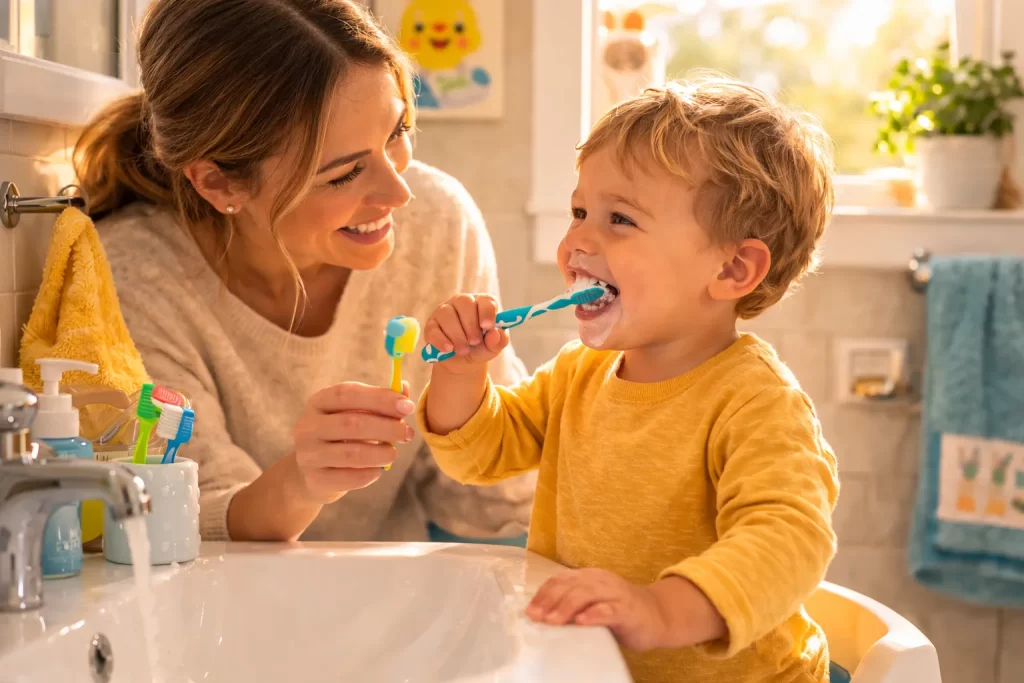
Structure reduces emotional stress
Routine plays a crucial role in how to manage toddler tantrums without yelling. Predictability helps toddlers feel secure and understand what happens next.
Children often struggle when transitions occur without warning.
Benefits of structured routines
A daily routine may include:
- Regular meal times
- Consistent naps
- Scheduled play periods
- Bedtime rituals
Toddlers who follow consistent bedtime routines experience 25% fewer evening tantrums. Structured schedules reduce uncertainty and emotional overload. Learn practical strategies for raising emotionally healthy children in our Child Behavior Management guide.
7. Use Calm Time Instead of Punishment
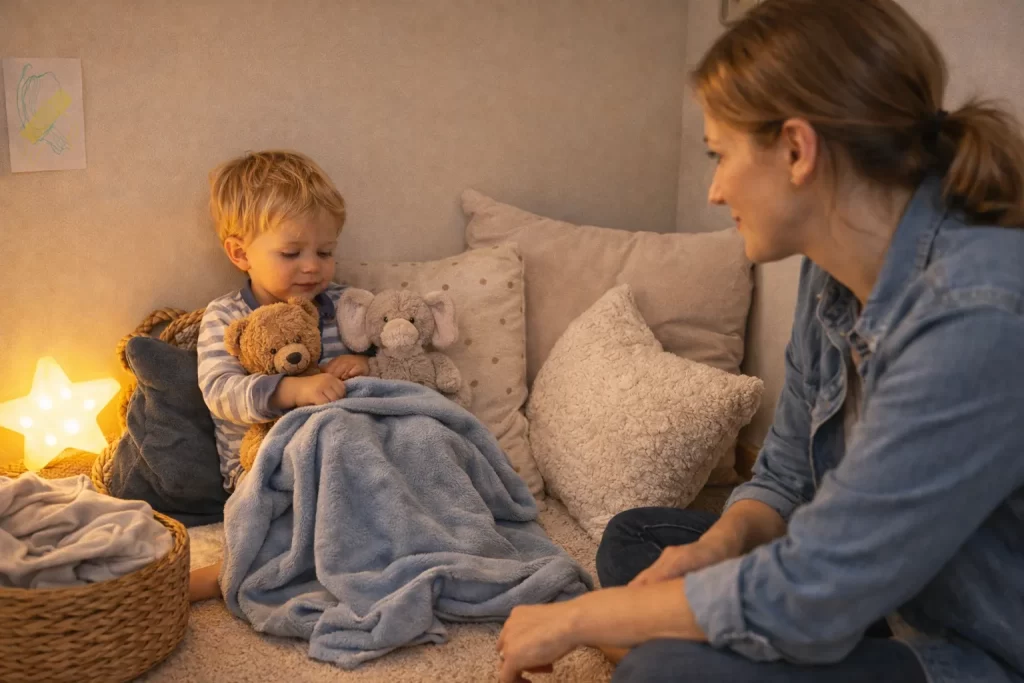
Teaching regulation, not punishment
Many parents rely on punishment during tantrums. However, experts recommend calm-down spaces when learning how to manage toddler tantrums without yelling.
A calm-down space helps toddlers regulate emotions safely.
How to create a calm space
Parents can create a simple, quiet area that includes:
- Soft pillows or cushions
- Favorite stuffed toys
- Calm sensory objects
- A quiet corner away from distractions
The goal is not isolation but emotional reset. Research cited by the Mayo Clinic suggests that short calm-down periods of 2–5 minutes help toddlers regain control faster.
8. Prevent Tantrums Before They Start

Prevention is the most effective strategy
Prevention is often the strongest method in how to manage toddler tantrums without yelling. Many tantrums can be avoided by anticipating needs.
Parents who plan to reduce frustration triggers.
Preventive strategies parents can use
Key preventive strategies include:
- Carry healthy snacks during outings.
- Warn toddlers before transitions.
- Avoid overstimulating environments.
- Ensure adequate sleep and rest.
A 2025 child behavior analysis found that preventive strategies reduce tantrum frequency by nearly 50% when used consistently.
Quick Reference: Tantrum Response Guide
| Situation | Parent Response | Expected Outcome |
|---|---|---|
| Child refuses toy sharing | Validate feelings | Child feels understood |
| Child screams in store | Stay calm and guide | Tantrum de-escalates |
| Child throws objects | Redirect attention | Behavior stops faster |
| Child cries during transitions | Offer choices | The child screams in the store |
Bottom Line
Learning how to manage toddler tantrums without yelling requires patience, emotional awareness, and consistent parenting strategies. Tantrums are a normal developmental stage rather than a sign of poor behavior. Toddlers experience strong emotions but lack the language and self-control to express them effectively.
Parents can guide children through these emotional moments using calm responses, validation, predictable routines, and positive reinforcement. Research from pediatric organizations confirms that supportive parenting reduces tantrum frequency and strengthens emotional development.
Want more practical parenting tips? Explore our Child Behavior Guide to learn simple, research-based strategies that help toddlers develop healthy emotional skills.