

Table of Contents
Toddler Emotional Development means understanding how children ages 1 to 3 years old begin to recognize, express, and manage feelings. This period features rapid growth in emotional skills that set the foundation for healthy relationships and school success. By age 2, most toddlers show a wide range of emotions and respond to others’ feelings.
They test limits, practice independence, and form attachments that help shape their sense of security. These social-emotional skills are key to self-regulation, empathy, and trust. Research shows that positive relationships with adults reduce stress and create a secure base from which toddlers explore the world.
As toddlers grow, they begin to share emotions like joy, fear, pride, and frustration in predictable ways. The Zero to Three organization notes that interactive play with peers becomes more common around ages 2–3. Experts stress that emotional growth supports future academic and social success. For example, emotion self-regulation strategies learned in toddlerhood contribute to later school readiness and problem-solving skills.
1. Recognizing Toddler Emotional Milestones
The Emotional Progress Markers
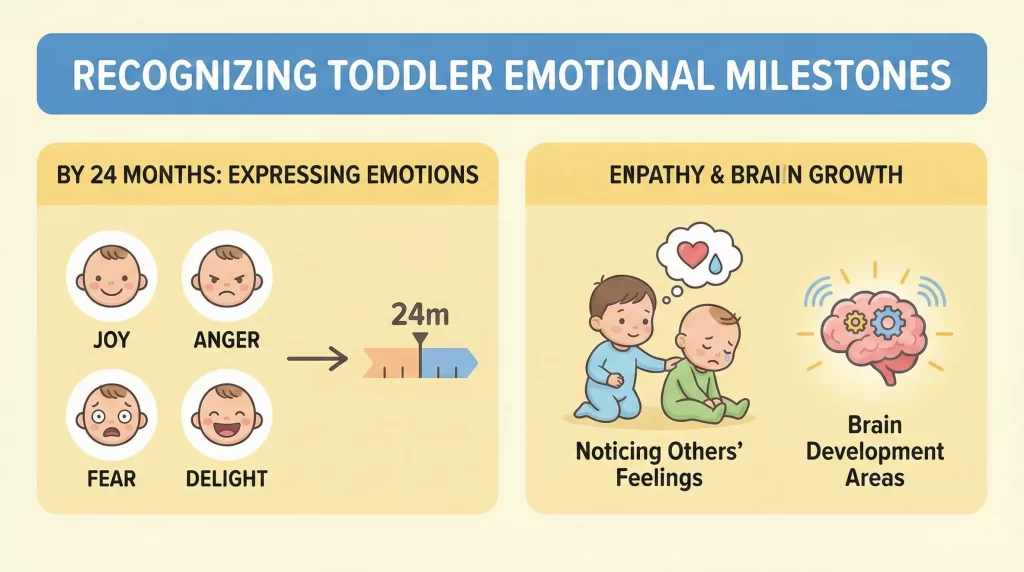
Toddler Emotional Development includes measurable changes in how children respond to their own and others’ emotions. By age 24 months, toddlers express joy, anger, fear, and delight openly. Most toddlers begin to notice others’ feelings and can react to sadness or happiness. These milestones show the brain is growing in areas responsible for emotional recognition and memory.
By age 3, many toddlers begin to feel more subtle emotions, such as guilt and shame. Self-regulation begins to improve, though children still need support during big feelings. Emotional regulation strategies often develop gradually as toddlers learn words for feelings and mimic supportive adult behaviour. Learn about the physical growth of toddlers and how to track your child’s growth.
2. How Play Supports Emotional Growth
Play as Emotional Practice
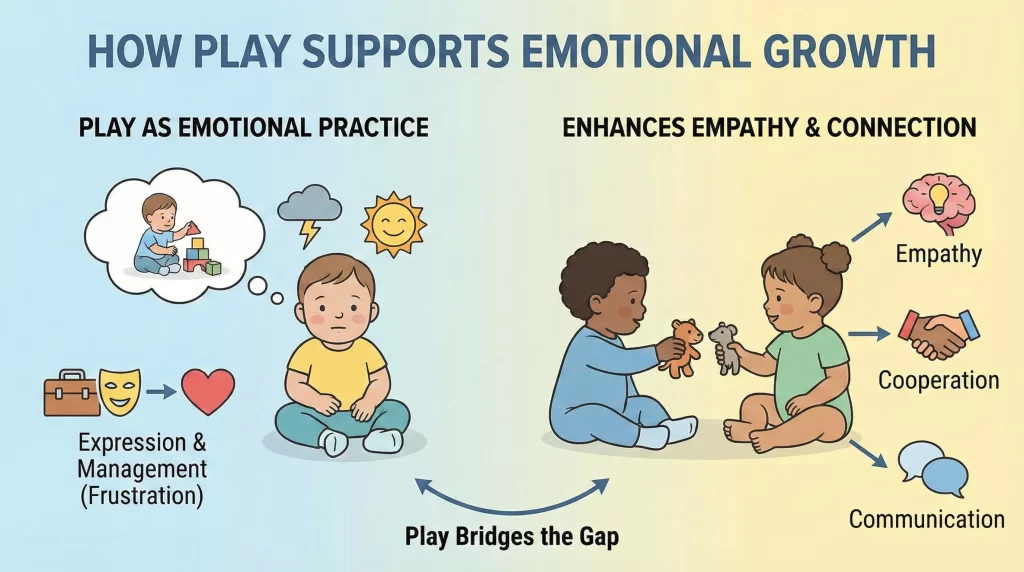
Play is essential for emotional learning. It gives toddlers a safe way to practise feeling expression and managing strong emotions like frustration. Research shows that play also enhances empathy, cooperation, and communication. Toddlers often don’t yet have the words to explain feelings, so play helps bridge that gap through social interaction and role-playing.
Simple activities like pretend games, singing, and outdoor play allow toddlers to explore feelings of pride, excitement, and disappointment while gaining confidence.
3. Building Emotional Regulation Skills
Teaching Calm and Coping
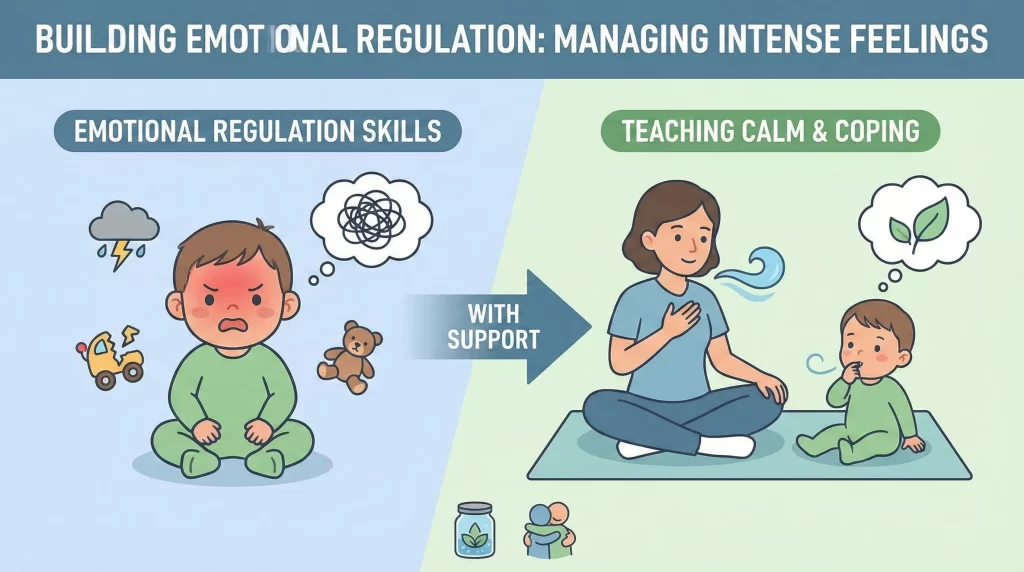
Emotional regulation means helping toddlers manage intense feelings, such as anger and frustration. At age 2, toddlers often experience emotional outbursts because they lack control strategies. Toddlers begin to learn calming techniques, such as deep breaths, with support from caregivers. Modeling calm behaviour teaches toddlers how to respond in big emotional moments. Understand toddler speech development and support early communication skills.
4. Creating a Supportive Emotional Environment
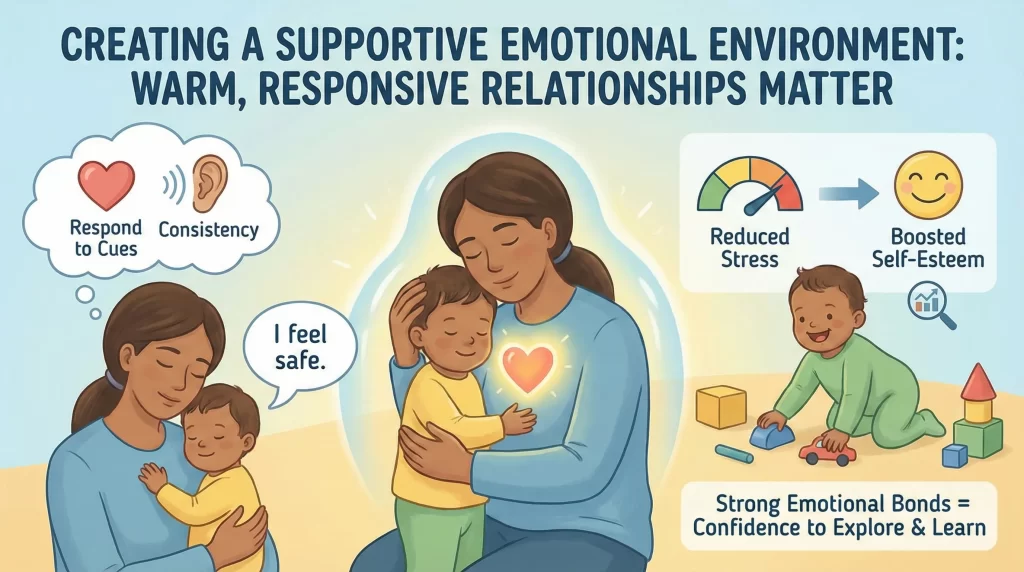
Warm, Responsive Relationships Matter
Toddler Emotional Development thrives in warm, responsive caregiving environments. Loving relationships give toddlers confidence to explore and learn. Research shows that strong emotional bonds reduce stress and improve self-esteem. When caregivers consistently respond to emotional cues, toddlers feel safe and protected as they learn to trust others.
Parents set the tone for emotional interactions by acknowledging feelings and encouraging positive expression. This supports self-awareness and healthy relationships. For a complete guide on toddler growth, check our main Toddler Development Guide for physical, emotional, and cognitive milestones.
5. Common Emotional Challenges and Guidance
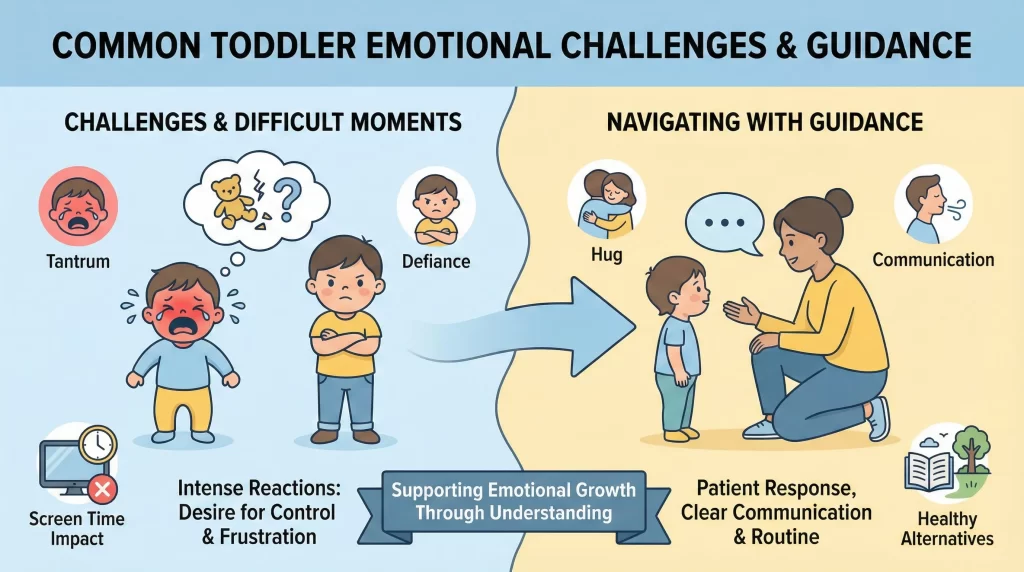
Navigating Difficult Moments
It’s normal for toddlers to have intense reactions, such as tantrums or defiance. These behaviours often reflect a desire for control and frustration with limited communication skills. Toddlers with more screen time may experience greater emotional challenges, including frustration and behavioural difficulties. Michigan gov reports note a link between prolonged screen use and emotional issues in toddlers.
Offering choices and setting clear routines helps toddlers feel secure while reducing power struggles. Encouraging them to name their feelings also strengthens emotional vocabulary.
Support Table: Emotional Development Suggestions
| Support Area | Example Strategy | Expected Outcome |
|---|---|---|
| Emotional Recognition | Name feelings during daily routines | Better emotional vocabulary |
| Play Engagement | Imaginative play 15–30 min/day | Improved empathy and expression |
| Self-Regulation | Model calm responses | Reduced tantrums over time |
| Positive Interaction | Daily warm interactions | Stronger emotional security |
| Screen Use Limits | <1 hour/day of passive screen time | Less emotional frustration |
Bottom Line
Understanding Toddler Emotional Development helps parents support children’s emotional growth effectively and intentionally. By tracking milestones, using play-based learning, and fostering warm, supportive interactions, caregivers help toddlers navigate big feelings and build emotional skills. Remember that emotional regulation and empathy are learned gradually through everyday moments and adult modeling. Prioritizing emotional development strengthens toddlers’ confidence, resilience, and readiness for future social and academic success.
FAQs
At what age do emotional tantrums peak?
Tantrums peak around ages 2–3 as toddlers test independence.
Is emotional regression normal?
Yes, stress or changes can temporarily slow emotional progress.
How much play aids emotional growth?
About 15–30 minutes of guided play daily helps emotional learning.
When should I worry about emotions?
Consult a doctor if your toddler shows persistent withdrawal or depression-like symptoms.
Can screen time affect emotions?
High screen use correlates with emotional and behavioural challenges in toddlers.
Disclaimer
This article is for educational purposes only and does not replace professional medical or developmental advice. Always consult a qualified pediatrician or child development specialist for personalized guidance.