

Table of Contents
Today, toddler brain development is one of the most studied areas in early childhood science. We know that 90% of brain growth occurs before age 5, with ages 0–3 being especially critical for the formation of cognitive pathways. Researchers consistently show that everyday interactions, such as talking, playing, reading, and exploring, directly shape neural connections in a toddler’s brain. In fact, simple play isn’t “just fun.” It’s the foundation of problem-solving, memory, attention, and communication skills.
During the toddler years, neural circuits rapidly strengthen through experience and repetition. Toddlers learn best through active engagement, social interaction, and sensory play rather than passive screen time. Caregivers who intentionally guide play, respond to communication cues, and create learning opportunities can significantly boost cognitive outcomes.
Today, we’ll unpack science-backed activities and structured approaches that help toddlers develop their thinking skills with practical takeaways for everyday life.
How Toddler Brain Development Works
The Science Behind Early Neural Growth
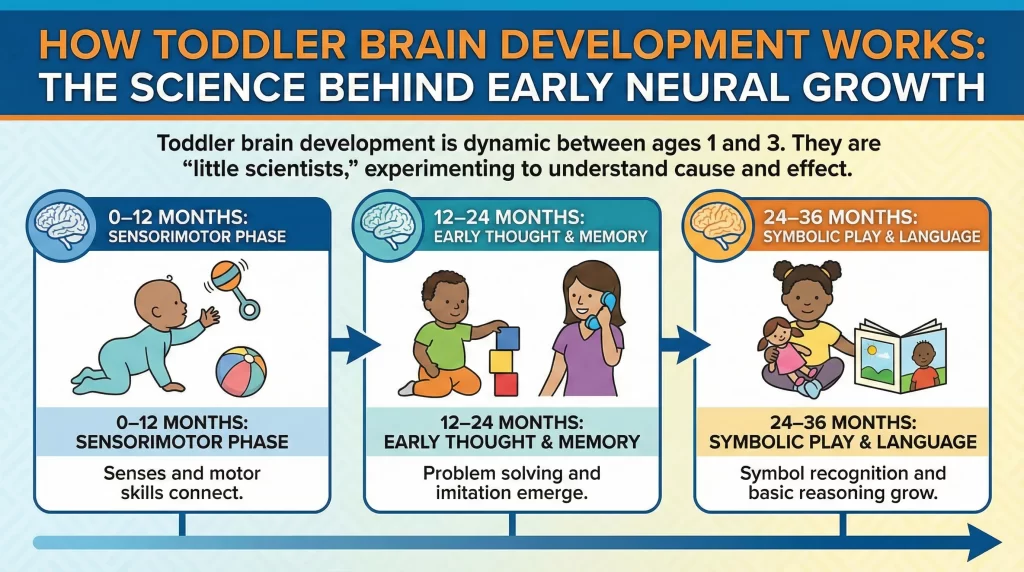
Toddler brain development is especially dynamic between ages 1 and 3. During this time, toddlers are like “little scientists,” experimenting with their world to understand cause and effect.
| Development Phase | Age Range | Key Cognitive Progress |
|---|---|---|
| Sensorimotor | 0–12 months | Senses and motor skills connect. |
| Early Thought & Memory | 12–24 months | Problem solving and imitation emerge. |
| Symbolic Play & Language | 24–36 months | Symbol recognition and basic reasoning grow. |
Responsive “serve and return” interactions when caregivers respond to a child’s sounds, gestures, or expressions actually build stronger neural connections.
This period is also when toddlers start sorting, categorizing, and connecting ideas through play. The more variety they experience, the more diverse neural networks develop. That’s why early interactions lay the foundation for later skills like literacy and math.
Essential Activities That Boost Cognitive Skills
Learning Through Play
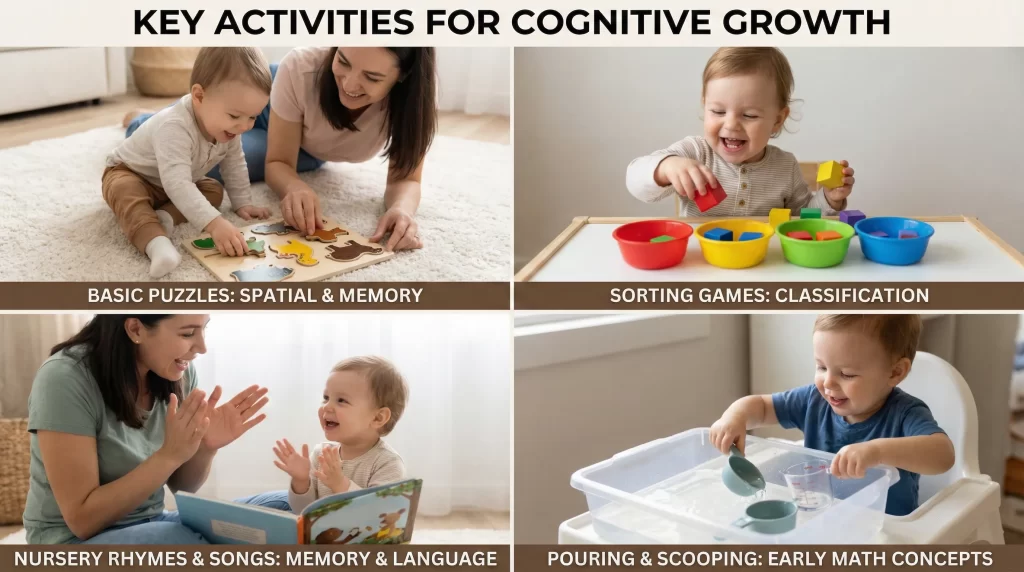
Play is not optional; it’s essential for toddler brain development. When toddlers play, they test ideas, solve problems, and develop logical thinking skills.
Key Activities for Cognitive Growth
- Basic Puzzles: Strengthen spatial reasoning and memory.
- Sorting Games: Group by color, size, or shape to build classification skills.
- Nursery Rhymes & Songs: Expand memory and language patterns.
- Pouring & Scooping: Introduce early math concepts, such as volume.
Toddlers also love exploratory play, such as water table games, which teach physics concepts like floating and sinking. Together, these activities make learning multisensory. Discover how emotional growth in toddlers helps them handle tantrums and moods.
Everyday Activities That Build Thinking Skills
Talk, Read, and Respond
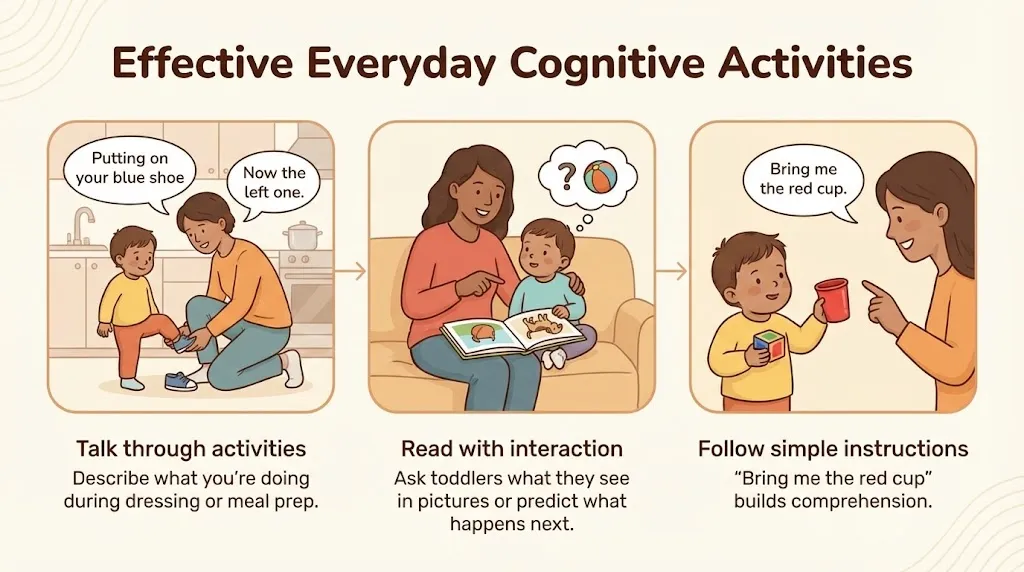
Everyday routines shape toddler brain development more than structured lessons. When caregivers talk about routines, name objects, and describe actions, toddlers link words to concepts.
Effective Everyday Cognitive Activities
- Talk through activities: Describe what you’re doing during dressing or meal prep.
- Read with interaction: Ask toddlers what they see in pictures or predict what happens next.
- Follow simple instructions: “Bring me the red cup” builds comprehension.
These interactions strengthen language and reasoning skills. They also encourage toddlers to express needs and questions.
Structuring Cognitive Play at Home
Create Learning Moments in Daily Routines
A predictable routine gives toddlers security, which supports cognitive exploration.
Home Activity Ideas
- Choice Making: Offer two outfit options to develop decision-making.
- Matching Tasks: Match socks or utensils during chores.
- Creative Crafting: Art encourages imagination and planning.
Caregivers can also use pretend play to build symbolic thinking, the foundation of language and abstract thought. Learn about toddler physical milestones and how to track your child’s growth.
Screen Time and Cognitive Impact
What the Research Says
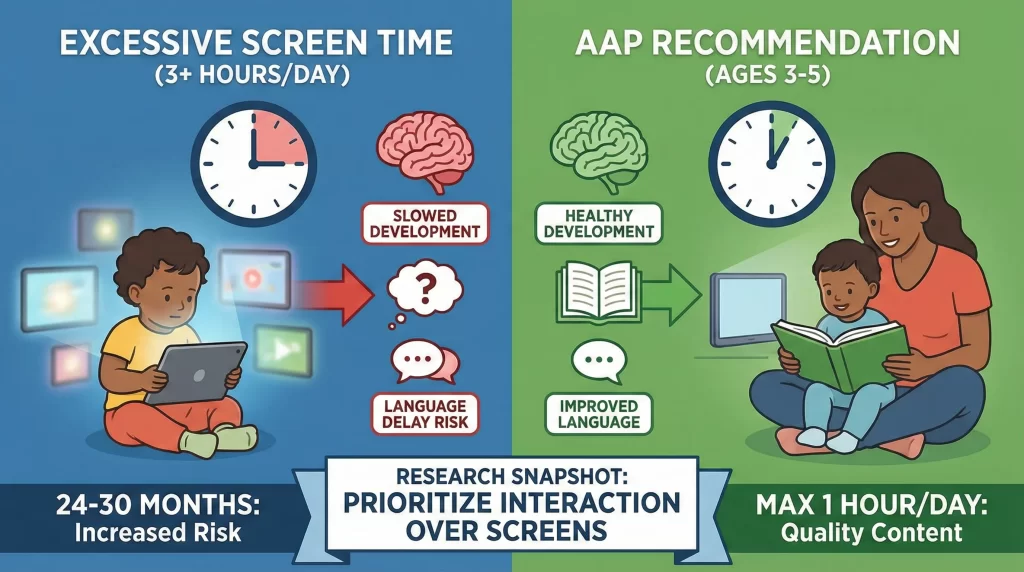
Scientific evidence indicates that excessive screen time can slow cognitive development in toddlers. In children aged 24–30 months, 3 hours of daily TV has been linked to increased risk of language delay.
The American Academy of Pediatrics recommends no more than 1 hour of quality screen time per day for ages 3–5.
While co-viewing and interaction can make screen time more meaningful, unstructured screen use replaces critical human engagement. Understand toddler speech milestones and support early communication skills.
Tools That Track Cognitive Progress
Standardized Measures
Professionals often use assessments like the Bayley Scales of Infant and Toddler Development to measure cognitive skills in children aged 1–42 months.
These tools help track milestones in memory, problem-solving, and language, providing insights into a toddler’s developmental trajectory.
Bottom Line
Toddler brain development thrives on active engagement, responsive relationships, and varied play. Early experiences shape the neural pathways that support future learning, behavior, and emotional resilience. Limit passive screen time, talk and read often, and embed thinking activities into everyday life. By choosing interactive games, sorting tasks, and rich conversations, caregivers help toddlers build cognitive skills that last a lifetime.
FAQs
At what age is the toddler’s brain most critical for development?
Ages 0–3 are the most critical for neural connections to form.
How does play boost cognitive skills?
Play builds problem-solving, memory, language, and reasoning.
Can reading help cognitive growth?
Yes, reading expands vocabulary and reasoning skills.
Should toddlers use screens for learning?
Limit screens; active play and interactions are more effective.
When should I track cognitive milestones?
Track regularly and consult professionals if concerns arise.
Disclaimer
This article is for educational purposes only and does not replace professional medical or developmental advice. Always consult a qualified pediatrician or child development specialist for individual concerns about your toddler’s growth and learning.