

Table of Contents
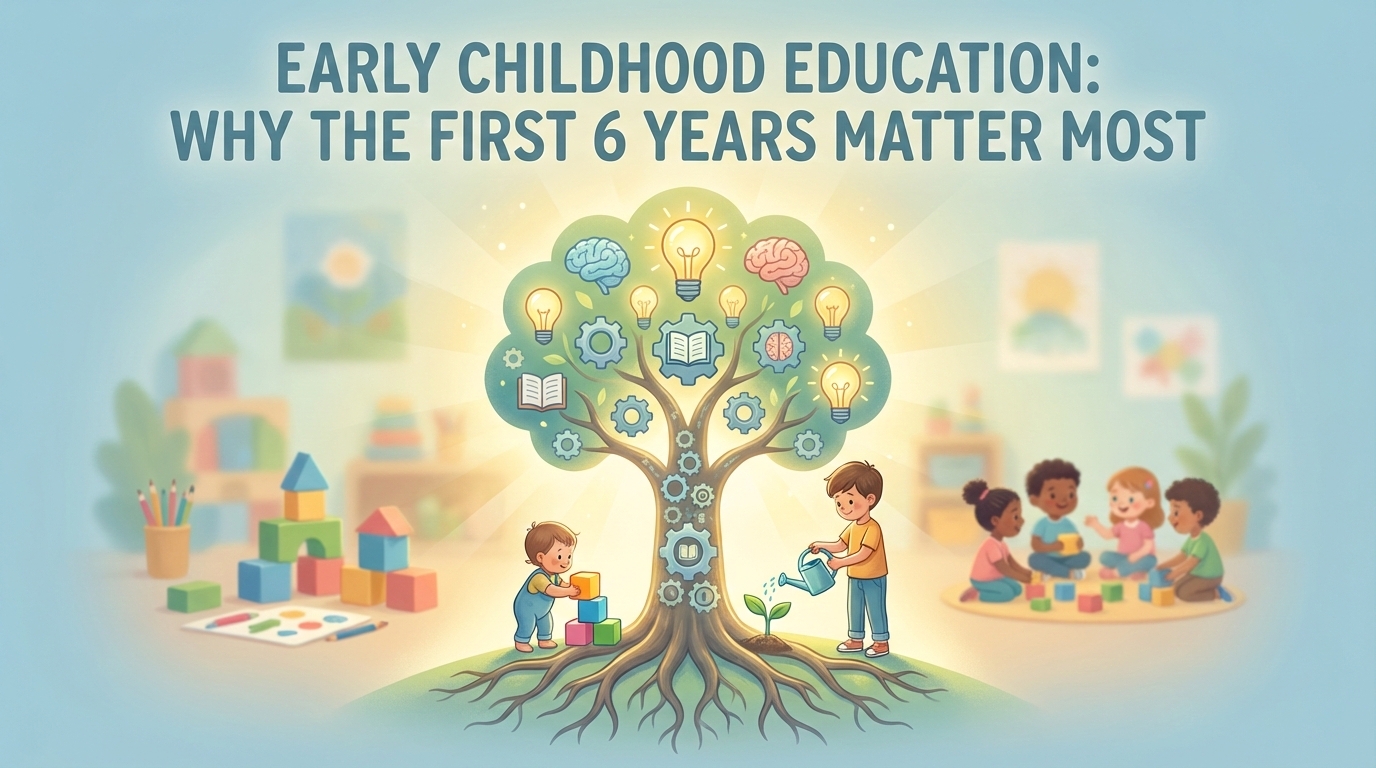
Early Childhood Education shapes a child’s future starting at birth and especially during the first six years. During this period, up to 90% of brain development occurs before age five, making experiences during these years critical to cognitive, social, and emotional growth. High-quality early learning programs support language skills, emotional regulation, and school readiness long before kindergarten begins.
The U.S. Department of Education recognizes early learning as essential to later achievement, partnering with the U.S. Department of Health and Human Services to expand access and improve outcomes. Research shows that children in structured early childhood education are more likely to succeed academically and socially throughout school.
When families and educators work together, children begin school with stronger skills and a healthier foundation for lifelong learning.
The Science of Early Learning
Brain Development in Early Childhood Education
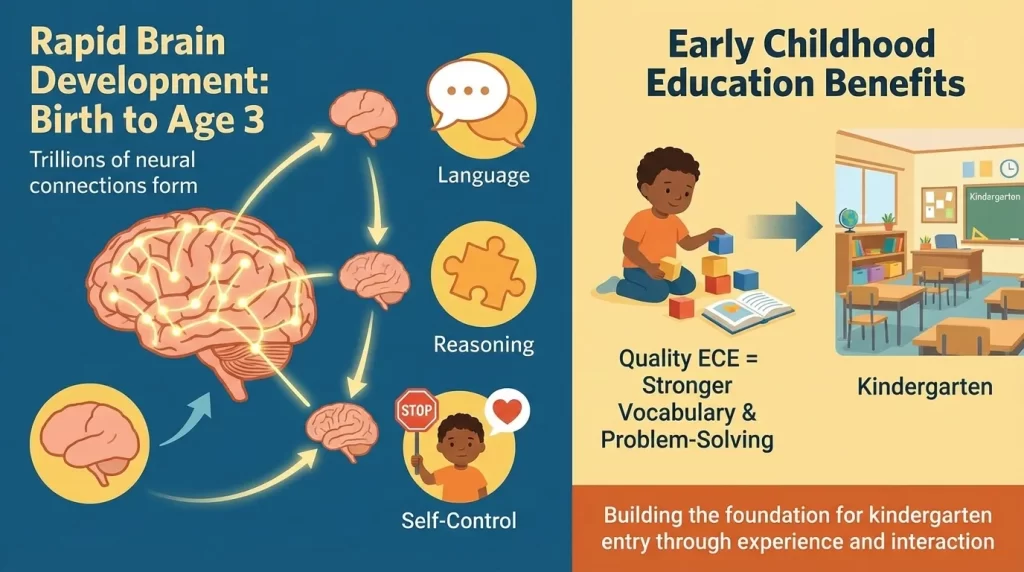
Children’s brains grow rapidly from birth to age six. By age three, trillions of neural connections form through experience and interaction. These early connections lay the groundwork for language, reasoning, and self-control. Children who engage in quality Early Childhood Education show stronger vocabulary and problem-solving skills at kindergarten entry.
Structured play, guided learning, and responsive caregiving stimulate cognitive pathways more consistently than informal care alone. This neurological momentum continues to benefit students through elementary school and beyond. Research also links high-quality early learning to higher high school graduation rates and greater college completion.
Emotional & Social Foundations
Early Childhood Education strengthens emotional regulation and social skills. Children learn to share, cooperate, and resolve conflict through structured interactions. Those skills reduce behavior challenges later in school. Programs with trained educators help children express emotions and build resilience.
These emotional foundations support friendships and self-confidence, crucial to classroom success. Strong early relationships with educators encourage curiosity and a love of learning. When children are secure and socially competent, they transition more easily to formal schooling. Thus, emotional development in early childhood is as important as academic readiness.
Quantifiable Benefits of Early Childhood Education
Academic Outcomes & Lifelong Learning
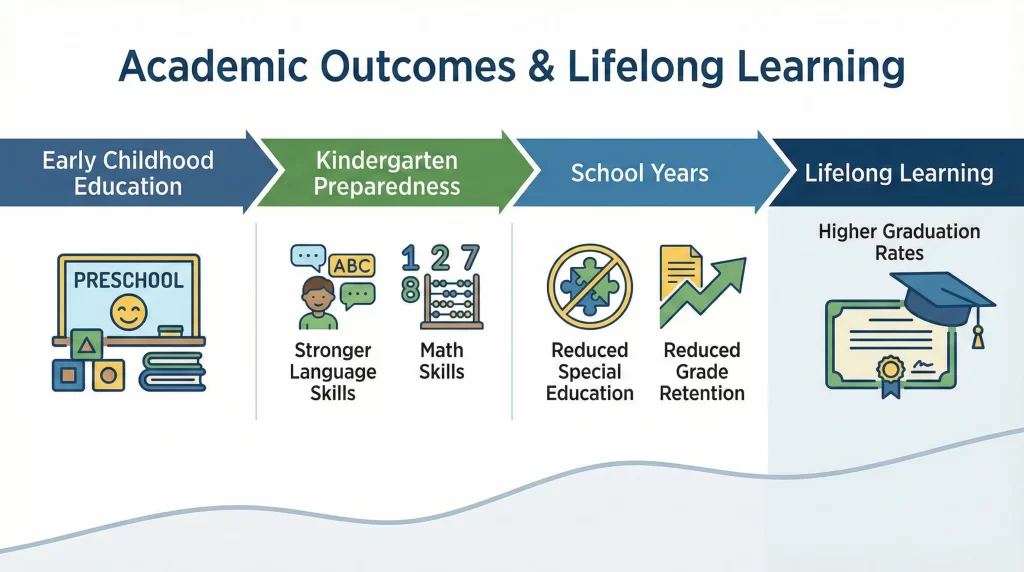
High-quality Early Childhood Education links to measurable academic benefits across a lifetime. Children who attend preschool are better prepared for kindergarten, with stronger language and math skills. Longitudinal studies show participation reduces special education placement and grade retention. Students with early learning experiences are more likely to graduate from high school.
They also pursue postsecondary education at higher rates than their peers without early learning exposure. Many research reviews find that early education significantly improves school performance, supporting sustained academic growth.
Social & Economic Returns
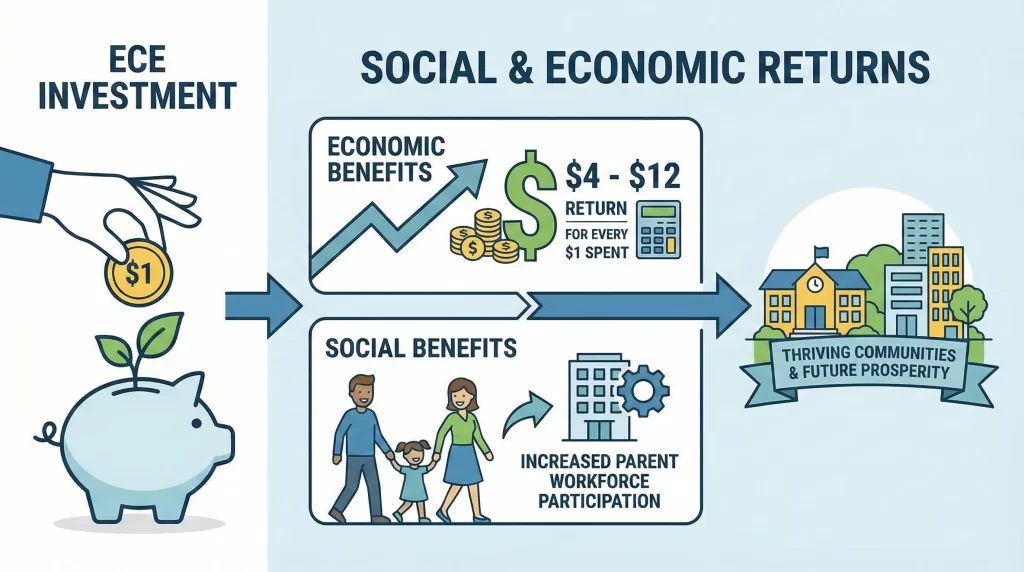
Investing in Early Childhood Education yields social and economic benefits. Economists estimate returns of between $4 and $12 for every $1 spent on high-quality early learning. Access to quality programs also increases parents’ workforce participation.
Communities benefit as children with strong early foundations require fewer remedial services and contribute more to the economy. Early learning investments reduce inequality by supporting children from low-income families and strengthening economic mobility.
Core Components of Quality Programs
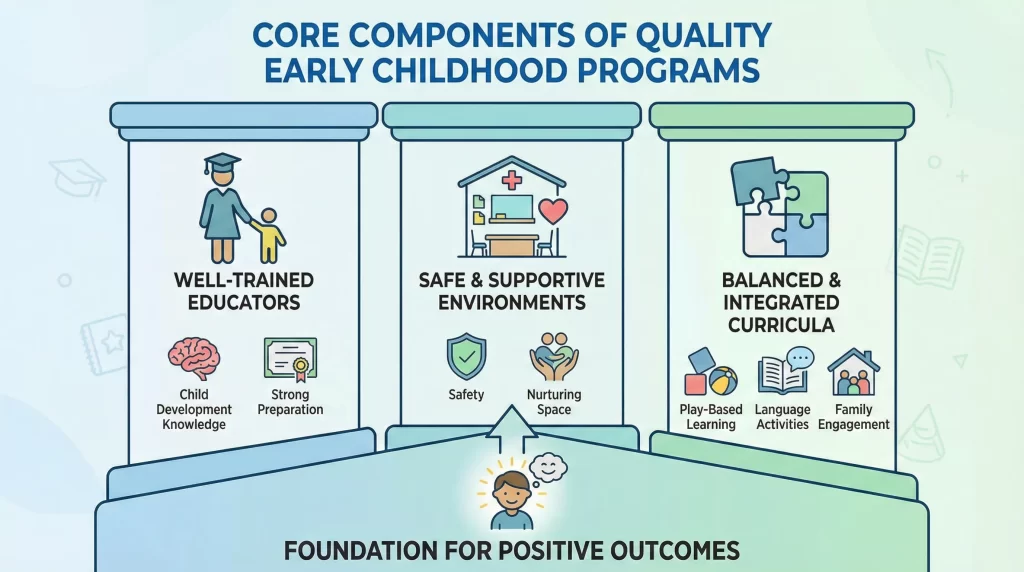
Quality Early Childhood Education depends on well-trained educators, safe environments, and balanced curricula. Educator preparation in childhood development strongly influences outcomes. Programs must integrate play, language activities, and family engagement.
Standards for quality vary by state, but research consistently shows that trained, consistent caregivers improve outcomes. Family involvement bolsters learning from home to school. When these components align, children are more likely to achieve sustained academic and social success.
A Comparative Data Table
| Measure | Outcome with Quality ECE |
|---|---|
| Brain development by age 5 | 90% complete |
| High school graduation increase | ~25% higher |
| Economic ROI per $1 spent | $4–$12 |
| Reduced special education placement | Significant decrease |
| Parental workforce participation | Increased hours & income |
Policy, Accessibility & Equity
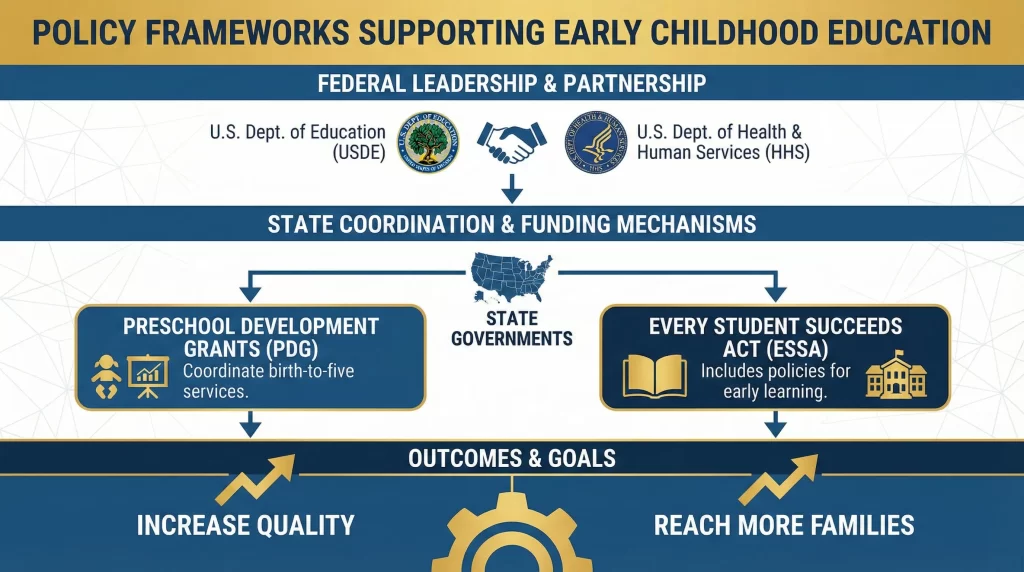
Policy Frameworks Supporting Early Childhood Education
Federal and state policies shape access to Early Childhood Education. The U.S. Department of Education works with the U.S. Department of Health and Human Services to expand high-quality early learning.
Grants like Preschool Development Grants help states coordinate services for children from birth through age five. The Every Student Succeeds Act includes policies for early learning and development. These frameworks aim to increase quality and reach more families.
Barriers to Access
Accessibility remains uneven across the U.S. Many families face high childcare costs and limited program availability. Workforce shortages and low educator wages also limit access to quality programs.
Policies that expand funding, improve affordability, and strengthen workforce conditions can close gaps. Ensuring equitable Early Childhood Education means addressing barriers that disproportionately affect low-income and underserved communities.
Bottom Line
Early Childhood Education during the first six years matters because it fundamentally shapes a child’s brain development, academic success, and social competence. Data show measurable impacts on school readiness, long-term achievement, and economic outcomes. With strategic policies and high-quality programs, we can support all children to thrive. Investing in early learning yields benefits for families, communities, and the broader society.
FAQs
What age range does Early Childhood Education cover?
Birth through age five, with emphasis on learning before school entry.
Does Early Childhood Education improve long-term academic outcomes?
Yes, it improves school readiness and increases high school graduation.
How does Early Childhood Education benefit families?
It supports parents’ work, increases income, and reduces stress.
What defines high-quality Early Childhood Education?
Trained educators, safe environments, and family engagement define quality.
Why is Early Childhood Education important for social skills?
It develops cooperation, emotional regulation, and peer interaction skills.
Disclaimer
This article is for educational purposes only. It does not replace professional educational, developmental, or medical advice for individual children.