

Table of Contents
Preschool Education is the foundation of lifelong learning for children aged about 2 to 6 years, before they enter formal schooling. According to global education data, only 40% of children aged 3–4 attend early childhood education programmes, underscoring the need for quality preschool access as a global priority.
Preschool settings help children build essential skills during a critical period of brain development, when neural connections form rapidly. High-quality preschool supports cognitive, social, emotional, and physical growth by using structured activities and play-based learning.
In the United States and many other countries, preschool, or pre-K, serves as a stepping stone to elementary school readiness by combining guided play with early literacy and numeracy experiences. Today’s article explains five skills young children learn early through Preschool Education and why they matter in the long term.
Cognitive and Language Development
Preschool Education Builds Thinking and Communication
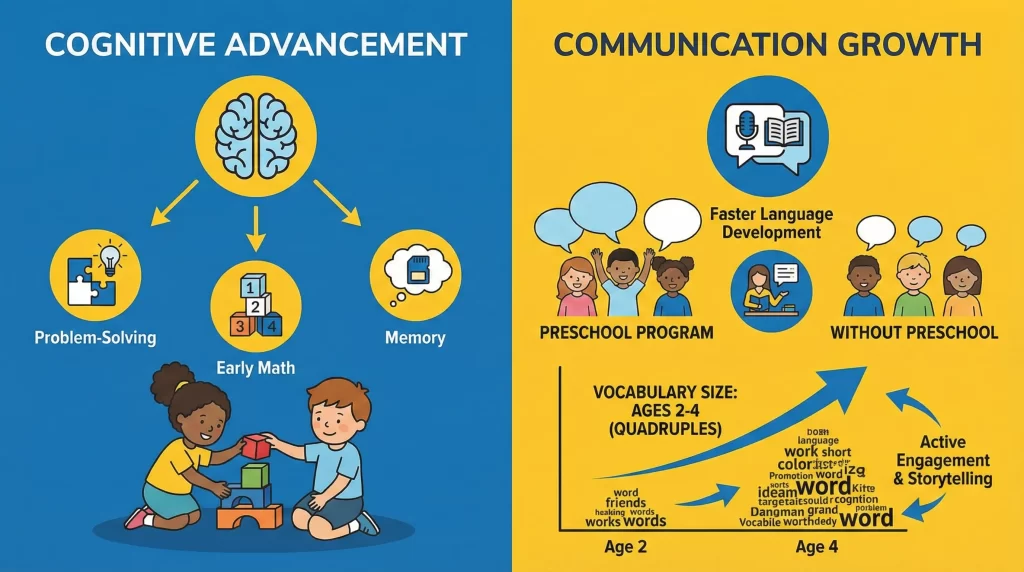
Preschool Education significantly advances cognitive skills like problem-solving, memory, and early math concepts. Children in structured early learning programmes develop language faster than peers without such experience. Over the preschool years, vocabulary size often quadruples between ages 2 and 4 as children engage actively with teachers and peers. Teachers use activities such as storytelling, rhymes, and guided conversations to strengthen expressive and receptive language.
This early language foundation improves reading readiness and comprehension once formal school begins. Preschool also introduces basic literacy concepts, such as letter recognition and narrative skills. These experiences help children think flexibly and approach new situations with confidence. Overall, strong cognitive and language growth sets children up for successful learning into the elementary years and beyond.
Social and Emotional Skills
Preschool Education Encourages Interaction and Self-Regulation
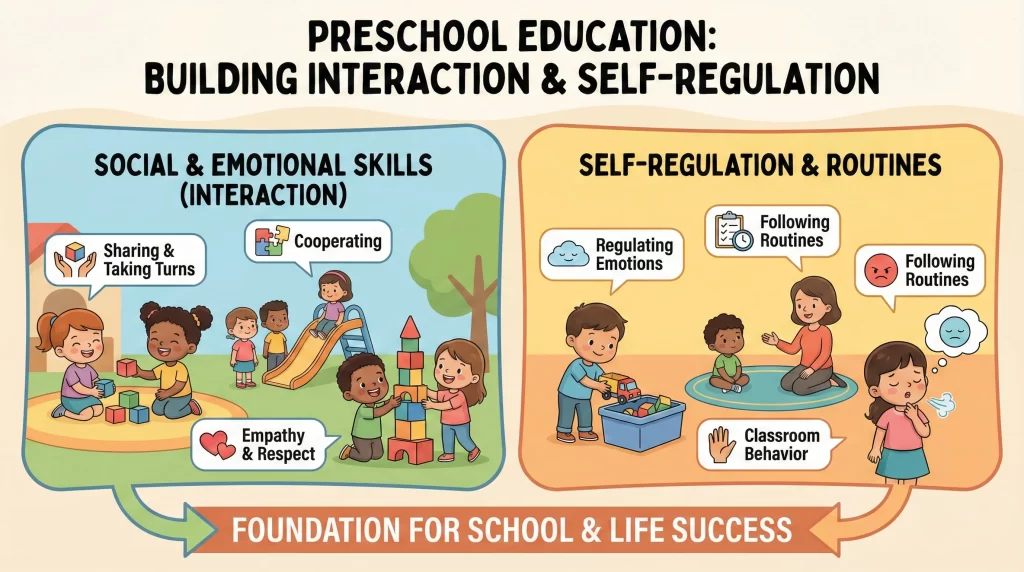
Preschool Education plays a major role in helping children learn social and emotional skills. In group settings, children practice sharing, taking turns, and cooperating during play. These interactions teach empathy and respect for others, crucial skills for school and life. Participation in preschool also helps children regulate emotions and follow classroom routines.
Teachers guide children to express feelings with words, not actions, reducing conflicts and improving resilience. Quality preschool environments encourage positive peer relationships, which contribute to a sense of belonging and confidence. Developing social and emotional skills early supports future academic and personal success.
The ability to interact with peers and manage emotions facilitates smoother transitions into more structured school settings. Preschool learning is one part of a child’s early growth. For a complete overview, explore our full Early Childhood Education Guide, which covers learning methods, activities, and long-term benefits.
Motor Skills and Physical Development
Preschool Education Supports Body and Motor Skill Growth
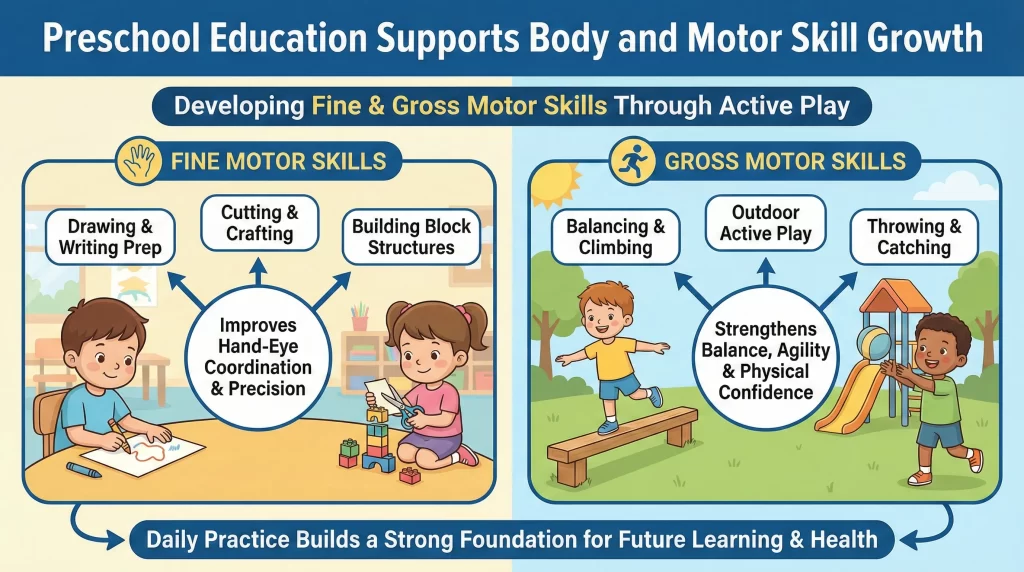
Physical development is a key part of Preschool Education. Activities that focus on movement and coordination enhance both fine and gross motor skills. Examples include drawing, cutting with safe tools, building block structures, and outdoor play that strengthens balance and agility. As children practice these skills daily, they improve hand-eye coordination and physical confidence.
Outdoor and indoor physical play also promotes healthy bodies and reduces restlessness. Teachers observe each child’s progress and offer new challenges that match developmental needs. Strong motor skills help children participate fully in classroom routines and everyday tasks. Early physical development directly supports active engagement in all areas of learning.
Creativity and Problem-Solving
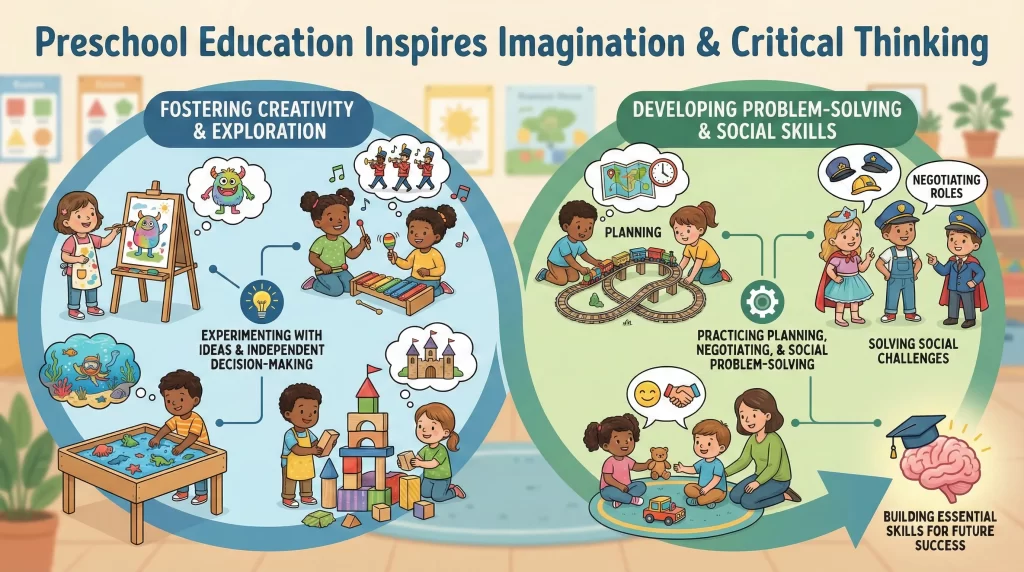
Preschool Education Inspires Imagination and Critical Thinking
Preschool Education nurtures creativity and problem-solving through play-based and exploratory activities. Young children are encouraged to explore art materials, music, sensory tables, and open-ended toys. These activities allow them to experiment with ideas and make decisions independently. When children engage in imaginative play, they practice planning, negotiating roles with peers, and solving social challenges.
Educators support curiosity by asking open-ended questions that prompt deeper thinking. For example, “What will happen if we mix these colors?” encourages children to reflect and predict outcomes. Creative experiences like these contribute to flexible thinking and rich cognitive development. The ability to think creatively and solve problems prepares children to face complex challenges later in school and life.
Early Numeracy and Pre-Math Skills
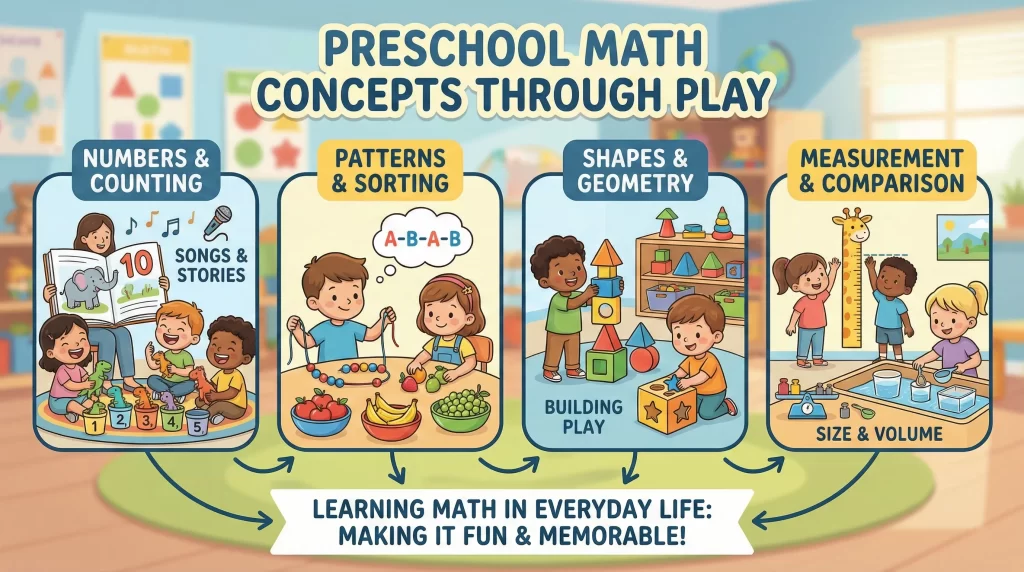
Preschool Education Introduces Math Concepts Through Play
Early math skills are a core component of quality Preschool Education. Children begin to understand numbers, patterns, shapes, and measurement through engaging activities. Counting games, sorting objects by size or color, and identifying shapes during building play help children see math in everyday life. Storybooks and songs with numbers make learning fun and memorable.
Repeated exposure to math thinking helps children recognize patterns, estimate quantities, and compare numbers confidently. Learning basic math skills at an early age supports later success in a formal math curriculum. Preschool teachers design playful math activities that are tailored to each child’s developmental level. This early practice strengthens analytical thinking and prepares children for school expectations.
Table: Key Skills Children Learn in Preschool Education
| Skill Category | What Children Learn | Why It Matters |
|---|---|---|
| Cognitive & Language | Vocabulary growth, early literacy concepts | Better reading and school readiness |
| Social & Emotional | Sharing, cooperation, emotion regulation | Strong relationships and classroom behavior |
| Motor & Physical | Fine and gross motor skills | Active participation in daily learning |
| Creativity & Problem-Solving | Imaginative play, decision-making | Flexible thinking and innovation |
| Numeracy & Pre-Math | Counting, patterns, shapes | Foundation for future math learning |
Supporting Research and Benefits
Global and Long-Term Advantages
Data show that Preschool Education offers benefits beyond immediate developmental milestones. Children who attend early childhood education are 25% more likely to graduate from high school and up to 4 times more likely to earn a bachelor’s degree than peers without such experience.
Research also links preschool attendance to reduced grade retention and lower need for special education later. Quality Preschool Education closes achievement gaps and supports equity for children from diverse backgrounds. Preschool truly lays the groundwork for future achievement and lifelong learning.
Bottom Line
Preschool Education equips young children with essential skills that shape learning and life success. Children gain strong language, social, motor, creative, and early academic skills in quality preschool settings. These early skills support school readiness, confidence, and long-term outcomes. Parents and educators should recognize that preschool is more than childcare; it’s foundational education. Guided play, supportive teachers, and structured activities unlock each child’s potential at the most important stage of brain development.
FAQs
What age is Preschool Education designed for?
Ages roughly 2 to 6 years before primary school starts.
Does Preschool Education Improve School Readiness?
Yes, it prepares children for structured learning and routines.
Are social skills part of preschool learning?
Yes, cooperation and empathy are key preschool outcomes.
Is play important in Preschool Education?
Play supports cognitive, social, and motor development.
Does preschool impact long-term academic success?
Research links attendance to higher graduation rates.
Disclaimer
This article is for informational purposes only and does not replace professional educational or developmental advice. Always consult qualified educators or child development specialists for personalized guidance.