

Table of Contents
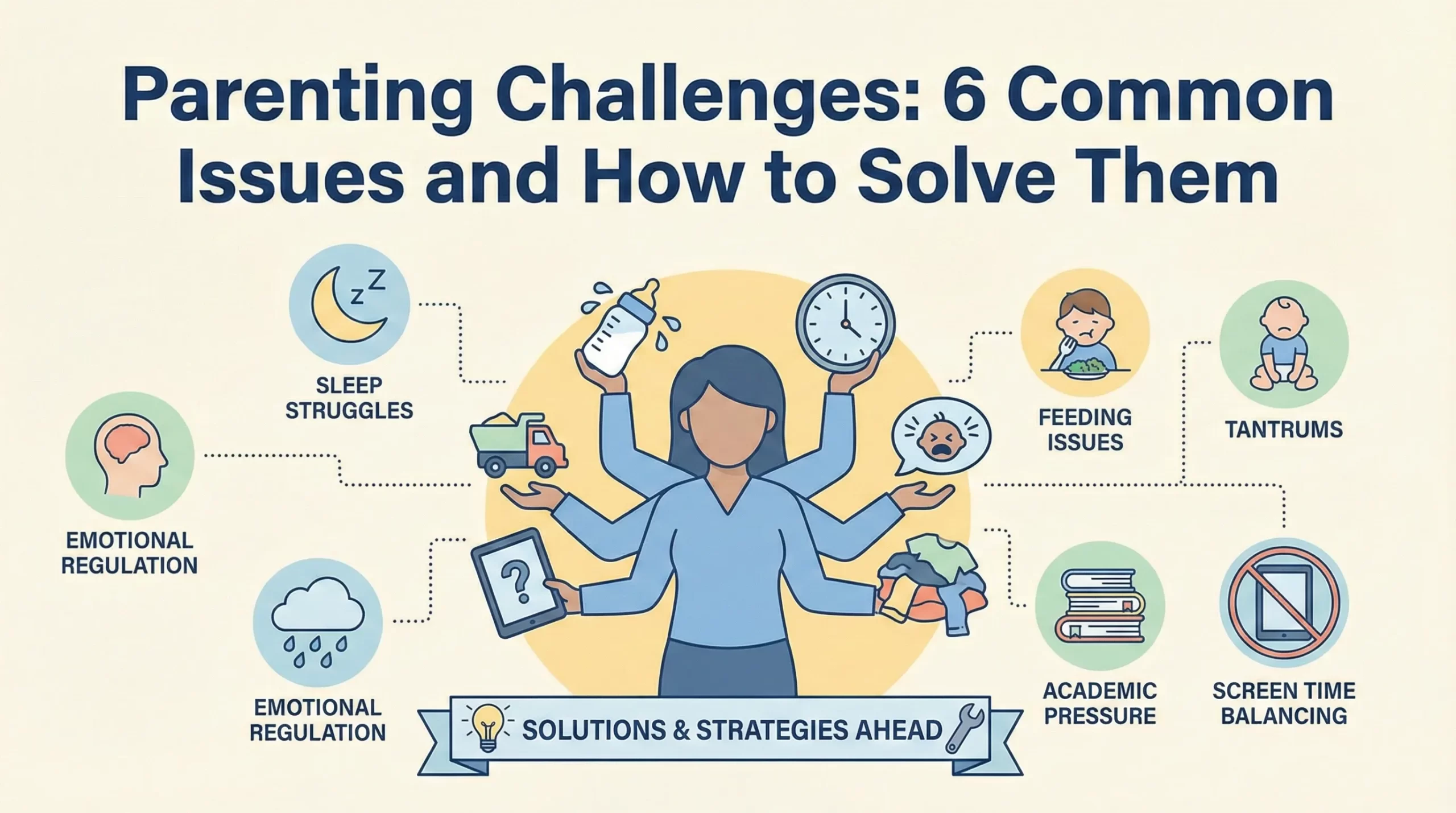
Parenting Challenges affect nearly every family, regardless of income, culture, or location. In 2026, parents face growing pressure from mental health concerns, digital exposure, and work-life imbalance. According to the American Psychological Association’s Stress in America survey, parents reported an average stress level of 5.0 out of 10 in the most recent nationwide assessment. That number remains higher than that of non-parents and signals a sustained challenge for families.
We see Parenting Challenges show up early and persist through adolescence. These issues often compound when parents lack reliable, practical guidance. The Centers for Disease Control and Prevention reports that 42% of US teens experienced persistent feelings of sadness or hopelessness in the latest youth risk behavior data.
This guide breaks down six common Parenting Challenges using current data, real-world context, and clear solutions. Each section explains why the challenge matters, what the data shows today, and how parents can respond effectively.
1. Managing Child Behavior and Discipline
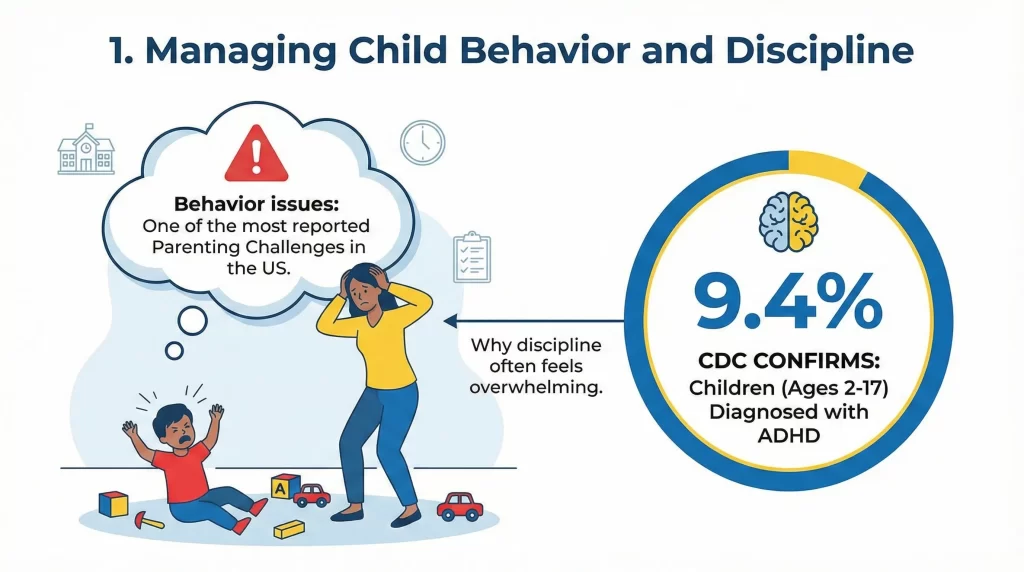
Behavior issues remain one of the most reported Parenting Challenges in the US. The CDC confirms that 9.4% of children aged 2 to 17 have been diagnosed with ADHD as of the latest update. That statistic highlights why discipline often feels overwhelming.
Setting Clear Boundaries Early
Consistent rules reduce confusion and power struggles. Research from the American Academy of Pediatrics shows children respond better to predictable consequences. Clear expectations improve cooperation and reduce emotional escalation.
Using Positive Discipline
Positive discipline focuses on teaching rather than punishing. Studies show that time-in strategies improve emotional regulation in children under 10. Parents who explain consequences see stronger long-term behavior change. Positive parenting is one of the most effective ways to raise emotionally strong children. For a complete overview, visit our full Parenting Tips Guide covering strategies for everyday parenting.
2. Balancing Work and Family Life
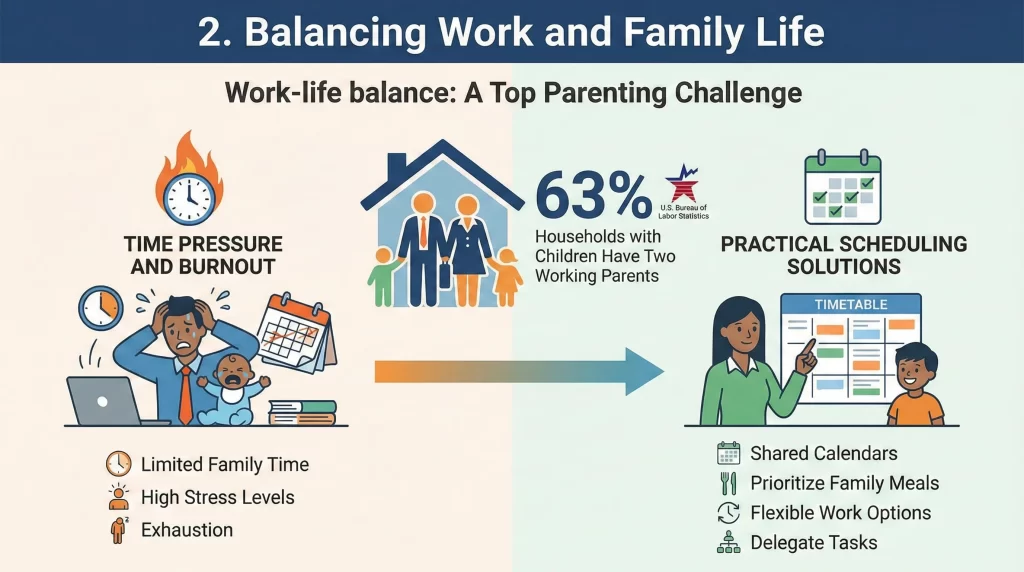
Work-life balance continues to rank high among Parenting Challenges. The US Bureau of Labor Statistics reports that 63% of households with children have two working parents. That structure limits family time.
Time Pressure and Burnout
Parents working full-time average 8.1 hours of work per day. Limited downtime increases parental burnout and emotional fatigue. Burnout directly affects patience and responsiveness at home.
Practical Scheduling Solutions
Time-blocking family routines improves consistency. Even 30 minutes of daily focused interaction strengthens parent-child bonds. Employers offering flexible schedules show reduced employee stress levels.
3. Supporting Children’s Mental Health
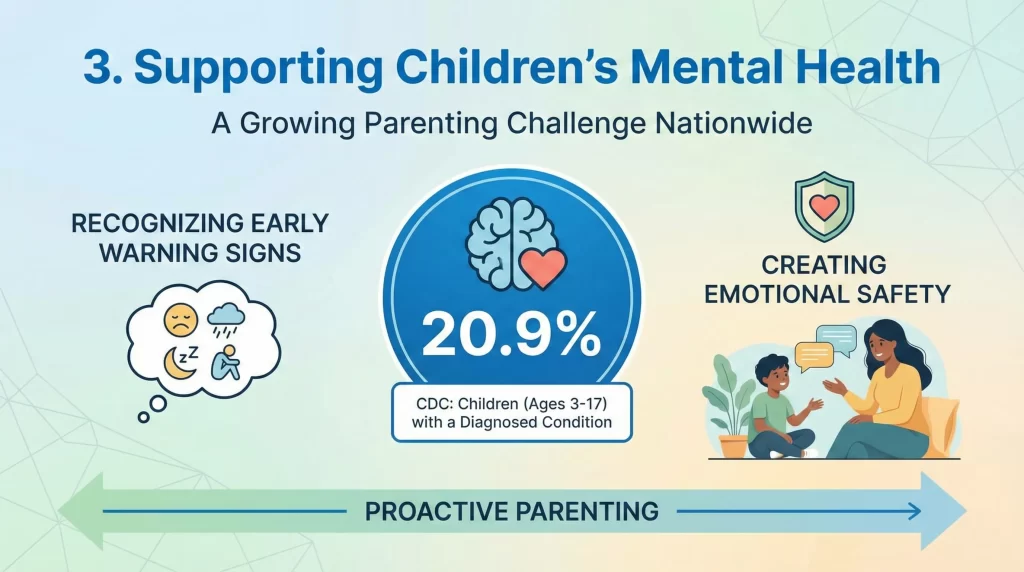
Children’s mental health is a growing Parenting Challenge nationwide. The CDC reports that 20.9% of children aged 3 to 17 have a diagnosed mental, emotional, or behavioral condition. That figure demands proactive parenting.
Recognizing Early Warning Signs
Mood changes lasting over two weeks require attention. Sleep disruption and withdrawal often signal emotional distress. Early response improves outcomes significantly.
Creating Emotional Safety
Open conversations reduce stigma and fear. Children who feel heard are more likely to share concerns. Professional support strengthens family coping strategies. Learn practical positive parenting techniques to build trust and emotional security.
4. Managing Screen Time and Technology
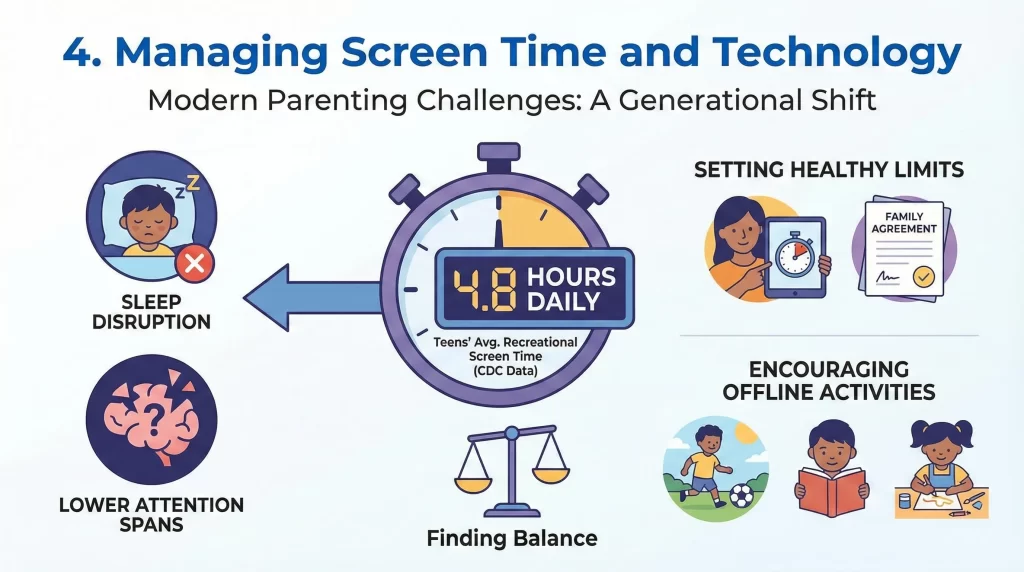
Technology use creates modern Parenting Challenges few generations faced. The CDC reports that teens average 4.8 hours of daily recreational screen time. Excessive use affects sleep and attention.
Setting Healthy Limits
The American Academy of Pediatrics recommends consistent screen rules. Screen-free bedrooms improve sleep quality by measurable margins. Structure prevents constant negotiation.
Encouraging Offline Activities
Physical activity reduces anxiety and improves focus. Children engaging in daily exercise show stronger emotional regulation. Balanced routines protect long-term development.
5. Teaching Responsibility and Independence
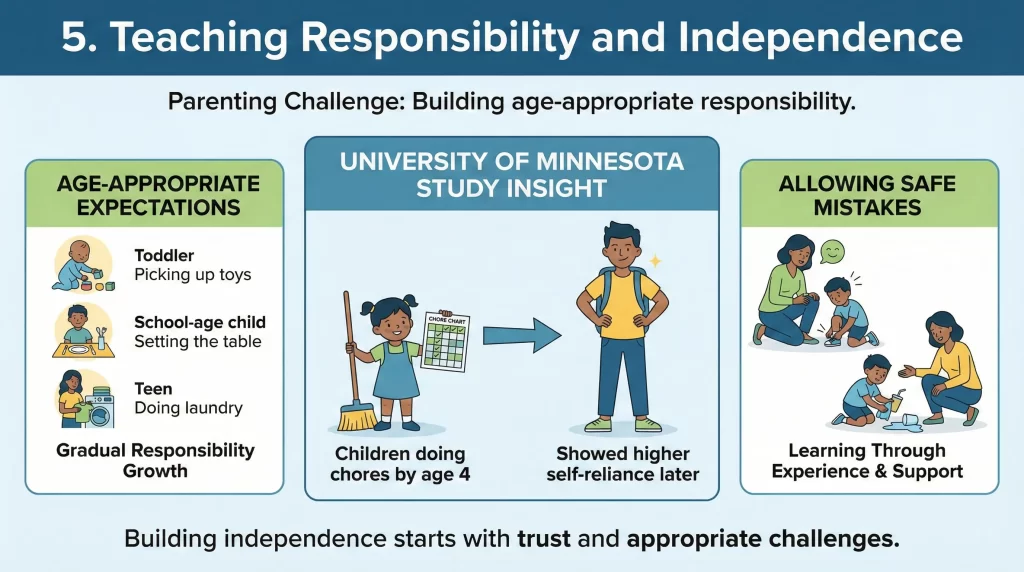
Many Parenting Challenges emerge when children lack age-appropriate responsibility. A University of Minnesota study found that children doing chores by age 4 showed higher self-reliance later.
Age-Appropriate Expectations
Simple tasks build confidence early. Responsibility grows through repetition and trust. Parents should adjust expectations as skills improve.
Allowing Safe Mistakes
Mistakes teach problem-solving skills. Overcorrection reduces independence and resilience. Guided autonomy builds long-term competence.
6. Navigating Parenting Stress and Self-Care
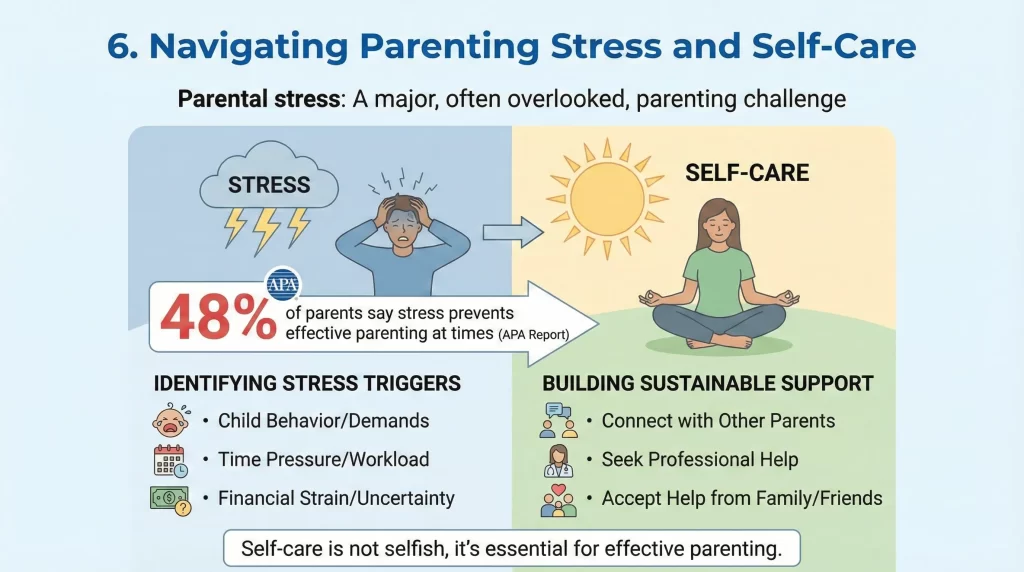
Parental stress remains one of the most overlooked Parenting Challenges. The APA reports 48% of parents say stress prevents effective parenting at times. That statistic highlights the need for self-care.
Identifying Stress Triggers
Financial pressure and time scarcity are stress sources. Awareness helps parents plan realistic coping strategies. Small adjustments reduce emotional overload.
Building Sustainable Support
Social support lowers stress markers measurably. Parents using support networks report better emotional regulation. Self-care improves parenting consistency.
Key Parenting Challenges and Solutions Overview
| Parenting Challenge | Key Cause | Practical Solution |
|---|---|---|
| Discipline Issues | Inconsistent rules | Clear boundaries and positive discipline |
| Work-Life Balance | Dual-income households | Time-blocked family routines |
| Mental Health | Rising youth anxiety | Early support and open dialogue |
| Screen Time | Excessive device use | Structured limits and offline play |
| Responsibility | Overprotection | Age-appropriate tasks |
| Parental Stress | Burnout | Support systems and self-care |
Bottom Line
Parenting Challenges are unavoidable, but they are manageable with informed action. Data from trusted health and psychology organizations shows where families struggle most today. These challenges often overlap, creating stress cycles that affect both parents and children.
The most effective solutions share common traits. They rely on consistency, communication, and realistic expectations. Parents do not need perfection to succeed. They need awareness and practical tools. Small changes in routines, boundaries, and self-care habits create measurable improvements over time.
FAQs
What are the most common Parenting Challenges today?
Discipline, mental health, screen time, work-life balance, and parental stress lead nationwide.
How does screen time affect children?
Excessive screen use disrupts sleep, focus, and emotional regulation.
Why is parental stress important to manage?
High stress reduces patience and consistency in parenting decisions.
At what age should children learn responsibility?
Research supports introducing simple chores by age four.
When should parents seek professional help?
When emotional or behavioral issues persist beyond two weeks.
Disclaimer
This article is for informational purposes only and does not replace professional medical, psychological, or parenting advice.