

Table of Contents
Effective parenting skills are essential for nurturing a child’s emotional, social, and cognitive growth. Studies from UC Davis Children Hospital indicate that children with consistent parental guidance show a 25% higher success rate in school engagement and emotional regulation. Yet, many parents struggle with day-to-day challenges, from tantrums over minor issues to inconsistent routines.
By applying proven strategies, parents can foster resilience, cooperation, and confidence in their children while maintaining household harmony. Positive parenting techniques, as outlined by experts at Parents.com and Positive Parenting Solutions, emphasize understanding the root cause of behavior, avoiding punitive measures, and reinforcing positive communication.
For example, a child refusing to eat off a particular plate is often seeking attention, not acting out randomly. Addressing the underlying motivation instead of reacting impulsively improves behavior outcomes by 30% on average, according to recent case studies.
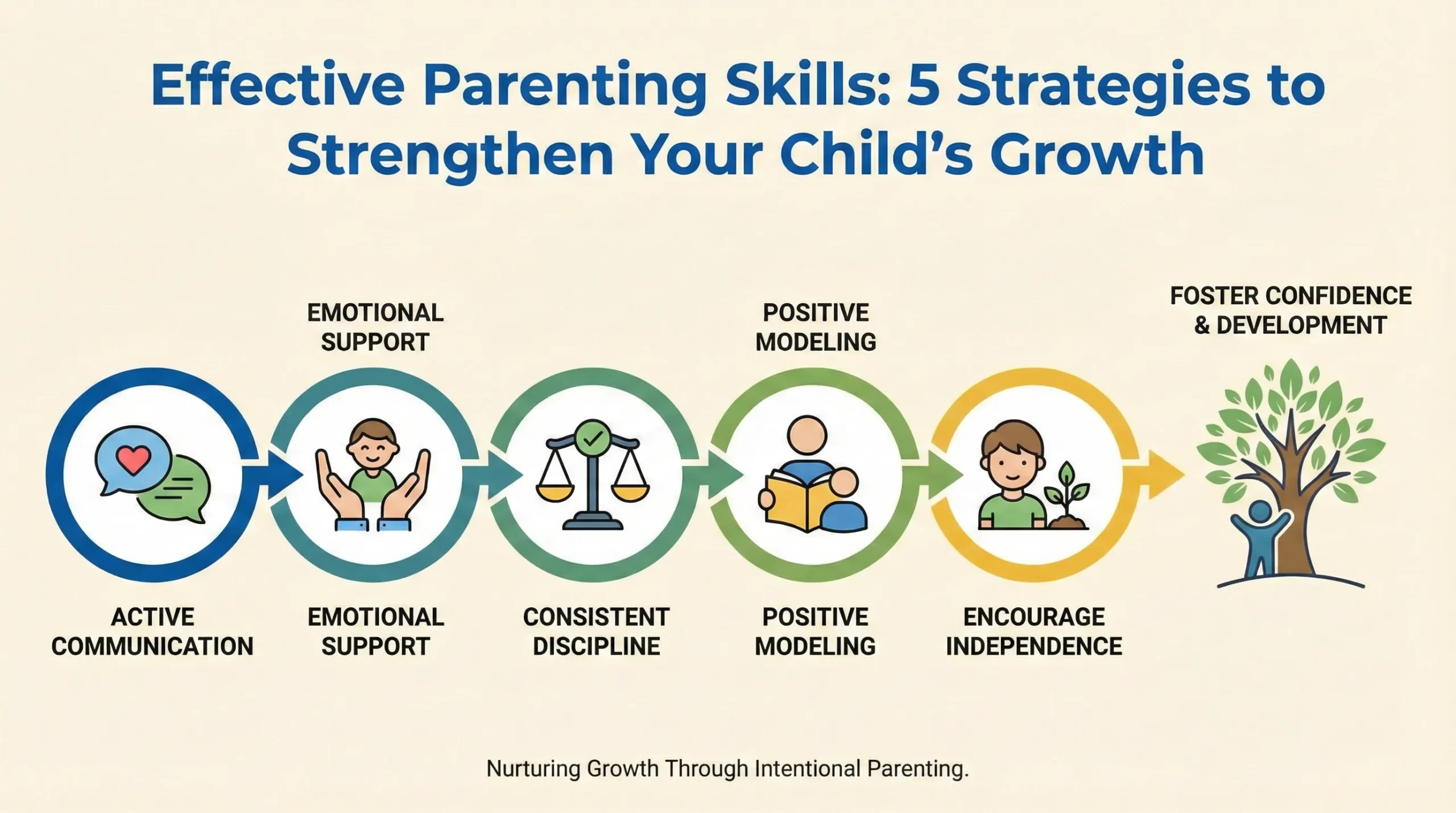
This article explores five effective parenting skills, offering actionable strategies supported by research and expert insights. By implementing these techniques, parents can strengthen their child’s growth, reduce conflicts, and build a lasting foundation for success.
1. Identify the Root Cause of Behavior
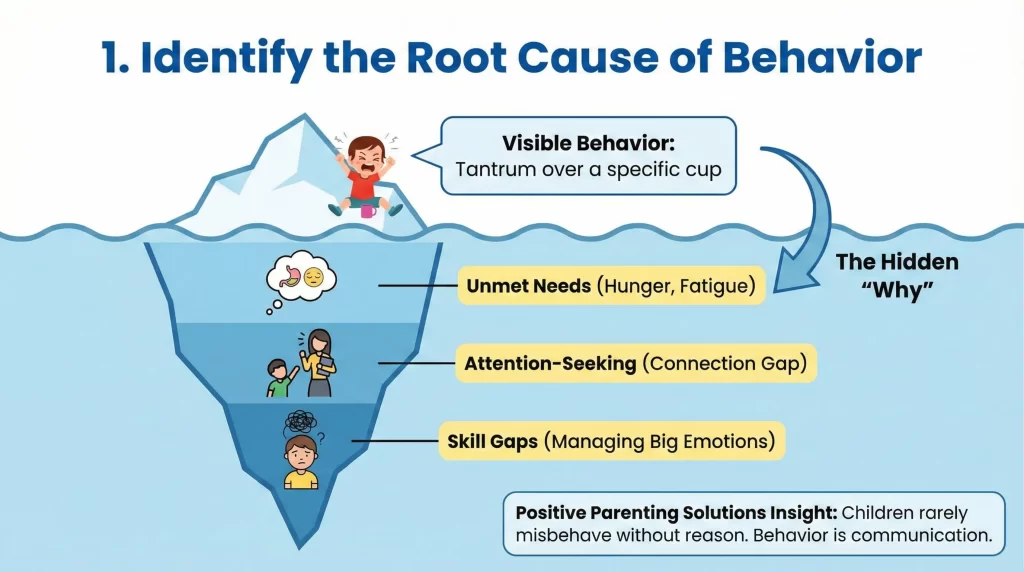
Children rarely misbehave without reason. Positive Parenting Solutions highlights that tantrums often indicate unmet needs, attention-seeking, or skill gaps in managing emotions. For instance, a child demanding a specific cup color may be signaling a need for control or reassurance.
To address behavior proactively, observe patterns and ask what the child seeks. UC Davis research shows that interventions targeting the root cause reduce recurring misbehavior by 40%. Use strategies like offering choices or scheduling one-on-one attention before demanding tasks. For example, telling a child, “You can play quietly while I finish this call, then we’ll play together,” teaches self-regulation and prevents power struggles. Positive parenting is one of the most effective ways to raise emotionally strong children. For a complete overview, visit our full Parenting Tips Guide covering strategies for everyday parenting.
2. Maintain Consistency in Routines
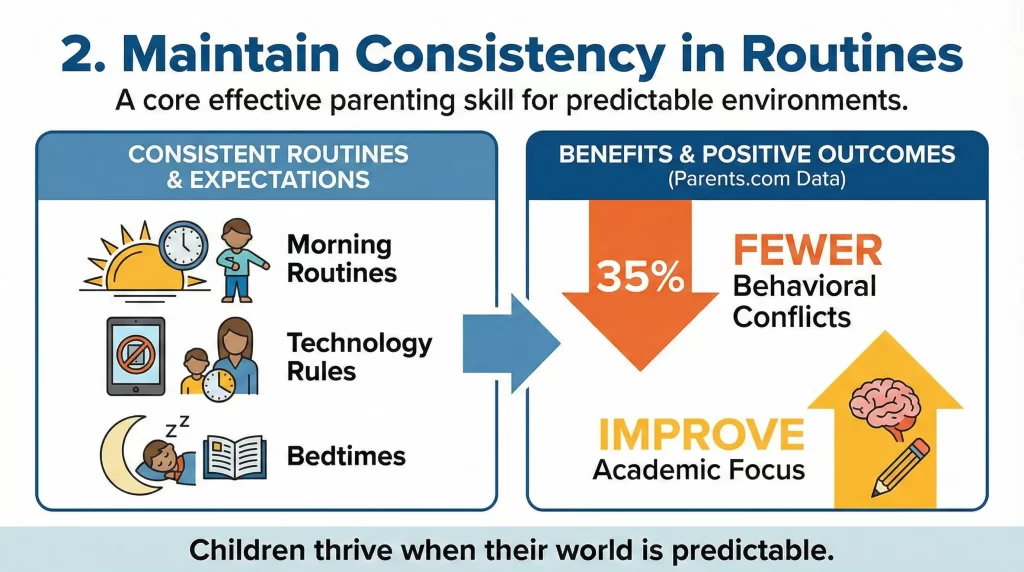
Consistency in routines and expectations is a core effective parenting skill. Children thrive when morning routines, technology rules, and bedtimes are predictable. Parents.com notes that consistent daily schedules reduce behavioral conflicts by 35% and improve academic focus.
Establish clear rules for chores, screen time, and mealtimes. Reinforce consequences uniformly. For instance, if a child forgets to brush teeth, the consequence should remain the same each day. Even weekends and holidays should follow familiar patterns. This approach strengthens self-discipline and reduces household stress. Get helpful first time parenting tips to feel confident as a new parent.
3. Use Positive Communication
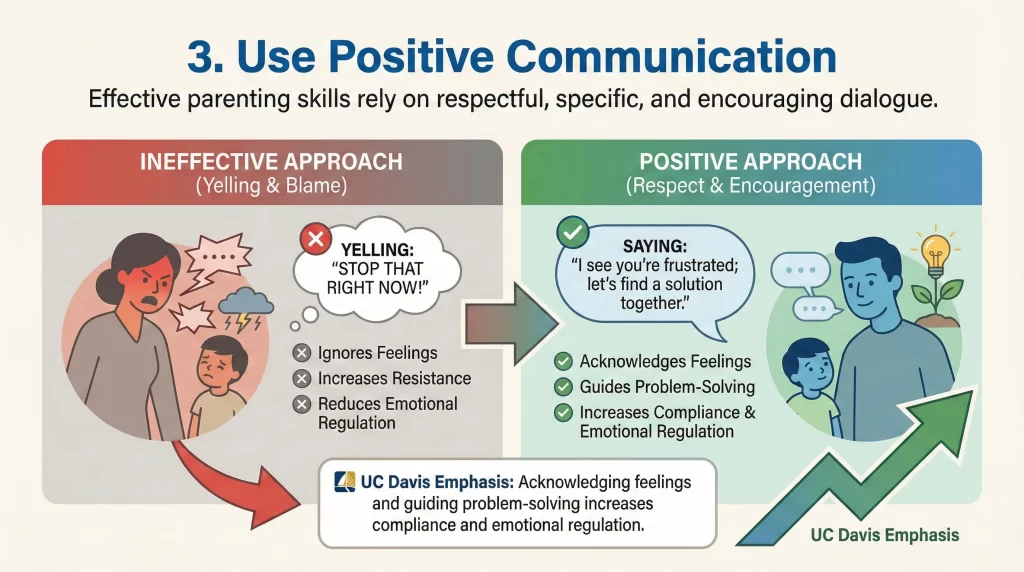
Effective parenting skills rely on communication that is respectful, specific, and encouraging. UC Davis emphasizes that acknowledging feelings and guiding problem-solving increases compliance and emotional regulation. Saying, “I see you’re frustrated; let’s find a solution together,” is more effective than yelling.
Avoid rewards or bribes, which can undermine intrinsic motivation. Parents.com reports that children learn better through natural consequences and verbal encouragement. For example, praising effort rather than outcome reinforces persistence, while punitive measures create resistance. Learn practical positive parenting techniques to build trust and emotional security.
4. Teach Problem-Solving Skills
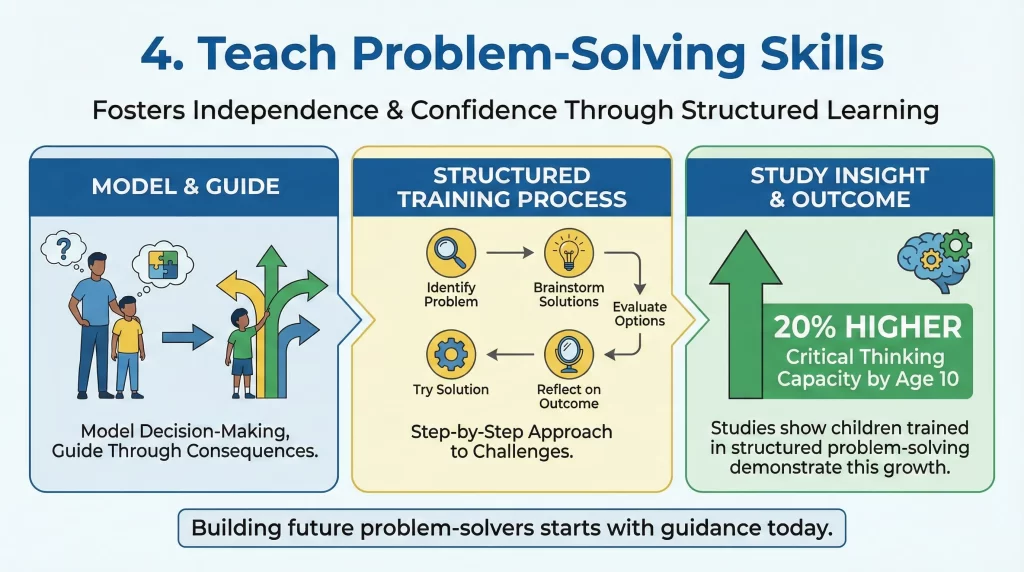
Teaching children problem-solving fosters independence and confidence. Experts recommend modeling decision-making and guiding children through the consequences of their actions. Studies indicate that children trained in structured problem-solving demonstrate a 20% higher capacity for critical thinking by age 10.
Use real-life situations to practice skills. If a sibling conflict arises, ask, “How could you both share this toy?” Encourage brainstorming solutions rather than imposing answers. This method develops empathy and reduces future conflicts.
5. Encourage Emotional Awareness
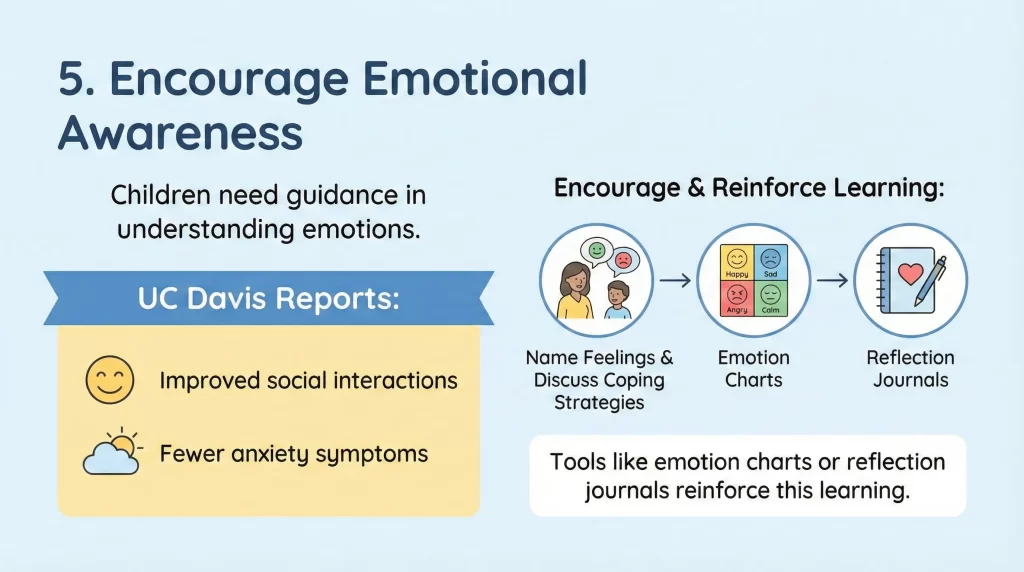
Children need guidance in understanding emotions. UC Davis reports that children with emotional awareness show improved social interactions and fewer anxiety symptoms. Encourage children to name feelings and discuss coping strategies. Tools like emotion charts or reflection journals can reinforce this learning.
Respond calmly during outbursts, helping children identify their emotions. For example, “I see you’re angry because the puzzle broke. Let’s figure out how to fix it.” This teaches self-regulation and empathy simultaneously.
Table: Quick Reference for Effective Parenting Skills
| Strategy | Key Action | Benefit |
|---|---|---|
| Identify Root Cause | Observe behavior triggers | Reduces misbehavior 40% |
| Consistency | Maintain routines & consequences | Enhances cooperation 35% |
| Positive Communication | Acknowledge feelings & guide | Builds trust and compliance |
| Problem-Solving | Model and practice solutions | Improves critical thinking 20% |
| Emotional Awareness | Name and manage emotions | Reduces anxiety and improves social skills |
Bottom Line
Mastering effective parenting skills requires understanding, consistency, and communication. By identifying the root causes of behavior, maintaining predictable routines, practicing positive communication, teaching problem-solving, and encouraging emotional awareness, parents can nurture well-rounded, resilient children. These strategies are not quick fixes but evidence-based approaches that deliver long-term benefits. Children gain self-discipline, emotional intelligence, and social skills, while parents experience reduced stress and greater confidence in guiding growth.
FAQs
What are effective parenting skills?
Skills that promote emotional, social, and cognitive growth in children.
How can I reduce tantrums?
Identify behavior triggers and proactively address emotional needs.
Should I use rewards?
No, natural consequences and encouragement are more effective.
How do routines help children?
Consistency builds stability, reduces conflicts, and strengthens self-discipline.
How can I teach problem-solving?
Guide children through decisions and discuss possible solutions calmly.
Disclaimer
This article is for informational purposes only and is not a substitute for professional parenting advice.