

Table of Contents
Understanding your child’s behavior is essential for fostering emotional growth and positive development. A Child Behavior Guide helps parents, teachers, and caregivers interpret children’s actions accurately and respond effectively. Children may display tantrums, defiance, or withdrawal, which are often misinterpreted as misbehavior. In reality, these behaviors can signal underlying needs or developmental challenges.
According to HeadStart.gov, nearly 30% of children aged 3–8 show some form of behavioral difficulty requiring guidance or intervention. Research from the National Association for the Education of Young Children emphasizes that early recognition and consistent strategies prevent long-term issues. By identifying patterns, using structured routines, and applying evidence-based interventions, caregivers can encourage constructive behaviors and reduce stress.
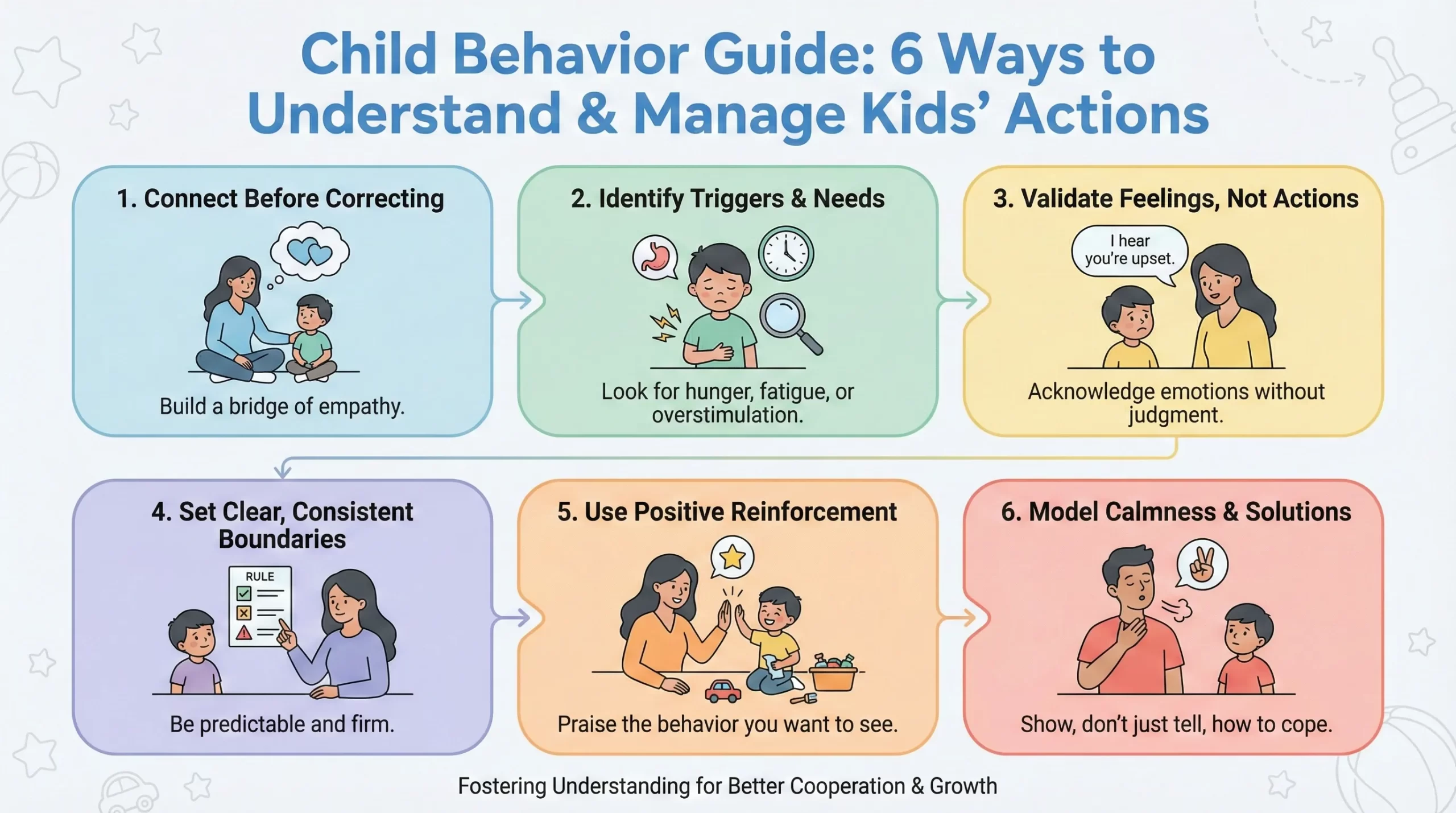
This Child Behavior Guide will explore six actionable strategies for managing children’s actions. Each approach incorporates data-driven techniques and practical tips, ensuring a balanced, nurturing environment. By the end, you’ll be equipped to interpret behavior, implement positive strategies, and foster confidence and resilience in your child.
1. Observe and Identify Patterns
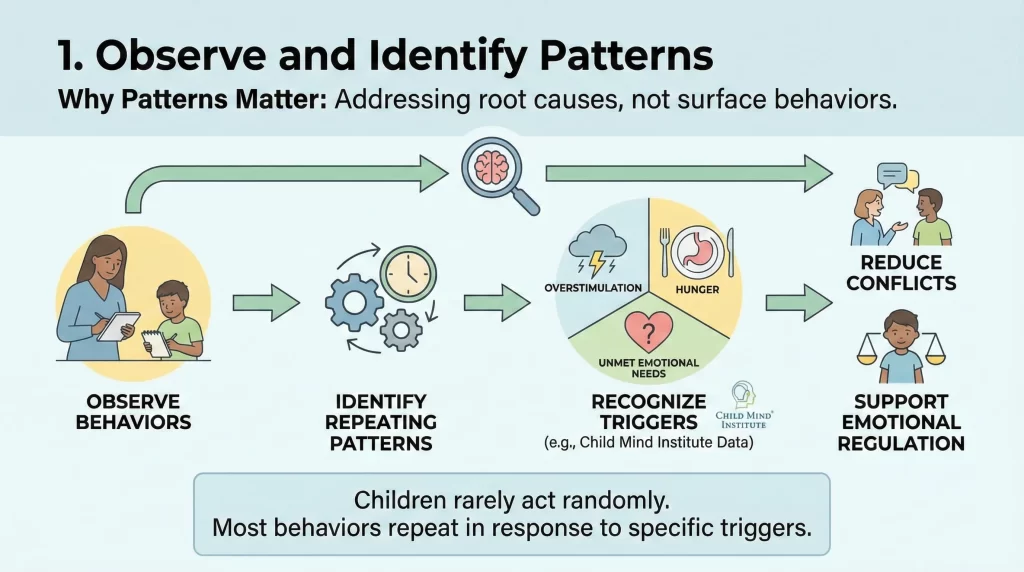
Why Patterns Matter
Children rarely act randomly. Most behaviors repeat in response to specific triggers. Observing patterns allows caregivers to address root causes instead of surface behaviors. For instance, the Child Mind Institute notes that aggressive behaviors in children aged 4–7 often occur during overstimulation, hunger, or unmet emotional needs. Recognizing these triggers can reduce conflicts and support better emotional regulation.
How to Track Behaviors
Create a simple behavior chart. Record the time, location, preceding event, and child’s reaction. Over two weeks, patterns often emerge. For example, tantrums may spike around 4 p.m., coinciding with fatigue. Want help with early challenges? Read our complete guide on Toddler Behavior Problems: 5 Common Issues and Solutions to understand what’s normal and what needs attention.
| Behavior Type | Trigger | Frequency | Recommended Action |
|---|---|---|---|
| Tantrums | Hunger/fatigue | 3–5x/day | Offer snack, quiet time |
| Defiance | Transitions | 2–4x/day | Provide warnings, structured cues |
| Aggression | Overstimulation | 1–2x/day | Calm environment, social stories |
| Withdrawal | Anxiety or sensory input | 1–3x/day | Gentle engagement, validate feelings |
2. Set Clear Expectations
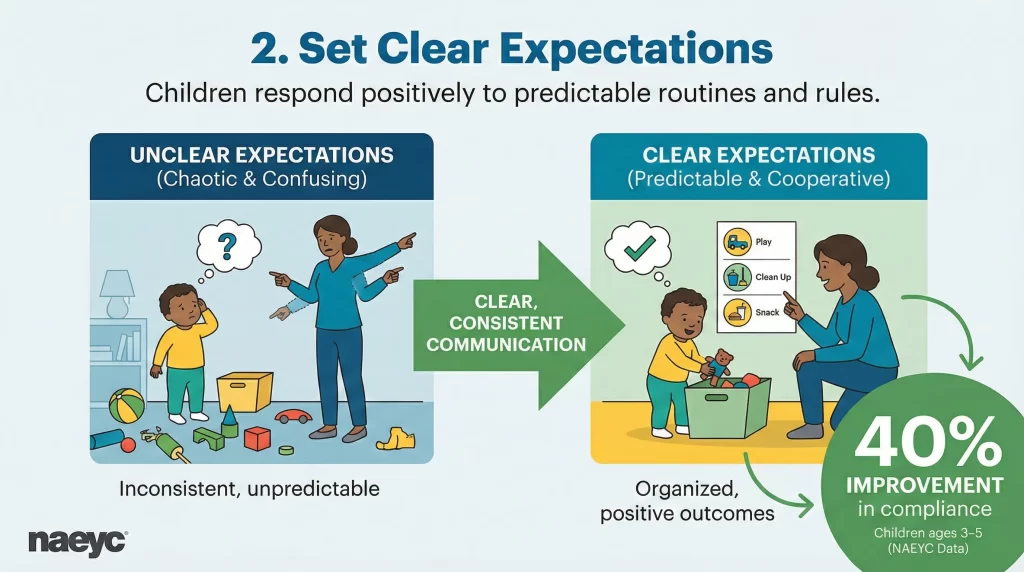
Children respond positively to predictable routines and rules. According to NAEYC, children ages 3–5 show a 40% improvement in compliance when clear, consistent expectations are communicated.
Implementing Rules
Use simple, age-appropriate language. For example, “We walk inside” is clearer than “Behave properly.” Visual reminders, like charts or illustrated cues, enhance understanding for younger children.
Reinforce Consistently
Consistency is key. Praise desired behaviors immediately and calmly redirect unwanted behaviors. Over time, children internalize expectations, reducing frustration for both parties. Clear expectations also strengthen emotional security and teach problem-solving skills. Struggling with discipline? Explore Positive Discipline Strategies: 7 Ways to Guide Your Child Effectively for calm and effective parenting methods.
3. Use Positive Reinforcement
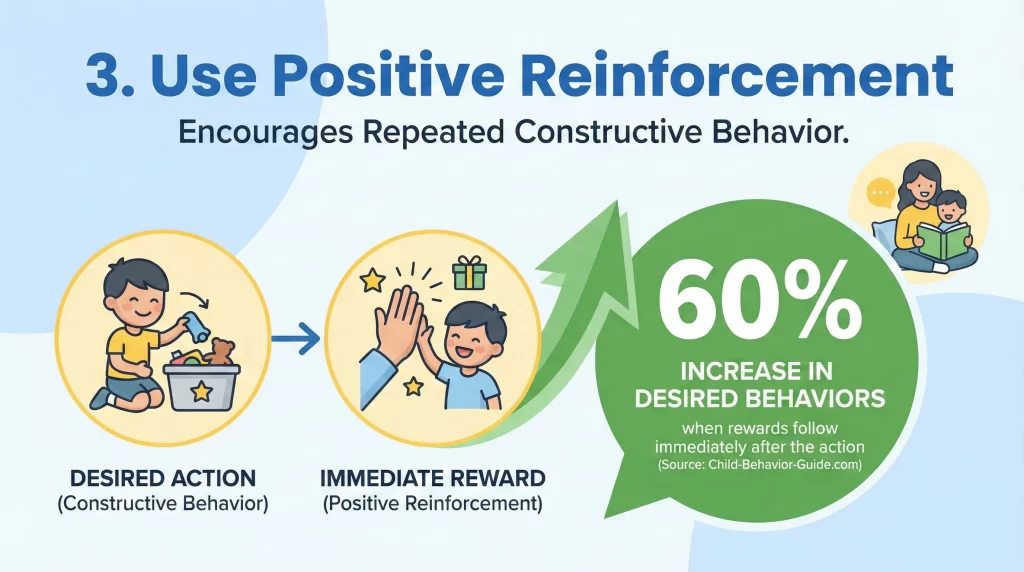
Positive reinforcement encourages repeated constructive behavior. Data from Child-Behavior-Guide.com suggests children show a 60% increase in desired behaviors when rewards follow immediately after the action.
Practical Techniques
- Behavior Reward Charts: Track daily achievements, such as completing chores or following instructions.
- Token Systems: Give tokens for positive behavior, redeemable for a small privilege.
- Verbal Praise: Specific feedback like “I like how you shared your toy” reinforces understanding.
Positive reinforcement fosters intrinsic motivation, reduces negative incidents, and promotes self-confidence. Avoid over-relying on material rewards; mix verbal praise and tangible recognition for balanced growth. Facing daily meltdowns? Learn practical steps in How to Handle Child Tantrums: 5 Practical Tips Without Yelling.
4. Teach Emotional Regulation
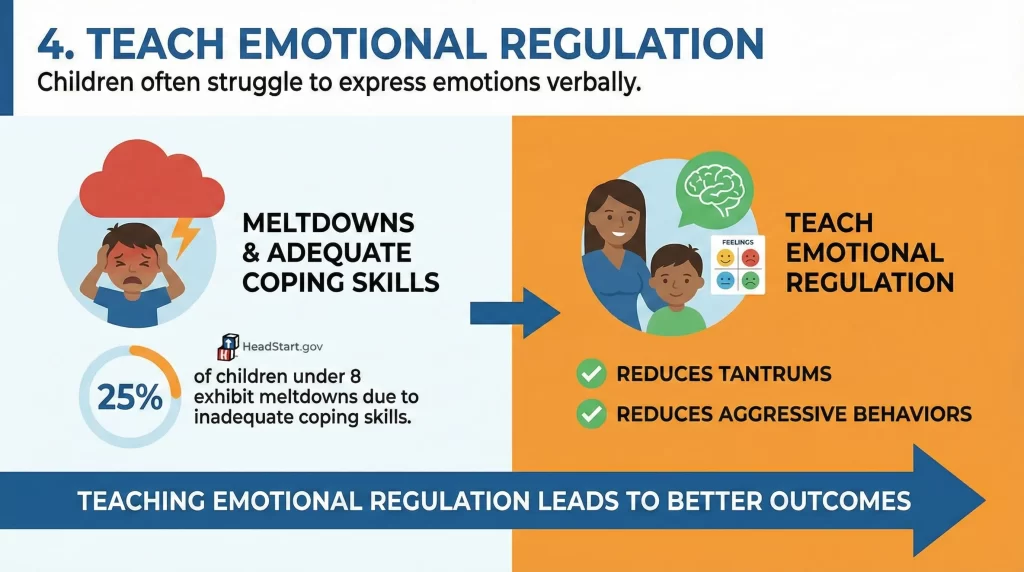
Children often struggle to express emotions verbally. HeadStart.gov reports that 25% of children under eight exhibit meltdowns due to inadequate coping skills. Teaching emotional regulation reduces tantrums and aggressive behaviors.
Strategies to Try
- Label Emotions: Encourage children to name feelings, such as “I feel angry.”
- Calming Techniques: Deep breathing, quiet corners, or sensory tools help children regain control.
- Modeling Behavior: Demonstrate calm responses to frustration to set examples.
By equipping children with coping strategies, caregivers minimize outbursts and nurture resilience. Emotional literacy also improves social interactions and academic focus. Teaching emotional control? Our guide on Emotional Regulation in Children: 6 Steps to Teach Self-Control breaks it down clearly.
5. Apply Consistent Consequences
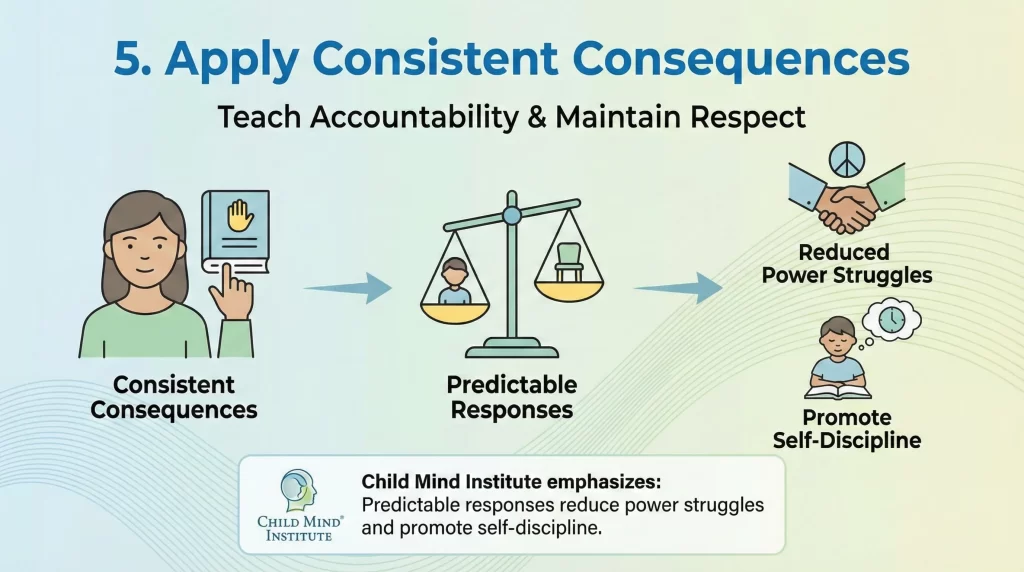
Appropriate consequences teach accountability while maintaining respect. The Child Mind Institute emphasizes that predictable responses reduce power struggles and promote self-discipline.
Effective Consequences
- Time-Outs: Short, structured breaks (1–2 minutes per age year) for reflection.
- Natural Consequences: Allow minor outcomes that result logically from behavior, like cleaning a spilled drink.
- Restorative Practices: Encourage children to repair relationships or correct mistakes, fostering empathy.
Consistency in consequences signals safety and fairness, improving behavior without creating fear or resentment.
6. Seek Professional Support When Needed
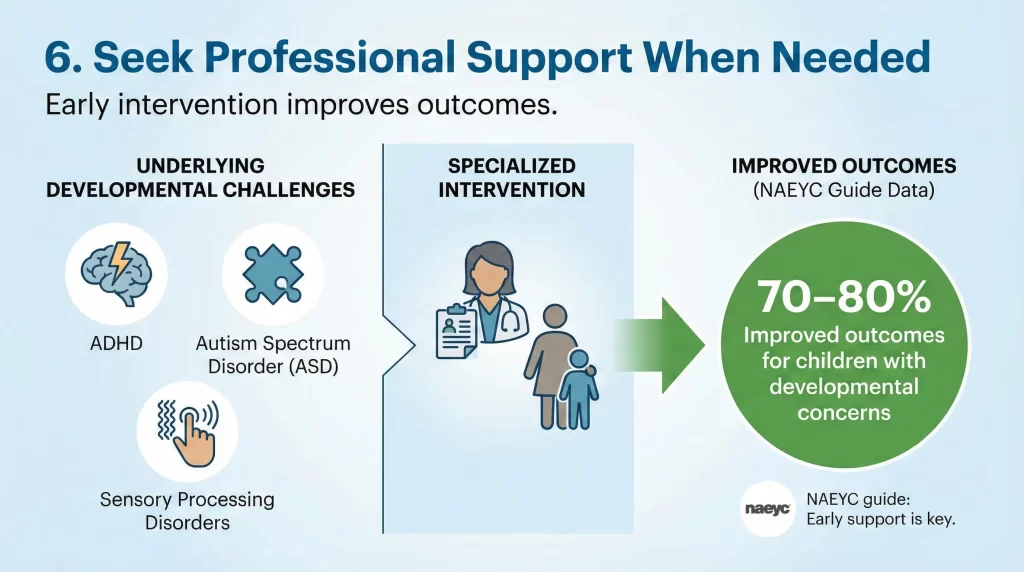
Sometimes, behavior signals underlying developmental challenges. ADHD, Autism Spectrum Disorder, and Sensory Processing Disorders may require specialized intervention. According to the NAEYC guide, early support improves outcomes for 70–80% of children with developmental concerns.
When to Consult
- Persistent aggression or self-harm
- Severe anxiety or withdrawal
- Regression in social or academic skills
Professional consultation can include behavior analysts, pediatric psychologists, or occupational therapists. Early guidance ensures interventions are tailored, effective, and supportive of the child’s long-term growth. Looking for an everyday structure? Discover simple systems in Child Behavior Management: 7 Tips for Parents to Improve Daily Habits.
Bottom Line
A Child Behavior Guide equips caregivers to interpret, manage, and positively influence children’s actions. Observation, consistent expectations, positive reinforcement, emotional regulation, and structured consequences form a holistic approach. Implementing these six strategies fosters trust, emotional intelligence, and self-discipline in children.
Tools like behavior charts and social stories improve clarity and engagement, while professional support ensures developmental challenges are addressed early. By acting proactively and compassionately, caregivers create environments where children thrive. Remember, each child’s behavior reflects needs, not defiance. Applying evidence-based strategies strengthens relationships, reduces stress, and supports long-term success. Don’t miss our recent post about Child Behavior.
FAQs
What is the best first step in managing child behavior?
Observe patterns and identify triggers before responding.
How long should behavior charts be used effectively?
Consistency over two to four weeks shows measurable progress.
Are positive reinforcements more effective than punishments?
Yes, they increase desired behaviors by up to 60% in children.
When should I seek professional help for behavior issues?
Persistent aggression, anxiety, or developmental regression warrants consultation.
Can routines improve children’s emotional regulation?
Absolutely, predictable routines reduce tantrums and enhance emotional stability.
Disclaimer
This guide is for informational purposes and is not a substitute for professional medical or psychological advice.
 Emory Stephens