

Table of Contents
Child Health & Nutrition shapes how children grow, learn, and resist disease from infancy through adolescence. Strong nutrition patterns directly influence brain development, immune strength, and long-term metabolic health.
According to the World Health Organization, nutrition-related factors contribute to nearly 45% of deaths in children under five worldwide as of 2024. That statistic alone shows why informed choices matter early.
In the United States, the CDC reports that 19.7% of children aged 2–19 were affected by obesity between 2017 and 2022, increasing risks of diabetes and heart disease. At the same time, micronutrient deficiencies still affect learning outcomes and physical stamina.
We focus here on practical, science-backed steps parents can apply daily. Each tip connects nutrition with physical growth and cognitive performance. The goal is to build resilient bodies and sharp minds using food, routines, and informed decisions.
Tip 1: Prioritize Balanced Macronutrients Daily
Why Balance Matters in Child Health & Nutrition
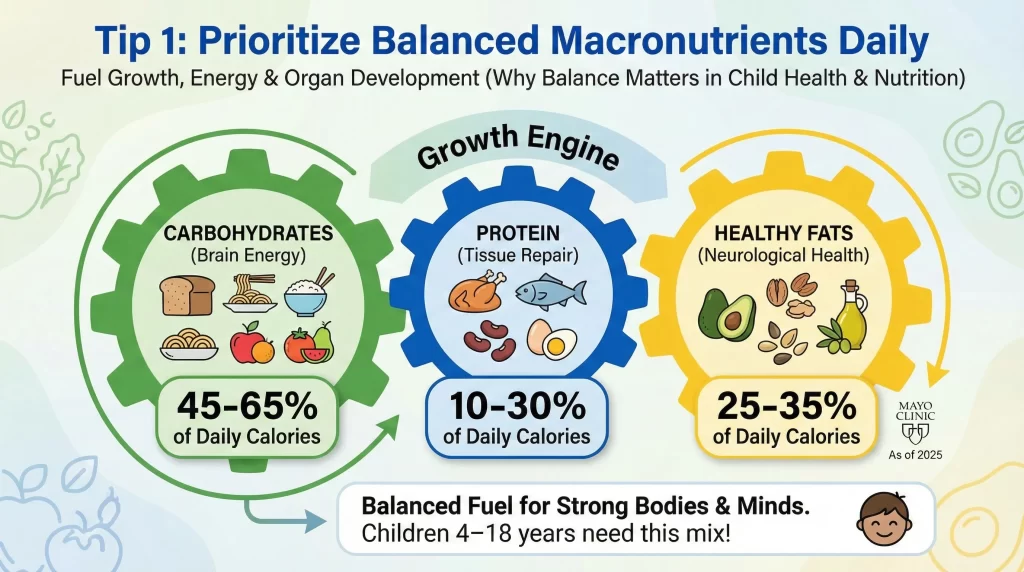
Balanced macronutrients fuel growth, energy, and organ development. Children require carbohydrates for brain energy, proteins for tissue repair, and fats for neurological health. The Mayo Clinic states that children aged 4–18 should get 45–65% of calories from carbohydrates, 10–30% from protein, and 25–35% from healthy fats as of 2025.
Skipping balance leads to energy crashes and nutrient gaps. Excess refined carbohydrates raise obesity risk, while low protein intake slows muscle development. Child Health & Nutrition improves when meals include whole grains, lean proteins, and unsaturated fats consistently. This balance supports attention, stamina, and mood stability throughout the day. If you’re feeding a growing toddler, explore our complete guide to healthy foods for early childhood development.
Tip 2: Focus on Micronutrients That Drive Development
Vitamins and Minerals Children Often Miss
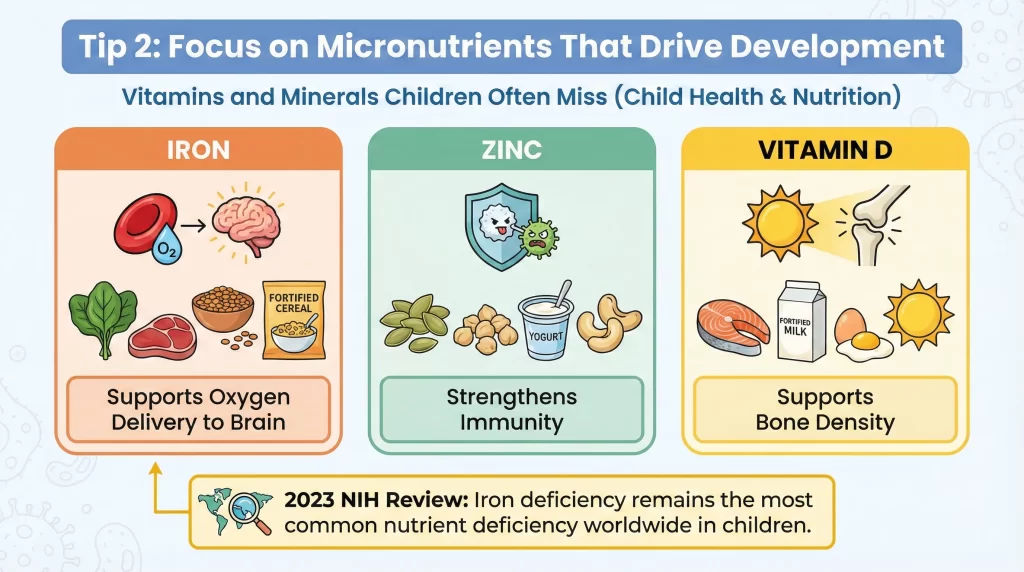
Micronutrients play a critical role in Child Health & Nutrition. Iron supports oxygen delivery to the brain. Zinc strengthens immunity. Vitamin D supports bone density. According to a 2023 NIH review, iron deficiency remains the most common nutrient deficiency worldwide in children.
In the US, the National Health and Nutrition Examination Survey shows 14% of children aged 1–5 have low iron stores. Vitamin D insufficiency affects 35% of children aged 6–11 as of 2024. These gaps impair learning, growth, and immune response.
Foods such as eggs, fortified milk, beans, leafy greens, and fish reduce the risk of deficiency. Supplements should only follow pediatric guidance. Nutrient-dense foods remain the safest strategy. Stay updated on essential vaccines by reviewing our detailed breakdown of the recommended immunization schedule for children.
Tip 3: Build Strong Eating Routines at Home
Structure Shapes Healthy Choices
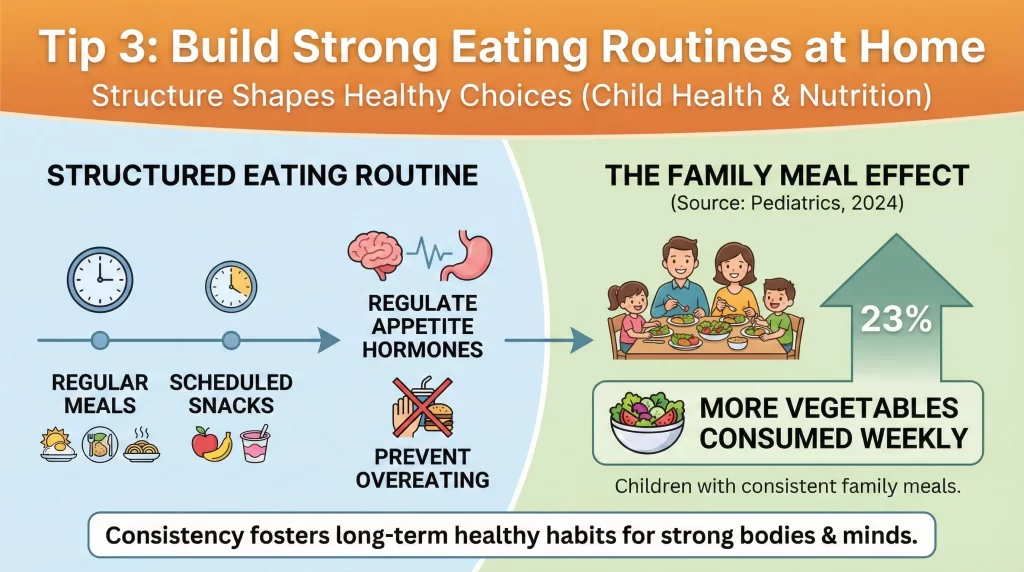
Routine is a silent driver of Child Health & Nutrition. Regular meal and snack times regulate appetite hormones and prevent overeating. Research published in Pediatrics in 2024 found that children with consistent family meals consumed 23% more vegetables weekly.
Unstructured eating increases reliance on ultra-processed foods. The USDA reports that 67% of children’s calories now come from processed sources. That trend correlates with higher sodium and sugar intake.
Structured routines also improve emotional regulation. Children feel secure when food timing is predictable. That security reduces stress-related eating behaviors.
Tip 4: Limit Added Sugars Without Eliminating Enjoyment
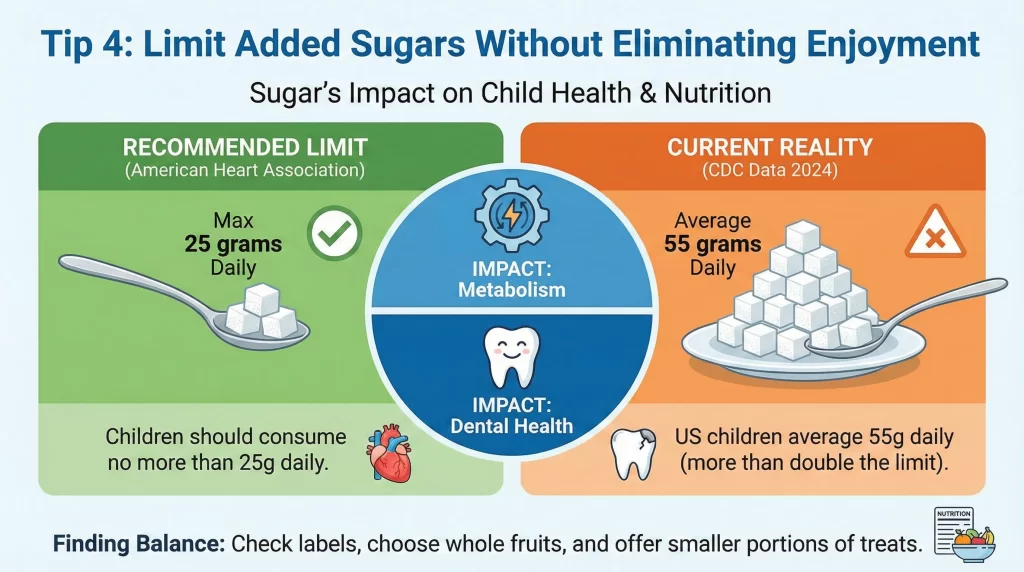
Sugar’s Impact on Child Health & Nutrition
Added sugar affects metabolism and dental health. The American Heart Association recommends children consume no more than 25 grams of added sugar daily. CDC data from 2024 shows that US children average 55 grams daily, more than double the limit.
High sugar intake increases obesity risk and insulin resistance. It also displaces nutrient-dense foods. Eliminating sugar is unrealistic and unnecessary. Moderation teaches balance and sustainability.
Replacing sugary drinks with water or milk cuts daily sugar intake by up to 180 calories. Reading labels helps families make informed decisions without restriction anxiety. Struggling with bedtime battles? Learn how to build a consistent and healthy sleep routine for kids.
Tip 5: Support Brain Growth With Nutrition for Cognition
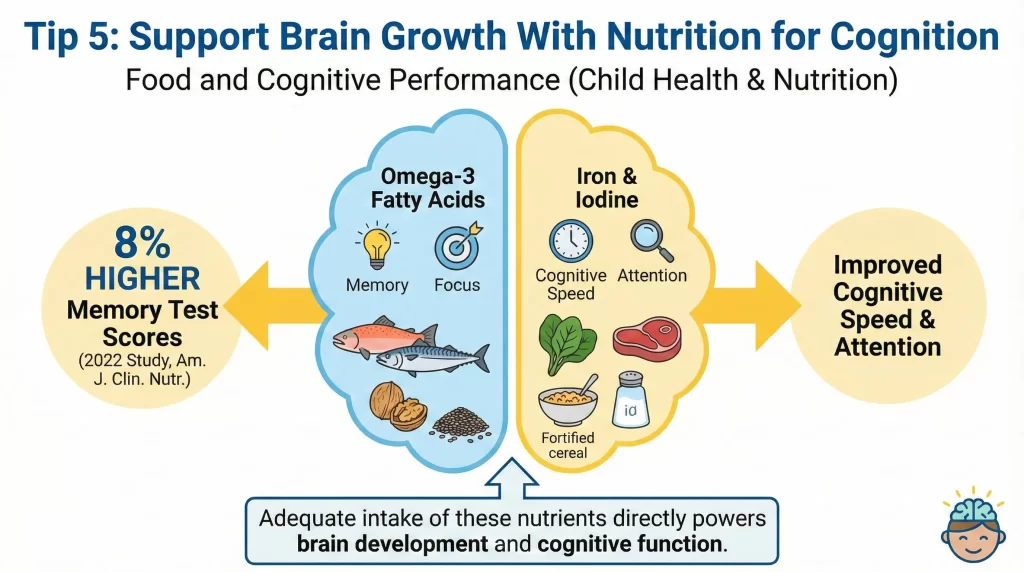
Food and Cognitive Performance
Child Health & Nutrition directly influences brain development. Omega-3 fatty acids support memory and focus. Iron and iodine influence cognitive speed and attention. A 2022 study in the American Journal of Clinical Nutrition found children with adequate omega-3 intake scored 8% higher on memory tests.
Breakfast quality matters. The Harvard School of Public Health reports that children who eat protein-rich breakfasts perform better academically than those who skip meals. Skipping breakfast increases fatigue and irritability.
Foods like oats, yogurt, nuts, eggs, and fish support sustained mental energy. Nutrition does not replace education, but it amplifies learning capacity. Protect your child every day with our practical home and outdoor safety strategies.
Tip 6: Align Nutrition With Physical Activity
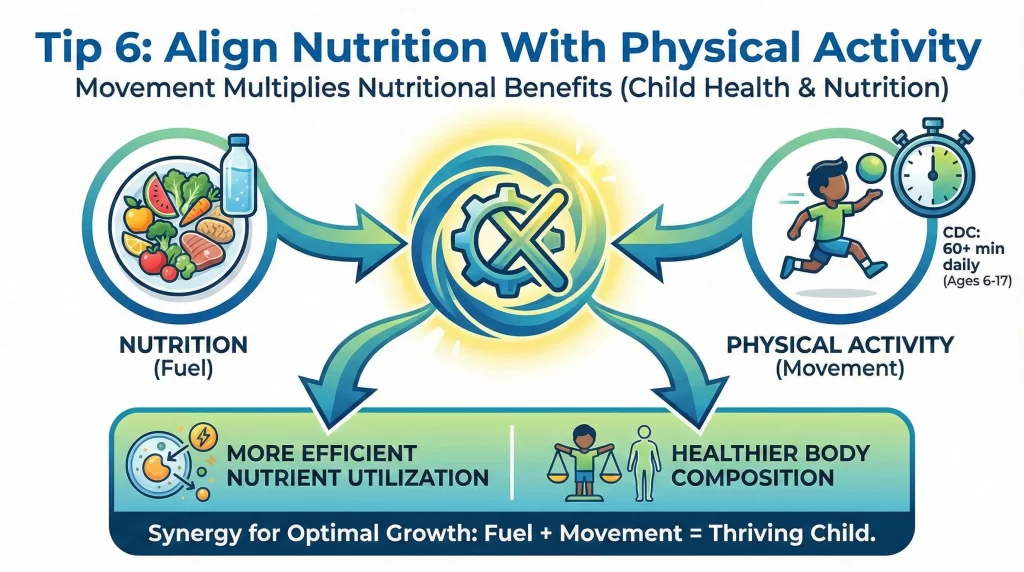
Movement Multiplies Nutritional Benefits
Physical activity and Child Health & Nutrition work together. The CDC recommends at least 60 minutes of daily physical activity for children aged 6–17. Active children utilize nutrients more efficiently and maintain healthier body composition.
Nutrition supports activity recovery. Protein repairs muscles. Carbohydrates restore energy. Hydration prevents fatigue. A 2024 Sports Medicine review found that active children with balanced diets had 32% lower injury rates.
Sedentary behavior weakens the benefits of good nutrition. Screen time over two hours daily correlates with higher BMI and poorer diet quality. Encouraging movement reinforces healthy eating patterns naturally. Know the warning signs early by reading our guide on recognizing and managing common childhood illnesses.
Practical Nutrition Checklist for Families
- Serve three balanced meals and two planned snacks daily.
- Include at least one fruit and one vegetable per meal.
- Choose whole grains over refined options.
- Offer water before sweetened drinks.
- Model healthy eating behaviors consistently.
Key Nutrients and Their Roles
| Nutrient | Primary Role | Key Food Sources |
|---|---|---|
| Protein | Growth and repair | Eggs, beans, poultry |
| Iron | Oxygen delivery | Spinach, lentils, beef |
| Calcium | Bone strength | Milk, yogurt, tofu |
| Vitamin D | Bone absorption | Fortified milk, fish |
| Omega-3 | Brain function | Salmon, walnuts |
Bottom Line
Child Health & Nutrition is built through daily choices, not occasional perfection. Balanced macronutrients provide energy and structure. Micronutrients protect growth and immunity. Routines shape habits that last beyond childhood. Limiting added sugars preserves metabolic health without restricting stress. Brain-focused nutrition enhances learning outcomes. Physical activity amplifies every nutritional benefit.
Families do not need complicated plans. They need consistent, informed actions grounded in evidence. Start with one change this week, then build momentum. Over time, these choices strengthen bodies, sharpen minds, and reduce preventable health risks.
FAQs
What is Child Health & Nutrition?
It focuses on food patterns that support children’s physical growth, immunity, and brain development.
How much protein do children need daily?
Children aged 4–8 need about 19 grams daily, while those aged 9–13 need 34 grams.
Is sugar completely bad for children?
No. Moderation matters. Excess added sugar increases health risks.
Do children need supplements?
Only if advised by a pediatrician after dietary assessment.
Does breakfast really matter for kids?
Yes. Quality breakfasts improve focus, memory, and energy levels.
Disclaimer
This article is for educational purposes only and does not replace professional medical or pediatric advice. Always consult a qualified healthcare provider for individual child health needs.