

Table of Contents
Positive Discipline is one of the most researched parenting approaches in 2026. Studies from the Centers for Disease Control and Prevention show that 1 in 7 U.S. children ages 3–17 has a diagnosed behavioral or mental health condition. The American Academy of Pediatrics continues to advise against physical punishment due to long-term emotional risks. Parents now seek tools that correct behavior without harming the connection.
We know discipline shapes brain development, emotional control, and future relationships. Research confirms that consistent, calm guidance strengthens executive function skills before age 8. UNICEF reports that children who experience supportive discipline show better social skills and fewer aggressive behaviors by adolescence. Positive Discipline focuses on teaching, not punishing. It builds responsibility while protecting trust.
This guide explains seven proven Positive Discipline strategies backed by current data and child development science.
Why Positive Discipline Works
Brain Development and Emotional Regulation
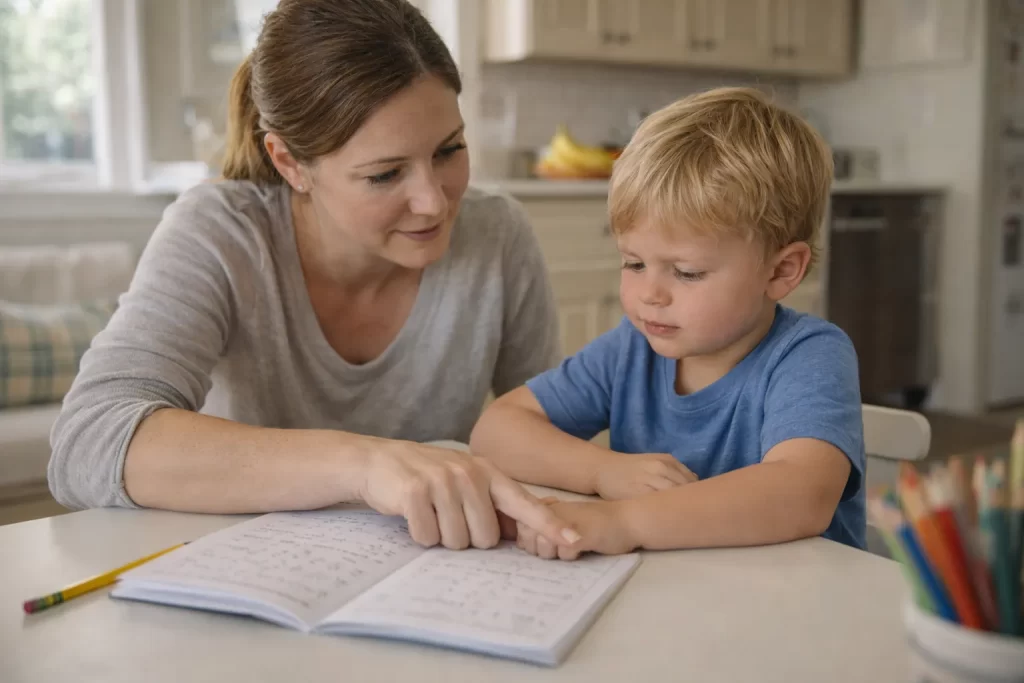
Positive Discipline works because it supports how children’s brains develop. The prefrontal cortex, which controls impulse and reasoning, matures into the mid-20s. Harvard University’s Center on the Developing Child confirms that early experiences shape stress response systems permanently. Harsh punishment activates fear circuits, not learning pathways.
When we use calm correction, we help children regulate emotions. According to UNICEF’s parenting guidance updated in 2025, children respond better to predictable routines and respectful communication. This approach lowers cortisol levels and increases cooperation. Children learn self-control instead of compliance driven by fear.
1. Set Clear and Consistent Expectations
Predictability Builds Security
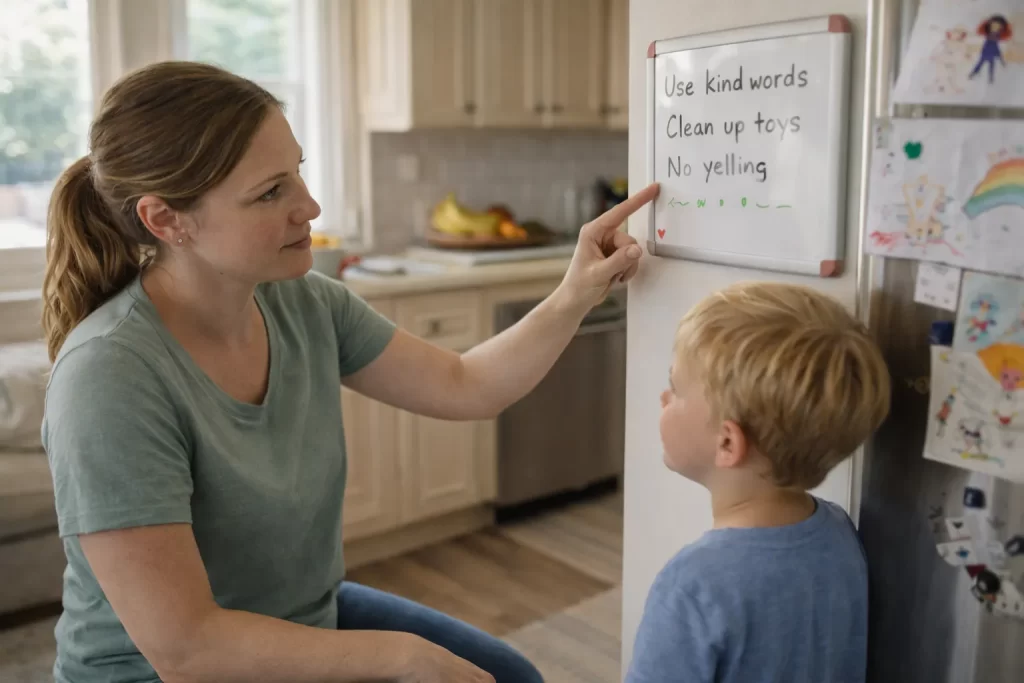
Children behave better when rules are clear. A 2024 American Psychological Association survey found that 72% of parents reported fewer daily conflicts after creating simple household rules. Consistency reduces power struggles because children know what happens next.
We recommend writing three to five family rules. Keep language short and positive. For example: “Use kind words” or “Toys stay in the playroom.” Repeat expectations calmly and follow through every time. Consistency teaches accountability without shouting. For a full roadmap, explore our main Child Behavior Guide: 6 Ways to Understand & Manage Kids’ Actions.
2. Use Natural and Logical Consequences
Teaching Cause and Effect
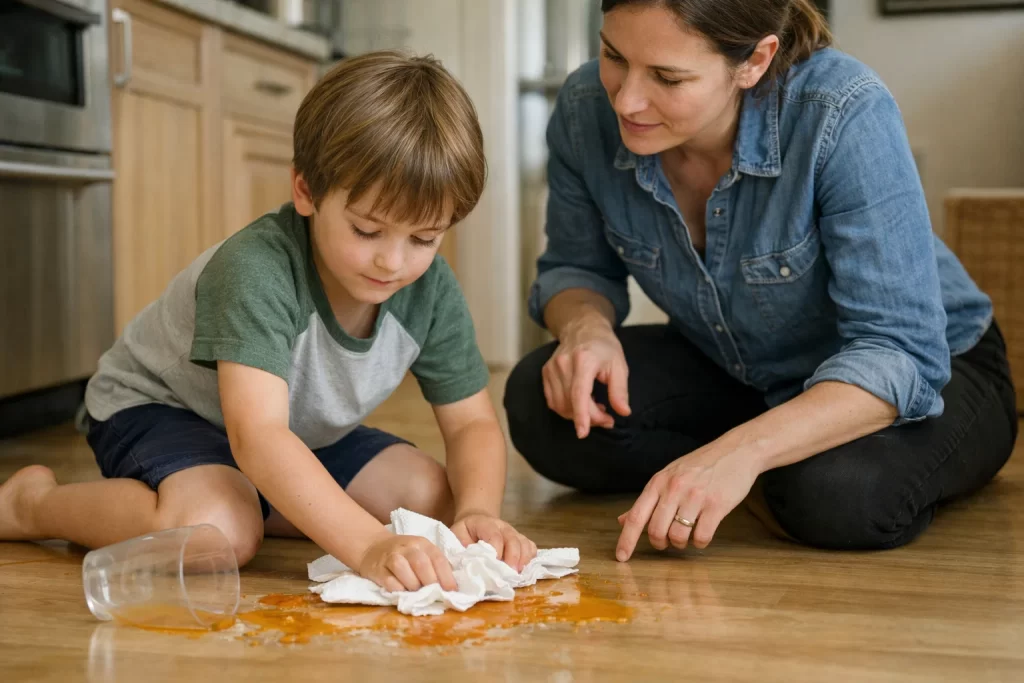
Positive Discipline avoids unrelated punishments. Instead, it uses natural and logical consequences. If a child spills juice, they help clean it. If homework is forgotten, they explain it to the teacher. Consequences must connect directly to behavior.
The CDC reports that children learn responsibility faster when consequences are immediate and related. Logical consequences work best when delivered calmly. We avoid sarcasm or lectures. The goal is learning, not shame.
Key Rules for Consequences:
- Stay calm and neutral.
- Keep consequences immediate.
- Ensure they relate directly to behavior.
- Avoid humiliation or threats.
3. Focus on Connection Before Correction
Relationship Drives Cooperation
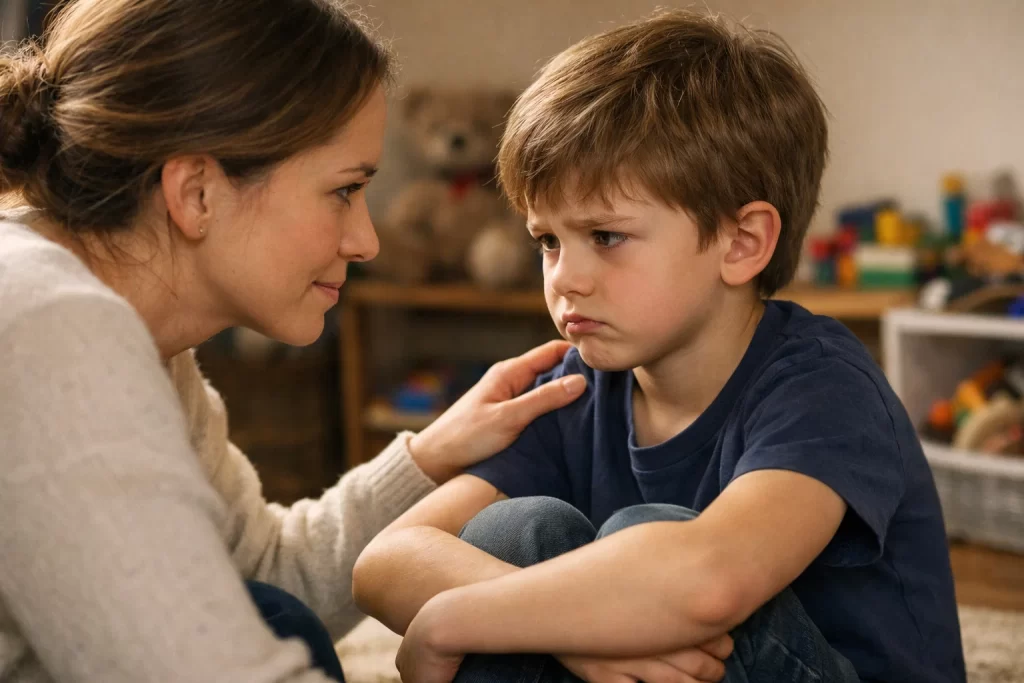
Connection fuels Positive Discipline success. Research published in 2025 by the American Academy of Pediatrics shows that children comply 40% more often when parents use empathy first. Emotional safety increases listening.
Before correcting behavior, we acknowledge feelings. For example, “I see you’re upset.” Then we guide the solution. This reduces defensive reactions. According to UNICEF’s parenting guidance, emotional validation improves long-term self-regulation. If you’re parenting toddlers, start with Toddler Behavior Problems: 5 Common Issues and Solutions.
4. Teach Emotional Skills Explicitly
Emotional Coaching Reduces Aggression
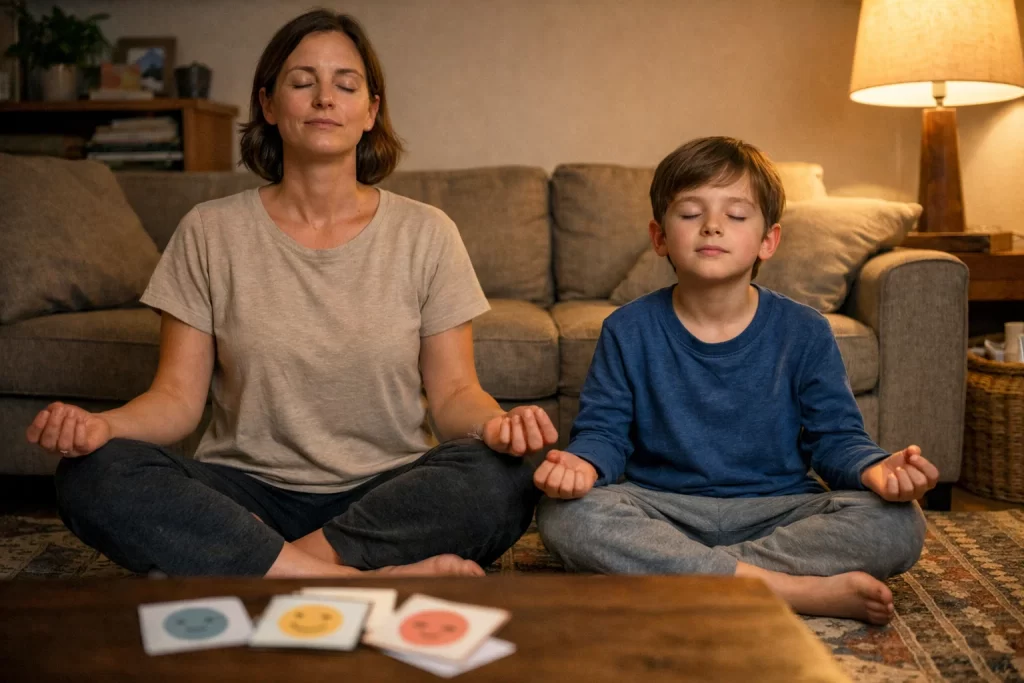
Positive Discipline includes teaching emotional vocabulary. Data from CASEL in 2024 shows that social-emotional learning programs reduce behavioral incidents by 13% in elementary schools. Emotional skills lower impulsive behavior.
We label emotions during calm moments. Use phrases like “You look frustrated.” Practice breathing exercises together. Model healthy coping strategies daily. Children mirror adult behavior consistently. When we teach emotional skills early, we prevent repeated misbehavior.
5. Offer Choices Within Limits

Autonomy Encourages Cooperation
Children resist when they feel powerless. Offering limited choices supports independence. A 2025 parenting study by Zero to Three found that toddlers cooperate more when given two clear options.
For example, “Red shirt or blue shirt?” Both options meet expectations. This keeps control with the parent while honoring autonomy. Positive Discipline respects developmental needs for independence. Structured choices reduce defiance and support confidence. Emotional growth matters too. Read Emotional Regulation in Children: 6 Steps to Teach Self-Control.
6. Reinforce Positive Behavior Intentionally
Encouragement Over Praise
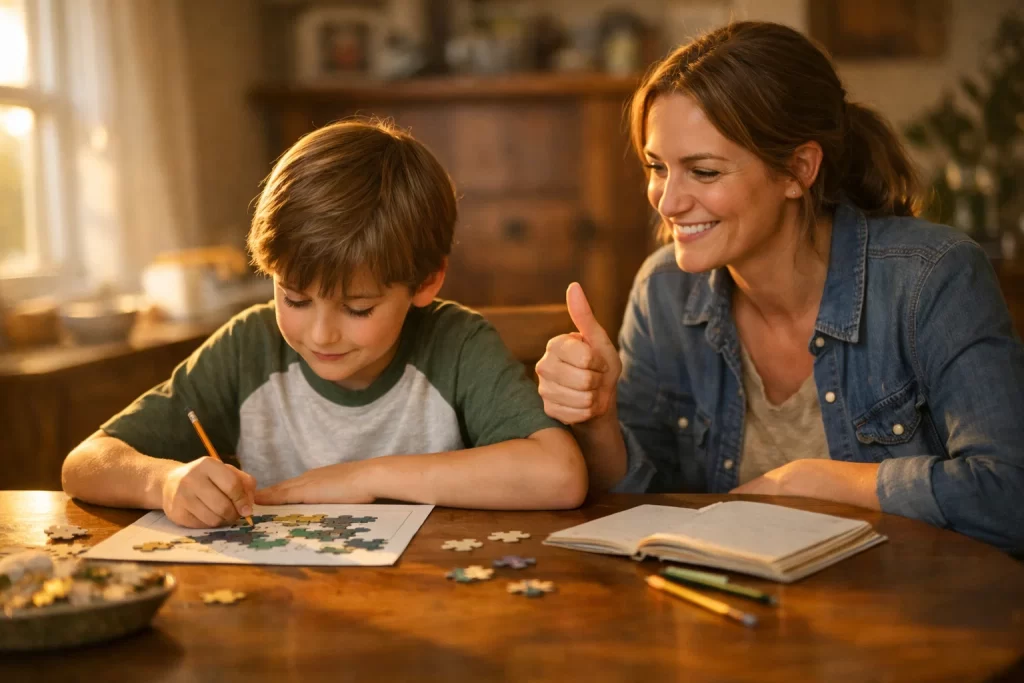
Positive Discipline emphasizes encouragement instead of empty praise. Encouragement focuses on effort, not traits. According to Stanford research updated in 2024, process-focused feedback increases persistence in children.
Instead of saying “You’re so smart,” say “You worked hard on that puzzle.” This builds growth mindset skills. Recognition should be specific and sincere. Children repeat behaviors that earn positive attention.
Encouragement Examples:
- “You remembered your homework today.”
- “You handled that frustration calmly.”
- “You shared without being asked.”
7. Model the Behavior You Expect

Children Learn by Watching
Modeling remains the foundation of Positive Discipline. Children imitate adult reactions closely. A 2024 University of Michigan child development review confirms that children copy emotional responses within minutes of exposure.
If we yell, children learn that yelling solves problems. If we stay calm, they learn regulation. Modeling includes respectful communication, apology when wrong, and problem-solving. Behavior modeling builds long-term habits.
Comparison Table: Traditional Punishment vs Positive Discipline
| Factor | Traditional Punishment | Positive Discipline |
|---|---|---|
| Goal | Immediate compliance | Long-term self-control |
| Emotional Impact | Fear-based response | Emotional safety |
| Learning Outcome | Avoids punishment | Understands cause and effect |
| Parent-Child Bond | Often strained | Strengthened |
| Long-Term Behavior | Short-term change | Sustainable improvement |
Practical Daily Implementation Plan
To apply Positive Discipline effectively, we recommend:
- Create three family rules today.
- Practice emotion labeling twice daily.
- Offer structured choices at least once daily.
- Use logical consequences consistently.
- Reinforce one positive behavior daily.
Bottom Line
Positive Discipline transforms how we guide children. It replaces fear with learning and punishment with accountability. Research in 2026 strongly supports calm correction, emotional coaching, and consistent structure. Children need boundaries, but they also need respect. When we focus on connection, clear expectations, and logical consequences, behavior improves sustainably.
 Emory Stephens