


Table of Contents
Parents often ask when can toddlers sleep with a blanket because sleep safety changes quickly during early childhood. No loose bedding during the first 12 months to reduce suffocation risk. According to 2024 data from the US Centers for Disease Control and Prevention, about 3,400 sleep-related infant deaths occur each year in the United States, often linked to unsafe sleep environments.
By toddlerhood, sleep safety becomes more flexible. Most pediatric sleep experts agree that around 18 months, toddlers can safely use a small blanket if other sleep conditions are safe. At this age, toddlers have stronger motor control and can reposition themselves during sleep.
However, introducing a blanket too early can still create hazards. Thick bedding, oversized blankets, and crowded cribs increase the risk of overheating or breathing obstruction. Parents should introduce blankets gradually and choose toddler-appropriate designs.
In this guide, we explain when can toddlers sleep with a blanket, what pediatricians recommend, and the five essential safety tips parents should follow.
When Can Toddlers Sleep With a Blanket?
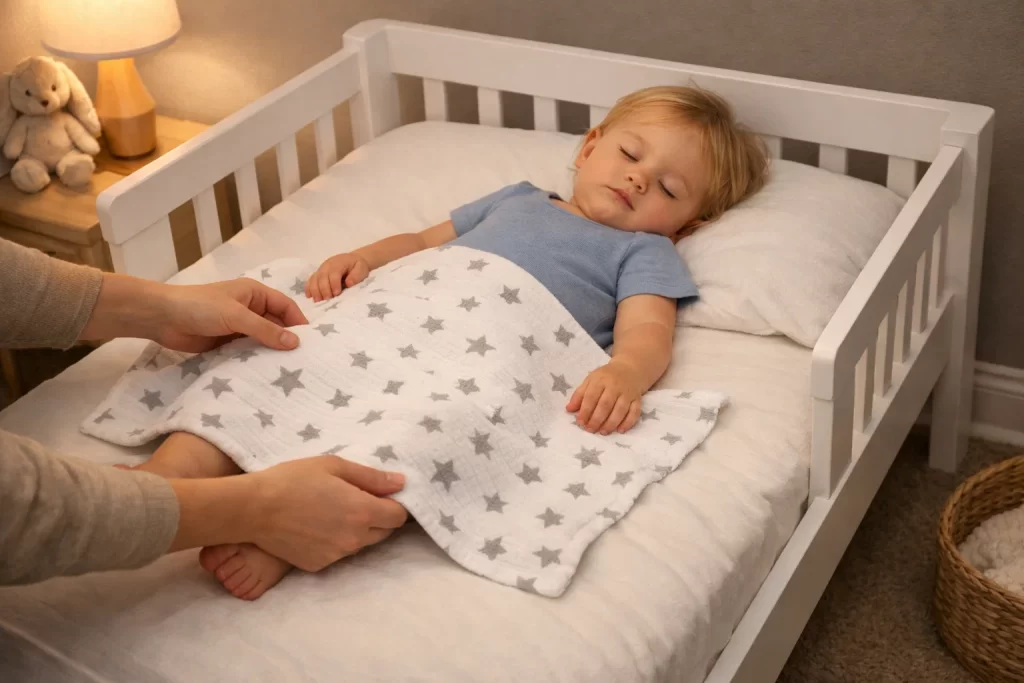
Most pediatricians agree that the safest time to introduce a blanket is between 18 and 24 months of age. By this stage, toddlers usually have better mobility and awareness during sleep. They can roll, sit, and move objects away from their faces without assistance. This developmental milestone significantly reduces suffocation risks compared to infancy.
Sleep safety guidance in 2024, loose bedding should be avoided for at least the first 12 months, but toddler blankets can be introduced once a child demonstrates stable motor control. Many sleep experts recommend waiting until 18 months to add a small, breathable blanket.
Parents should also consider whether their toddler has transitioned from a crib to a toddler bed. Blankets often work better after this transition because toddlers can move freely without crib barriers trapping bedding around them.
Key readiness signs
Parents should watch for these indicators before introducing a blanket:
- Toddler is 18 months or older.
- The child can roll, stand, and reposition objects easily.
- Toddler sleeps consistently through the night.
- The child shows interest in comfort objects like stuffed animals.
Recommended toddler blanket sizes
| Blanket Type | Typical Size | Best Use |
|---|---|---|
| Toddler blanket | 30 x 40 inches | Standard toddler bed |
| Lightweight muslin blanket | 30 x 36 inches | Warm climates |
| Fleece toddler blanket | 30 x 40 inches | Cooler rooms |
Why Blankets Are Unsafe for Babies
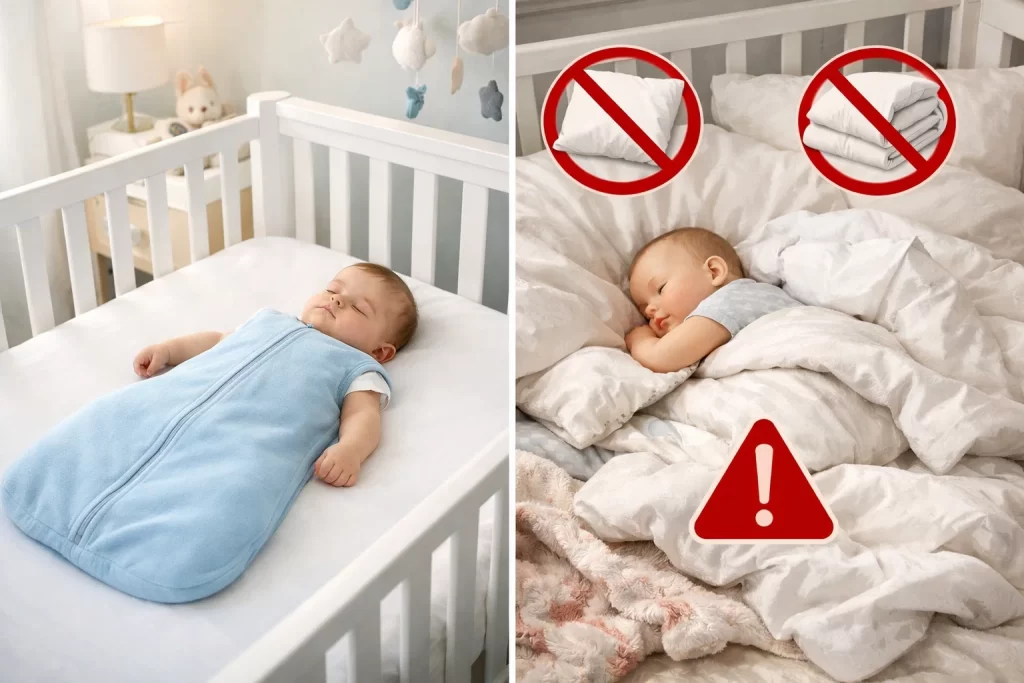
Blankets pose real safety risks for infants because babies cannot move objects away from their faces. The first year of life carries the highest risk for Sudden Infant Death Syndrome (SIDS) and accidental suffocation.
The AAP reported in 2024 that soft bedding contributes to roughly 23% of sleep-related infant deaths. Thick quilts, pillows, and loose blankets create breathing hazards when babies cannot roll or push them away.
Infants also regulate body temperature poorly. Heavy blankets can cause overheating, which is another factor linked to sleep-related infant deaths.
Common blanket hazards for babies
- Suffocation from fabric covering the nose or mouth
- Overheating during sleep
- Fabric wrapping around the neck
- Entrapment between crib bars
Because of these risks, pediatricians recommend sleep sacks instead of blankets for babies younger than 12 months. Sleep sacks keep infants warm without loose bedding.
Safer alternatives for infants
Parents can maintain warmth without blankets using:
- Wearable sleep sacks
- Footed pajamas
- Breathable cotton sleepwear
- Room temperatures between 68°F and 72°F
These methods provide warmth while maintaining a safe sleep environment. Learn about common childhood illnesses parents should recognize early to keep children healthy and prevent complications.
5 Safety Tips When Introducing a Toddler Blanket
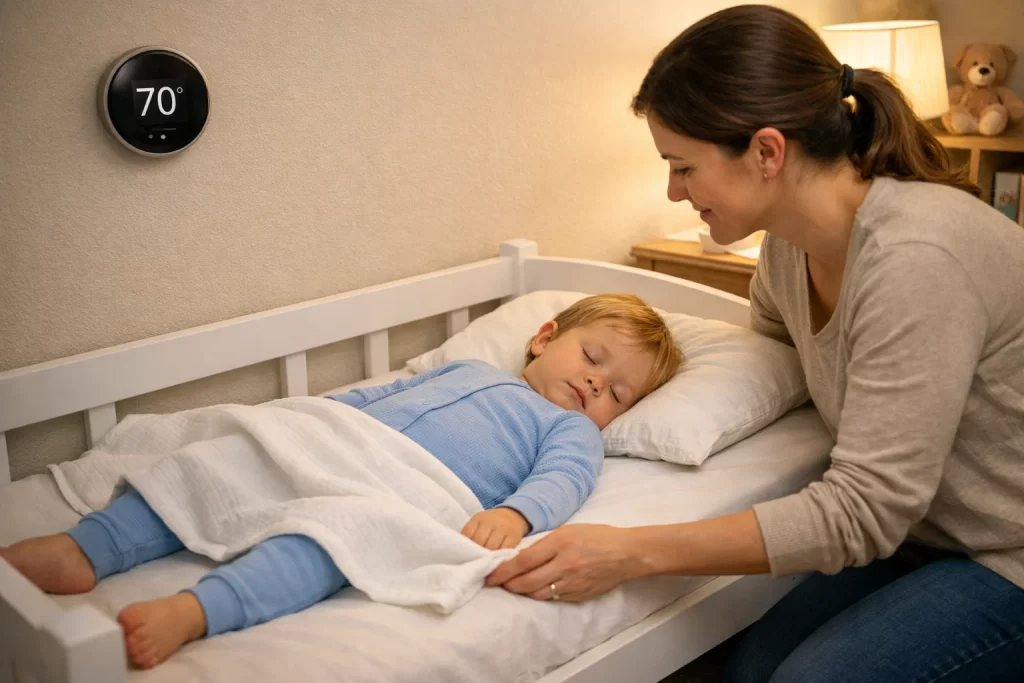
Introducing a blanket requires thoughtful safety practices. Even toddlers can experience sleep hazards if bedding is too thick or poorly placed.
1. Choose a lightweight blanket
A breathable cotton or muslin blanket works best for toddlers. Heavy quilts or weighted blankets increase the risk of overheating. A toddler blanket should feel light and flexible.
2. Use the correct size
Oversized blankets can wrap around a toddler’s head or neck. The safest toddler blankets measure 30 x 40 inches or smaller.
3. Keep the crib clear
Only introduce one blanket at a time. Avoid adding pillows, extra blankets, or large stuffed toys. A clutter-free sleep space reduces the risk of suffocation.
4. Position the blanket correctly
Place the blanket around the toddler’s waist or legs, not near the face. Many parents tuck the bottom edge under the mattress for stability.
5. Maintain safe sleep temperatures
Overheating increases sleep risks. Pediatric sleep experts recommend keeping the bedroom between 68°F and 72°F. Lightweight pajamas help maintain a comfortable body temperature.
Quick safety checklist
- Toddler age: 18 months or older
- Blanket size: Small toddler blanket
- Fabric: Breathable cotton or muslin
- Sleep space: Clear and uncluttered
- Room temperature: 68–72°F
Choosing the Best Blanket for Toddlers
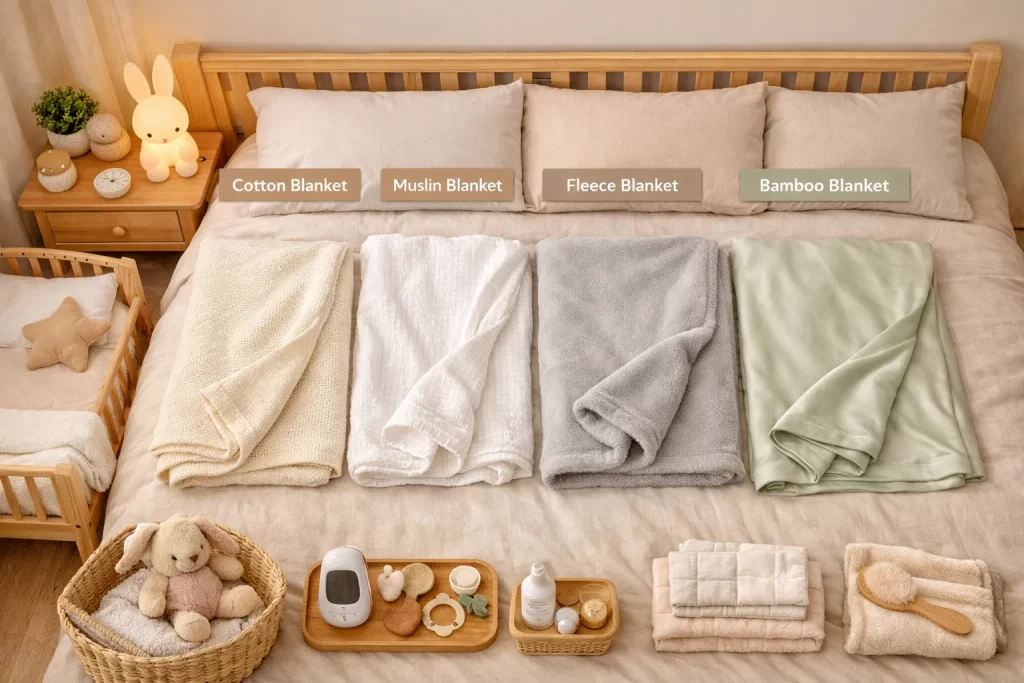
Selecting the right blanket matters as much as timing. The safest toddler blankets prioritize breathability, proper size, and temperature comfort.
Cotton remains the most recommended material because it balances warmth and airflow. Muslin blankets also work well in warmer climates. Fleece can provide warmth during winter, but parents should monitor the room temperature carefully.
Features to look for
Parents should prioritize blankets with these safety characteristics:
- Breathable natural fabrics
- Lightweight construction
- Machine washable materials
- Size designed for toddler beds
Avoid weighted blankets or heavy quilts. Pediatricians generally recommend avoiding weighted blankets until age 5 or older.
Popular toddler blanket materials
| Material | Breathability | Best Season |
|---|---|---|
| Cotton | High | All seasons |
| Muslin | Very high | Warm climates |
| Fleece | Moderate | Winter |
| Bamboo fabric | High | Sensitive skin |
Bottom Line
Understanding when can toddlers sleep with a blanket helps parents balance comfort and safety. Most pediatric experts recommend introducing a blanket between 18 and 24 months, once toddlers gain strong motor control and sleep independence.
Blankets remain unsafe for infants because babies cannot reposition objects that block their breathing. During the first year, sleep sacks and footed pajamas provide safer warmth. Once toddlers reach developmental readiness, parents can gradually introduce a lightweight blanket.
Still wondering when can toddlers sleep with a blanket? Use these expert safety tips tonight to help your toddler sleep warmer, safer, and better.