


Table of Contents
Toddler speech delay activities at home help parents build communication skills during a critical stage of brain development. Between ages 1 and 3, toddlers typically learn 50–300 words and begin combining words into simple phrases. According to the ASHA, toddlers who receive daily language interaction show significantly faster vocabulary growth than those with limited verbal engagement.
Speech delay affects many families. Research published in 2025 estimates that about 10–15% of toddlers experience delayed speech development during early childhood. In many cases, the delay is temporary and improves with consistent language stimulation. Parents can play a powerful role by introducing structured speech activities at home.
The good news is that speech learning does not require complex therapy tools. Simple daily routines, interactive games, and playful conversations help toddlers connect sounds with meaning. These experiences strengthen neural pathways responsible for language processing.
This guide explains 07 toddler speech delay activities at home that parents can use every day. Each activity builds vocabulary, improves listening skills, and encourages toddlers to practice words naturally.
1. Naming Everyday Objects
Why Naming Objects Works
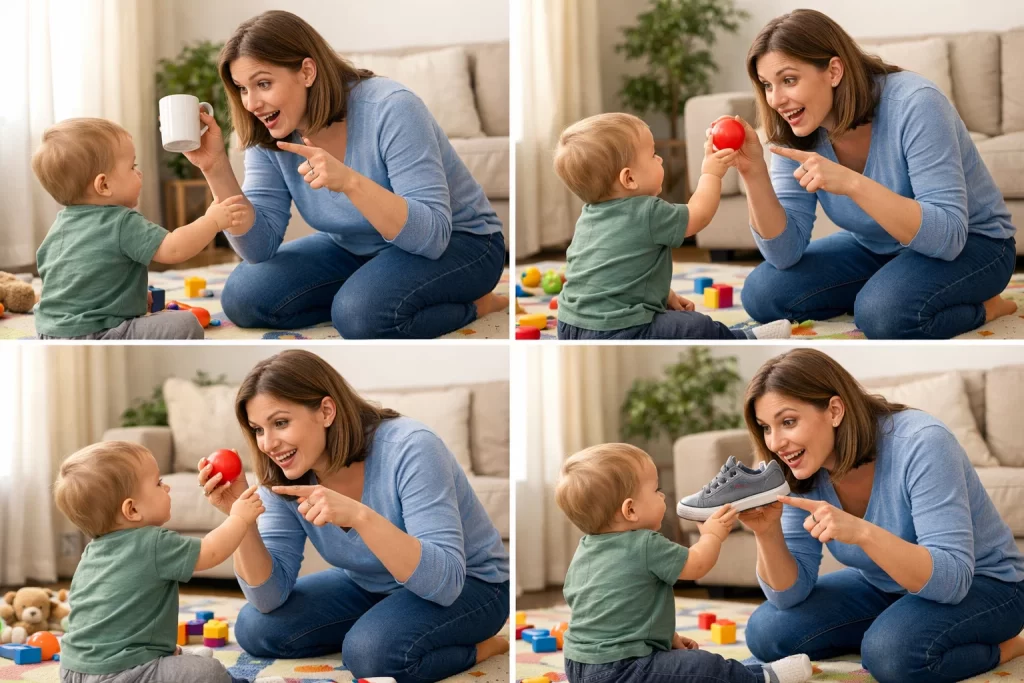
Object naming builds vocabulary by linking spoken words with physical items. Toddlers learn words faster when adults label objects during daily routines.
Simple labeling also strengthens auditory processing and memory. Toddlers hear the same word repeatedly while observing the object.
How to Practice This Activity
Use everyday situations to introduce words clearly and slowly.
Examples include:
- “This is a cup.”
- “Look at the ball.”
- “Here is your shoe.”
Repeat the word three to five times while showing the object. Toddlers learn through repetition and visual association.
2. Reading Picture Books Together
Why Picture Books Help Speech
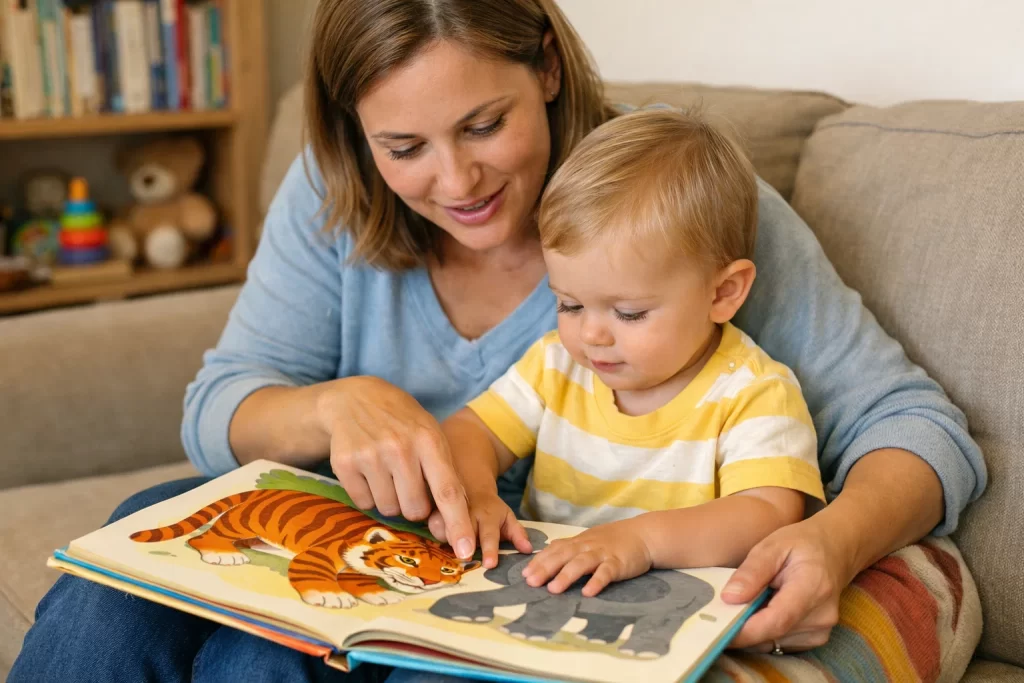
Picture books introduce toddlers to new vocabulary, sounds, and storytelling patterns. Reading together exposes toddlers to around 30% more words daily, according to early language studies.
Pictures also help toddlers connect spoken language with visual context.
How to Use Books for Speech Practice
Choose books with bright illustrations and simple words.
During reading:
- Point to objects and name them.
- Ask simple questions like “What is this?”
- Pause so your toddler can respond.
Books with repetitive phrases encourage toddlers to participate verbally.
3. Singing Songs and Nursery Rhymes

How Music Stimulates Language
Music activates multiple areas of the brain involved in speech and memory. Studies show toddlers remember words 40% better when paired with rhythm or melody.
Songs slow down speech patterns, making words easier to hear and imitate.
Easy Songs for Speech Practice
Use simple nursery rhymes such as:
- Twinkle Twinkle Little Star
- Wheels on the Bus
- Old MacDonald Had a Farm
Encourage toddlers to fill in missing words.
Example:
“The wheels on the bus go ___ and ___.”
4. Encouraging Imitation Games
Why Imitation Builds Speech
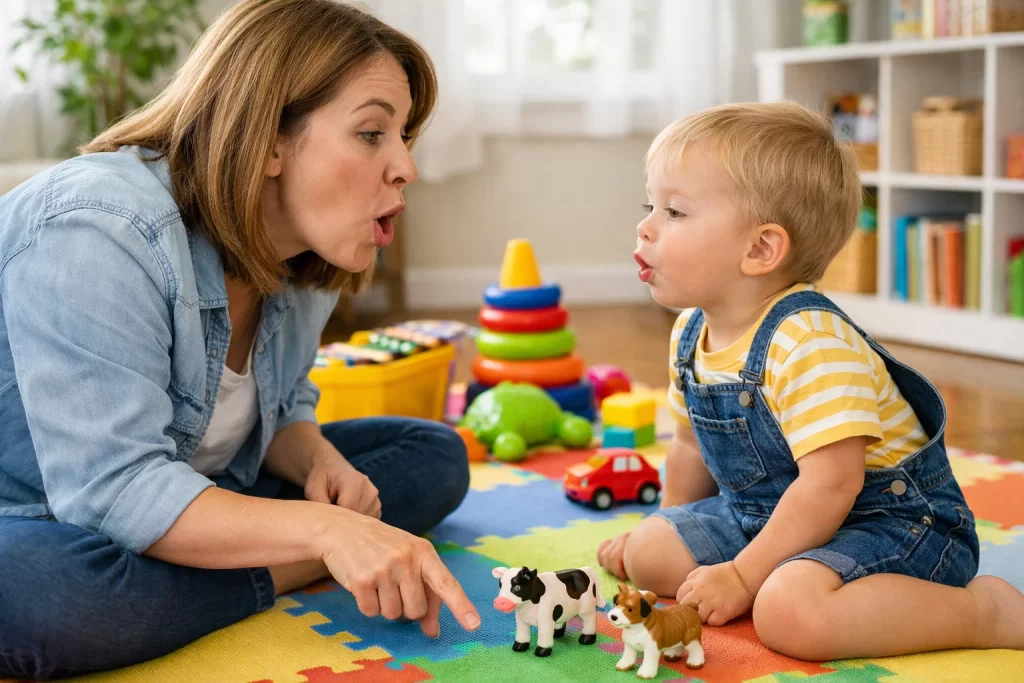
Speech development begins with imitation. Toddlers first copy sounds, facial expressions, and mouth movements before forming words.
Imitation exercises train toddlers to observe and reproduce sounds.
Simple Imitation Activities
Try playful sound games such as:
- Animal sounds: “moo,” “woof,” “quack.”
- Vehicle sounds: “vroom,” “beep.”
- Fun sounds: “pop,” “wow,” “yay.”
Sit face-to-face so toddlers can watch your mouth movements.
5. Using Choice Questions

Why Choice Questions Work
Choice questions encourage toddlers to respond verbally instead of nodding or pointing. They also reinforce vocabulary related to everyday needs.
Speech therapists frequently use this method to stimulate expressive language.
Examples of Choice Questions
Offer two clear options:
- “Do you want milk or juice?”
- “Should we play with the car or ball?”
- “Do you want the red shirt or blue shirt?”
Pause for several seconds to allow the toddler to respond.
6. Narrating Daily Activities

How Narration Supports Language Learning
Narrating daily actions helps toddlers understand how words describe real-life situations. It increases exposure to vocabulary without requiring structured lessons.
Experts recommend describing activities throughout the day.
Examples of Activity Narration
While doing routines, say:
- “We are washing hands.”
- “Mommy is cutting apples.”
- “You are putting on shoes.”
Narration builds comprehension before toddlers attempt speaking. Learn what to expect at every stage of early growth in our guide on Toddler Development Milestones and track your child’s progress with confidence.
7. Play-Based Conversation
Why Play Is the Best Learning Environment
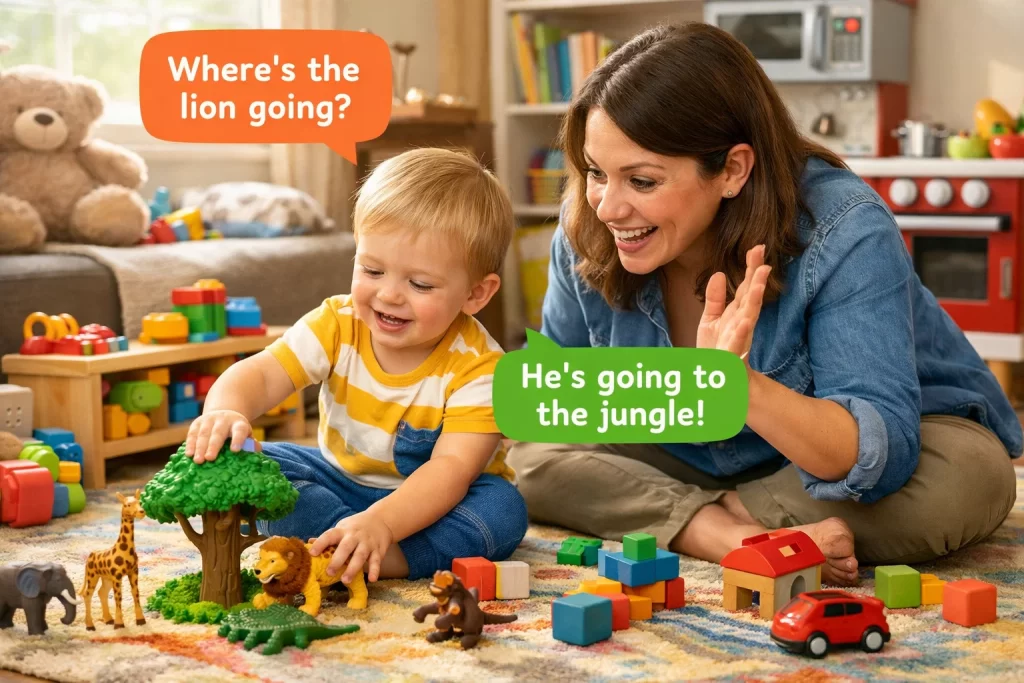
Play naturally encourages toddlers to communicate. When children are relaxed and engaged, they are more willing to attempt words.
Play also introduces problem-solving and social interaction.
Speech-Friendly Play Ideas
Interactive toys work best:
- Toy kitchens
- Building blocks
- Toy animals
- Pretend grocery stores
Ask open prompts like:
- “What is the cow doing?”
- “Where should the block go?”
Toddler Speech Milestones by Age
| Age | Expected Speech Skills | Average Vocabulary |
|---|---|---|
| 12 months | Says simple words like “mama” | 5–10 words |
| 18 months | Understands simple instructions | 20–50 words |
| 24 months | Combines two words | 50–200 words |
| 36 months | Uses short sentences | 200–1,000 words |
Bottom Line: Toddler Speech Delay Activities at Home
Speech development happens gradually, and every child progresses at a unique pace. However, toddler speech delay activities at home can significantly improve language learning during the early years. Consistent interaction, repetition, and play help toddlers connect sounds with meaning and gain confidence when speaking.
Parents do not need specialized tools to support speech growth. Simple activities such as naming objects, reading picture books, singing songs, and narrating daily routines create powerful learning opportunities. These interactions strengthen listening skills, expand vocabulary, and encourage toddlers to practice speech naturally.
Want more expert tips on toddler development? Explore our guides to support speech, behavior, sleep, and learning during the most important early growth years.