

Table of Contents
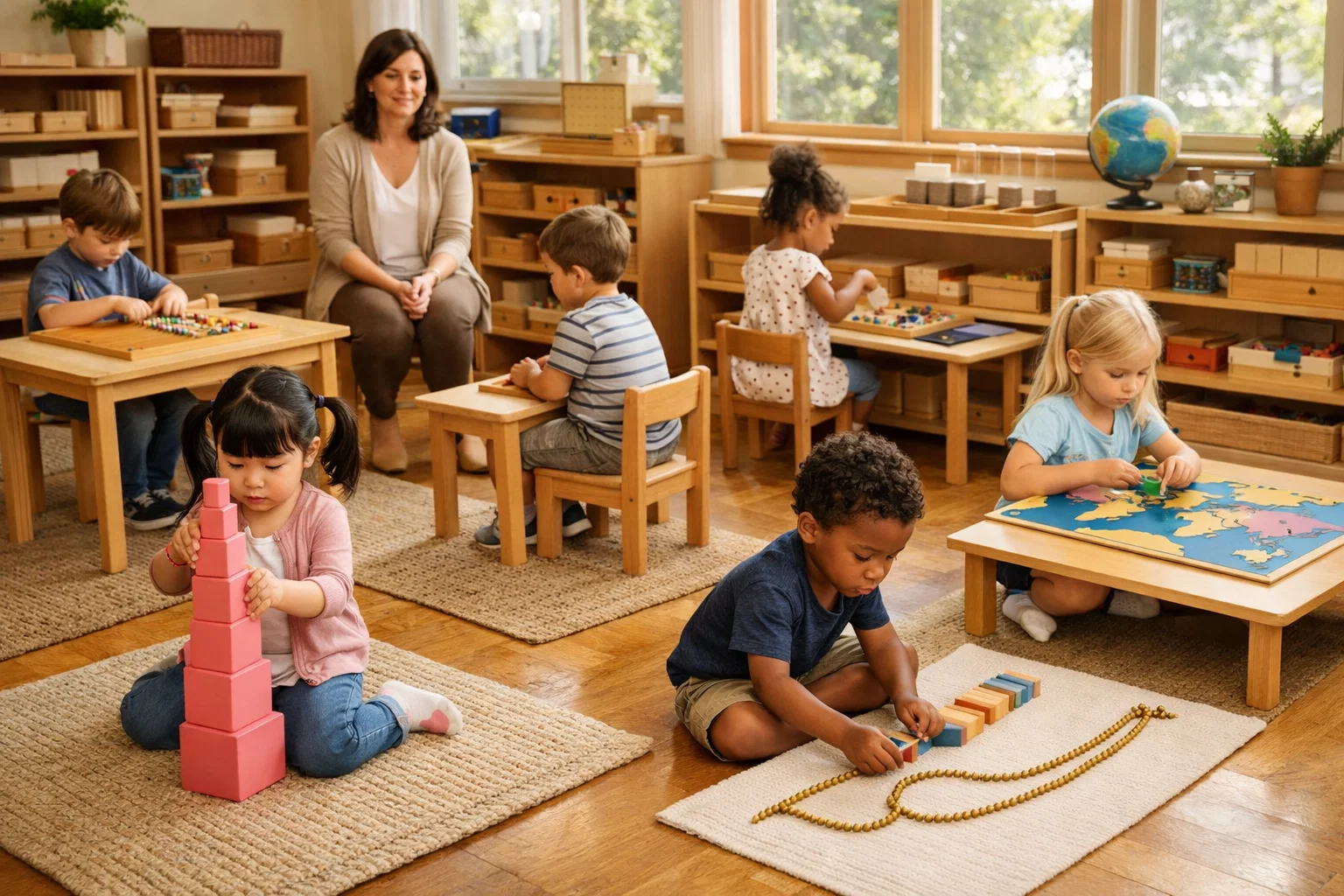
Montessori early childhood education is one of the most researched learning approaches for children aged 3 to 6 years. Developed by Italian physician Dr. Maria Montessori in 1907, this method focuses on independence, hands-on learning, and respect for a child’s natural development. As of 2026, more than 20,000 Montessori schools operate worldwide, with programs in over 110 countries.
Montessori early childhood education differs from traditional preschool systems. Instead of teacher-led instruction, children learn through self-directed activities, carefully prepared environments, and sensory-based materials. Montessori students often demonstrate stronger executive functioning, better social behavior, and higher academic outcomes than students in traditional programs.
The early childhood stage is critical. Neuroscience research confirms that 90% of brain development occurs before age five, making educational environments extremely influential. Montessori classrooms intentionally support this development through movement, concentration, and choice.
Parents and educators increasingly turn to Montessori early childhood education because it builds confidence, curiosity, and lifelong learning habits.
1. Builds Strong Independence Early
Child-Led Learning Encourages Responsibility
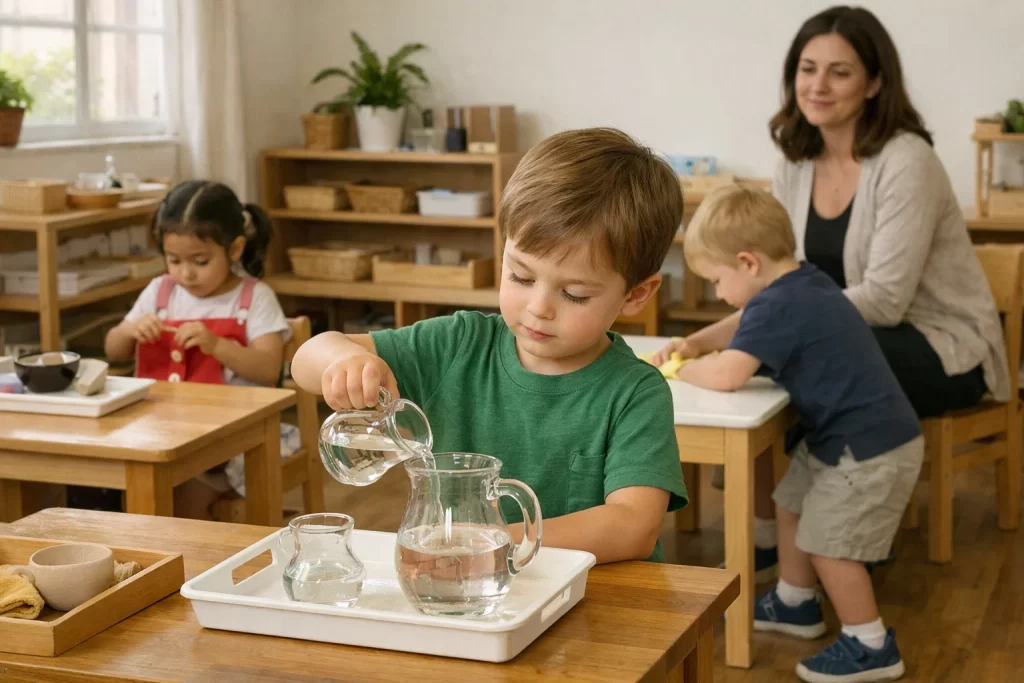
Montessori early childhood education prioritizes independence from the start. Children choose activities, manage materials, and complete tasks at their own pace.
This autonomy strengthens decision-making. Instead of waiting for teacher instructions, children learn to initiate tasks independently. Montessori classrooms include practical life activities such as pouring water, cleaning tables, and organizing materials.
These tasks build self-reliance while strengthening motor skills. Children in Montessori programs demonstrate higher levels of task persistence and independence by age six.
Practical Life Skills Strengthen Confidence
Practical life activities teach everyday skills. These include:
- Buttoning clothes
- Food preparation
- Sweeping and cleaning
- Caring for plants
2. Supports Natural Brain Development
Sensitive Periods Drive Learning
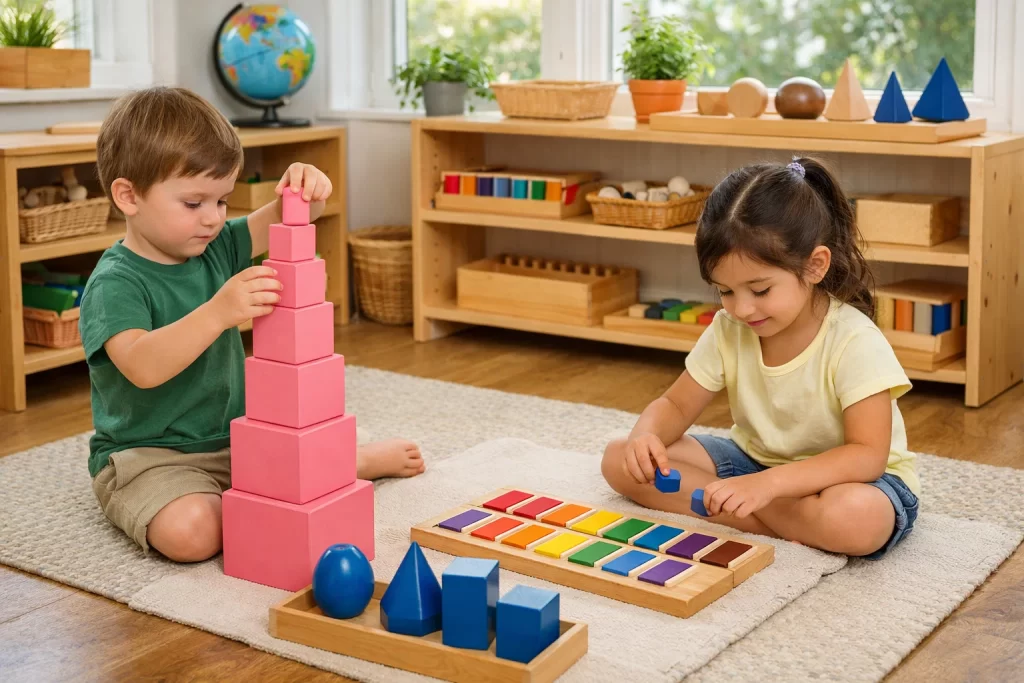
Montessori early childhood education aligns with neurological “sensitive periods.” These are phases when children absorb specific skills easily.
Key sensitive periods include:
| Sensitive Period | Age Range | Learning Focus |
|---|---|---|
| Language Development | Birth–6 years | Vocabulary and communication |
| Order and Routine | 2–4 years | Organization and patterns |
| Movement Coordination | 1–4 years | Motor control |
| Sensory Exploration | 2–6 years | Touch, sound, sight learning |
Montessori classrooms provide materials that match these phases. When children encounter the right activity during the right period, learning becomes faster and more natural.
Sensory Materials Strengthen Cognitive Skills
Montessori materials isolate one concept at a time. For example, pink tower blocks focus only on size relationships.
This structure helps children develop spatial awareness, mathematical reasoning, and problem-solving skills. Research from the University of Virginia found Montessori students scored 20% higher in executive function tests than peers in conventional preschool settings.
3. Encourages Deep Concentration
Uninterrupted Work Cycles Build Focus
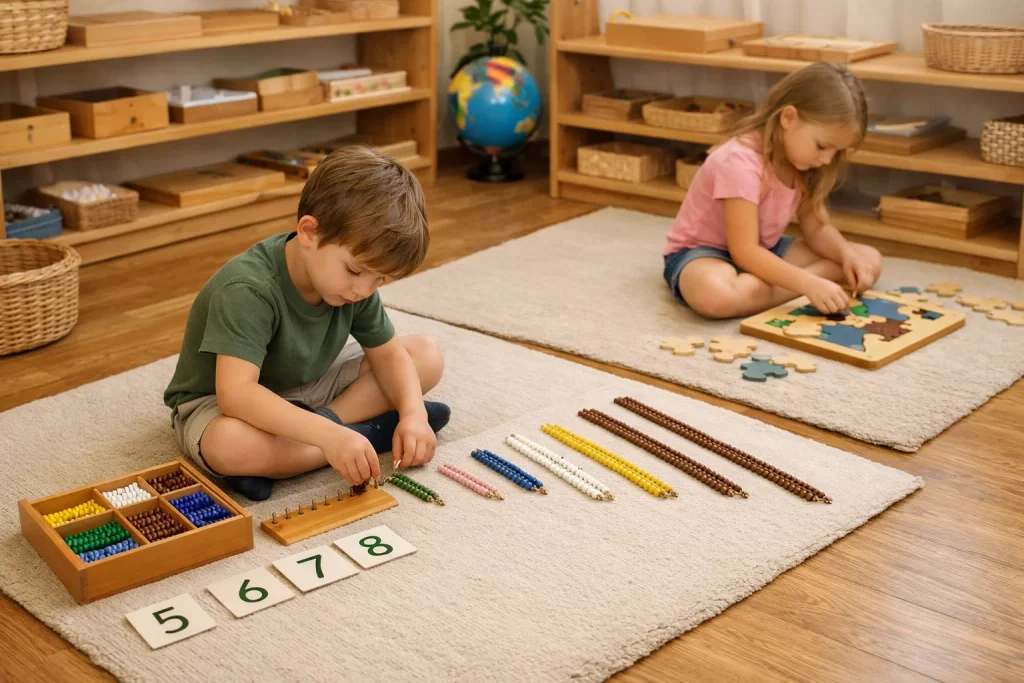
A key element of Montessori early childhood education is the three-hour uninterrupted work cycle. Children spend extended periods exploring materials without constant interruptions.
This structure improves attention span. In traditional classrooms, activities often change every 20–30 minutes. Montessori programs allow children to work until they feel satisfied.
Long work cycles help children:
- Complete tasks independently
- Develop patience
- Strengthen concentration
Hands-On Materials Keep Children Engaged
Children naturally focus longer on tactile tasks. Montessori materials include puzzles, bead chains, counting rods, and geometric solids.
These activities require movement and problem-solving. Engagement remains high because learning feels like discovery rather than instruction.
4. Promotes Social and Emotional Growth
Mixed-Age Classrooms Encourage Cooperation
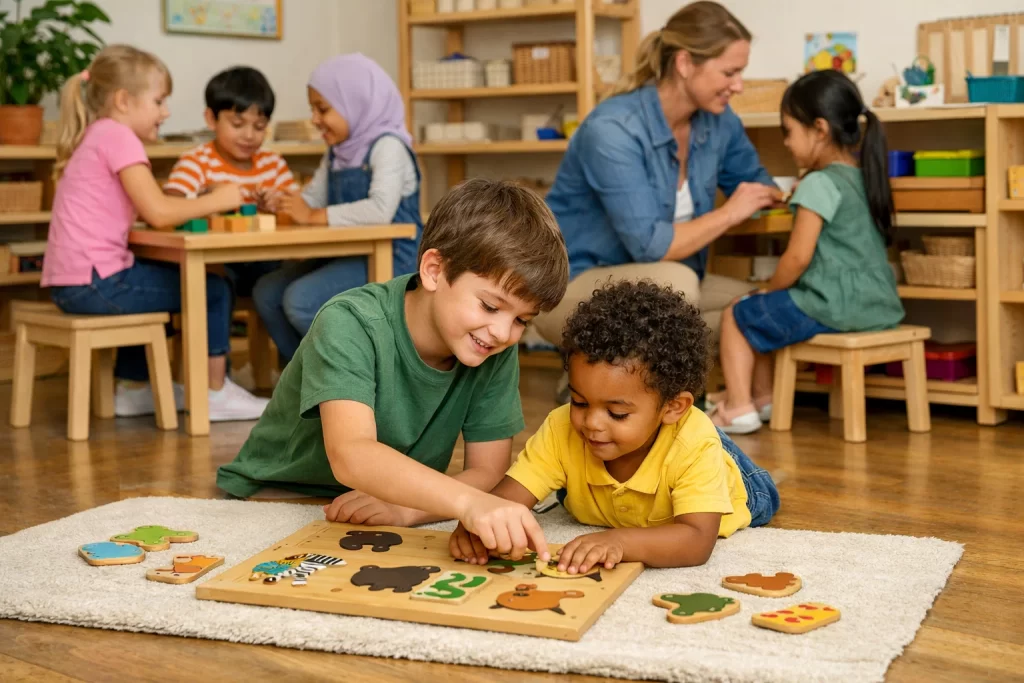
Montessori early childhood education typically groups children aged 3 to 6 years in the same classroom.
Older children mentor younger peers. Younger students observe advanced skills. This structure creates a collaborative environment.
Research from Montessori Northwest reports mixed-age classrooms improve:
- Empathy
- Leadership
- Communication skills
Children learn from each other naturally rather than competing academically.
Conflict Resolution Is Built Into the Classroom
Montessori teachers guide children through respectful communication. Instead of punishment, students learn to discuss problems.
Children practice expressing feelings and resolving disagreements. These skills build emotional intelligence early.
5. Strengthens Academic Foundations
Early Math and Language Skills Develop Naturally
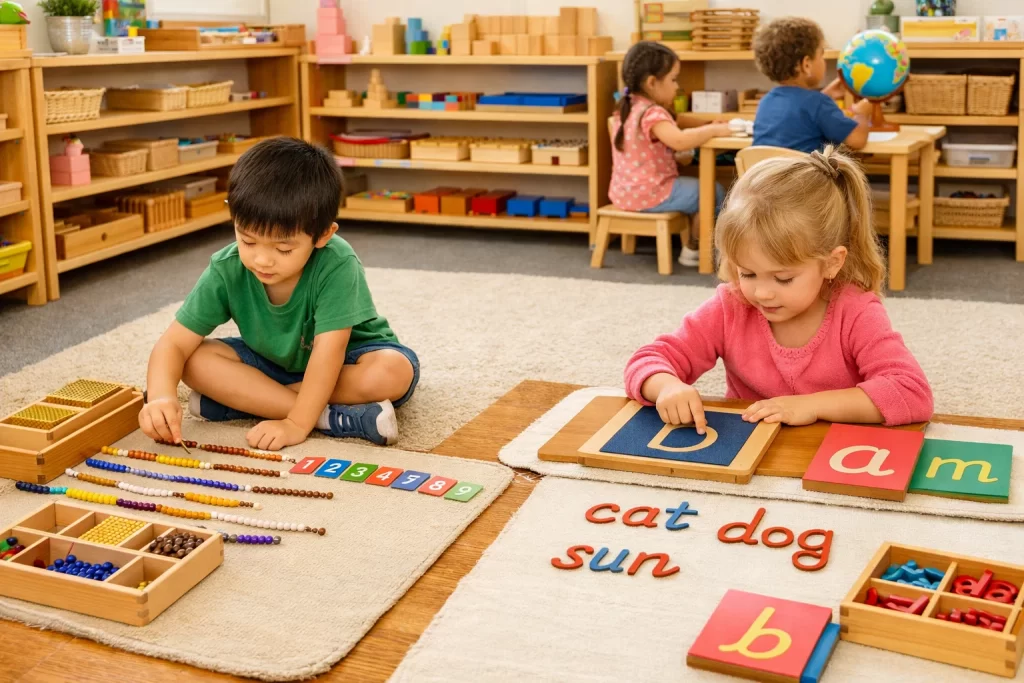
Montessori early childhood education introduces math concepts using concrete materials before abstract symbols.
Children first touch and manipulate numbers using bead chains and counting rods. Once they understand quantity, teachers introduce written numbers.
This method improves comprehension. Montessori students perform significantly better in math and reading by age seven.
Literacy Develops Through Exploration
Montessori classrooms use sandpaper letters and a movable alphabet. These tools combine sensory and language learning.
Children trace letters with their fingers while saying sounds aloud. This process builds phonetic awareness.
Many Montessori students begin reading between ages 4 and 5, earlier than the traditional literacy timeline.
6. Encourages Curiosity and Creativity
Exploration Drives Learning
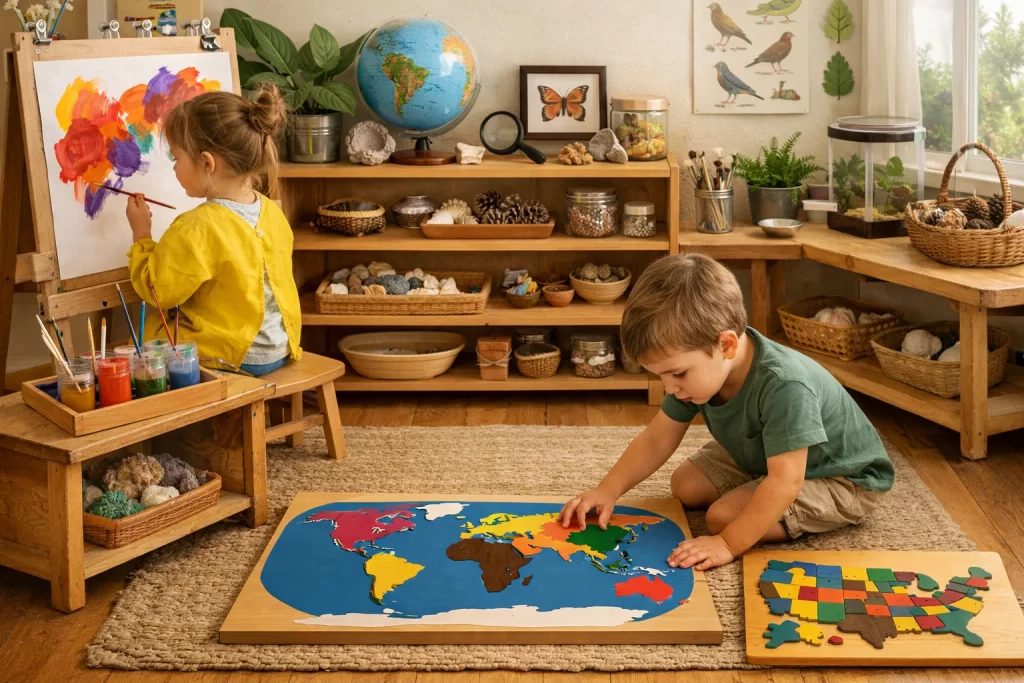
Montessori early childhood education encourages curiosity through exploration rather than memorization.
Children choose from a range of subjects:
- Science materials
- Geography puzzles
- Cultural activities
- Art stations
This freedom nurtures intrinsic motivation. Children pursue topics because they want to understand them. Learn why the Importance of Early Education shapes brain development, learning ability, and lifelong academic success in children.
7. Builds Lifelong Learning Habits
Responsibility and Discipline Develop Naturally
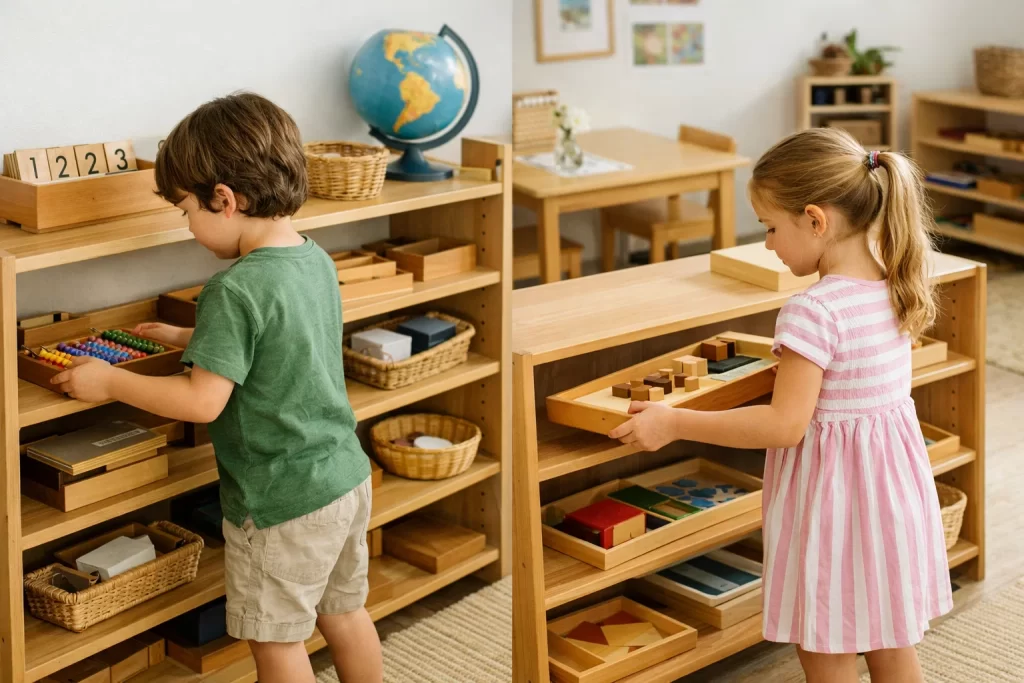
Montessori early childhood education teaches children to manage their own learning.
They select tasks, organize materials, and return them after use. These routines build responsibility.
Children gradually learn to plan activities, follow through, and evaluate results. These habits mirror real-world productivity.
Love of Learning Continues Beyond Preschool
Montessori education aims to cultivate lifelong curiosity.
Research published in 2023 by the National Center for Montessori in the Public Sector found that Montessori alumni often demonstrate:
- Higher intrinsic motivation
- Stronger academic persistence
- Greater independence in college environments
Bottom Line
Montessori early childhood education continues to expand globally because it aligns with how children naturally learn. By focusing on independence, hands-on exploration, and respect for developmental stages, this approach builds strong academic and personal foundations.
The early years shape long-term outcomes. Research consistently shows that children educated in Montessori environments demonstrate higher concentration, stronger executive function, and improved social behavior. These skills influence both school success and lifelong learning.
Explore more expert guides on Early Childhood Education to help children build strong learning foundations, confidence, and lifelong curiosity from the start.