

Table of Contents
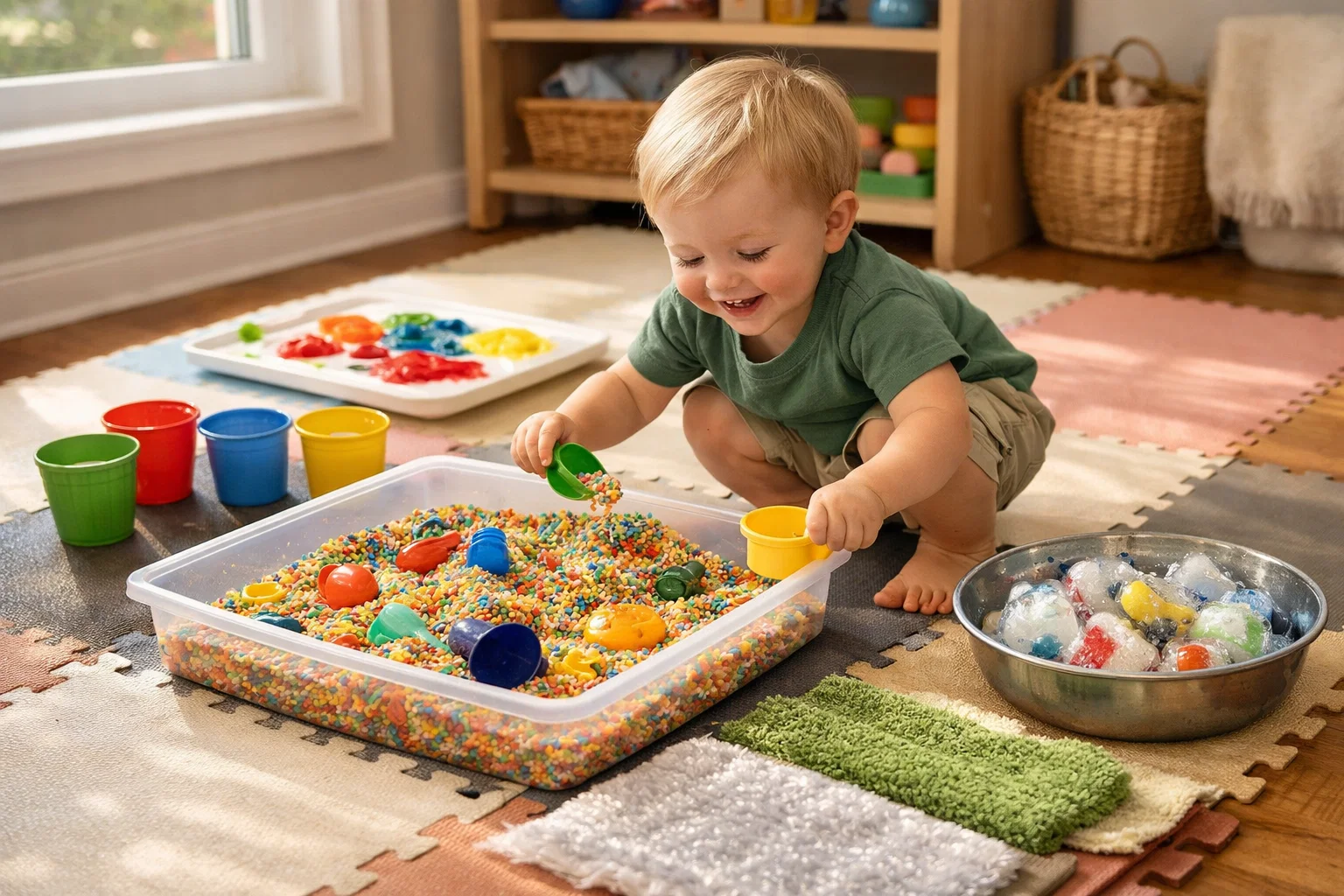
Simple sensory play activities for toddlers indoors help young children explore the world through touch, movement, sight, and sound. Early childhood experts confirm that sensory play strengthens brain connections responsible for language, coordination, and problem-solving. More than 1 million neural connections form every second during early childhood, making sensory exploration vital during toddler years.
Indoor sensory activities also help parents manage high-energy toddlers when outdoor play is limited. Weather, safety, and small living spaces often restrict outdoor movement. Structured indoor play keeps toddlers engaged while supporting cognitive development and emotional regulation.
Toddlers learn best through hands-on exploration rather than passive screen time. Simple household items can easily become learning tools that stimulate curiosity and creativity.
This guide explains six simple sensory play activities for toddlers indoors that encourage exploration, creativity, and early development.
1. Sensory Bin Exploration
Why sensory bins support brain development
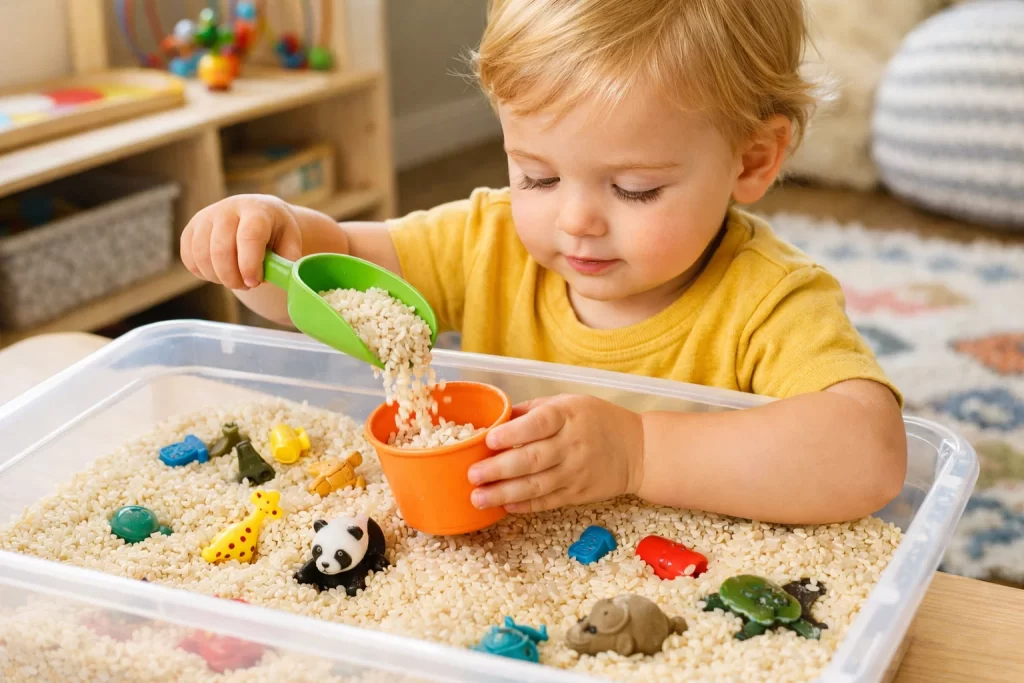
Sensory bins rank among the most effective simple sensory play activities for toddlers indoors because they combine tactile discovery and imaginative play. A sensory bin is a container filled with materials such as rice, beans, or pasta.
Sensory bins improve fine motor coordination by up to 30% during toddler learning programs. Scooping, pouring, and sorting strengthen small hand muscles needed for writing later.
How to set up a sensory bin
Use a shallow plastic container and fill it with safe materials. Add small toys to encourage exploration.
Common sensory bin fillers include:
- Dry rice or pasta
- Kinetic sand
- Water beads (for supervised play)
- Shredded paper
- Dry beans
Parents should supervise closely to prevent choking risks. Sensory bins allow toddlers to explore textures while improving hand-eye coordination.
2. Water Transfer Station
Why water play builds coordination
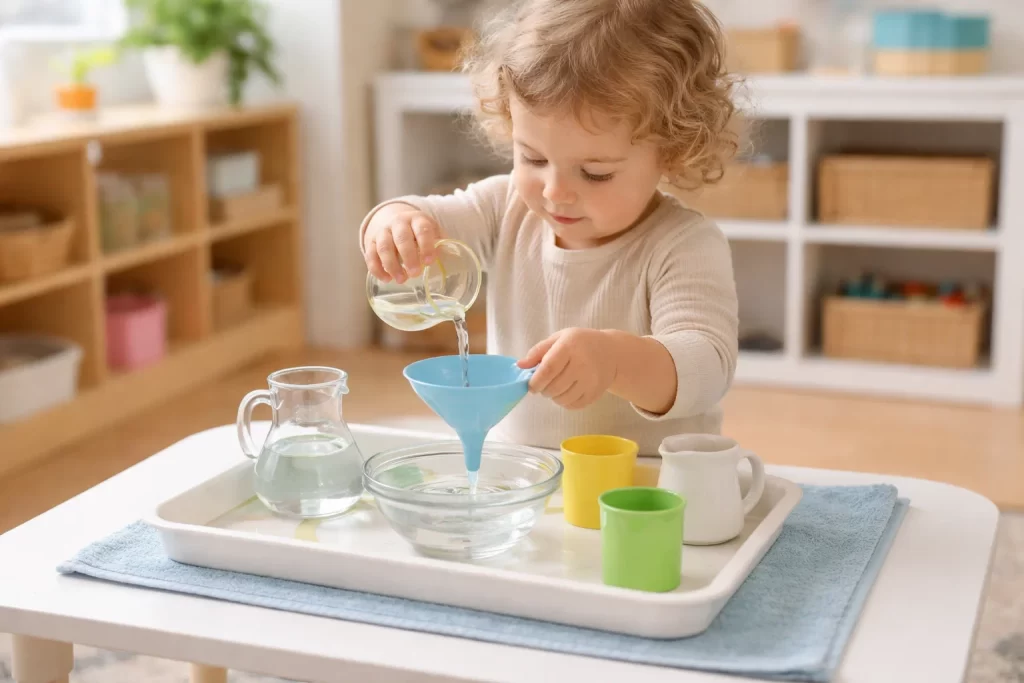
Water play remains one of the easiest, simple sensory play activities for toddlers indoors. Pouring water from cup to cup strengthens coordination and teaches cause-and-effect relationships.
Child development research shows that toddlers practicing pouring activities improve hand precision and focus within weeks of repeated play sessions. Water play also promotes early STEM learning through volume and movement observation.
Materials for a water transfer activity
| Item | Purpose | Development Benefit |
|---|---|---|
| Plastic cups | Pouring practice | Fine motor control |
| Small pitchers | Transfer practice | Hand strength |
| Funnels | Water direction | Problem solving |
| Towels or tray | Spill control | Independence |
3. DIY Texture Walk
How texture exploration stimulates the senses
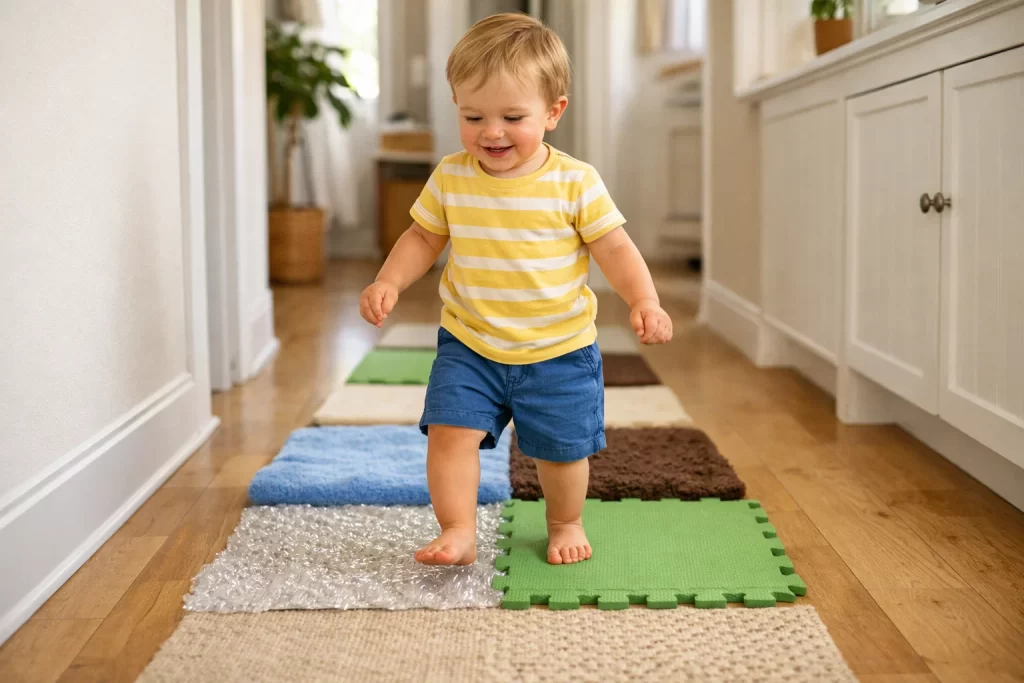
A texture walk introduces toddlers to different surfaces they rarely notice during everyday play. This activity is a creative way to design simple sensory play activities for toddlers indoors that encourage movement.
Children walk barefoot across surfaces like bubble wrap, soft towels, foam mats, and cardboard. Each step stimulates sensory receptors in the feet, improving body awareness.
Early childhood educators confirm that sensory pathways become stronger when toddlers interact with varied textures. These experiences help children process tactile information more efficiently.
Setting up a texture path
Arrange materials in a line across a hallway or play area. Encourage toddlers to walk slowly and describe what they feel.
Common texture materials include:
- Bubble wrap
- Cotton fabric
- Foam mats
- Carpet squares
- Soft towels
Ask simple questions such as “Which feels soft?” or “Which feels bumpy?” This builds language and observation skills. Discover more hands-on ideas in our guide to DIY Learning Activities that turn simple materials into powerful learning experiences for kids.
4. Edible Finger Painting
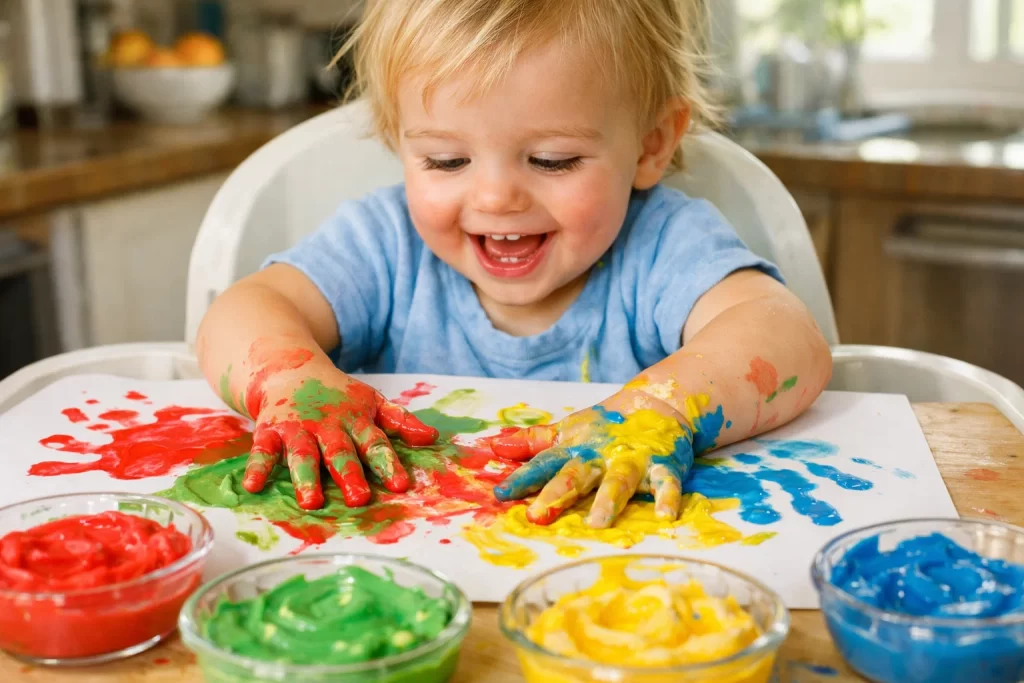
Why edible paint works for toddlers
Finger painting stimulates creativity while supporting sensory exploration. Many parents worry about safety when toddlers taste materials. Edible paint solves this concern while keeping sensory play engaging.
This activity remains one of the safest, simple sensory play activities for toddlers indoors because the ingredients are food-grade.
Finger painting helps toddlers develop visual-motor coordination and color recognition. Toddlers also gain emotional expression skills through creative exploration.
Simple edible paint recipe
Create edible paint using kitchen ingredients:
- Plain yogurt
- Natural food coloring
- Cornstarch (optional for a thicker texture)
Mix ingredients in small bowls and place paper on a tray or highchair surface.
Encourage toddlers to explore shapes, handprints, and color mixing. Creative freedom improves confidence and imagination.
5. Ice Melt Discovery
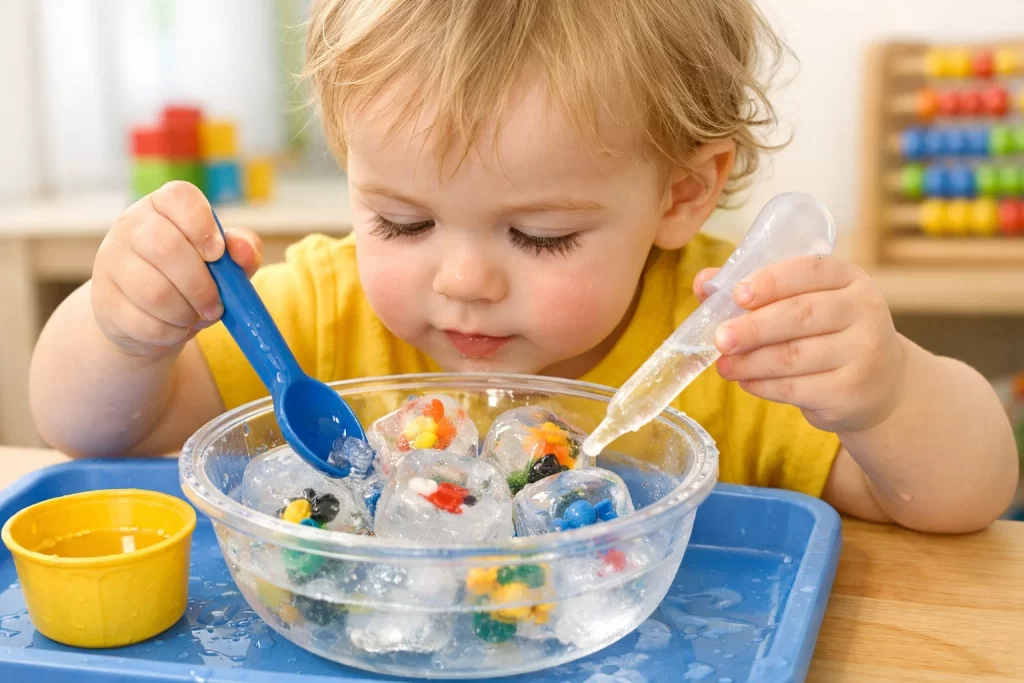
Why frozen play builds curiosity
Ice exploration introduces toddlers to temperature differences and physical changes. This activity stands out among simple sensory play activities for toddlers indoors because it teaches basic science concepts.
Children observe melting ice and experiment with tools that speed up the process. Early science play improves observation skills.
Toddlers quickly learn cause-and-effect relationships through this activity.
How to create an ice play station
Freeze small toys inside ice cubes or plastic containers. Place frozen pieces in a bowl and provide simple tools.
Useful tools include:
- Plastic spoons
- Droppers with warm water
- Small cups
Toddlers will enjoy freeing toys trapped inside the ice. This activity builds patience and curiosity about natural processes.
6. Sensory Treasure Hunt
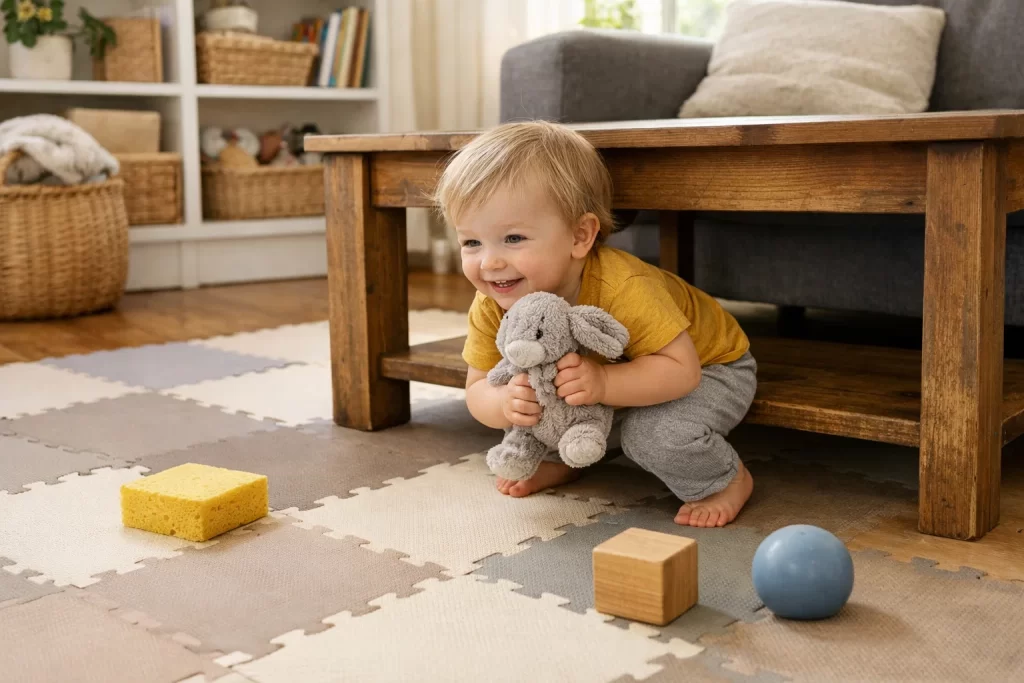
How treasure hunts develop problem-solving
Treasure hunts transform everyday play into learning adventures. Hide safe objects around the room and give toddlers clues based on texture, color, or shape.
This game remains one of the most engaging, simple sensory play activities for toddlers indoors because it combines movement and discovery.
Development specialists confirm that toddlers practicing object searches improve memory recall and spatial awareness.
Simple treasure hunt ideas
Hide items with distinctive sensory features:
- Soft stuffed toy
- Rough sponge
- Smooth plastic ball
- Wooden block
Ask questions like “Find something soft” or “Find something round.” This encourages toddlers to connect language with sensory experiences.
Key Benefits of Sensory Play for Toddlers
Regular sensory activities deliver measurable developmental advantages.
Major benefits include:
- Strengthens fine motor skills used in writing later.
- Improves early language development through descriptive learning.
- Supports emotional regulation and calm behavior.
- Encourages creativity and problem-solving.
- Builds neural pathways during early brain development.
Child development research consistently shows that toddlers who engage in sensory play demonstrate stronger cognitive growth during preschool years.
Bottom Line
Simple indoor play can deliver powerful learning outcomes during early childhood. Simple sensory play activities for toddlers indoors encourage exploration while strengthening motor skills, creativity, and problem-solving abilities. These activities require minimal materials yet deliver meaningful developmental benefits.
Parents can rotate activities weekly to maintain curiosity and engagement. Sensory bins, water play, texture walks, and edible painting all stimulate different learning pathways. Consistent hands-on exploration builds confidence and independence in toddlers.
Enjoyed these ideas? Explore more creative ways to boost curiosity, creativity, and development in our guide on Learning Activities for Kids.