


Chilled Mama helps parents feel informed, calmer, and more confident through pregnancy and early parenthood. Cathy describes herself as a perinatal educator and trainer. Her work covers pregnancy, birth, early parenting, and practitioner education. The platform combines research, discussion, relaxation, and respect for individual family choices. That approach matters because parents often face conflicting advice from professionals, relatives, social media, and parenting communities.
The wider health data shows why calm support matters. U.S. authorities report higher stress among parents than other adults. Postpartum mental health, feeding, sleep, movement, and recovery also deserve practical attention. Chilled Mama does not replace clinical care. Its public materials emphasize realistic expectations, informed decisions, and nonjudgmental support. We can reduce avoidable pressure while keeping medical concerns with qualified professionals. That combination can make complex decisions more manageable.
What Chilled Mama Offers
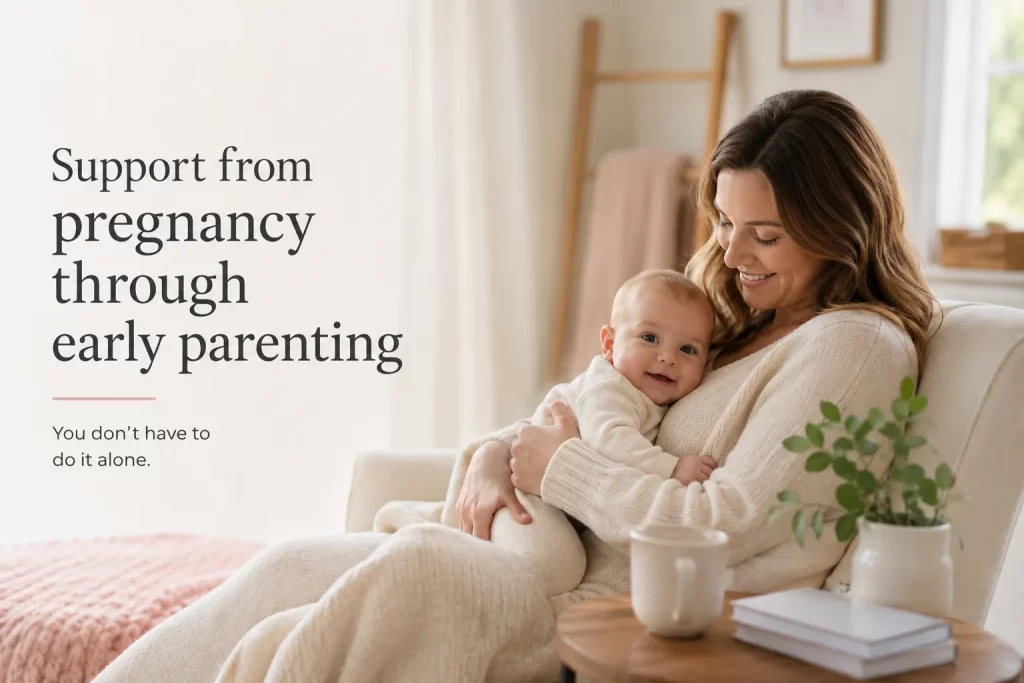
Support from pregnancy through early parenting
Chilled Mama covers birth choices, VBAC, home birth, water birth, relaxation, starting solids, sleep expectations, and parenting education. The site also provides practitioner training for people supporting families. Cathy says she has worked in perinatal education for more than two decades. Her VBAC material says an HBAC online course reached more than 300 people. These details show a long-running educational focus rather than a short-lived parenting trend.
The platform favors informed choice over one fixed parenting method. It encourages families to understand evidence, consider their circumstances, and choose what fits. That matters when guidance conflicts across healthcare settings and online spaces. We can narrow decisions without assuming every family needs identical routines. Good support should build confidence and explain limits. It should also help parents prepare focused questions when individual medical risks require clinical advice.
Why Parental Calm Needs Real Support
Stress numbers show a genuine support gap
Parental stress is measurable. The U.S. Surgeon General reports 33% of parents had high stress, versus 20% of other adults. It also reports 48% felt overwhelming stress most days, versus 26% of other adults. Those gaps explain demand for simpler guidance. Chilled Mama addresses pressure through education, community, and realistic expectations. It does not promise a perfectly calm home or eliminate genuine family stressors.
Stress also comes from several directions at once. HHS highlights financial strain, time demands, child health, safety, isolation, technology, and cultural pressure. Families cannot remove every stressor, but they can reduce decision overload. This approach treats information as a tool rather than another rulebook. We should ask whether support creates clarity and stronger connection. We should also notice when stress requires professional medical or mental-health support.
Chilled Mama and Birth Confidence
Education can make choices easier to discuss
Birth education remains a central theme. Current resources address VBAC, home birth, water birth, induction, cesarean birth, and relaxation. VBAC training covers monitoring, induction, uterine rupture, birth settings, and decision factors. That scope can help parents prepare focused questions before appointments. It cannot replace personalized obstetric advice because individual risks differ. The educational value comes from understanding options well enough to have clearer clinical conversations.
Postpartum support also needs structure. ACOG recommends maternal contact within three weeks after birth. A comprehensive postpartum visit should occur no later than 12 weeks. CDC reports about 1 in 8 women with a recent live birth had postpartum depression symptoms. Its materials on recovery, relaxation, and connection can complement care. Persistent mood, anxiety, anger, detachment, or functioning problems still deserve prompt assessment by a qualified professional.
Feeding and Sleep Without Perfection
Everyday choices benefit from realistic expectations
Feeding can become stressful when advice feels absolute. The platform offers starting-solids education using a nonjudgmental, developmental approach. Its facilitator material covers baby-led weaning, spoon feeding, guidelines, and practical discussion. The site says this training supports NHS guidance. CDC says about 1 in 3 U.S. infants are exclusively breastfed through six months. That figure supports feeding conversations grounded in real family circumstances rather than idealized expectations.
Sleep brings similar pressure. The site states that its sleep facilitator material is not a sleep-solution course. It covers infant development, biological norms, individual differences, attachment, and parental wellbeing. The site describes its approach as simple, real, and relaxed. We can use that framing without ignoring safety. Parents should follow current public-health and clinical safer-sleep guidance. Individual sleep arrangements can carry different risks and require careful decisions.
Key Numbers Behind the Chilled Mama Conversation
Verified figures for quick reference
| Topic | Verified figure | Why it matters |
|---|---|---|
| Parents reporting high stress | 33% | Compared with 20% of other adults |
| Overwhelming stress most days | 48% | Compared with 26% of other adults |
| Postpartum depression symptoms | About 1 in 8 | Supports screening and early help |
| Exclusive breastfeeding through six months | About 1 in 3 infants | Shows varied real-world feeding patterns |
| First postpartum contact | Within 3 weeks | Supports earlier review and help |
| Comprehensive postpartum visit | By 12 weeks | Keeps recovery care ongoing |
| Moderate weekly activity | 150 minutes | CDC target for healthy pregnant and postpartum women |
The figures come from current official HHS, CDC, and ACOG resources. CDC recommends 150 minutes of moderate aerobic activity weekly for healthy pregnant and postpartum women. The activity can be divided throughout the week. Percentages describe populations rather than individual outcomes. We should use these numbers to identify pressure points and ask better questions. Data should make decisions clearer, not become another standard parents feel pressured to meet.
A Practical Chilled Mama Framework

Five habits that reduce unnecessary decision load
A Chilled Mama approach can use small systems instead of constant resets. The goal is to lower decision load without ignoring health needs. Parents can choose trusted sources, prepare questions, share practical tasks, and watch persistent mood changes. These habits keep information manageable and make support easier to use. They also preserve a clear role for qualified maternity, pediatric, and mental-health professionals.
- Choose one trusted health source before searching social media.
- Write three questions before maternity or pediatric appointments.
- Share one practical task when someone offers help.
- Track persistent mood changes instead of dismissing them.
- Keep feeding, sleep, and movement goals flexible.
Small routines can reduce friction without demanding perfect consistency. Chilled Mama emphasizes simplifying information and trusting informed choices. We can apply that by limiting comparisons and focusing on the next useful decision. A short question list improves preparation. Shared tasks can protect recovery time. Flexible routines reduce unnecessary pressure. When concerns become medical, emotional, or safety-related, professional care should take priority over any general parenting framework.
Chilled Mama: The Main Takeaway
Calm support works when information stays useful
Chilled Mama offers an educational model for pregnancy, birth, and early parenting. Its strongest themes are informed choice, relaxation, realistic expectations, and community. Current health data supports practical parental support, especially around stress and postpartum mental health. We should not confuse calm with ignoring problems. Effective support notices risk, uses professional care, and removes pressure that adds no value. That balance can make everyday decisions easier.
The goal is not becoming a perfectly chilled mama every day. The goal is building enough knowledge for confident decisions. Reliable information can guide birth planning, recovery, feeding, sleep, and movement. Clinical care remains essential when health concerns arise. We can simplify what is safely simplified and seek expert help when needed. Families can then make informed choices that fit their circumstances without chasing an impossible standard of perfect calm.
 Liam Stephens