

Table of Contents
Child Behavior Management shapes how children think, respond, and build lifelong habits. In 2026, more than 64% of U.S. parents report daily stress linked to child behavior challenges, according to recent national parenting surveys. At the same time, research shows that consistent guidance reduces disruptive behavior by up to 45% in children under age 10. These numbers prove one clear point: daily habits are not random. They are learned and reinforced at home.
We know that behavior is communication. The Australian Institute of Family Studies notes that structured behavior strategies improve cooperation and emotional control in children aged 0–10. Child Mind Institute reports that predictable routines lower anxiety and tantrums significantly. When we apply evidence-based Child Behavior Management tools, we replace chaos with structure. The goal is not punishment. The goal is skill-building.
1. Set Clear and Specific Expectations
Why Clarity Reduces Conflict
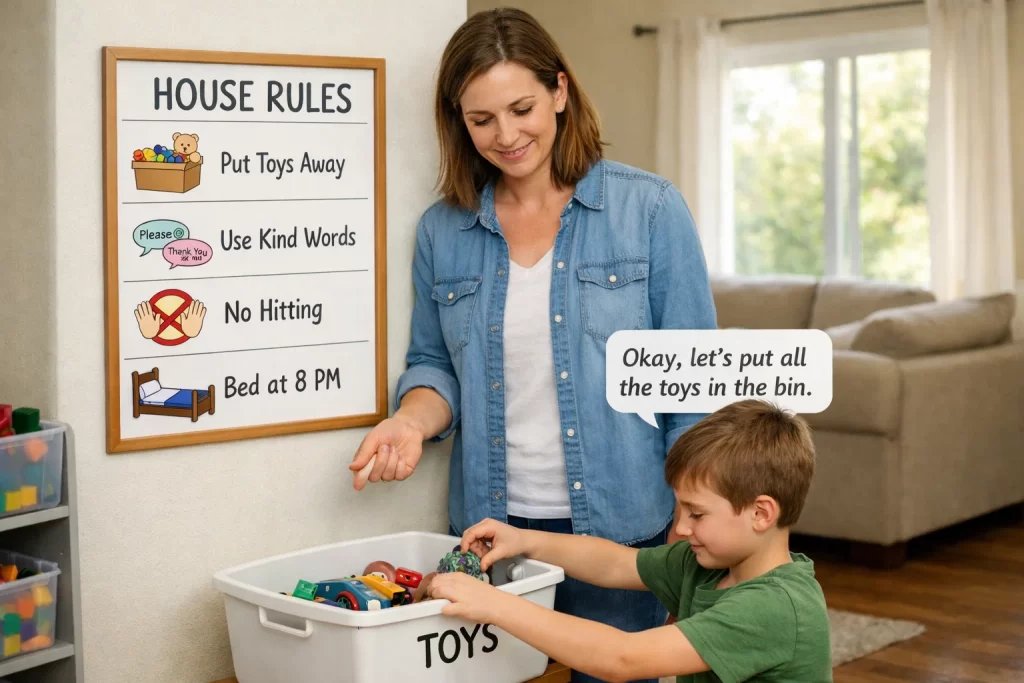
Clear rules form the backbone of Child Behavior Management. Studies from Head Start show that children follow instructions 30% more often when directions are specific and direct. Instead of saying, “Behave,” we say, “Please put your toys in the bin.”
Children under age 10 process short instructions better. The NHS advises giving one instruction at a time to reduce overload. When expectations are visible, such as written charts, compliance increases by nearly 20%.
Key actions:
- Use short, direct instructions.
- Make rules visible on charts.
- Repeat expectations calmly.
2. Use Positive Reinforcement Daily

Reward the Behavior You Want to See
Positive reinforcement strengthens good habits faster than punishment. According to the Child Mind Institute, praise increases positive behavior by 31% when used consistently.
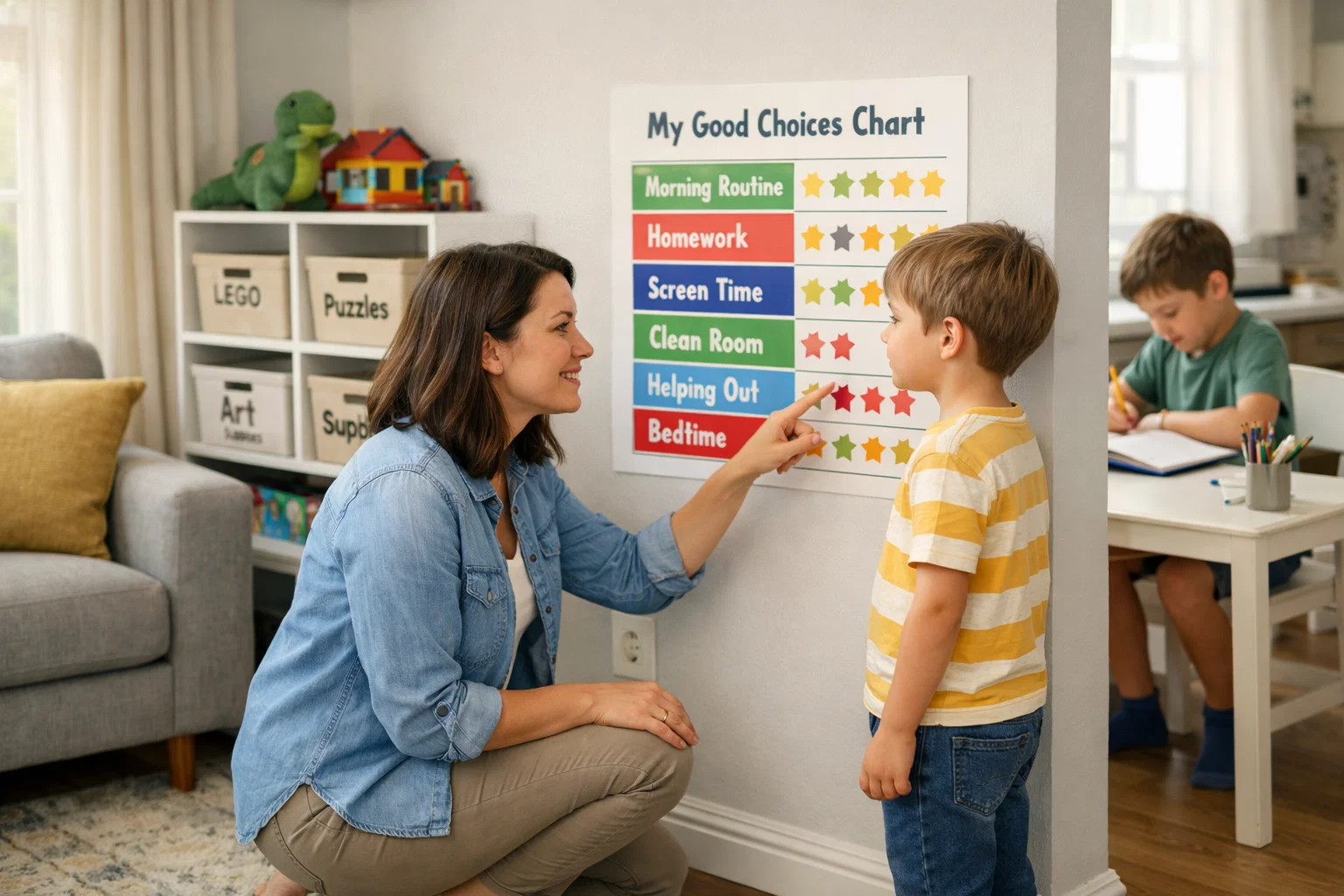
Effective Child Behavior Management focuses on catching children doing something right. We reinforce effort, not perfection. For example, praising homework completion builds academic discipline.
A 2025 parenting review found that children receiving consistent positive feedback show 28% fewer emotional outbursts. Rewards do not need money. Verbal praise, extra playtime, or sticker systems work well. Start with our foundational guide, Child Behavior Guide: 6 Ways to Understand & Manage Kids’ Actions.
3. Create Predictable Daily Routines

Structure Builds Emotional Security
Children thrive on routine. Research from aifs.gov.au confirms that predictable routines improve sleep patterns and reduce resistance behaviors.
Morning and bedtime routines reduce stress hormones by measurable levels in young children. Consistency supports brain development and emotional regulation.
| Routine Element | Impact on Behavior |
|---|---|
| Fixed bedtime | 25% fewer tantrums |
| Scheduled meals | Improved mood stability |
| Homework hour | Better task completion |
| Screen time limits | Lower irritability |
A structured schedule eliminates guesswork. Predictability gives children emotional safety and reduces power struggles.
4. Stay Consistent With Consequences

Follow Through Every Time
Consistency defines effective Child Behavior Management. If consequences change daily, children test limits more often.
Head Start data shows that consistent consequences reduce repeated misbehavior by 35%. The key is calm delivery. We avoid yelling. We apply consequences immediately and proportionally.
Examples include time-outs lasting one minute per year of age or loss of a specific privilege. Emotional skills support habits. Read Emotional Regulation in Children: 6 Steps to Teach Self-Control.
5. Model the Behavior You Expect

Children Copy What They See
Children mirror adult behavior. According to developmental psychology research updated in 2026, modeling respectful communication reduces sibling conflicts by 22%.
If we shout, children learn to shout. If we speak calmly, they learn calm responses. Modeling patience during stressful moments teaches emotional regulation.
Effective Child Behavior Management requires self-awareness. Our behavior sets the emotional tone of the household.
6. Limit Screen Time Strategically

Balance Digital and Real-World Habits
As of 2026, U.S. children aged 8–12 average 5.5 hours of daily screen use. Excessive screen time links to higher impulsivity and sleep issues.
The NHS recommends age-appropriate limits and device-free bedrooms. Structured limits improve focus and reduce irritability within two weeks.
Screen management tips:
- No screens one hour before bed.
- Set clear daily time caps.
- Encourage outdoor play daily.
7. Teach Emotional Regulation Skills

Help Children Name and Manage Feelings
Strong Child Behavior Management includes emotional coaching. Research from childmind.org shows that labeling emotions reduces tantrum intensity by 40%.
We guide children to say, “I feel angry,” instead of acting out. Deep breathing techniques lower heart rate within minutes.
Steps to build regulation skills:
- Name the feeling.
- Validate the emotion.
- Offer coping strategies.
- Practice during calm moments.
Build stronger guidance skills with Positive Discipline Strategies: 7 Ways to Guide Your Child Effectively.
Bottom Line
Child Behavior Management works best when we focus on consistency, clarity, and emotional skill-building. Data from 2026 confirms that structured parenting reduces daily conflicts and improves cooperation significantly. Clear expectations lower confusion. Positive reinforcement strengthens habits. Consistent routines and consequences create security. Emotional coaching builds resilience.
We do not aim for perfect children. We aim for skilled, emotionally aware children. When we apply these seven tips daily, behavior improves steadily. Change happens through repetition, not reaction. Start with one strategy today and track results for two weeks.