


Table of Contents
Child Safety Tips matter more than ever in 2026, as injuries remain a leading threat to children’s health. According to the Centers for Disease Control and Prevention (CDC), unintentional injuries are still the leading cause of death for U.S. children ages 1 to 17. In 2024 data updates, over 7,000 children died from preventable injuries, and millions visited emergency rooms. Most of these incidents happened at home or during everyday outdoor activities.
We cannot control every risk, but we can reduce most hazards with clear safety steps. The American Academy of Pediatrics notes that simple home safety changes lower injury risk by up to 30%. Outdoor supervision and proper gear reduce serious trauma significantly.
1. Make Your Home Fall-Proof

Falls account for nearly 2.8 million emergency visits yearly among children under 19, according to CDC 2024 updates. Most falls occur inside the home.
Secure Furniture and Install Safety Gates
We should anchor heavy furniture to walls to prevent tip-overs. TVs and dressers cause thousands of injuries each year. Install safety gates at staircases for children under age five. Use window guards on upper floors. Keep floors dry and clutter-free to prevent slipping hazards.
The American Academy of Pediatrics recommends guards on windows above the first floor. Safety is a key part of overall wellness. See our full guide to child health and nutrition.
2. Prevent Poisoning and Choking

Poisoning is the second leading cause of injury death in children. In 2024, over 60,000 children visited emergency departments for medication poisoning.
Store Medications and Small Objects Safely
We must store medicines in locked cabinets, not purses or countertops. Use child-resistant packaging and keep cleaning supplies out of reach. Avoid transferring chemicals into food containers.
Choking remains a serious risk for children under age four. Cut grapes and hot dogs into small pieces. Keep coins, batteries, and small toys off the floor.
Quick action saves lives, so call Poison Control at 1-800-222-1222 immediately if exposure occurs.
3. Practice Fire and Burn Safety

Fires and burns send over 100,000 children to emergency departments annually. Smoke inhalation remains a major cause of injury.
Install Smoke Alarms and Create Escape Plans
We should install smoke alarms on every level of the home. Test alarms monthly and replace batteries twice a year. Create and practice a family escape plan. Teach children how to “stop, drop, and roll.”
Set water heaters to 120°F to prevent scalding burns. Keep hot drinks and cooking pans away from the edges. Use stove knob covers for toddlers.
The National Fire Protection Association reports that working smoke alarms reduce fire death risk by 55%. Rested children are safer children learn how to build a strong bedtime routine for kids.
4. Prioritize Outdoor and Road Safety

Outdoor injuries often involve vehicles, bikes, and playground equipment. Motor vehicle crashes remain the leading injury-related death for children.
Use Proper Car Seats and Helmets
We must use age-appropriate car seats correctly. In 2024, the National Highway Traffic Safety Administration confirmed that car seats reduce fatal injury by 71% for infants and 54% for toddlers.
Children should wear helmets while biking, skating, or scootering. Helmets reduce head injury risk by up to 85%. Supervise playground use and check equipment surfaces for safety.
5. Protect Children Online

Digital exposure has increased sharply since 2020. In 2025, over 95% of teens reported daily internet use. Online risks now affect child safety beyond physical hazards.
Set Digital Boundaries and Monitor Activity
We should set parental controls on devices and apps. Keep computers in shared spaces. Teach children not to share personal information. Monitor screen time based on age guidelines.
The American Academy of Pediatrics recommends creating a family media plan. Visit aap.org for updated digital safety tools.
Online awareness protects emotional health and personal security. Stay prepared by understanding the early symptoms of common childhood illnesses.
6. Teach Stranger Awareness and Personal Boundaries
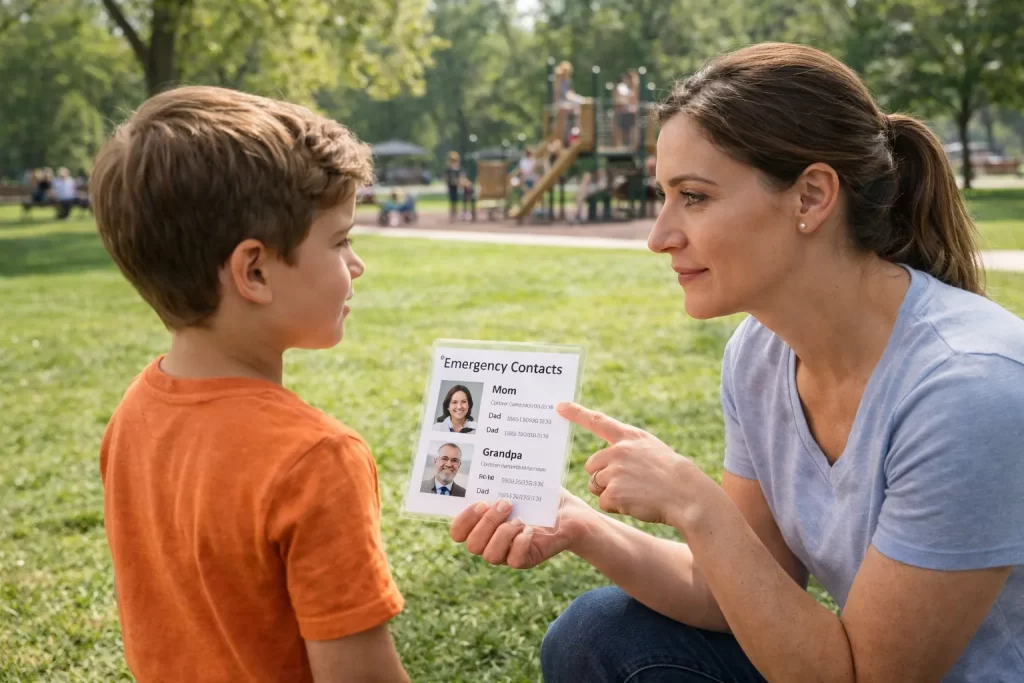
Teaching children about personal safety builds confidence and awareness. Education reduces vulnerability to harm.
Practice Safe Communication Skills
We should teach children their full name, address, and emergency contacts. Explain safe versus unsafe touch in simple language. Encourage children to speak up if uncomfortable.
Role-play scenarios about strangers and public safety. Teach children never to go anywhere without parental permission.
The FBI’s 2024 child safety education updates emphasize communication and supervision as key prevention tools.
7. Maintain Regular Health and Safety Checks
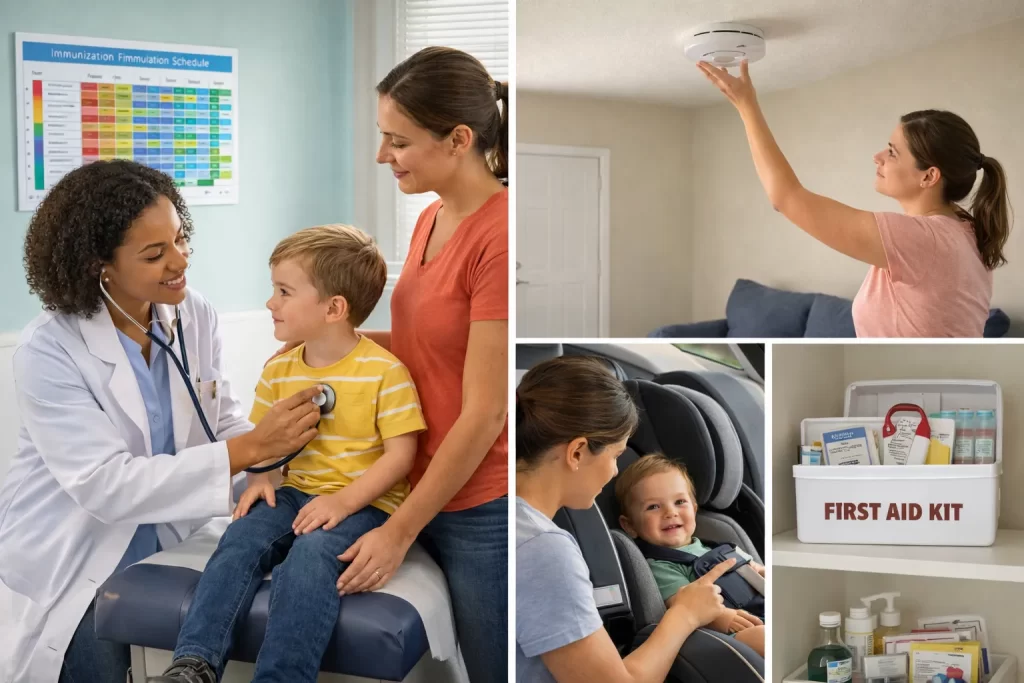
Prevention includes medical care and home maintenance. Regular checkups identify risks early.
Schedule Pediatric Visits and Inspect Safety Equipment
We should follow recommended well-child visit schedules. Immunizations protect against preventable diseases. Check smoke alarms, carbon monoxide detectors, and first-aid supplies regularly.
According to the CDC immunization schedule update in 2026, routine vaccines prevent 14 serious childhood diseases. Keeping safety equipment functional reduces emergency response time.
Monthly safety routine:
| Safety Check | Recommended Frequency | Why It Matters |
|---|---|---|
| Test smoke alarms | Monthly | Early fire detection |
| Check car seat fit | Every 3 months | Proper crash protection |
| Review medicine storage | Monthly | Prevent poisoning |
| Update emergency contacts | Twice yearly | Faster emergency response |
Bottom Line
Child Safety Tips work best when practiced daily and reviewed often. Most childhood injuries are preventable with simple, consistent actions. Securing furniture, storing medications safely, installing alarms, and supervising outdoor play dramatically reduce risk. Teaching digital awareness and personal boundaries protects children beyond physical spaces.
We cannot eliminate every danger, but we can reduce exposure significantly. Start with one room today and complete a safety checklist. Practice emergency drills this month. Review online safety rules this week. Small, consistent steps build safer homes and communities.