

Table of Contents
A consistent Child Sleep Routine is one of the strongest predictors of healthy growth and learning. Sleep fuels brain development, immune strength, and emotional balance. According to the CDC, children aged 6–12 years need 9–12 hours of sleep nightly, while teens need 8–10 hours. Yet CDC data updated in 2025 shows 35% of middle school students sleep less than 8 hours on school nights. That gap affects mood, focus, and long-term health.
We now know sleep regulates growth hormone release, memory consolidation, and appetite hormones. The American Academy of Pediatrics reports that chronic sleep loss increases obesity risk by up to 60% in children. A structured Child Sleep Routine protects against these risks. When we guide bedtime habits early, we improve school performance and emotional stability. The right steps, repeated nightly, build lifelong sleep hygiene.
Why a Consistent Child Sleep Routine Matters

A predictable Child Sleep Routine stabilizes the body clock. Our internal circadian rhythm responds to light, food, and routine cues. When bedtime shifts daily, melatonin release becomes irregular. That delay makes falling asleep harder the next night.
Harvard pediatric sleep experts note that even a 30-minute bedtime delay can reduce REM sleep cycles. REM sleep supports learning and memory storage. Children who sleep fewer than 9 hours show reduced attention scores by 20% in classroom testing. A regular Child Sleep Routine keeps the brain aligned with natural rhythms. Consistency strengthens both academic focus and emotional control.
Sleep Duration by Age Group
We must match sleep hours to age needs. Babies require 12–16 hours, including naps. Preschoolers need 10–13 hours. School-aged children need 9–12 hours nightly. Teens need at least 8 hours.
The CDC updated 2025 Youth Risk Behavior Survey shows 77% of high school students do not meet the 8-hour recommendations. That shortfall links to higher anxiety and injury rates. A structured Child Sleep Routine ensures children hit their recommended range daily. Matching sleep to age protects growth and mental health. Healthy sleep is part of our full child wellness framework. Explore the complete health and nutrition guide.
Tip 1: Set a Fixed Bedtime and Wake Time
A fixed schedule anchors the Child Sleep Routine. Choose a bedtime that allows the full recommended hours before morning wake-up. Keep wake time consistent, even on weekends.
Research from Boston Children’s Hospital shows children with variable weekend bedtimes sleep 40 minutes less on school nights. That sleep debt accumulates quickly. When bedtime remains steady, melatonin rises predictably. The body learns when to relax. Consistency builds faster sleep onset and deeper rest.
How to Build the Schedule
Start with your child’s wake time. Count backward the required sleep hours. Add a 20–30 minute wind-down period. Repeat nightly for at least 14 days.
Children adapt within two weeks when routines stay stable. If bedtime shifts are needed, adjust by 15 minutes daily. Gradual shifts prevent resistance. A steady Child Sleep Routine reduces bedtime battles and improves morning energy.
Tip 2: Create a Calm Pre-Bed Wind-Down Routine

A relaxing pre-bed ritual signals the brain that sleep is near. Activities should stay calm and screen-free. Reading, bathing, or soft music work best.
Blue light from screens suppresses melatonin by up to 23%, according to pediatric sleep research cited by KidsHealth.org. Turn off devices at least one hour before bed. A predictable 20-minute wind-down reduces cortisol levels. This steady signal strengthens the Child Sleep Routine.
Keep the Sequence Predictable
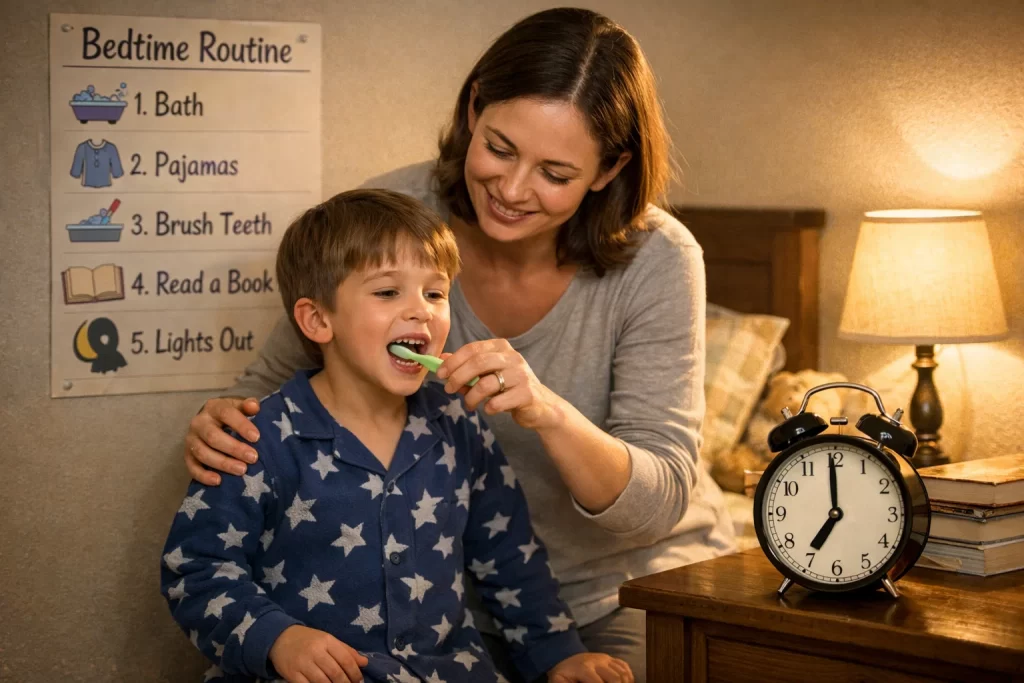
Follow the same order nightly. For example: bath, pajamas, brushing teeth, story, lights out. Repetition builds neural cues.
Children feel secure when routines stay familiar. Predictability lowers bedtime anxiety. A consistent Child Sleep Routine with calming steps improves sleep latency and emotional comfort. Vaccines protect rest and recovery. Review the essential immunization schedule for children.
Tip 3: Optimize the Sleep Environment

The sleep environment shapes the success of any Child Sleep Routine. Bedrooms should stay dark, cool, and quiet. The ideal temperature ranges between 65 70°F.
Light exposure delays melatonin release. Blackout curtains reduce early morning waking. Noise machines can mask household sounds. Remove televisions and tablets from bedrooms. The American Academy of Pediatrics links bedroom screen presence with 30 minutes less nightly sleep. Optimizing space supports uninterrupted rest.
Quick Environmental Checklist
- Keep room temperature at 65–70°F.
- Use blackout curtains.
- Remove screens and blinking lights.
- Provide a supportive mattress and pillow.
Tip 4: Support Healthy Daytime Habits

Daytime habits directly influence nighttime sleep quality. Physical activity increases total sleep time by up to 40 minutes. Encourage at least 60 minutes of active play daily.
Limit caffeine and sugary drinks after 2 PM. A balanced dinner with protein and complex carbohydrates supports stable blood sugar overnight. Exposure to natural sunlight in the morning anchors circadian rhythms. These habits reinforce a stable Child Sleep Routine.
Nutrition and Sleep Connection
Magnesium-rich foods like leafy greens and seeds support relaxation. Avoid heavy meals within one hour of bedtime.
Balanced nutrition stabilizes energy and mood. Healthy daytime choices make bedtime smoother and strengthen the Child Sleep Routine. Daytime health starts with balanced meals, so check out smart nutrition tips for toddlers.
Sleep Recommendations by Age
| Age Group | Recommended Hours | Common Risk if Inadequate |
|---|---|---|
| Infants (4–12 months) | 12–16 hours | Delayed growth |
| Toddlers (1–2 years) | 11–14 hours | Behavioral issues |
| Preschool (3–5 years) | 10–13 hours | Mood swings |
| School Age (6–12 years) | 9–12 hours | Poor focus |
| Teens (13–18 years) | 8–10 hours | Anxiety, accidents |
Bottom Line
A strong Child Sleep Routine builds healthy brains, steady moods, and stronger immunity. Children need structured schedules, calming wind-down time, and screen-free bedrooms. They also need daytime activity and balanced meals. Small nightly habits create lasting biological benefits.
We must protect sleep as seriously as nutrition and exercise. Start with a fixed bedtime tonight. Remove screens from bedrooms. Follow the same calming steps every evening. Within two weeks, most children fall asleep faster and wake refreshed.