


Table of Contents
Common Childhood Illnesses affect nearly every family each year. In 2026, children in the United States average 6 to 8 colds annually, according to the American Academy of Pediatrics. Respiratory infections remain the top cause of pediatric doctor visits. Stomach viruses, ear infections, and influenza also peak during school months.
We cannot prevent every illness, but we can recognize symptoms early and manage them safely. The Centers for Disease Control and Prevention reports that children under age 5 account for over 7 million outpatient visits yearly due to viral infections. Early action reduces complications and missed school days.
In this guide, we explain five practical ways to identify and manage Common Childhood Illnesses. We focus on symptoms, home care, red flags, and prevention steps.
1. Recognize Cold and Flu Symptoms Early
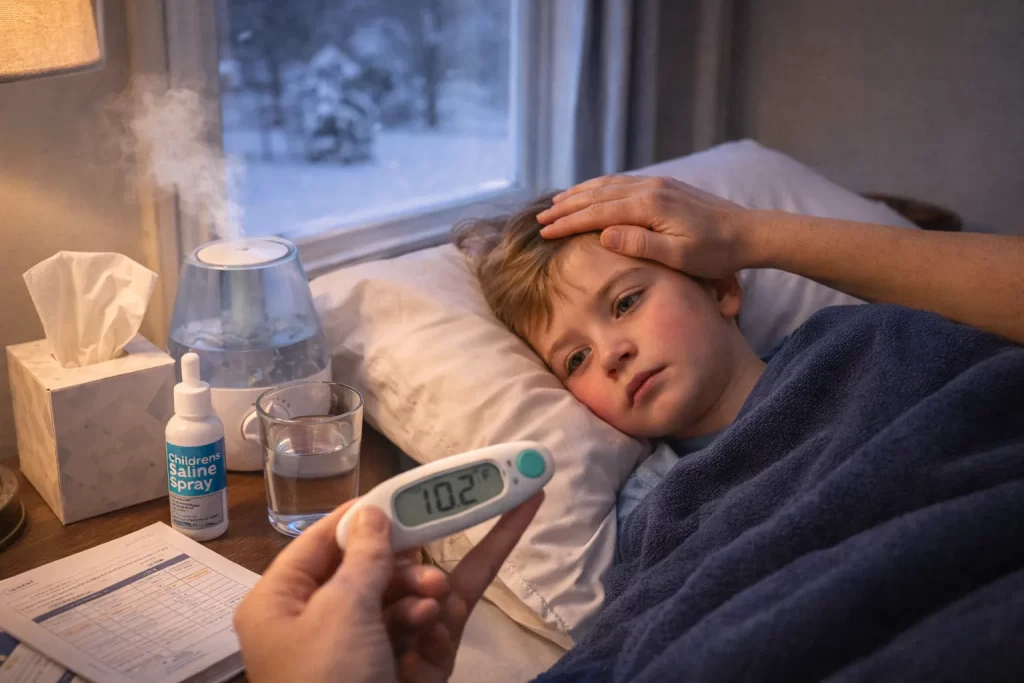
Colds and influenza lead the list of Common Childhood Illnesses. The CDC confirms influenza activity remains seasonal, with pediatric hospitalizations reported each winter. In the 2024–2025 flu season, over 200 pediatric deaths were recorded nationwide. Early recognition matters.
How to Spot the Difference
Colds develop gradually with mild fever and a runny nose. Flu begins suddenly with a high fever above 101°F. Body aches and fatigue are stronger with the flu.
Watch for these signs:
- Fever lasting more than 3 days.
- Severe headache or muscle pain.
- Dry cough with chest discomfort.
- Reduced appetite and unusual tiredness.
If breathing becomes difficult, seek care immediately. Quick response reduces complications like pneumonia.
How to Manage at Home
Offer fluids every hour. Use saline drops for congestion. Run a cool-mist humidifier overnight. Ensure rest for at least 48 hours.
Antiviral medication works best within 48 hours of flu symptoms. Always consult your pediatrician before giving medication. For updated flu data, review cdc.gov/flu for current 2026 statistics. For a complete plan to support your child’s health, read our child health and nutrition pillar guide.
2. Understand Ear Infections and Sore Throats
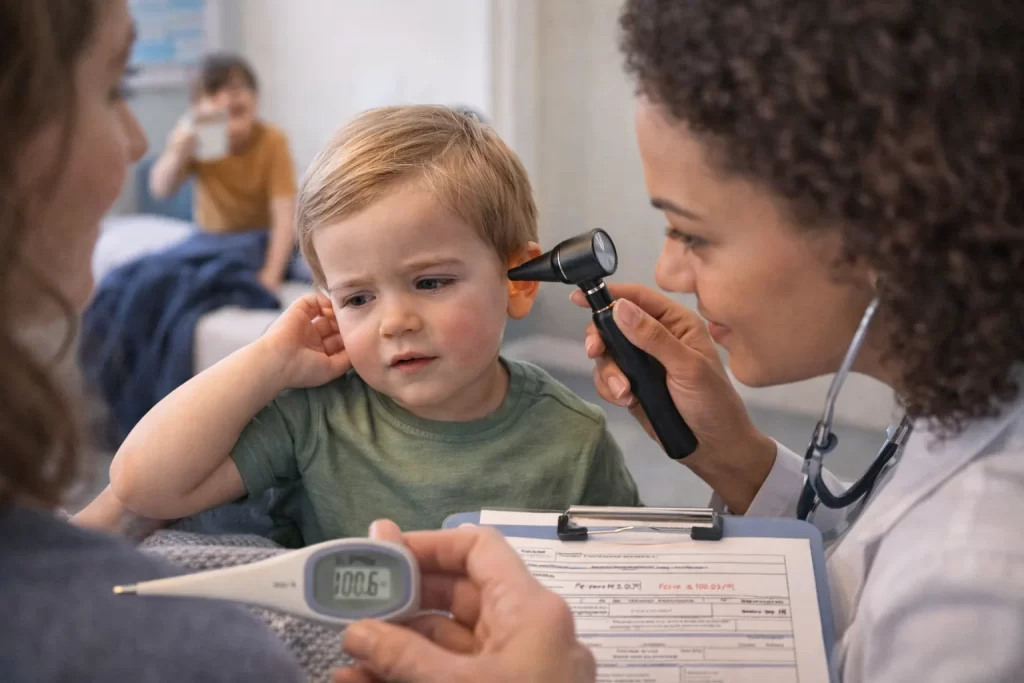
Ear infections remain one of the most frequent Common Childhood Illnesses in children under 3. The National Institutes of Health states that 5 out of 6 children experience at least one ear infection before age 3.
Signs of an Ear Infection
Children may tug at their ears. Fever often rises above 100.4°F. Sleep becomes restless, and appetite drops.
Pain typically worsens when lying down. Fluid drainage from the ear requires urgent care. Early treatment prevents hearing complications.
Managing Sore Throats
Sore throats often result from viral infections. However, strep throat requires antibiotics. According to healthychildren.org, about 20% to 30% of childhood sore throats are caused by streptococcal bacteria.
Encourage warm fluids and soft foods. Use age-appropriate pain relief under medical advice. If swallowing becomes painful or a rash develops, consult a doctor immediately. Prevention begins with everyday protection. Review our practical child safety strategies.
3. Monitor Stomach Viruses and Dehydration
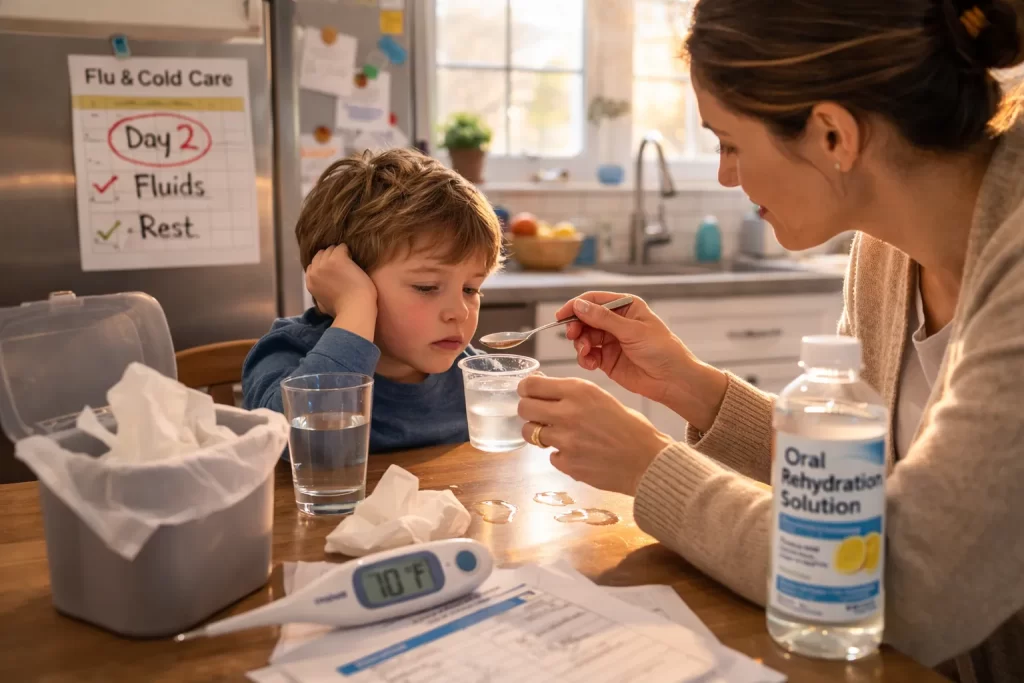
Stomach bugs, also called viral gastroenteritis, are highly contagious. Common Childhood Illnesses. The CDC estimates that norovirus causes 19 to 21 million illnesses annually in the United States. Young children face higher dehydration risks.
Symptoms to Watch
Vomiting and diarrhea appear suddenly. Fever may reach 102°F. Mild abdominal cramps are common.
Dehydration signs include:
- Dry mouth or cracked lips.
- No tears when crying.
- Urinating fewer than 3 times in 24 hours.
- Sunken eyes or extreme fatigue.
Safe Management at Home
Offer oral rehydration solution in small sips every 5 minutes. Avoid sugary drinks. Resume bland foods after vomiting stops for 8 hours.
Most cases improve within 1 to 3 days. If symptoms persist beyond 72 hours, seek medical care. Prevent spread by washing hands with soap for 20 seconds. Consistent hygiene reduces repeat infections.
4. Identify Skin Rashes and Allergic Reactions
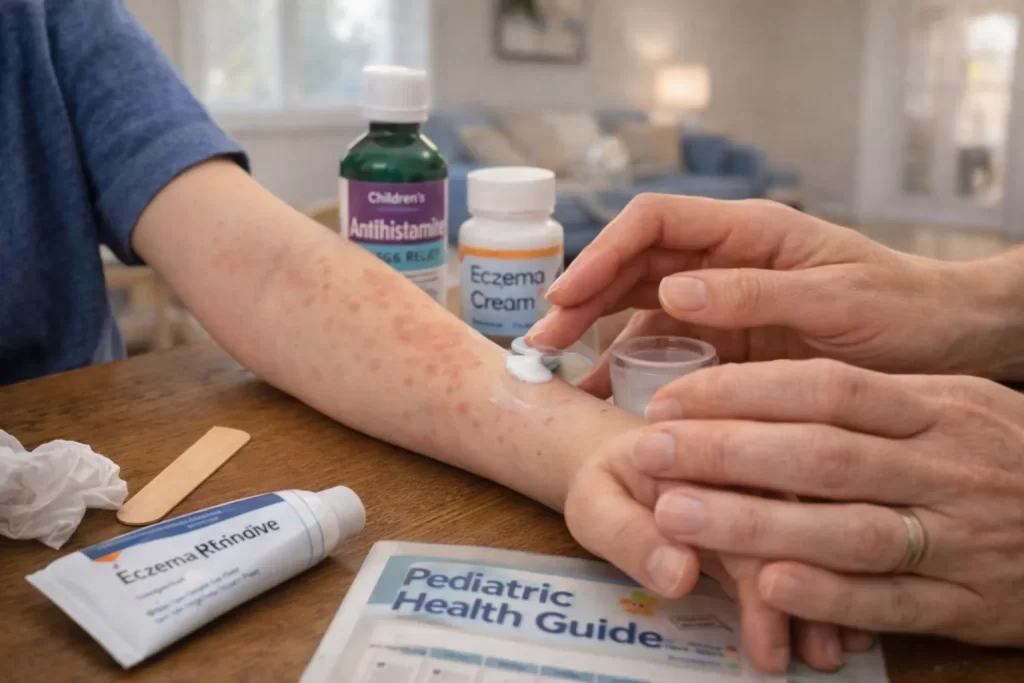
Skin conditions represent a visible category of Common Childhood Illnesses. Rashes may signal viral infections, allergic reactions, or eczema flare-ups.
Common Rash Triggers
Hand, foot, and mouth disease causes red spots and mild fever. Eczema affects about 10% of U.S. children, according to the National Eczema Association.
Allergic rashes often appear after new foods or medications. Hives look raised and itchy. Immediate swelling of the lips or face requires emergency care.
How to Manage Mild Cases
Keep skin clean and dry. Apply fragrance-free moisturizer twice daily. Use antihistamines only under pediatric guidance.
Track new foods or exposures. This helps identify patterns and prevent recurrence. If rash spreads rapidly or involves breathing changes, call emergency services immediately. Strong immunity also depends on proper nutrition, so explore healthy food choices for toddlers.
5. Prevent Infections Through Vaccination and Hygiene

Prevention remains the strongest defense against Common Childhood Illnesses. The CDC’s 2026 immunization schedule protects against 14 serious diseases before age 2. Vaccination rates for kindergarteners reached 93% nationwide in 2025.
Key Prevention Strategies
- Follow the CDC immunization schedule.
- Wash your hands before meals and after bathroom.
- Disinfect shared toys weekly.
- Encourage balanced nutrition rich in vitamin C and zinc.
- Ensure 9 to 12 hours of sleep for school-aged children.
Quick Symptom Guide
| Illness Type | Main Symptom | Fever Range | When to Call Doctor |
|---|---|---|---|
| Cold | Runny nose | Rare or mild | Lasts over 10 days |
| Flu | Sudden fatigue | 101–104°F | Trouble breathing |
| Ear Infection | Ear pain | 100–102°F | Fluid drainage |
| Stomach Virus | Vomiting | Up to 102°F | No urination 24 hrs |
| Allergic Reaction | Hives | Usually none | Facial swelling |
Bottom Line
Common Childhood Illnesses are part of growing up, but informed action makes a difference. We recognize symptoms early, monitor warning signs, and manage mild cases safely at home. We seek medical care when symptoms escalate or persist beyond safe limits.
Strong prevention habits reduce infection rates significantly. Vaccination, hygiene, sleep, and balanced nutrition strengthen immunity.