

Table of Contents
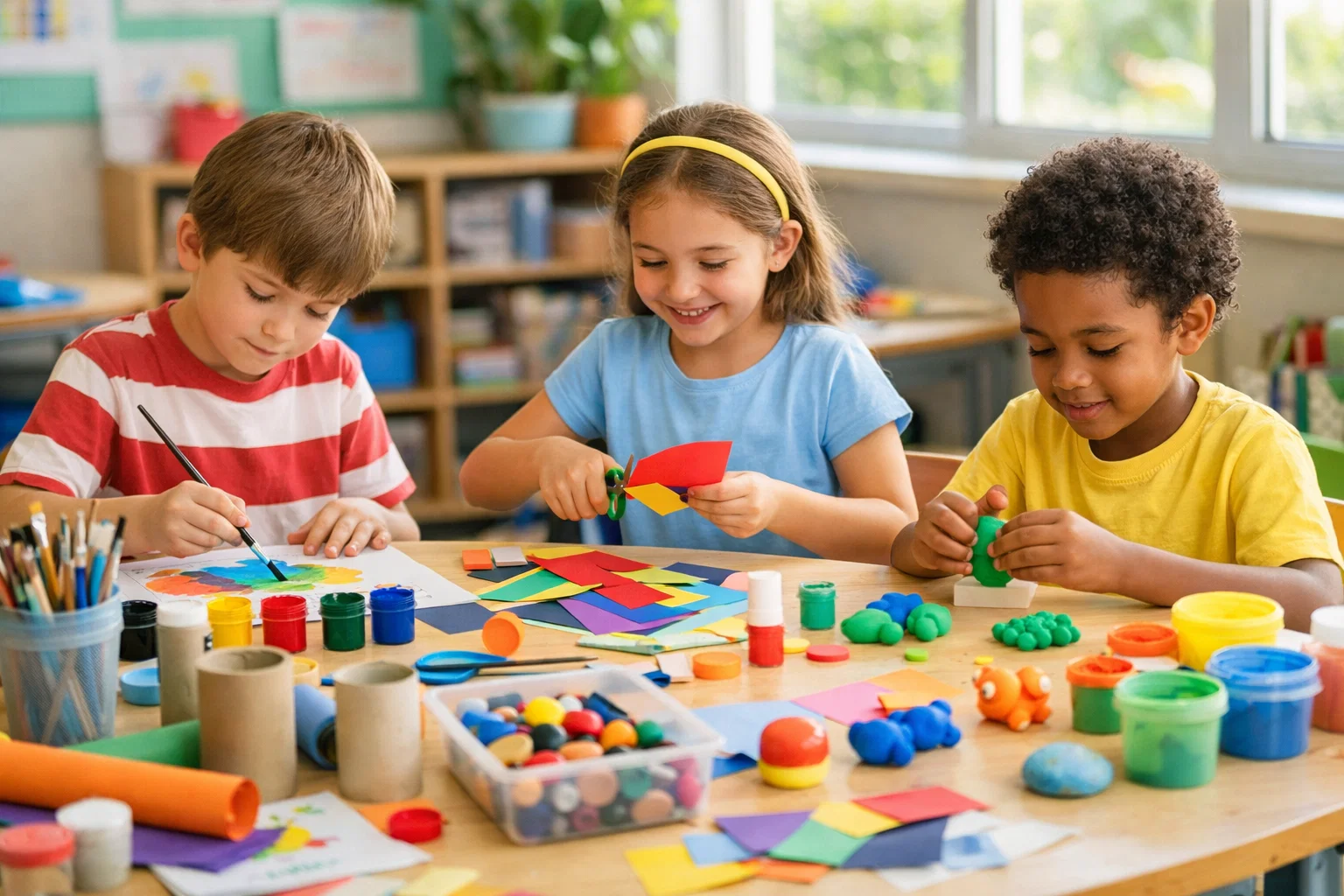
Creative Activities for Children play a crucial role in early cognitive and emotional development. Research shows that creative play improves problem-solving ability, language skills, and emotional expression in children aged 4–12. According to the Australian parenting resource Raising Children Network, creative activities stimulate brain connections that support learning, memory, and self-confidence.
Children who participate in creative activities at least three times per week show a 23% improvement in creative thinking scores. Art, craft, and hands-on activities allow children to explore ideas freely while building patience and focus. Even simple materials like paper, glue, and recycled items can become powerful tools for learning.
Parents and teachers do not need expensive supplies to encourage creativity. Structured yet flexible activities work best for developing imagination and curiosity. When children create something with their hands, they learn experimentation, persistence, and confidence.
Why Creative Activities Are Essential for Child Development
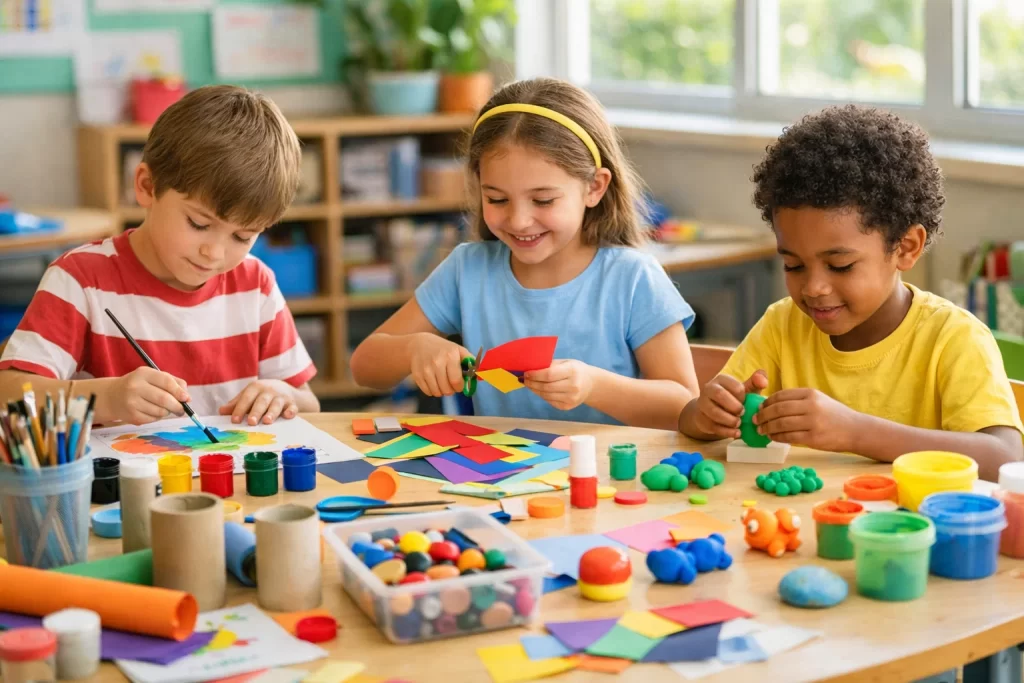
Creative Activities for Children support intellectual, emotional, and social development. Creative play activates multiple brain regions responsible for problem-solving, storytelling, and emotional regulation. Children who engage in art projects often show stronger communication and collaboration skills.
Creative activities help children express feelings they may struggle to verbalize. Art becomes a safe outlet for emotions and ideas. As a result, children develop self-confidence and stronger identity awareness.
Creative engagement also strengthens fine motor skills. Cutting paper, drawing shapes, and assembling crafts improve hand-eye coordination. These skills support handwriting and other academic tasks.
Key developmental benefits include:
- Strengthened imagination and creativity
- Improved problem-solving ability
- Enhanced fine motor development
- Better emotional expression
- Increased confidence and independence
Schools worldwide now incorporate creative learning strategies into STEM education. The approach is often called STEAM, combining science with art and creativity.
The table below highlights how creative activities impact child development.
| Skill Area | Creative Activity Impact | Age Benefit |
|---|---|---|
| Cognitive Development | Encourages imagination and problem solving | 4–12 years |
| Motor Skills | Improves hand-eye coordination | 4–8 years |
| Emotional Expression | Helps children communicate feelings | 5–12 years |
| Social Skills | Encourages teamwork in group projects | 6–12 years |
| Confidence | Builds pride in completed creations | Encourages imagination and problem-solving |
Paper Collage Art: Building Creativity With Simple Materials
Materials Needed
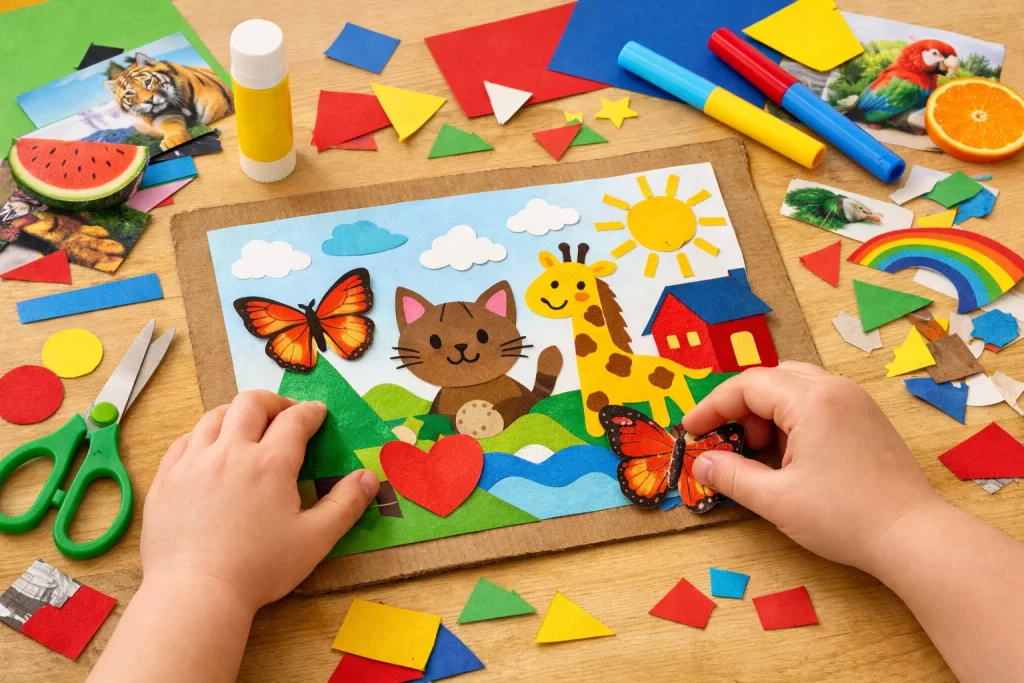
Paper collage is one of the most accessible Creative Activities for Children. It uses common household items and encourages experimentation. Children combine textures, colors, and shapes to create unique artwork.
Materials include:
- Colored paper or magazines
- Child-safe scissors
- Glue sticks
- Cardboard or drawing paper
- Markers or crayons
These simple supplies allow children to transform everyday materials into creative compositions.
Learning Benefits
Paper collage improves visual thinking and artistic exploration. Children learn to arrange shapes and colors intentionally. This process strengthens decision-making skills and creativity.
Collage projects also teach recycling awareness. Old newspapers, magazines, and packaging materials can become art supplies. Children learn that creativity does not require expensive materials.
Teachers often use collage activities to support storytelling. Children create scenes representing animals, seasons, or imaginary worlds. This technique connects visual art with narrative thinking.
Collage art remains one of the easiest Creative Activities for Children to introduce at home or school.
DIY Nature Crafts: Turning Outdoor Finds Into Art
Materials From Nature
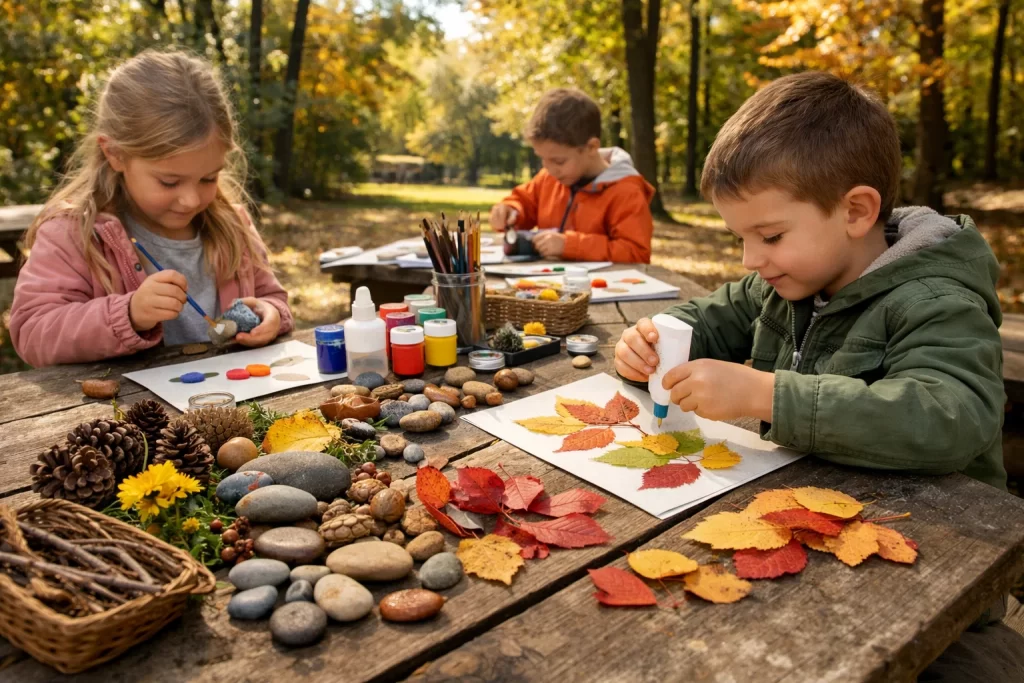
Nature crafts connect children with the outdoors while encouraging creativity. Children collect leaves, twigs, flowers, and stones during walks. These natural objects become materials for artistic projects.
Common nature craft materials include:
- Leaves and flowers
- Pinecones and sticks
- Smooth stones
- Seeds and bark
- Natural dyes from berries
Outdoor exploration adds excitement to creative play.
Developmental Value
Nature crafts help children observe patterns, colors, and textures in the environment. These observations strengthen scientific curiosity and environmental awareness.
For example, leaf printing teaches children about plant shapes and symmetry. Painting rocks improves fine motor control while encouraging patience. Building small sculptures with sticks introduces basic design concepts.
Outdoor creativity also reduces stress and improves mood. Studies in 2025 educational research reported that outdoor creative play reduces anxiety in children by 19%.
Homemade Playdough Sculpting: Creative Hands-On Learning
Simple Playdough Recipe
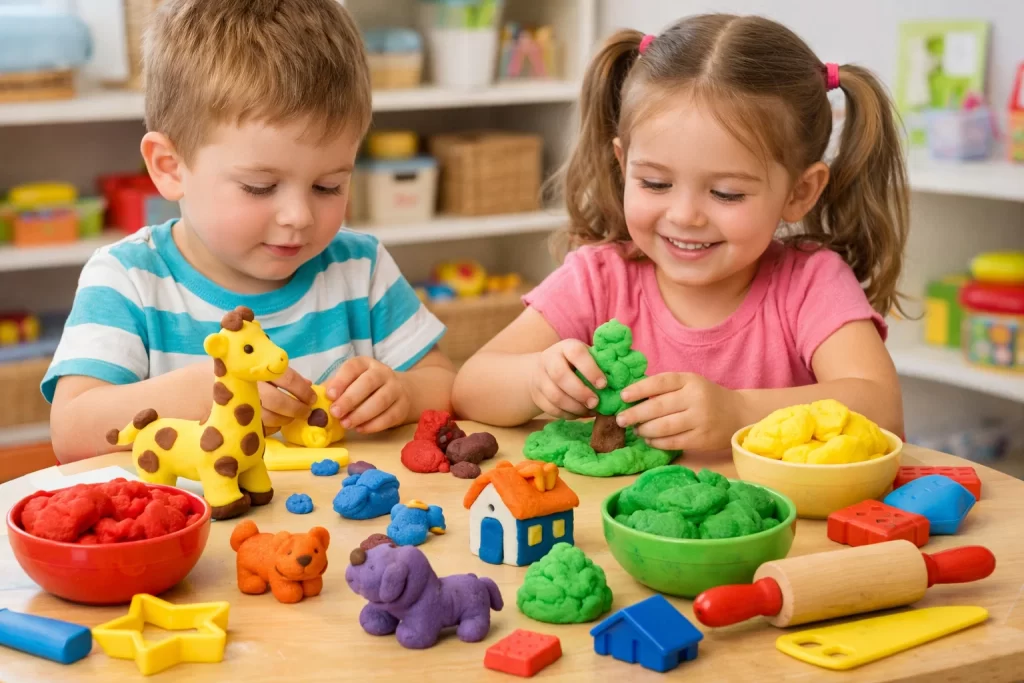
Homemade playdough remains one of the most effective Creative Activities for Children. The activity strengthens sensory learning and imagination. A basic recipe requires only five ingredients.
Ingredients:
- 2 cups flour
- 1 cup salt
- 1 tablespoon vegetable oil
- 1 cup warm water
- Food coloring
Mix ingredients until the dough forms a soft texture. Children can shape it into animals, buildings, or imaginary creatures.
Creative Skill Development
Playdough sculpting strengthens finger muscles essential for writing skills. Rolling, pressing, and shaping dough develops hand control and coordination.
Children also learn spatial thinking while building shapes and figures. This skill supports later math and geometry learning.
Teachers often combine playdough activities with storytelling. For example, children build animals while narrating stories about them. This approach strengthens language development and imagination.
Story Drawing: Combining Art With Imagination
How the Activity Works
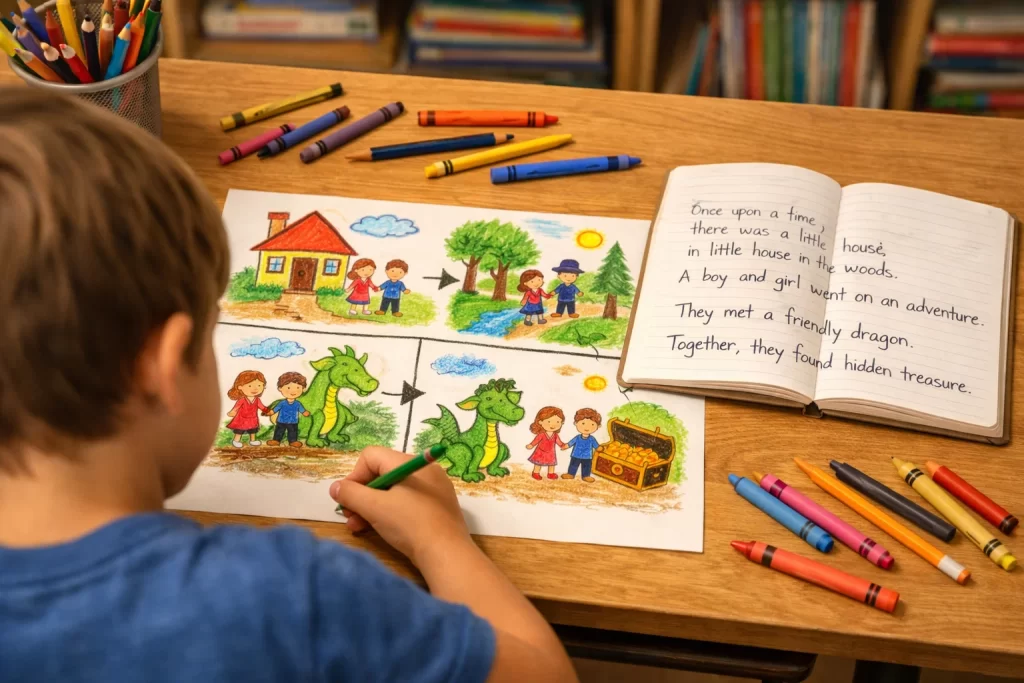
Story drawing encourages children to illustrate their own stories. This activity combines creativity with early literacy development.
Children begin by imagining a simple story. They then draw scenes that represent each part of the narrative. Finally, they describe the story aloud or write short sentences.
Educational Impact
Story drawing improves narrative thinking and visual communication. Children learn to structure ideas into beginning, middle, and ending sequences.
This activity also strengthens vocabulary development. When children describe drawings, they practice expressing thoughts clearly.
Teachers frequently use story drawing in early education programs. It encourages creativity while supporting reading readiness skills.
Recycled Craft Projects: Creativity With Sustainability
Materials From Household Items
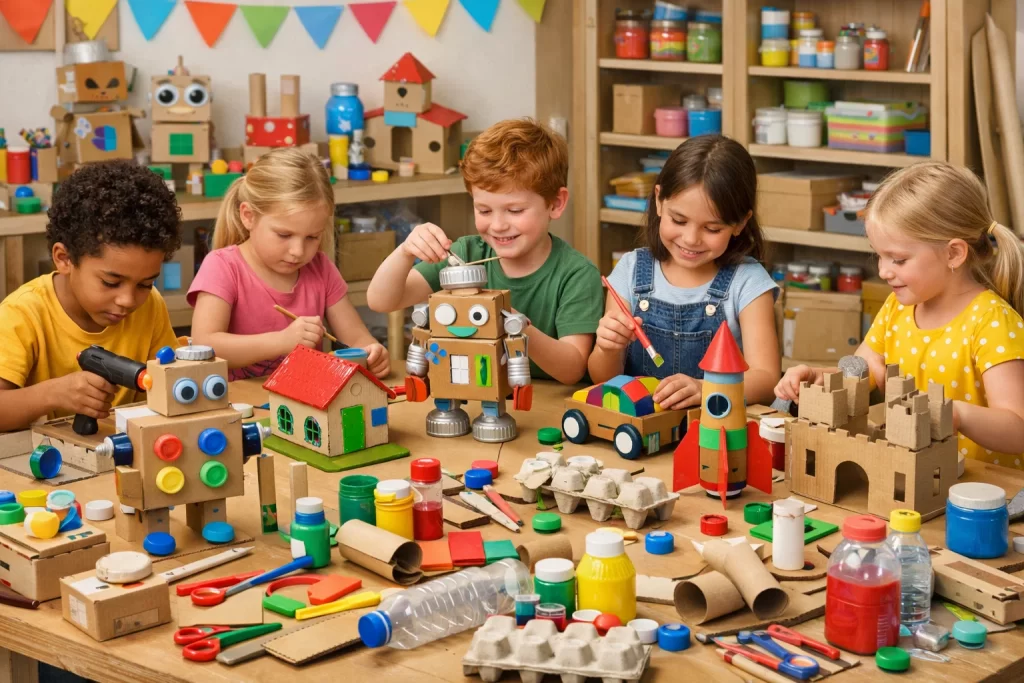
Recycled crafts teach children creativity and environmental responsibility. Instead of throwing away items, children transform them into useful creations.
Common recycled materials include:
- Cardboard boxes
- Plastic bottles
- Egg cartons
- Toilet paper rolls
- Bottle caps
Children can build toys, robots, animals, or decorative objects using these materials.
Environmental Learning Benefits
Recycled crafts introduce children to sustainability concepts early. They learn that many everyday items can be reused creatively.
These projects also improve engineering thinking. Children experiment with balance, structure, and design when building models.
For example, cardboard castles encourage architectural creativity. Bottle cap mosaics develop pattern recognition and artistic planning.
Tips for Encouraging Creative Activities at Home
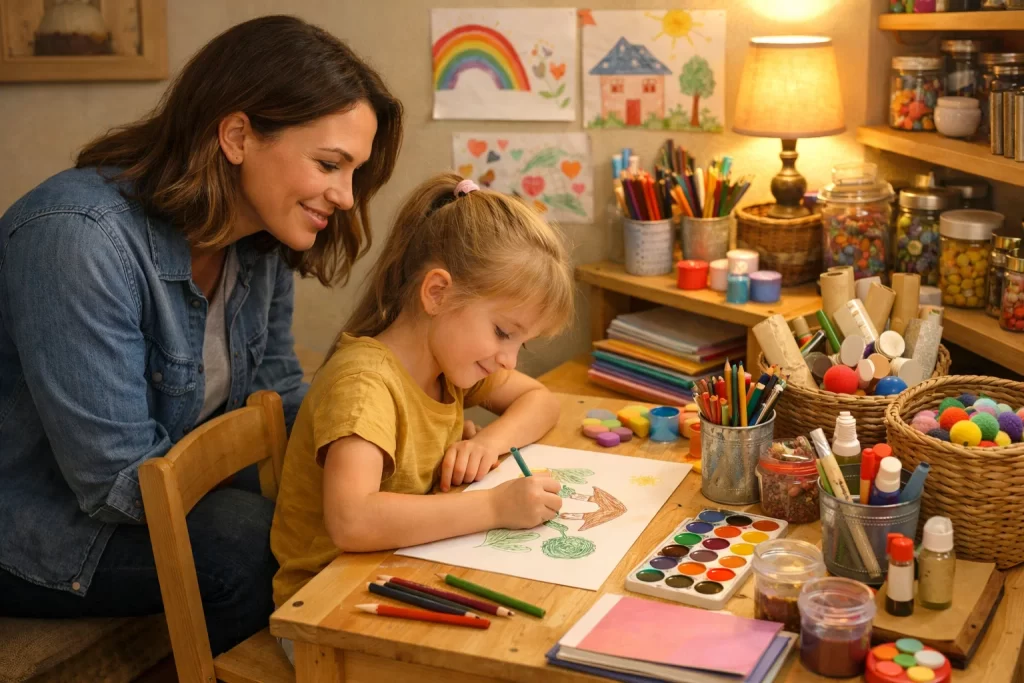
Parents can make Creative Activities for Children more effective by creating a supportive environment. Creativity grows best when children feel free to explore ideas without pressure.
Helpful strategies include:
- Provide a dedicated creative space at home
- Allow children to experiment without strict rules
- Encourage storytelling during art activities
- Use inexpensive and recycled materials
- Celebrate effort instead of perfection
Consistency matters more than complexity. Even 20 minutes of creative time daily can support imagination and learning.
Bottom Line
Creative Activities for Children build essential life skills that extend beyond art and craft projects. Through creative play, children develop imagination, emotional expression, and problem-solving ability. These skills contribute directly to academic learning and social development.
Simple activities such as paper collage, nature crafts, playdough sculpting, story drawing, and recycled projects provide powerful learning experiences. Each activity encourages experimentation and curiosity while strengthening motor and cognitive skills.