

Table of Contents
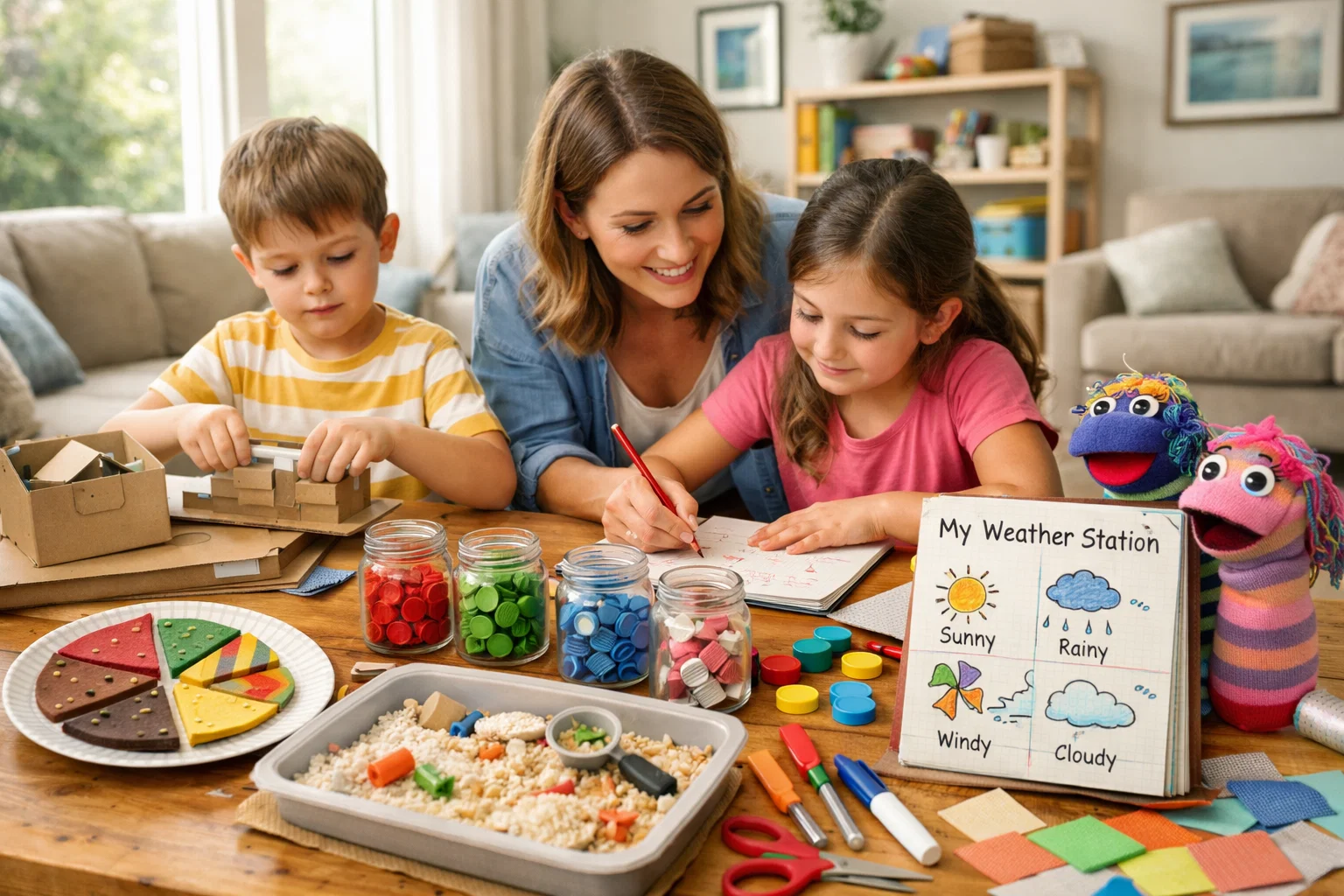
DIY Learning Activities are one of the most practical ways to build skills at home in 2026. Families are spending more structured time on home-based learning, and over 68% of parents globally now supplement schoolwork with at-home creative tasks, according to recent education trend reports published in January 2026. Simple household items can support literacy, math, science, and fine motor growth without expensive kits.
We do not need complex materials to build strong learning habits. Cardboard, paper rolls, rice, buttons, and plastic bottles can become powerful teaching tools. Research from Harvard’s Center on the Developing Child confirms that hands-on play strengthens executive function and problem-solving skills in children ages 3–10.
In this guide, we explore six structured DIY Learning Activities that use everyday materials. Each project connects creativity with measurable skill development.
1. Cardboard Shape City for Early Geometry
Materials and Setup
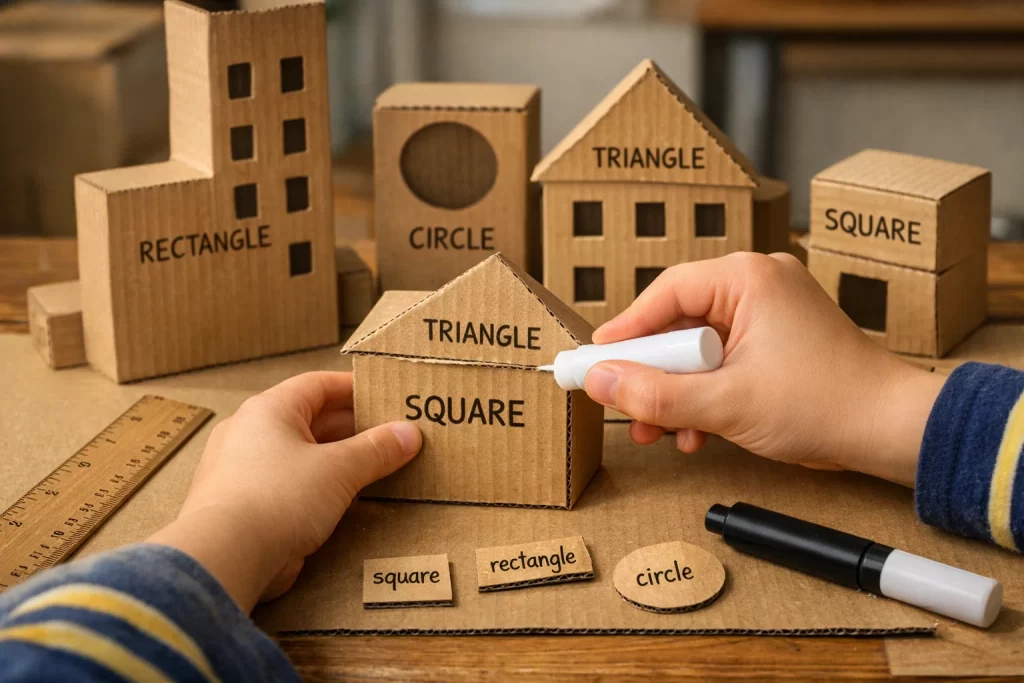
Cardboard boxes, scissors, glue, rulers, and markers create a simple geometry lab. Children cut squares, rectangles, triangles, and circles. They assemble buildings using basic shapes. This hands-on activity builds spatial awareness.
The National Council of Teachers of Mathematics reports that early exposure to shapes improves geometry readiness by Grade 2. Shape recognition supports math fluency later. This project playfully introduces geometry.
Skills Developed
This DIY Learning Activities project strengthens:
- Shape identification.
- Measurement basics.
- Fine motor control.
- Creative planning.
Children physically manipulate shapes. That movement improves retention. The final city becomes proof of understanding.
2. Rice Sensory Writing Tray for Literacy
Materials and Setup
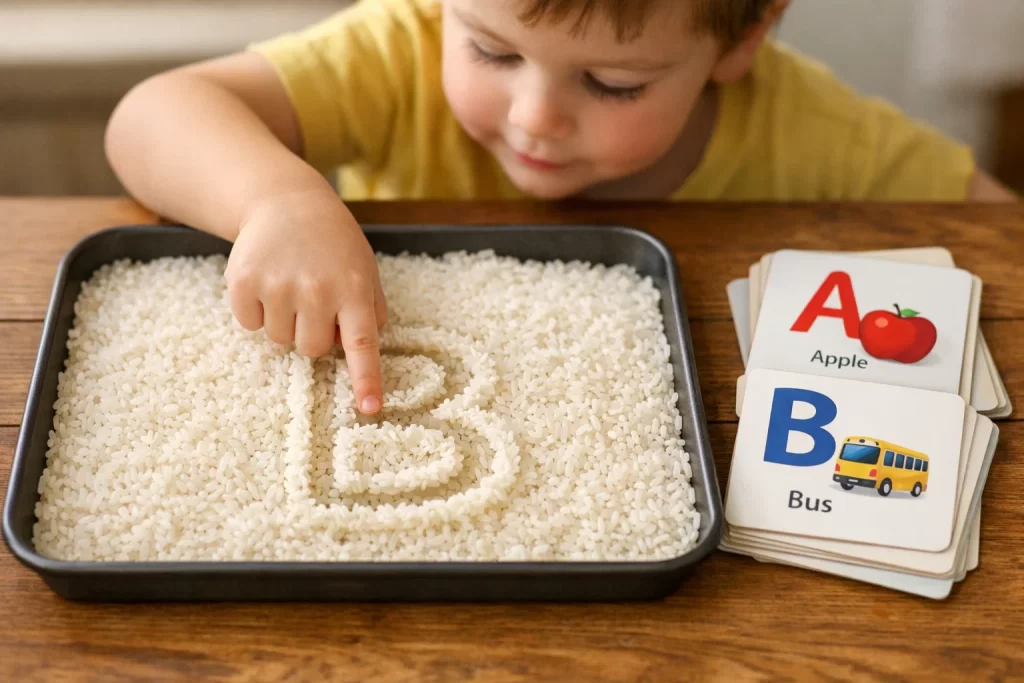
Fill a shallow tray with 2 cups of rice or salt. Children trace letters using their fingers. You can add alphabet cards for guidance. This activity works best for ages 3–6.
Tactile writing improves letter recognition by 32%, according to literacy studies summarized by Reading Rockets in February 2026.
Skills Developed
This DIY Learning Activities method improves:
- Letter formation accuracy.
- Sensory integration.
- Muscle memory.
- Early spelling awareness.
Mistakes disappear with one shake of the tray. Children feel safe experimenting. That safety accelerates literacy growth.
3. Bottle Cap Math Sorting Station
Materials and Setup
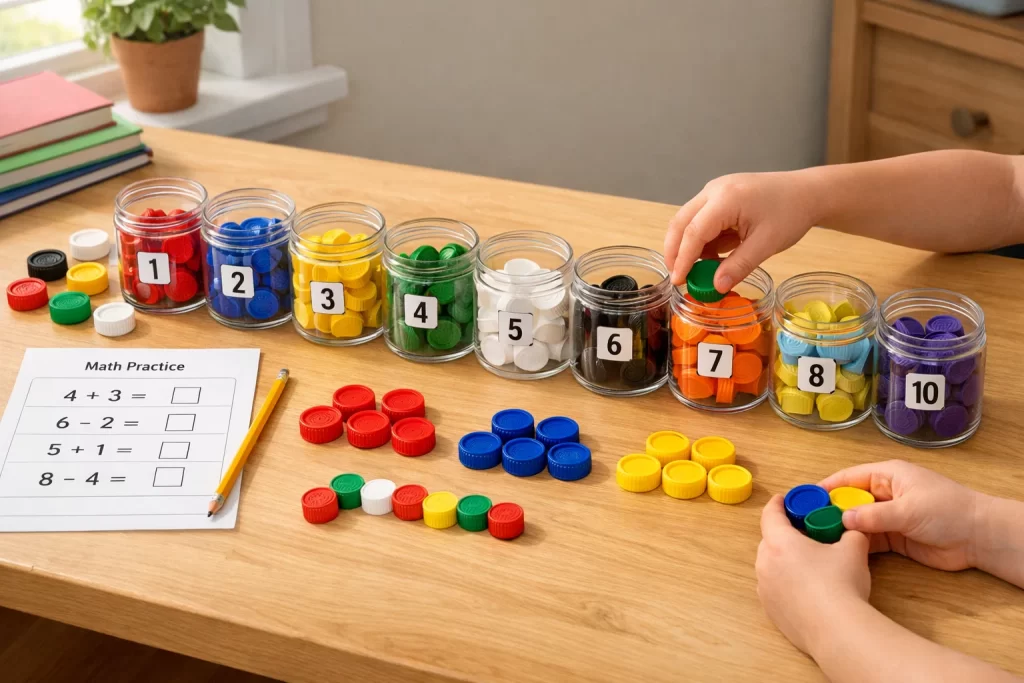
Collect 50 clean bottle caps. Label containers with numbers 1–10. Children count caps into matching jars. You can color-code for added challenge.
Counting tangible objects strengthens number sense. According to OECD early education insights updated January 2026, early counting exposure improves Grade 1 math performance by 20%.
Skills Developed
This project supports:
- One-to-one correspondence.
- Basic addition practice.
- Pattern recognition.
- Logical grouping skills.
Hands-on sorting turns abstract numbers into visible quantities. Children see what “7” truly means.
4. Homemade Weather Station for Science Exploration
Materials and Setup
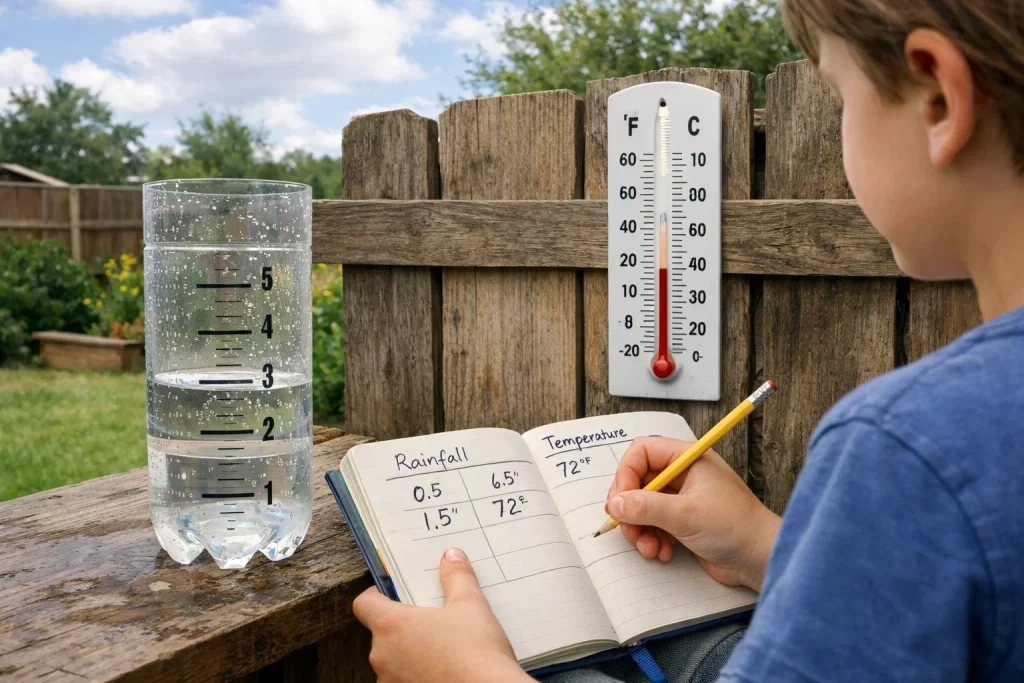
Use a plastic bottle to create a rain gauge. Add a simple thermometer and notebook. Record daily temperature and rainfall for 14 days.
NOAA climate data from February 2026 shows global average temperatures rising 1.2°C above pre-industrial levels.
Skills Developed
This DIY Learning Activities project builds:
- Data tracking skills.
- Scientific observation habits.
- Graph reading ability.
- Environmental awareness.
Children compare daily measurements. They learn patterns and trends. Science becomes real when data connects to daily life.
5. Paper Plate Fraction Pizza
Materials and Setup
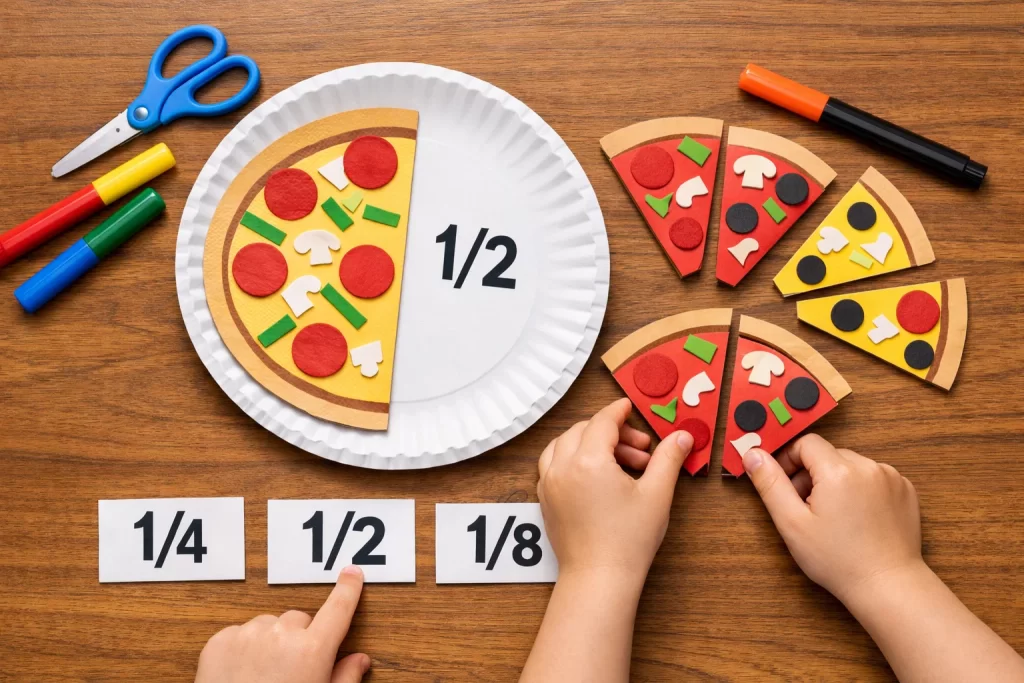
Cut a paper plate into equal slices. Label 1/2, 1/4, and 1/8. Color toppings using markers or paper cutouts. Children physically combine slices.
Fractions remain one of the hardest Grade 3 concepts. The National Assessment of Educational Progress reported in 2024 that only 41% of fourth graders scored proficient in fractions. Concrete models improve understanding.
Skills Developed
This DIY Learning Activities craft improves:
- Fraction comparison.
- Visual math modeling.
- Part-to-whole reasoning.
- Critical thinking.
Children see that two 1/4 slices equal 1/2. Visual proof builds clarity.
6. Storytelling Puppets from Socks
Materials and Setup
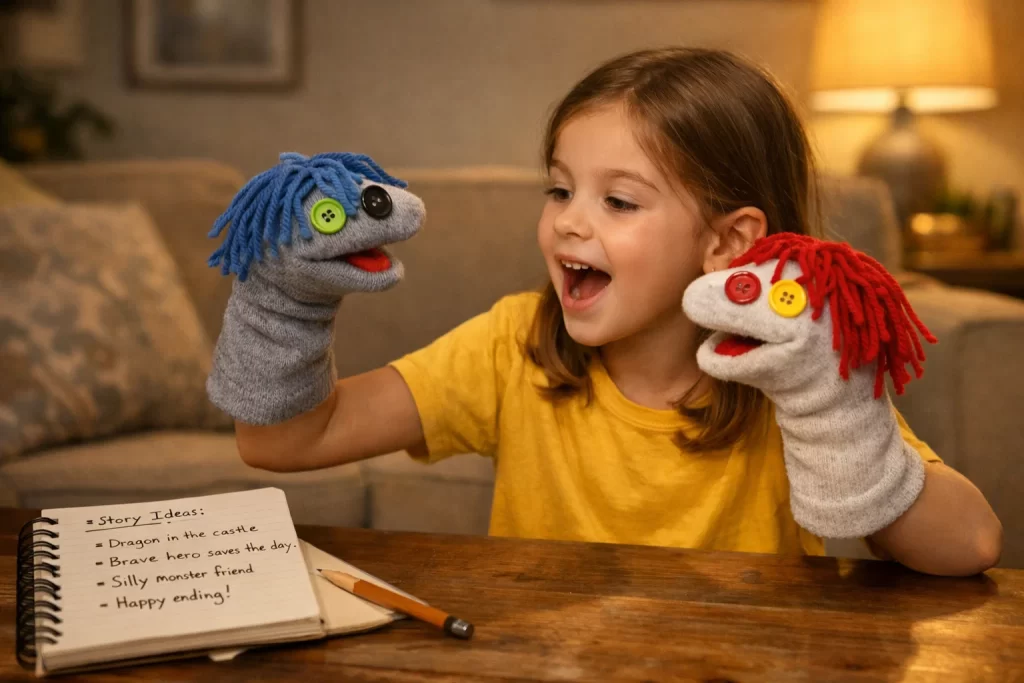
Use old socks, buttons, yarn, and glue. Create simple characters. Encourage children to act out a short story.
Expressive storytelling improves vocabulary by up to 24% in early learners, according to speech development research published in late 2025. Role-play also improves emotional intelligence.
Skills Developed
This activity strengthens:
- Verbal expression.
- Emotional regulation.
- Narrative structure understanding.
- Creative confidence.
Children build dialogue and sequence events. Language flows more naturally through play.
Quick Comparison Table
| Activity | Age Range | Main Skill | Time Required | Cost |
|---|---|---|---|---|
| Cardboard Shape City | 4–8 | Geometry | 45 minutes | $0 |
| Rice Writing Tray | 3–6 | Literacy | 20 minutes | $2 |
| Bottle Cap Sorting | 4–7 | Counting | 30 minutes | $0 |
| Weather Station | 6–10 | Science | 14 days | $5 |
| Fraction Pizza | 7–9 | Fractions | 40 minutes | $1 |
| Sock Puppets | 5–10 | Language | 60 minutes | $3 |
Why DIY Learning Activities Work
DIY Learning Activities combine movement, creativity, and repetition. Research consistently shows that active learning improves retention by 25–60% compared to passive instruction.
These projects also:
- Encourage independent thinking.
- Reduce screen time.
- Strengthen parent-child engagement.
- Build cross-subject connections.
Learning sticks when children build, touch, and experiment. That consistency makes home education stronger in 2026.
Bottom Line
DIY Learning Activities do not require expensive materials or formal lesson plans. They require intention and structure. When we turn cardboard, rice, or socks into learning tools, we transform ordinary moments into skill-building sessions.
Start with one activity this week. Track progress for 14 days. Observe improvements in focus, vocabulary, or number recognition. Small projects build long-term growth. Consistent hands-on practice shapes confident learners.