


Table of Contents
Emotional Regulation in Children is one of the strongest predictors of lifelong mental health and academic success. Research from the National Institute of Mental Health shows that 1 in 5 U.S. children aged 3–17 has a diagnosable mental, emotional, or behavioral disorder as of 2025. Many of these challenges involve difficulty managing emotions. When children cannot regulate anger, frustration, or anxiety, learning and relationships suffer.
We know from decades of child development studies that self-control develops fastest between ages 3 and 9. During this window, the brain’s prefrontal cortex grows rapidly. This area governs impulse control and decision-making. The good news is that Emotional Regulation in Children is teachable. Parents and caregivers can build this skill with consistent practice and clear strategies.
Why Emotional Regulation in Children Matters
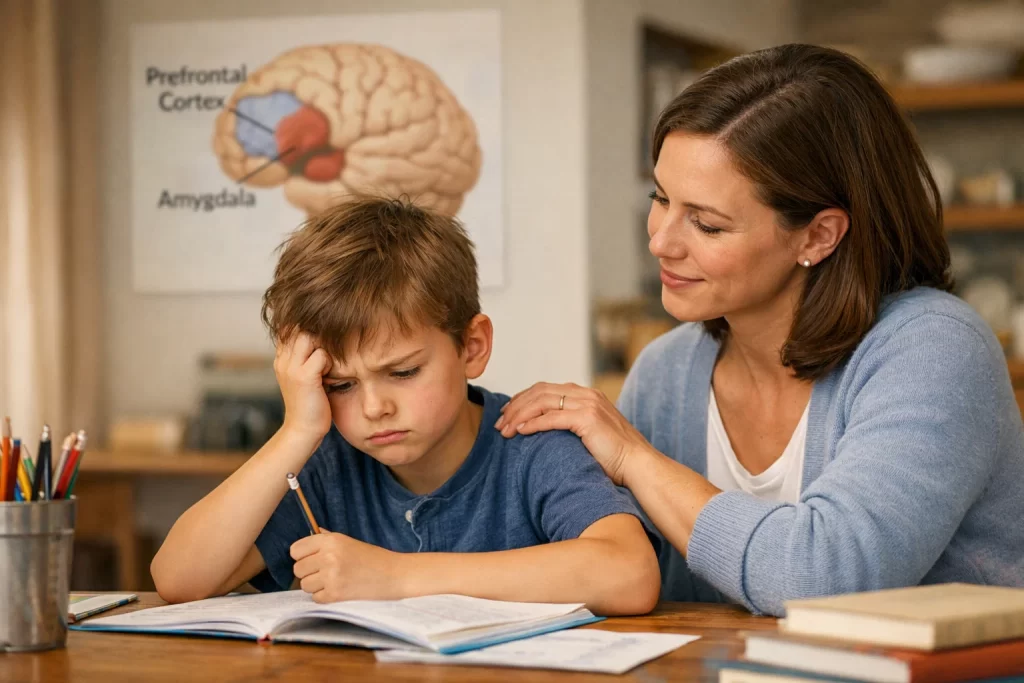
The Brain Science Behind Self-Control
Strong emotional skills begin in the brain. The prefrontal cortex, responsible for impulse control, continues maturing until age 25. Meanwhile, the amygdala, which triggers emotional reactions, develops earlier. This imbalance explains why children react before they think. According to the CDC’s 2025 youth behavior data, 42% of children with behavior concerns struggle specifically with emotional control.
Teaching Emotional Regulation in Children strengthens neural pathways through repetition. Each time a child pauses instead of reacting, the brain builds stronger self-control circuits. This is not about suppressing emotions. It is about managing them effectively.
When we teach children regulation skills early, we lower the risk of anxiety, aggression, and academic decline. For a complete parenting framework, read Child Behavior Guide: 6 Ways to Understand & Manage Kids’ Actions.
Step 1: Name the Emotion Clearly
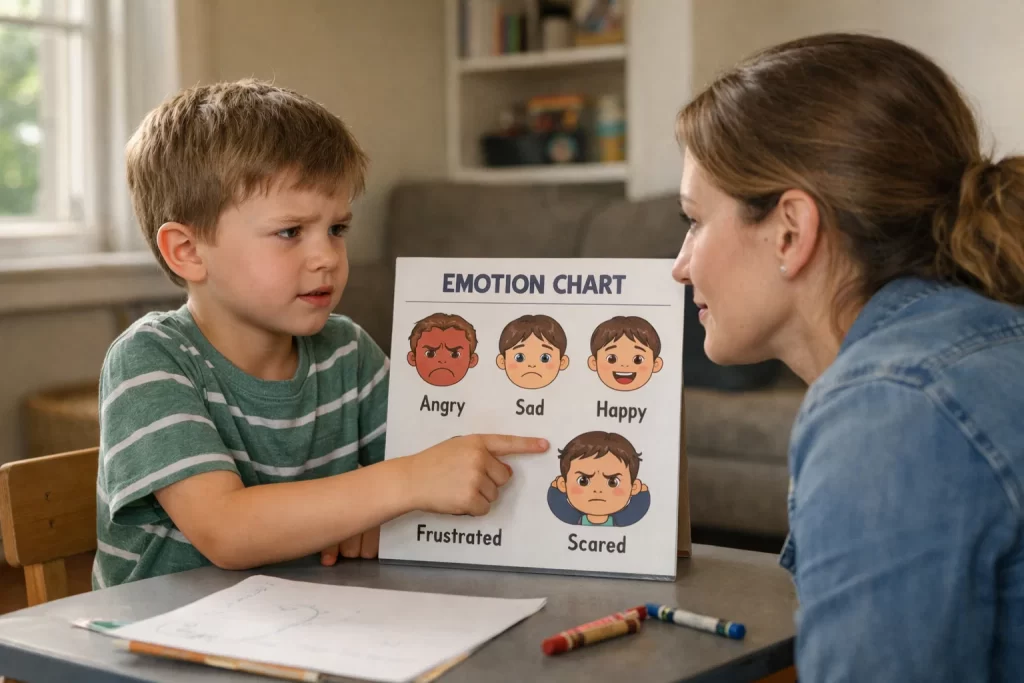
Why Labeling Feelings Works
Naming emotions reduces their intensity. A 2024 UCLA study found that labeling emotions lowers amygdala activity by up to 30%. When children say, “I feel angry,” they gain distance from the feeling. This improves decision-making.
We should teach children basic emotional vocabulary first. Focus on five core feelings:
- Angry
- Sad
- Scared
- Happy
- Frustrated
Younger children benefit from emotion charts with facial expressions. Older children can journal their feelings. Emotional Regulation in Children improves when feelings are specific. Saying “I feel left out” works better than saying “I feel bad.” Clear labels give children control over their experience.
Step 2: Teach the Pause Technique
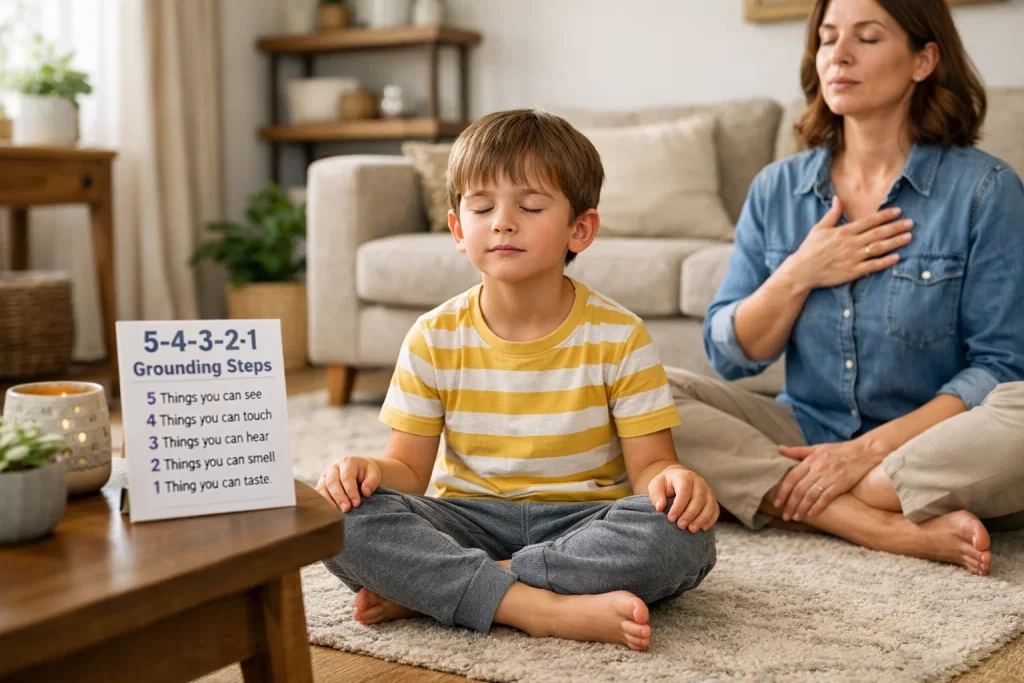
The 5-Second Reset
Impulse control requires a pause. The American Academy of Pediatrics recommends teaching children to take five slow breaths before responding. Deep breathing slows heart rate and reduces cortisol. Studies show slow breathing can lower stress markers by 20% within minutes.
We can teach the “5-4-3-2-1” grounding method:
- Name 5 things you see.
- Name 4 things you feel.
- Name 3 things you hear.
- Name 2 things you smell.
- Name 1 thing you taste.
This technique redirects attention from emotional overload to the present moment. Emotional Regulation in Children strengthens when pause strategies become routine. Struggling with meltdowns? Review How to Handle Child Tantrums: 5 Practical Tips Without Yelling.
Step 3: Model Calm Behavior
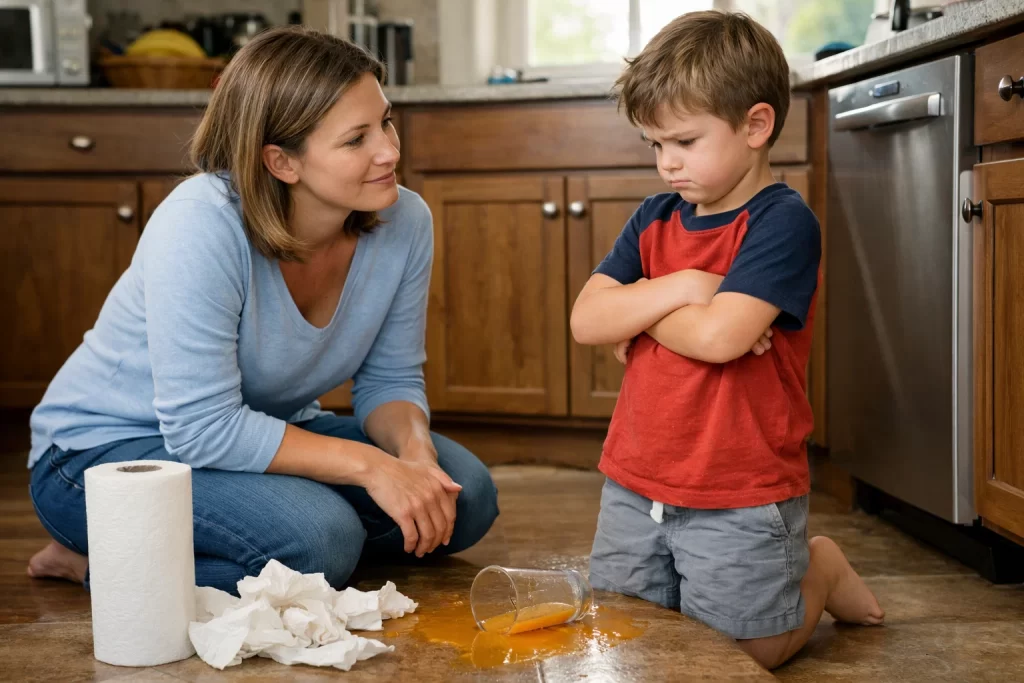
Children Mirror Adult Responses
Children learn regulation by watching adults. Research published in 2025 by Harvard’s Center on the Developing Child confirms that children mirror adult stress patterns within seconds. If we yell, they escalate. If we remain calm, they regulate faster.
We should model phrases like, “I feel frustrated, so I’m taking a breath.” This shows children how to respond constructively. Consistency matters more than perfection. Even repairing after a mistake teaches growth. Emotional Regulation in Children grows strongest in predictable environments where adults respond calmly and consistently.
Step 4: Build Routines That Reduce Stress
Structure Creates Security
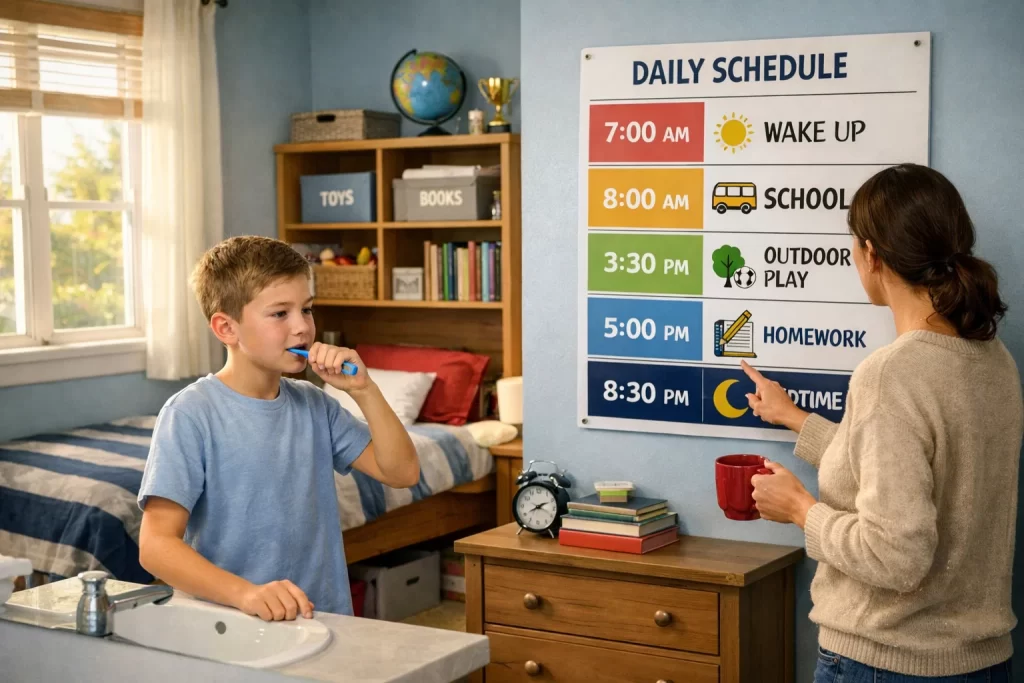
Children regulate better when daily routines remain consistent. According to the CDC’s 2025 sleep report, children aged 6–12 who sleep 9–12 hours nightly show 35% fewer emotional outbursts. Lack of sleep increases irritability and impulsivity.
Daily structure should include:
- Regular sleep times
- Balanced meals
- Outdoor activity for 60 minutes
- Screen limits under 2 hours daily
When routines reduce stress, emotional reactions decrease. Emotional Regulation in Children becomes easier when the body feels safe and rested.
Step 5: Practice Problem-Solving Skills
Replace Reaction with Strategy
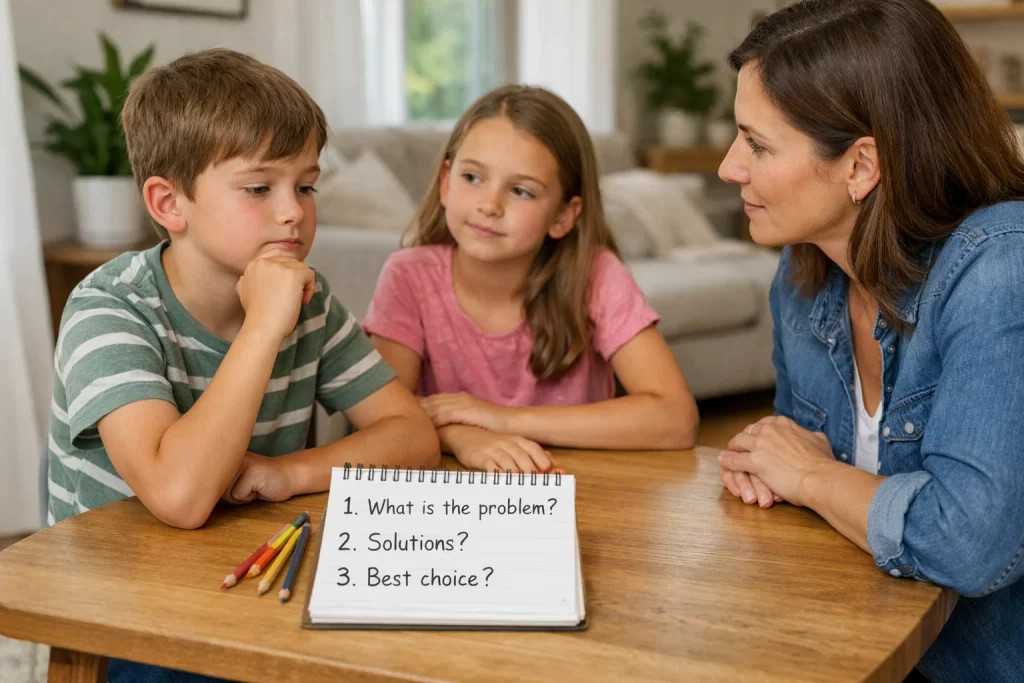
Teaching children to solve problems builds independence. The Child Mind Institute reports that children who practice structured problem-solving show improved behavioral outcomes within 8 weeks.
Use this 3-step method:
- Identify the problem.
- Brainstorm two solutions.
- Choose the safest option.
This approach shifts focus from emotion to action. Emotional Regulation in Children improves when children feel capable of fixing problems. They learn that emotions guide decisions, not control them. Early years matter most. Explore Toddler Behavior Problems: 5 Common Issues and Solutions.
Step 6: Reinforce Positive Self-Control
Reward the Behavior You Want
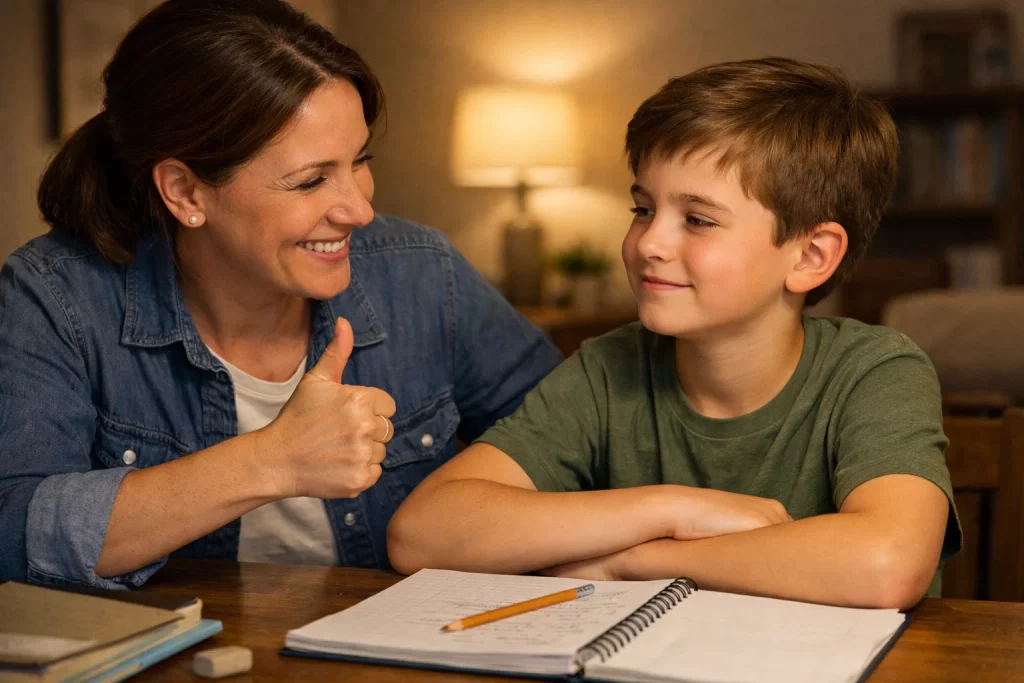
Positive reinforcement works. According to the American Psychological Association’s 2025 behavioral study, praise increases repeated self-control behaviors by 40%. Specific praise works best.
Instead of saying “Good job,” say “You stayed calm when your game ended.” This reinforces the exact behavior. Rewards do not need to be material. Verbal recognition and extra playtime are effective. Emotional Regulation in Children strengthens when progress is noticed and reinforced consistently.
Practical Strategies at a Glance
| Strategy | Age Range | Time Needed | Measurable Benefit |
|---|---|---|---|
| Emotion labeling | 3–10 | 5 minutes daily | 30% reduction in emotional intensity |
| Deep breathing | 4–12 | 2–3 minutes | 20% drop in stress markers |
| Routine building | All ages | Ongoing | 35% fewer meltdowns |
| Problem-solving steps | 6–12 | 10 minutes weekly | Improved behavior in 8 weeks |
| Specific praise | All ages | Immediate | 40% increase in self-control behaviors |
Bottom Line
Emotional Regulation in Children does not develop automatically. It requires guidance, repetition, and strong adult modeling. When we teach children to name emotions, pause before reacting, and solve problems calmly, we strengthen lifelong resilience. Data from 2025 confirms that early emotional skill-building reduces behavioral challenges and improves academic performance.