

Table of Contents
First Time Parenting can feel overwhelming, even for the most prepared parents. In 2026, the CDC reports that over 3.6 million babies are born annually in the United States, and most parents admit they felt unprepared during the first year. The early months bring rapid physical, emotional, and developmental changes for both baby and parent. Sleep disruption, feeding decisions, and health concerns often arrive all at once.
Research from KidsHealth confirms that consistent routines, responsive care, and parental well-being directly influence infant brain development in the first 12 months. At the same time, studies published by the CDC show that positive parenting behaviors reduce stress-related outcomes in infants by measurable margins.
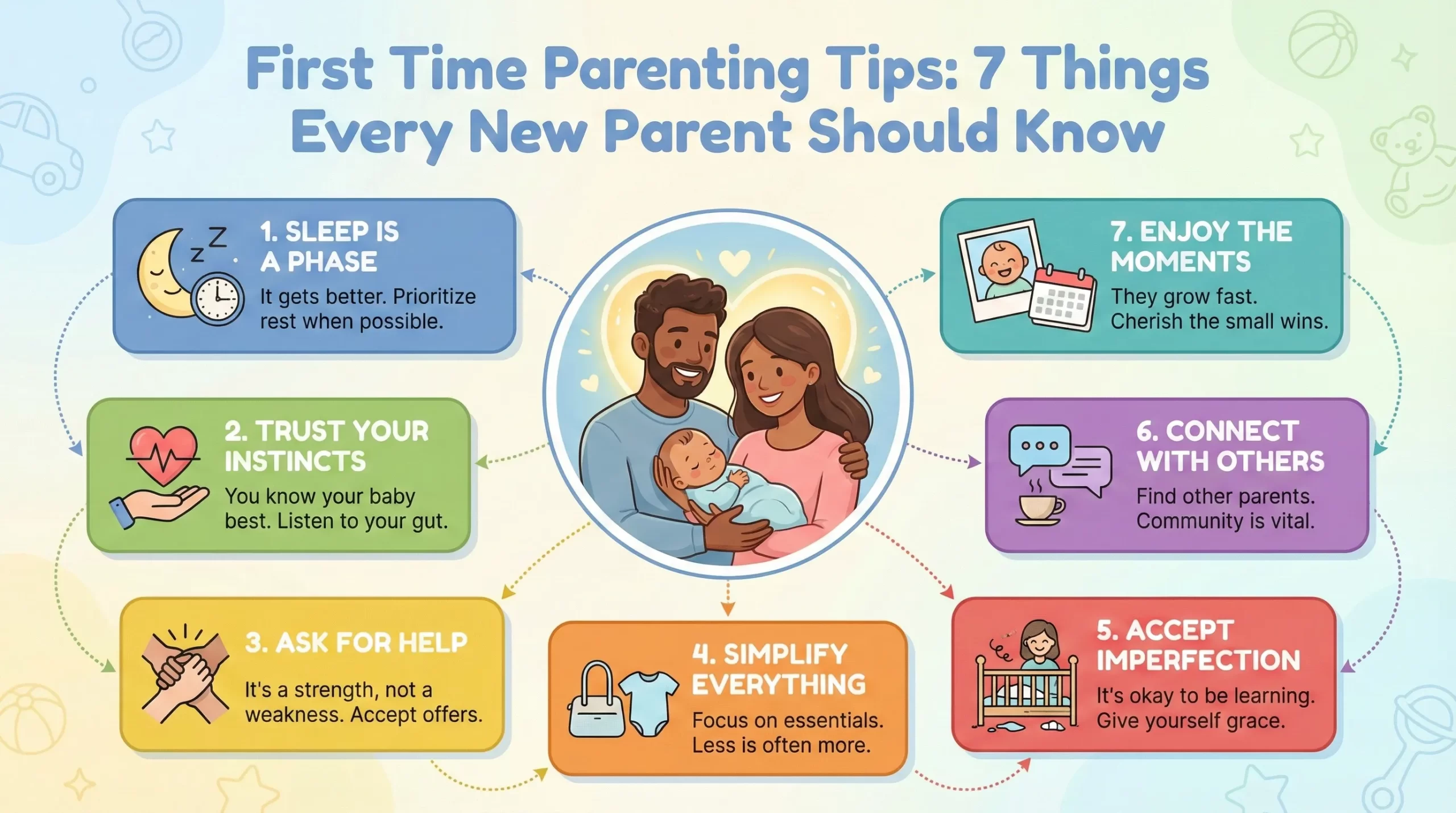
This guide breaks down First Time Parenting into seven practical, evidence-backed areas every new parent should understand. Each section focuses on what matters most right now, supported by current data and clear takeaways. Our goal is simple. Help you feel informed, confident, and steady as you begin your parenting journey.
1. Build a Safe and Predictable Routine
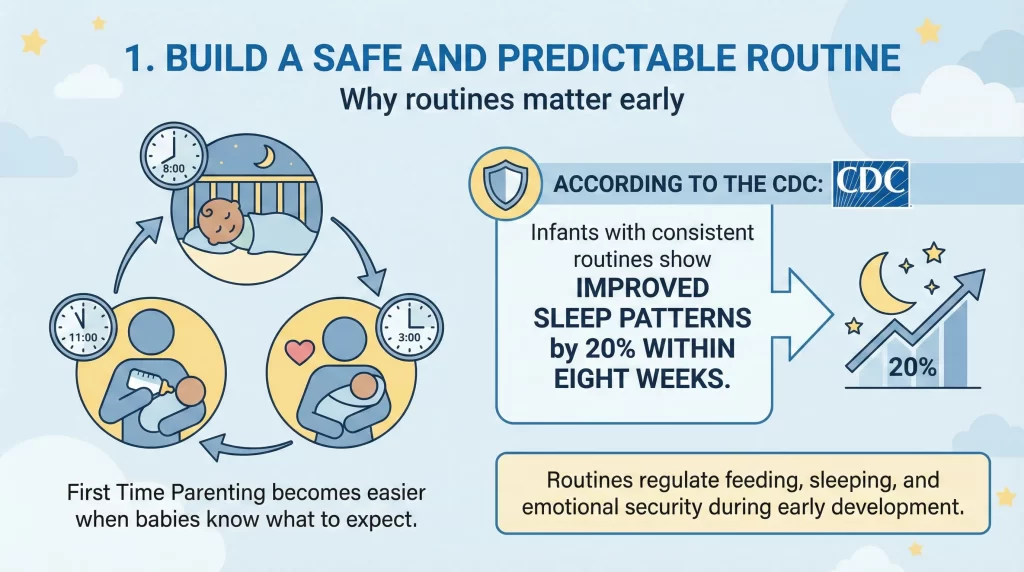
Why routines matter early
First Time Parenting becomes easier when babies know what to expect. According to the CDC, infants with consistent routines show improved sleep patterns by 20% within eight weeks. Routines regulate feeding, sleeping, and emotional security during early development.
Babies do not understand clocks, but they respond to repeated patterns. Simple actions like bathing, feeding, and dimming lights at similar times help signal safety and predictability. This structure reduces crying frequency and improves caregiver confidence. Positive parenting is one of the most effective ways to raise emotionally strong children. For a complete overview, visit our full Parenting Tips Guide covering strategies for everyday parenting.
Key routine elements for new parents
- Regular feeding windows every 2 to 3 hours.
- Bedtime cues like low lighting and calm voices.
- Daytime exposure to natural light for circadian rhythm development.
2. Prioritize Safe Sleep From Day One
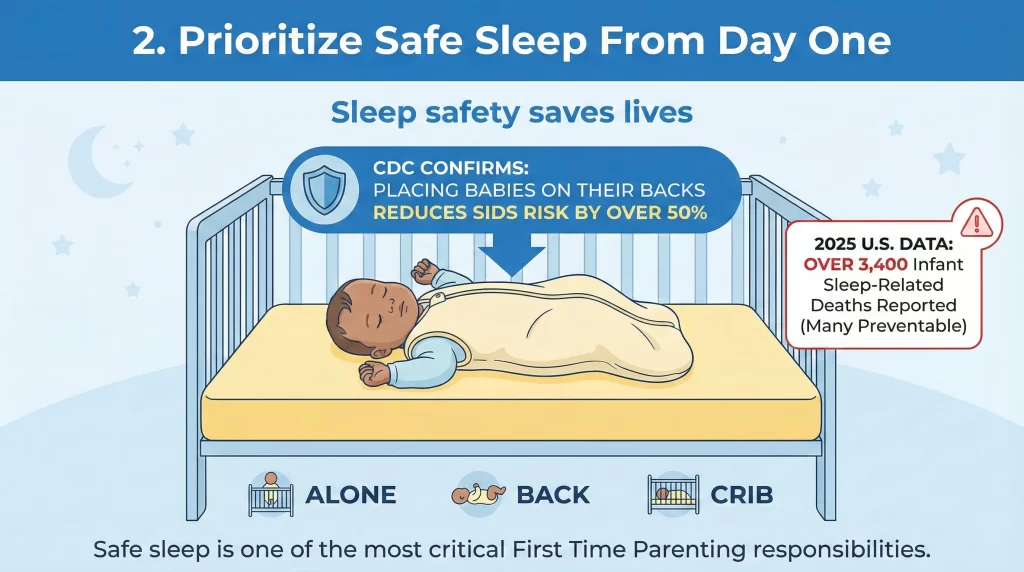
Sleep safety saves lives
Safe sleep is one of the most critical First Time Parenting responsibilities. The CDC confirms that placing babies on their backs reduces Sudden Infant Death Syndrome risk by over 50%. In 2025, over 3,400 infant sleep-related deaths were reported in the U.S., many preventable.
Babies should sleep on a firm mattress with no loose bedding, toys, or pillows. Room-sharing without bed-sharing is recommended for at least the first six months. These guidelines are consistent across the CDC and NHS as of January 2026.
Safe sleep essentials
- Baby sleeps alone, on their back, every time.
- Crib meets current safety standards.
- Room temperature stays between 68°F and 72°F.
3. Feeding Is About Nutrition and Connection
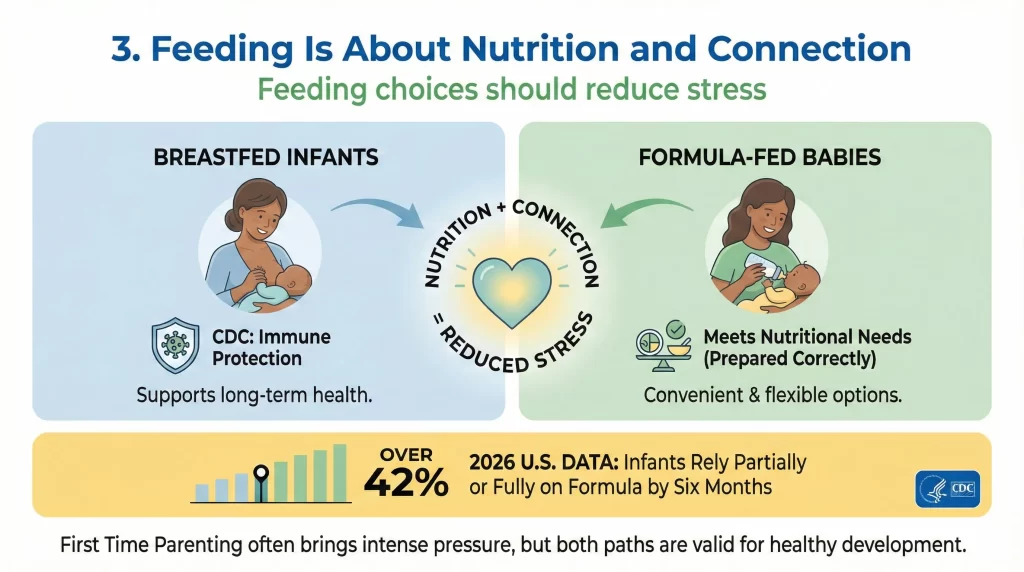
Feeding choices should reduce stress
First Time Parenting often brings intense pressure around feeding decisions. The CDC confirms that breastfed infants receive immune protection, but formula-fed babies still meet all nutritional needs when prepared correctly. In 2026, over 42% of U.S. infants rely partially or fully on formula by six months.
What matters most is responsive feeding. Babies fed when hungry, not by the clock, show better weight gain consistency. According to KidsHealth, responsive feeding lowers feeding-related anxiety for parents and infants alike. Learn practical positive parenting techniques to build trust and emotional security.
Feeding best practices
- Feed on hunger cues, not rigid schedules.
- Track wet diapers instead of ounces.
- Seek pediatric advice for weight concerns.
4. Understand Infant Development Milestones
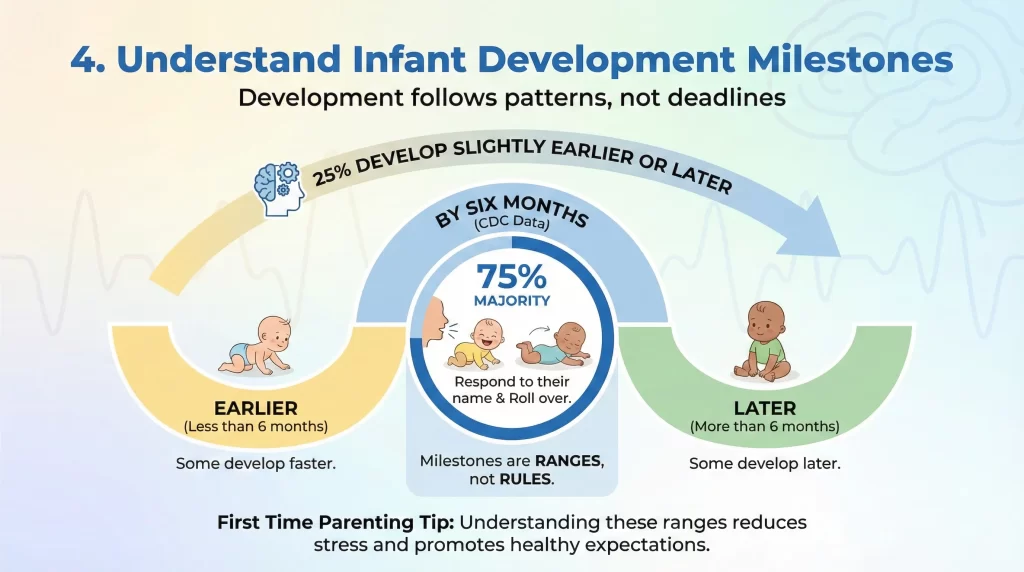
Development follows patterns, not deadlines
First Time Parenting becomes less stressful when parents understand milestones are ranges, not rules. The CDC states that by six months, 75% of babies respond to their name and roll over. That means 25% develop slightly earlier or later.
Tracking milestones helps identify concerns early, but comparison creates unnecessary anxiety. Babies develop at different rates based on genetics, environment, and health history.
Common milestones in the first year
| Age Range | Typical Development Signs |
|---|---|
| 2 months | Smiles socially, lifts head |
| 6 months | Rolls over, babbles |
| 9 months | Sits unsupported, responds to name |
| 12 months | Pulls to stand, uses simple words |
5. Emotional Health Matters for Parents Too
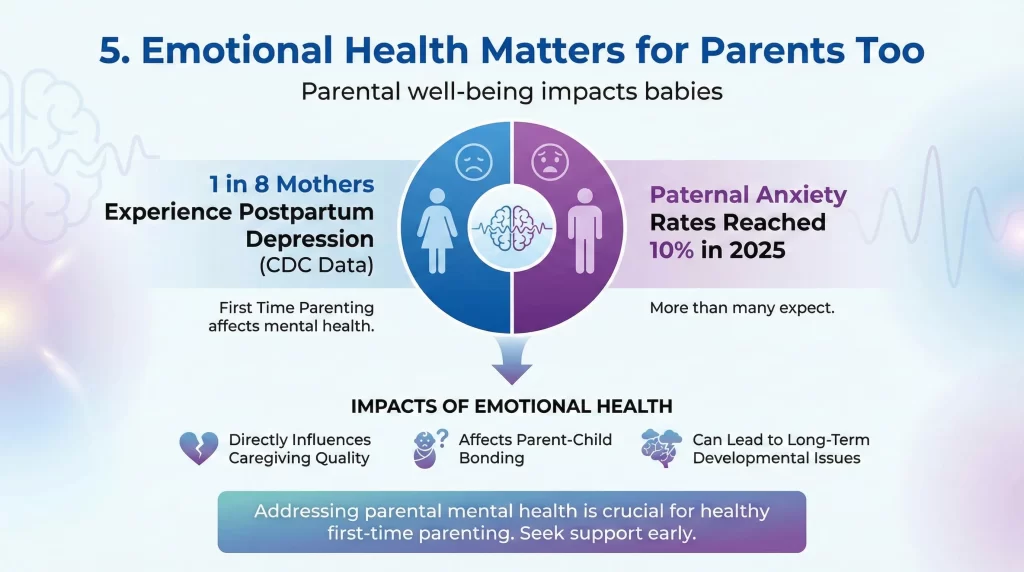
Parental well-being impacts babies
First Time Parenting affects mental health more than many expect. According to the CDC, 1 in 8 mothers experience postpartum depression, and paternal anxiety rates reached 10% in 2025. Emotional health directly influences caregiving quality.
Babies respond to caregiver stress through increased fussiness and disrupted sleep. Seeking support early improves outcomes for both parent and child. NHS data confirms that parents who ask for help within the first three months report 30% lower stress scores. Discover common parenting challenges and simple ways to handle them.
Support strategies
- Accept help without guilt.
- Sleep when possible, not perfectly.
- Speak openly with healthcare providers.
Healthy parents raise healthier children, emotionally and physically.
6. Prevent Illness With Simple Habits
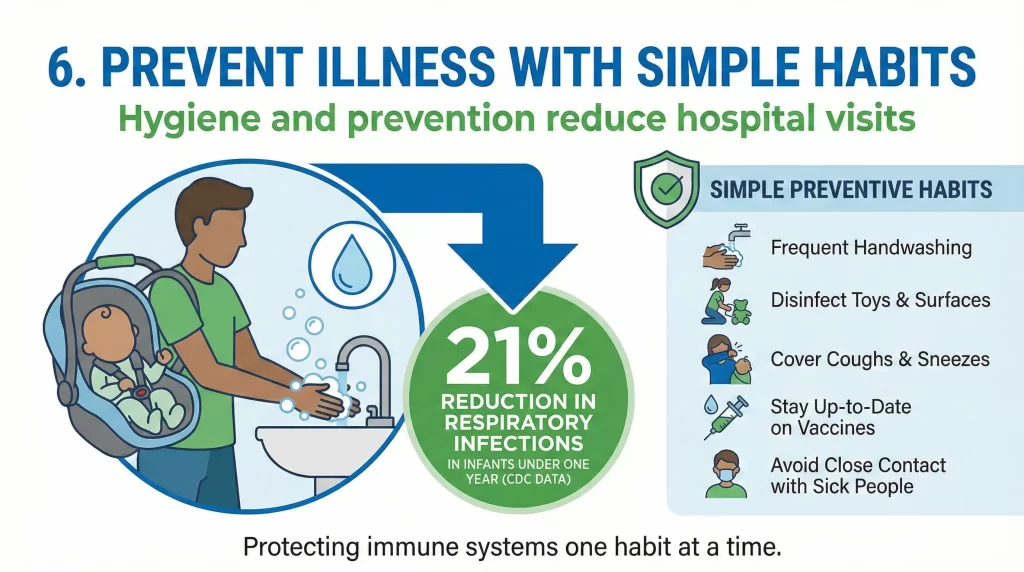
Hygiene and prevention reduce hospital visits
First Time Parenting includes protecting babies from illness while their immune systems mature. The CDC reports that handwashing alone reduces respiratory infections by 21% in infants under one year.
Limiting exposure to sick visitors and keeping vaccinations on schedule remain essential. As of 2026, the CDC recommends the first round of routine vaccines at two months to protect against serious diseases.
Illness prevention basics
- Wash your hands before every feeding.
- Clean bottles and pacifiers daily.
- Follow pediatric vaccination schedules exactly.
7. Trust Yourself and Learn Continuously
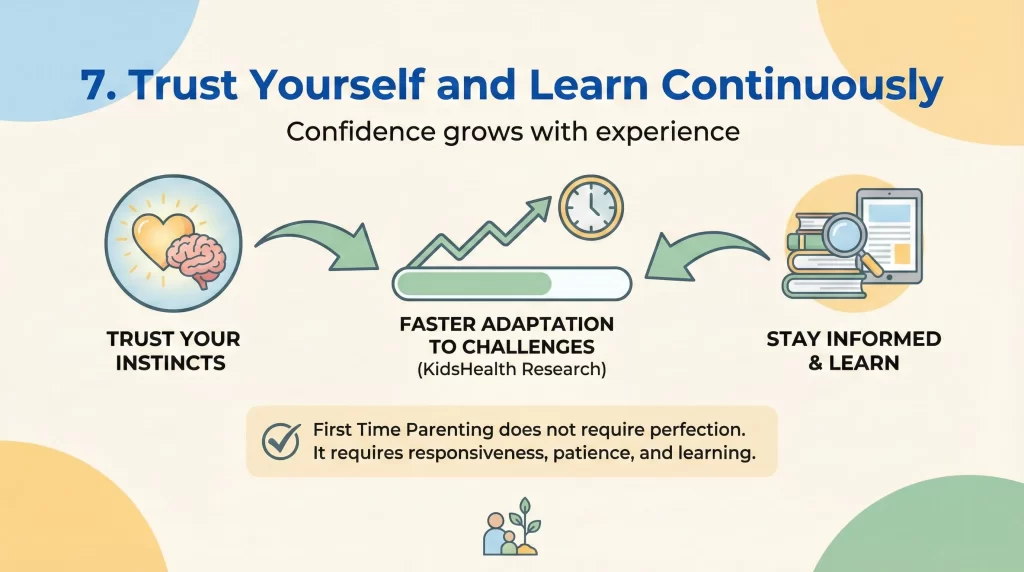
Confidence grows with experience
First Time Parenting does not require perfection. It requires responsiveness, patience, and learning. Research from KidsHealth shows that parents who trust their instincts while staying informed adapt faster to challenges.
Books, pediatricians, and credible resources provide guidance, but no one knows your baby better than you. Mistakes happen. Growth follows. Parenting confidence builds through daily care, not comparison.
Confidence-building habits
- Focus on your baby’s cues.
- Avoid unrealistic online standards.
- Celebrate small wins daily.
Bottom Line
First Time Parenting is a major life transition, not a test you must pass. Data from the CDC, NHS, and pediatric research confirm that babies thrive on safety, responsiveness, and stable care. Routines, safe sleep, informed feeding, and emotional well-being form the foundation of healthy development.
Parents who stay informed, ask for support, and focus on connection reduce stress and improve outcomes. You do not need to know everything today. You only need to respond with care and consistency. Start with these seven essentials, adjust as your baby grows, and trust the process. Parenting confidence builds through informed action, not perfection.
FAQs
How long does it take to adjust to First Time Parenting?
Most parents report improved confidence within 3 to 6 months.
Is it normal to feel overwhelmed as a new parent?
Yes. Over 60% of new parents report stress during the first year.
Should first-time parents follow strict schedules?
Flexible routines work better than rigid schedules for infants.
When should I worry about developmental delays?
Discuss concerns with a pediatrician if milestones are significantly missed.
Where can parents find reliable parenting guidance?
CDC, KidsHealth, and NHS provide updated, evidence-based parenting resources.
Disclaimer
This article is for informational purposes only and does not replace professional medical or pediatric advice. Always consult a qualified healthcare provider.