


Table of Contents
Child Tantrums are one of the most common behavior challenges in early childhood. According to the American Academy of Pediatrics, tantrums peak between ages 2 and 3 and can occur once per day in many toddlers. Research shows that up to 87% of 18- to 24-month-olds have regular tantrums. By age 4, frequency usually declines as language and self-control improve.
Parents often feel overwhelmed because tantrums are loud, emotional, and public. A 2024 parenting stress survey found that 62% of caregivers feel judged during public meltdowns. Yet evidence-based strategies show we can manage Child Tantrums without yelling. Programs like Triple P Parenting report up to a 30% reduction in disruptive behavior when parents use calm, consistent techniques.
In this Child Behavior Guide, we break down five practical, research-backed tips. Each strategy is simple, realistic, and grounded in current child development data as of February 26, 2026.
Why Child Tantrums Happen

Brain Development Drives Big Emotions
Young children lack full emotional control. The prefrontal cortex, which manages impulse control, continues developing into the mid-20s. At age 2, children rely heavily on the amygdala, the brain’s emotional center. That imbalance explains intense reactions.
According to raisingchildren.net.au, tantrums are a normal stage of development, not defiance. Most last between 3 and 15 minutes. Knowing this helps us respond with strategy instead of frustration.
Triggers Are Predictable
Common triggers include:
- Hunger
- Fatigue
- Overstimulation
- Transitions
- Limited language skills
A 2025 CDC update reported that toddlers with fewer than 50 spoken words at 24 months show higher frustration levels. Identifying triggers allows us to prevent many Child Tantrums before they escalate. Learn the bigger picture in our Child Behavior Guide: 6 Ways to Understand & Manage Kids’ Actions.
Tip 1: Regulate Yourself First

Calm Parents Reduce Escalation
Children mirror adult nervous systems. A 2023 study in Child Development found that parental calmness reduced tantrum intensity by 27%. When we lower our voice, breathe slowly, and maintain a steady posture, the child’s stress response drops.
Triple P Parenting confirms that consistent calm responses significantly reduce repeated meltdowns. You can read more at triplep-parenting.net.
Practical Reset Steps
- Take one slow breath before speaking
- Lower your tone instead of raising it
- Use short, clear phrases
When we regulate ourselves, we teach regulation. This step sets the foundation for managing Child Tantrums effectively.
Tip 2: Validate Feelings Without Giving In

Emotion Coaching Works
Validation does not mean agreement. It means acknowledging the child’s emotion. For example, say, “You’re upset because you want that toy.”
Research from the Gottman Institute shows that emotion coaching improves emotional regulation by age 5. Children who feel heard calm down faster.
Hand in Hand Parenting highlights that connection reduces emotional overload. More details are available at handinhandparenting.org.
Why Validation Reduces Tantrums
When children feel understood, their stress hormones decrease. Cortisol levels drop faster when a caregiver responds warmly. That biological shift helps shorten Child Tantrums naturally. Strengthen your approach with Positive Discipline Strategies: 7 Ways to Guide Your Child Effectively.
Tip 3: Set Clear, Predictable Boundaries

Consistency Builds Security
Children thrive on structure. The CDC states that consistent rules reduce behavioral problems by up to 25% in preschoolers. If we change rules mid-tantrum, children learn that escalation works.
Instead of debating, repeat the boundary calmly. Say, “We are not buying candy today.” Then stay steady.
Use Simple Choices
Offer limited options:
- “Red cup or blue cup?”
- “Walk or hold my hand?”
Choices provide control without surrendering authority. This approach prevents power struggles and reduces Child Tantrums over time.
Tip 4: Teach Emotional Skills Outside the Tantrum
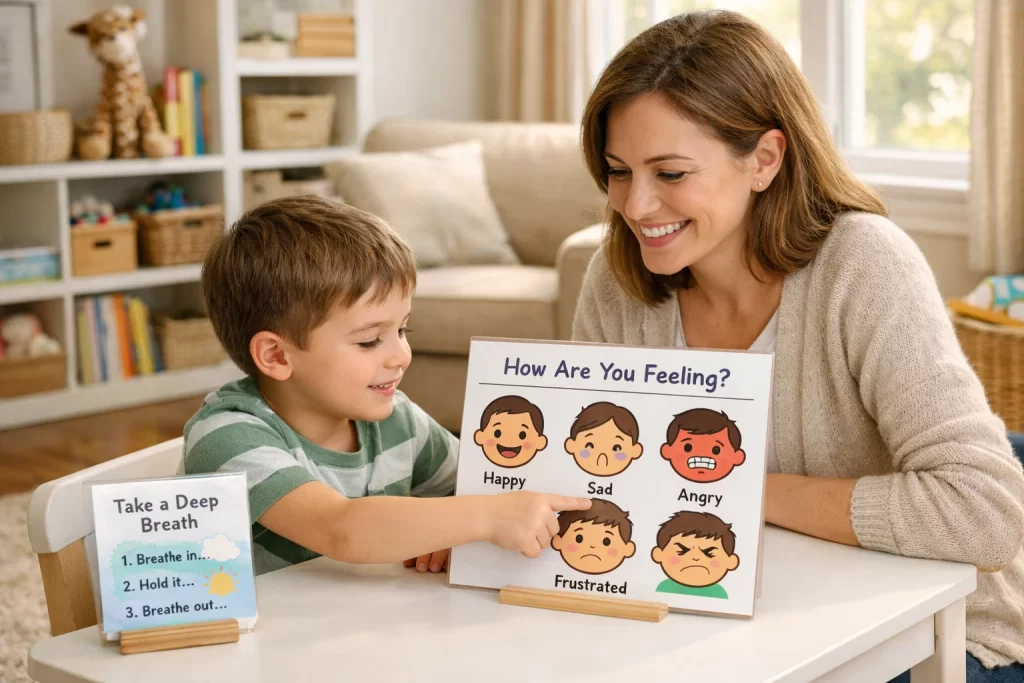
Skills Develop in Calm Moments
Teaching during a meltdown rarely works. The brain cannot absorb lessons under stress. Instead, practice naming emotions during peaceful times.
A 2024 Early Childhood Education report found that children taught emotion words show 20% fewer aggressive behaviors by kindergarten.
| Approach | During Tantrum | After Calm | Long-Term Result |
|---|---|---|---|
| Reactive | Yelling | Lecture | Repeated meltdowns |
| Proactive | Calm presence | Skill practice | Reduced intensity |
Tip 5: Reinforce Positive Behavior Immediately

Catch Good Behavior Early
Positive reinforcement works. The American Academy of Pediatrics reports that labeled praise increases desired behavior by up to 40%.
Instead of generic praise, be specific. Say, “You waited patiently.” This builds internal motivation.
Use a Simple Reward Framework
Effective reinforcement includes:
- Immediate praise
- Clear description of behavior
- Consistent follow-through
Avoid bribes during a tantrum. Reinforce after calm behavior appears. For daily routines, check out Child Behavior Management: 7 Tips for Parents to Improve Daily Habits.
When to Seek Professional Help

Most tantrums are normal. However, consider support if:
- Tantrums last longer than 15 minutes regularly
- Aggression causes injury
- Tantrums continue past age 5 frequently
- There is a speech delay or developmental concern
Bottom Line
Handling Child Tantrums without yelling requires strategy, not perfection. When we regulate ourselves, validate emotions, hold firm boundaries, teach skills proactively, and reinforce positive behavior, change happens. Research as of February 26, 2026, shows that calm, consistent parenting reduces disruptive behavior significantly.
Tantrums are a stage, not a verdict on your parenting. Our role is to guide emotional growth while maintaining steady leadership. With daily practice, we reduce intensity, increase connection, and build lifelong emotional skills.