

OpenAI has landed a significant enterprise victory even as its leadership recently sounded the alarm internally. According to a report on December 8, 2025, enterprise usage of OpenAI’s AI tools, notably ChatGPT, has surged sharply.
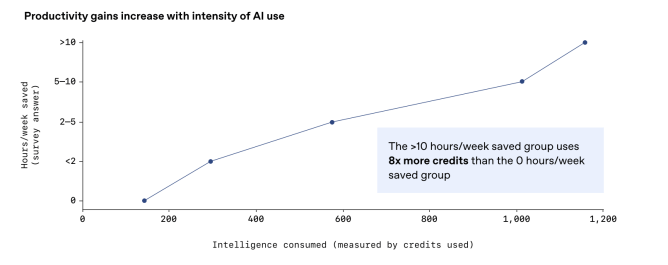
Over the past year, ChatGPT message volume has grown 8× since November 2024. Employees in enterprise settings report saving up to one hour daily. This uptick comes just days after the firm’s CEO declared a “code red” in response to rising competition from Google.
The timing underscores OpenAI’s attempt to reassert its position in enterprise AI, even as external pressure mounts.
Enterprise Adoption Accelerates

Strong growth in enterprise usage
OpenAI’s December 8, 2025, disclosure reveals that enterprise users dramatically increased their reliance on ChatGPT. Message volume rose eightfold compared to November 2024. Many companies now report daily productivity gains of up to one hour saved per employee. Such gains reflect deeper integration of AI into work processes, not just occasional usage. This suggests that OpenAI’s AI tools are moving beyond novelty and becoming workflow staples.
Rising “reasoning token” consumption signals complex use
Organizations using OpenAI’s API consumed 320× more “reasoning tokens” than a year ago. These tokens fuel complex tasks like problem-solving or data analysis. High consumption indicates companies are using AI for sophisticated tasks beyond simple chat, perhaps automating decision-making or knowledge work. That shift underscores enterprise trust in the technology’s capabilities and value.
Custom GPTs are gaining traction
Use of custom GPTs’ proprietary models enterprises build to encode institutional knowledge or automate workflows jumped 19× this year. These custom systems now account for 20% of enterprise-generated messages. For example, major financial institution BBVA reportedly runs over 4,000 custom GPTs. This reveals that companies increasingly trust OpenAI to handle institution-specific tasks and workflows.
Summary: Key Metrics at a Glance
| Metric / Indicator | Reported Value / Change |
|---|---|
| ChatGPT enterprise message volume growth | 8× since November 2024 |
| Daily productivity savings (per employee) | Up to 1 hour saved |
| API “reasoning token” usage increase | 320× year-over-year |
| Growth in custom GPT usage | 19× increase; now 20% of enterprise messages |
| Infrastructure/compute commitment | $1.4 trillion ahead |
Why OpenAI Declared “Code Red.”
Competitive pressure from Google’s Gemini program
OpenAI’s internal “code red” declaration reflects growing pressure from Google. Earlier this month, CEO Sam Altman reportedly sent a memo instructing teams to pause non-core projects and focus on improving ChatGPT’s speed, reliability, and personalization. Projects like ad products, AI agents for health and shopping, and a planned personal assistant named “Pulse” are postponed.
This pressure mirrors a reversal from 2022 when Google issued its own “code red” after ChatGPT first disrupted search dominance. Then, OpenAI was the upstart; now it defends its lead.
High infrastructure commitments increase risk
OpenAI reportedly has committed $1.4 trillion to infrastructure and compute over the coming years. That level of investment demands scale and stable enterprise growth to pay off.
Analysts warn that OpenAI faces structural risks: slower subscription growth, increasing competition (from Google, other AI firms), and the burden of massive compute commitments.
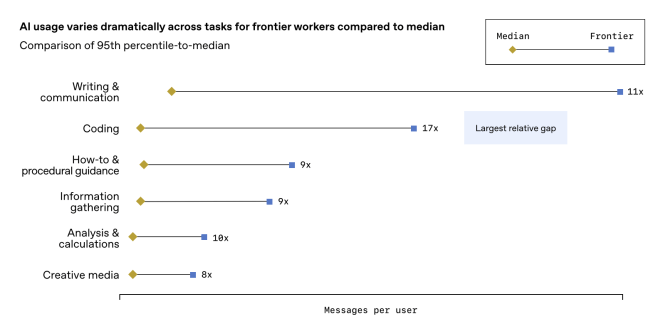
Image Credits: OpenAI
What the Enterprise Win Means And What’s Next
Enterprise AI becomes essential, not optional
The data shows businesses view AI as a productivity multiplier. Custom GPTs and high token consumption suggest AI is being baked into daily work, not used sporadically. Enterprises might now see AI as indispensable, not additive. This could lock in OpenAI as a core vendor for many firms.
Sustainability and cost pressures remain
While adoption is high, “reasoning tokens” consume infrastructure and energy. This could prove expensive and unsustainable long-term. There is a risk that some organizations may scale down usage once they assess cost-benefit tradeoffs.
Strategic pivot, but execution matters
With other projects paused, OpenAI’s short-term focus is clear: fix ChatGPT and defend market share. If they succeed, they may strengthen their position. If not, competition from Google and others may erode their lead. The stakes are high. Don’t miss our recent post about Anthropic Signs $200M Deal to Deliver Its LLMs to Snowflake Customers.
Bottom Line
OpenAI’s latest enterprise win demonstrates that companies increasingly embed AI into real workflows. The sharp growth in message volume, token usage, and custom GPT adoption signifies enterprise trust. However, the internal “code red” underscores serious competitive and financial pressures. For OpenAI to retain leadership, it must convert usage growth into sustainable, cost-efficient enterprise adoption. Firms considering AI tools now should watch how OpenAI executes on user experience and scalability before committing at scale.
Disclaimer:
This article is for informational and educational purposes only.