

Table of Contents
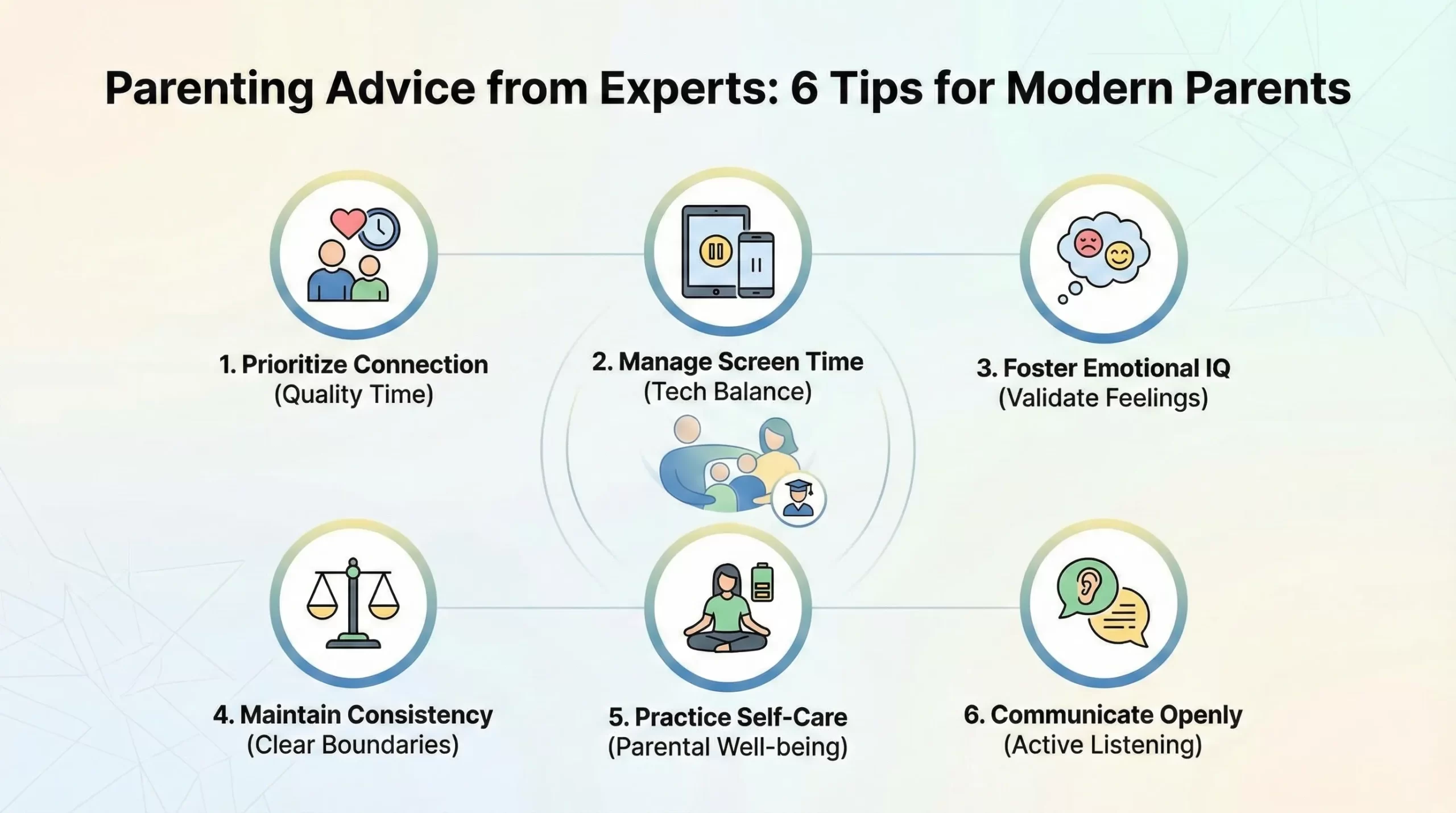
Parenting Advice must be both practical and evidence‑based if modern families are to thrive. Research indicates that nurturing children with consistent emotional support improves lifelong wellbeing. For example, experts recommend applying the “5:1 rule,” meaning five positive interactions for every negative one to strengthen relationships and build resilience. Studies from KidsHealth highlight nine core steps every parent can use to elevate family dynamics and child development.
We begin with clearly defined, expert‑backed strategies that build confidence and competence in parents. Each section below includes data, practical direction, and takeaways you can adapt immediately. The patterns that follow represent consensus across pediatric psychologists, developmental experts, and trusted organizations like KidsHealth and Family Lives.
By focusing on attachment, communication, structure, and emotional health, we help you raise happy, secure, and capable children in a constantly evolving world. Parenting Advice is not a one‑size‑fits‑all formula; it’s a flexible toolkit grounded in real evidence.
1. Build Secure, Emotionally Healthy Relationships
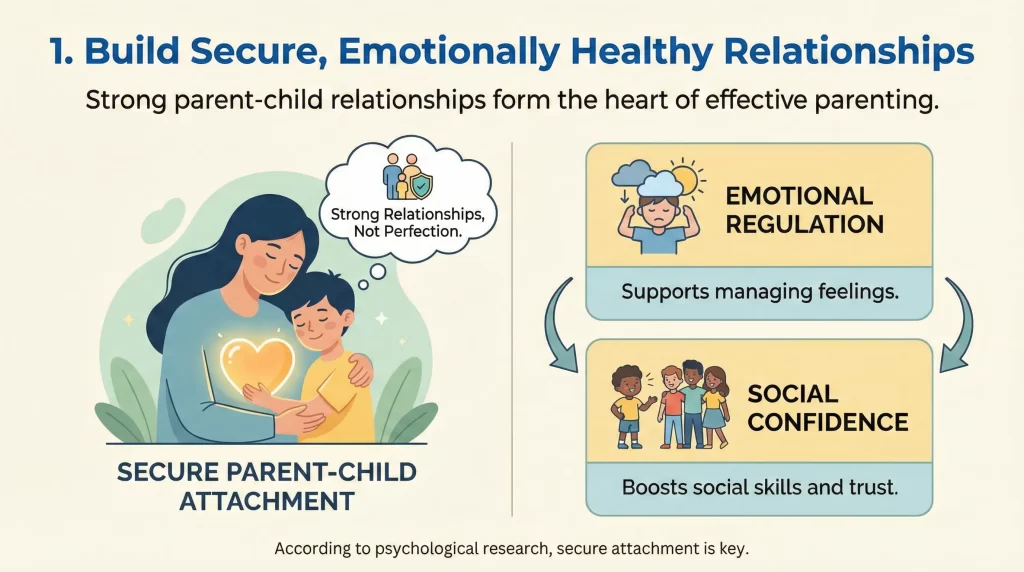
Strong parent‑child relationships form the heart of effective parenting. According to psychological research, secure attachment supports emotional regulation and social confidence in children, even when parents are not perfect.
Prioritize Warmth and Connection
Showing love and affection reinforces a child’s sense of safety and security. Use hugs, verbal affirmations, and attentive listening daily. A study shows secure attachment predicts better emotional outcomes and resilience later in life. This kind of positive interaction lowers anxiety and makes children more likely to seek support when they need it. In practice, end each day with at least one focused, undistracted conversation with your child. Quality time does more than quantity.
2. Reinforce Positive Behaviors with the “5:1 Rule.”
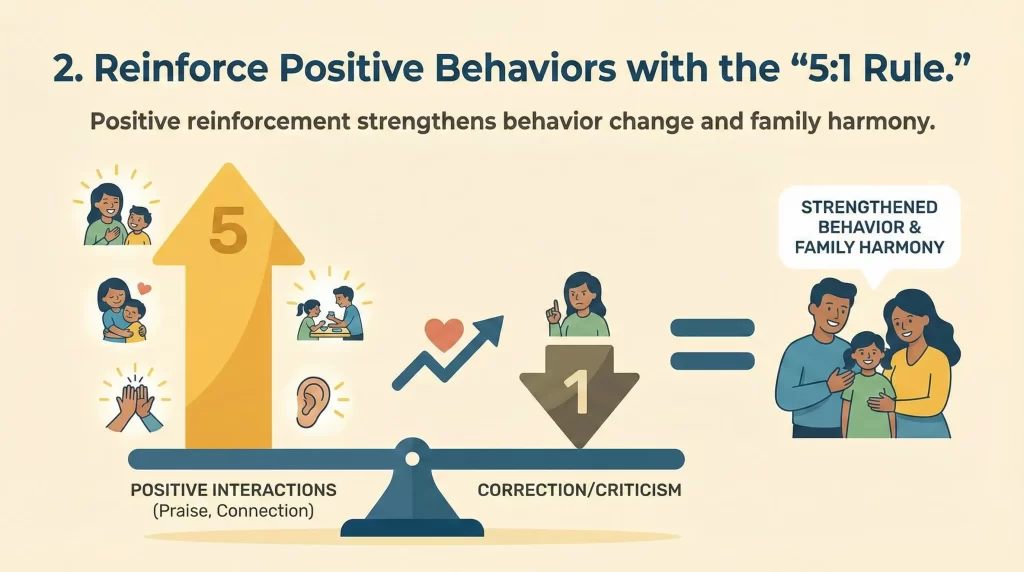
Positive reinforcement is a cornerstone of modern Parenting Advice. Experts in children’s psychology emphasize that focusing on strengths instead of weaknesses strengthens behavior change and family harmony.
What Is the 5:1 Rule?
The 5:1 rule recommends offering at least five supportive, positive interactions for every corrective or disciplinary moment. This ratio helps children internalize approval and builds intrinsic motivation. It also aligns with the child’s natural tendency to tune into positive reinforcement more than criticism. Whether praising effort, celebrating small wins, or acknowledging progress, this rule shifts family culture toward encouragement.
| Positive Interaction | Example | Why It Works |
|---|---|---|
| Praise | “Great job finishing homework!” | Builds confidence |
| Active listening | Child talks, parent reflects | Improves communication |
| Quality time | Shared play or reading | Strengthens attachment |
| Affirmation | “I’m proud of you” | Reduces stress |
| Support | Helping with challenges | “I’m proud of you.” |
3. Use Evidence‑Based Routine and Discipline
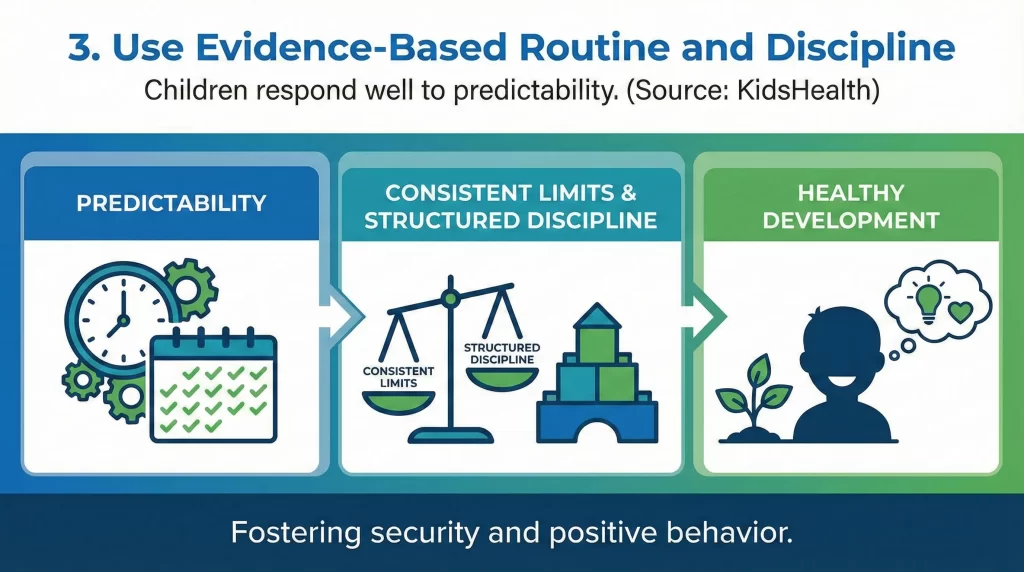
Children respond well to predictability. Parenting Advice from KidsHealth highlights consistent limits and structured discipline as key to healthy development.
Establish Clear Routines
Clear routines for bedtime, meals, and school prep reduce family stress. Predictability helps children understand expectations and feel secure. A simple rule: same bedtime schedule at least five nights each week fosters better sleep and emotional regulation.
Consistent Discipline Practices
Discipline is about teaching, not punishment. Set clear, age‑appropriate boundaries and follow through calmly and predictably. Consistency shows children what behavior is acceptable and helps them internalize self‑control. Discover common parenting challenges and simple ways to handle them.
4. Grow Communication with Purpose and Respect
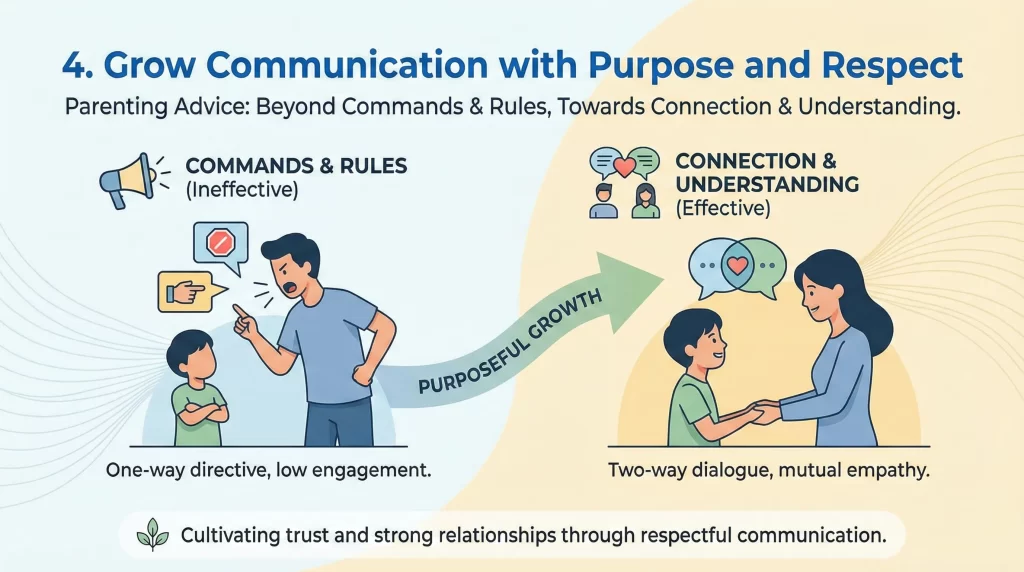
Parenting Advice emphasizes that effective communication goes beyond commands and rules. It’s about connection and mutual understanding.
Listen Actively and Without Judgment
When you listen and reflect on what your child says, they feel valued. Research shows that conversational engagement can improve children’s language skills and emotional insight. Use open‑ended questions like “How did that make you feel?” to deepen dialogue.
Share Your Thoughts Clearly
Children learn best when expectations and motives are explained in simple terms they understand. Respectful communication models problem‑solving and fosters partnership. When kids feel heard and know rules are fair, cooperation increases.
5. Encourage Independence and Healthy Exploration
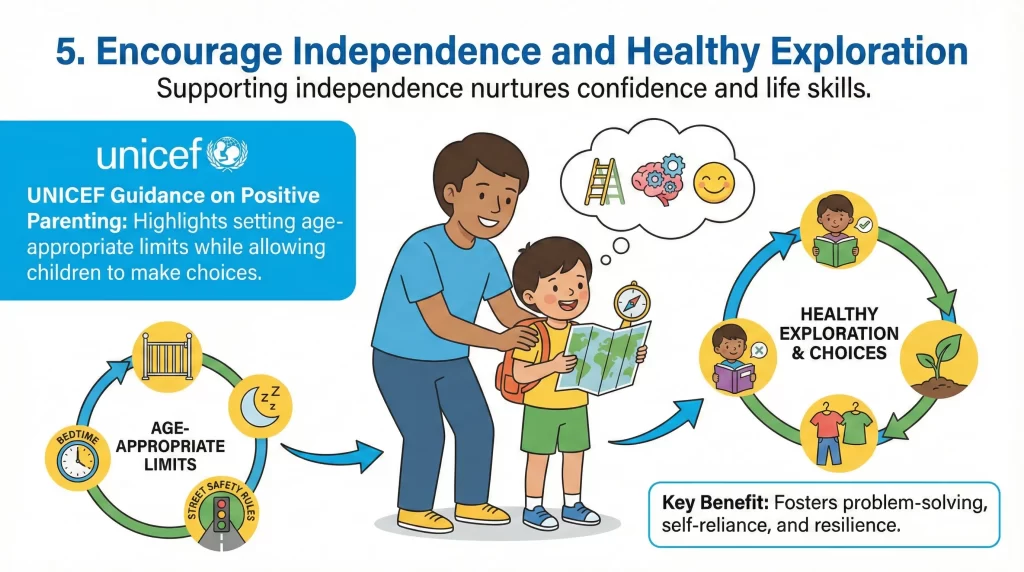
Supporting independence nurtures confidence and life skills. UNICEF’s guidance on positive parenting highlights setting age‑appropriate limits while allowing children to make choices.
Allow Safe Exploration
Give children chances to try new activities, solve problems, and make decisions within safe boundaries. This helps them learn autonomy and resilience. Simple choices like selecting clothing or planning playtime build confidence. Positive parenting is one of the most effective ways to raise emotionally strong children. For a complete overview, visit our full Parenting Tips Guide covering strategies for everyday parenting.
Balance Support and Challenge
Encourage tasks slightly beyond comfort zones, but offer support. Achieving goals with help boosts self‑efficacy. Age‑appropriate responsibilities like small chores lead to meaningful competence and pride.
6. Model Healthy Behaviors Every Day
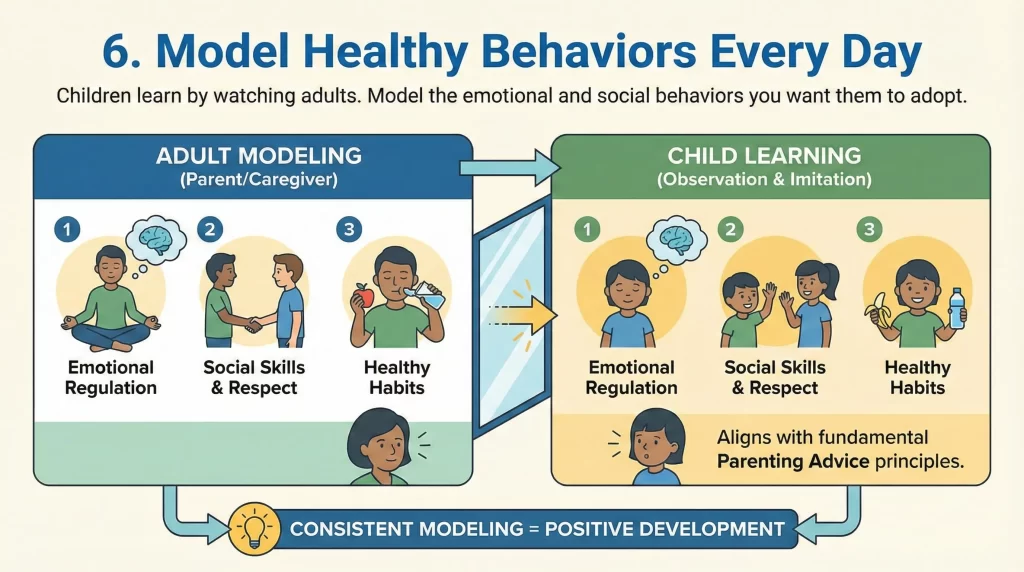
Children learn by watching adults. Model the emotional and social behaviors you want them to adopt. This aligns with fundamental Parenting Advice principles.
Practice Emotional Regulation
When we manage stress calmly, we teach children how to cope. Show them how to name and handle feelings. Empathy and patience become lived behaviors.
Demonstrate Respect and Kindness
Children mirror how parents treat others. Every polite exchange and respectful disagreement shows them how to interact kindly in relationships. Improve daily routines with effective parenting skills that strengthen family bonds.
Bottom Line
Parenting Advice today is rooted in evidence, clarity, and compassion. Focus on secure attachment, positive reinforcement, predictable routines, and respectful communication. Support independence and model healthy emotional habits every day. These seven strategies help children grow emotionally resilient, capable, and connected. Start small, be consistent, and let each positive interaction shape a family life built on trust and joy.
Disclaimer
This article provides general parenting guidance based on expert recommendations and public resources. It is not a substitute for professional medical or psychological advice.