

Table of Contents
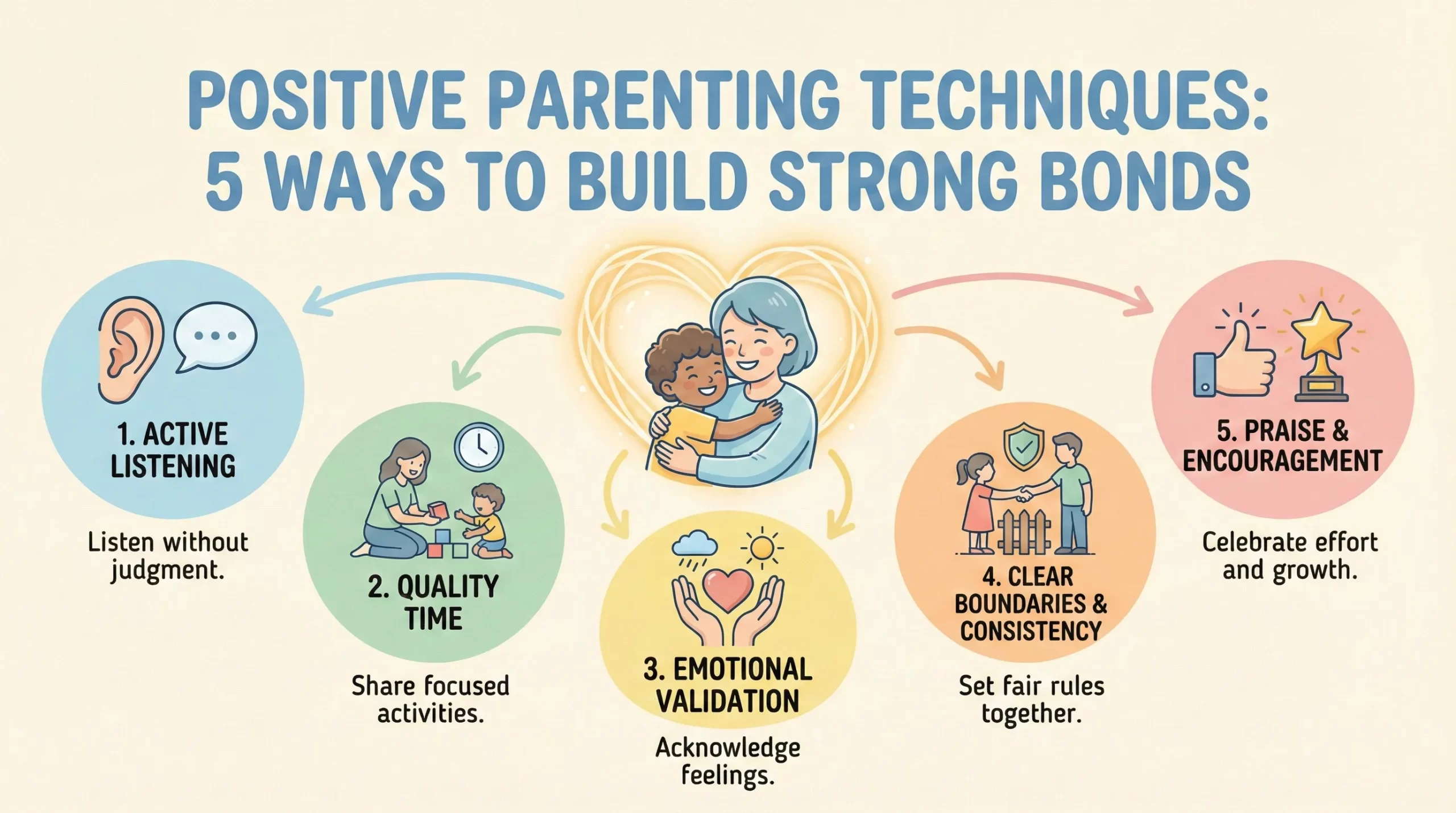
Positive Parenting is a research-backed approach that focuses on warmth, structure, and respect to support healthy child development. As of 2026-01-24, child development studies consistently show that strong parent-child bonds improve emotional regulation, academic performance, and long-term mental health. According to UNICEF, children raised with positive discipline show lower stress levels and better social skills by age 10.
We use Positive Parenting to guide behavior without fear, punishment, or shame. Instead, it emphasizes communication, empathy, and consistency. The American Academy of Pediatrics confirms that responsive parenting reduces behavioral problems by up to 45% in early childhood. These outcomes matter in daily family life, especially during high-stress routines like school mornings and bedtime.
This article explains five practical Positive Parenting techniques supported by current data. Each method is easy to apply and effective across all ages. We focus on real-world actions, not theory. Parents seeking calm, cooperation, and connection will find clear guidance here.
1. Build Emotional Connection Through Daily Presence
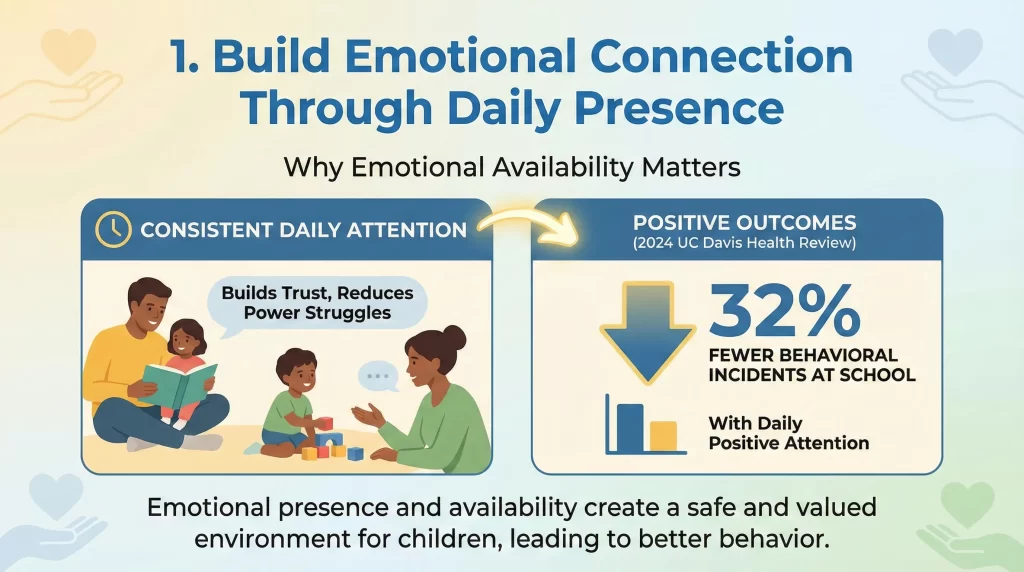
Why Emotional Availability Matters
Positive Parenting starts with emotional availability. Children need consistent attention to feel safe and valued. A 2024 UC Davis Health review found that children receiving daily positive attention showed 32% fewer behavioral incidents at school. Emotional presence builds trust and reduces power struggles at home.
We strengthen bonds by being fully present during short daily moments. Ten focused minutes can be more effective than hours of distracted time. This approach aligns with attachment research showing that secure attachment forms through predictable emotional responses. Parents who listen without interrupting reinforce emotional safety.
2. Use Positive Discipline Instead of Punishment
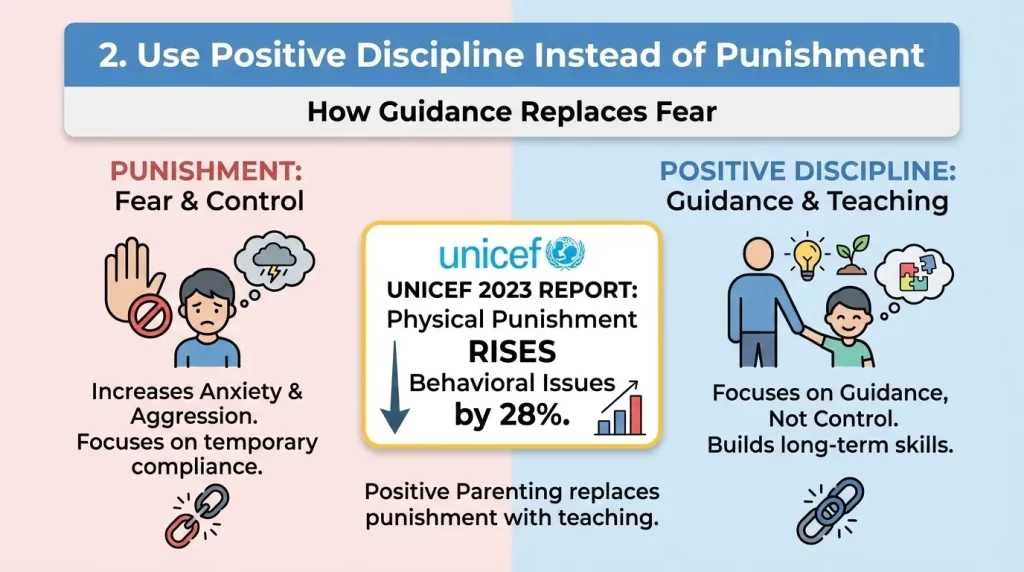
How Guidance Replaces Fear
Positive Parenting replaces punishment with teaching. Punitive discipline increases anxiety and aggression. A 2023 UNICEF parenting report confirmed that physical punishment raises behavioral issues by 28%. Positive discipline focuses on guidance, not control.
We explain expectations clearly and enforce logical consequences. For example, toys left out are put away temporarily. This teaches responsibility without fear. Children learn cause and effect through calm correction.
Positive discipline also preserves dignity. Respectful guidance improves self-regulation by age seven, according to pediatric behavioral studies. Children cooperate more when they feel respected. Positive parenting is one of the most effective ways to raise emotionally strong children. For a complete overview, visit our full Parenting Tips Guide covering strategies for everyday parenting.
3. Communicate Clearly and Respectfully
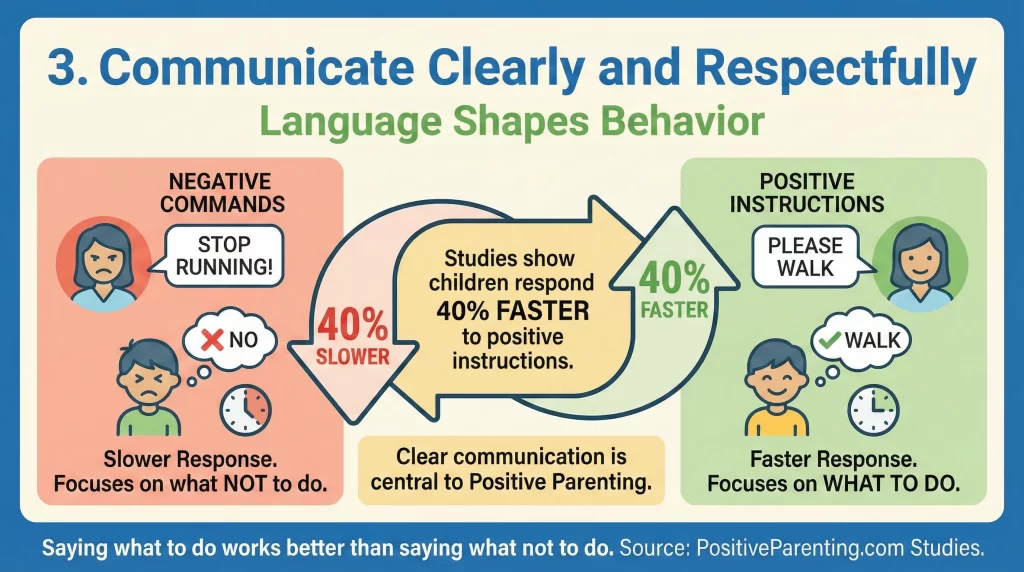
Language Shapes Behavior
Clear communication is central to Positive Parenting. The words we choose influence how children respond. Studies from PositiveParenting.com show that children respond 40% faster to positive instructions than negative commands. Saying what to do works better than saying what not to do.
We use short, clear sentences and maintain eye contact. This reduces confusion and power struggles. Children process instructions better when the tone stays calm and respectful.
Respectful communication models emotional intelligence. Children learn how to express needs without aggression. Over time, this improves family communication patterns.
4. Encourage Autonomy With Age-Appropriate Choices
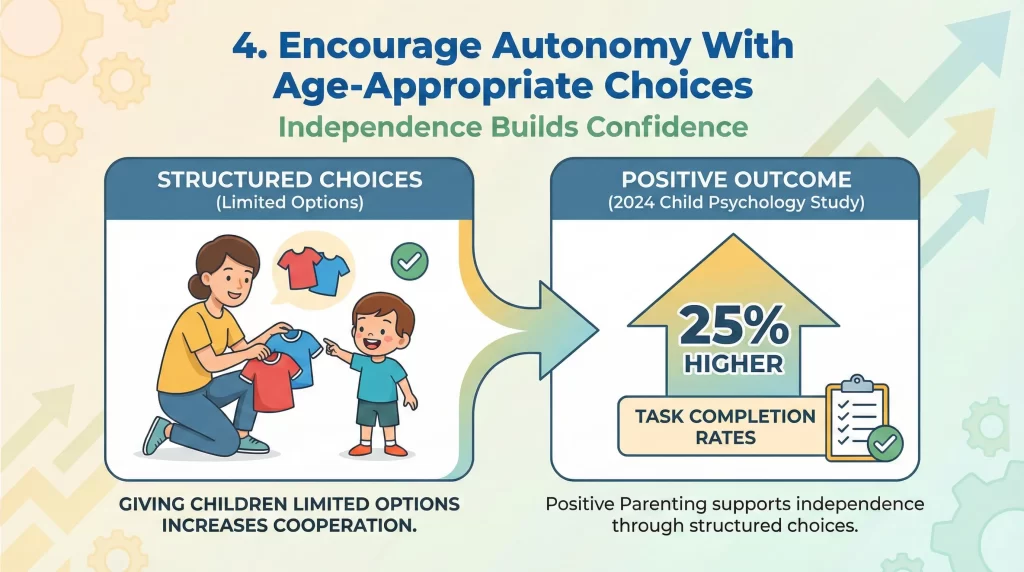
Independence Builds Confidence
Positive Parenting supports independence through structured choices. Giving children limited options increases cooperation. A 2024 child psychology study found that children offered choices showed 25% higher task completion rates.
We offer two acceptable options. For example, choosing between two outfits or snack options. This gives children control without overwhelming them. Autonomy supports decision-making skills and confidence.
Structured choices also reduce conflict. Children feel heard and respected. This approach works across developmental stages when choices match age and ability.
5. Model the Behavior You Want to See
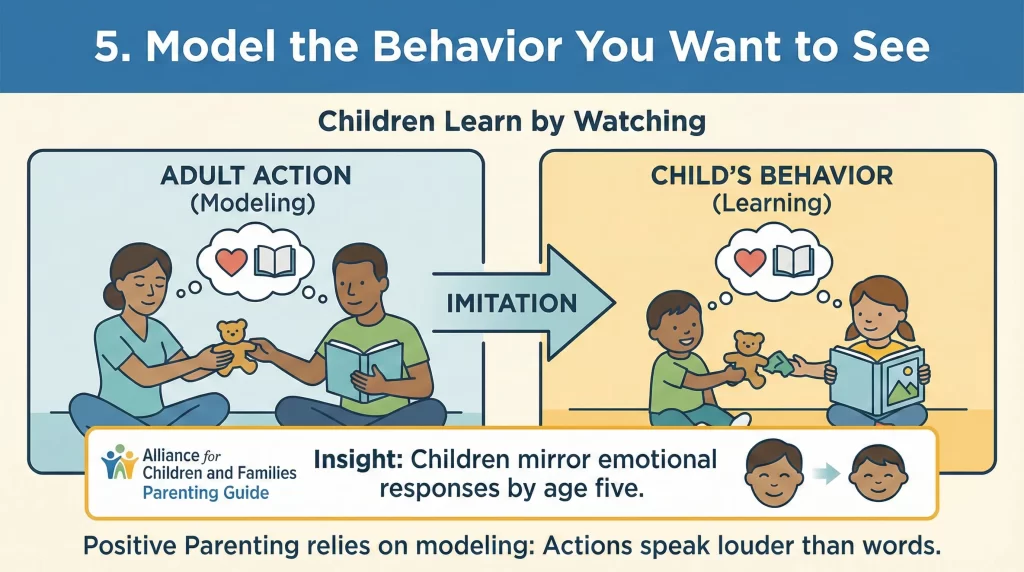
Children Learn by Watching
Positive Parenting relies heavily on modeling behavior. Children imitate adult actions more than words. According to the Alliance for Children and Families Parenting Guide, children mirror emotional responses by age five.
We manage our emotions during stress. Calm responses teach emotional regulation. Apologizing when wrong models accountability. These behaviors shape children’s social development.
Modeling also builds credibility. Children follow parents who practice what they teach. This reduces resistance and builds mutual respect.
Key Benefits of Positive Parenting
- Improves emotional regulation and self-control.
- Reduces behavioral issues by measurable margins.
- Strengthens long-term parent-child relationships.
- Builds communication and problem-solving skills.
- Supports mental health and resilience.
Positive Parenting Techniques at a Glance
| Technique | Primary Benefit | Supporting Data |
|---|---|---|
| Emotional Presence | Secure attachment | 32% fewer school incidents |
| Positive Discipline | Better behavior control | 28% reduction in aggression |
| Clear Communication | Faster cooperation | 40% improved response rate |
| Guided Choices | Higher confidence | 25% task completion increase |
| Behavior Modeling | Emotional regulation | Observed by age five |
Bottom Line
Positive Parenting is a practical, evidence-based approach that strengthens family bonds through respect, structure, and empathy. The techniques outlined here work because they align with how children learn and develop. Data from UNICEF, UC Davis Health, and pediatric research consistently confirm these outcomes.
We do not need perfection to parent positively. We need consistency, awareness, and intention. Small daily actions shape long-term outcomes. Emotional presence builds trust. Positive discipline teaches responsibility. Clear communication reduces conflict. Guided autonomy builds confidence. Modeling behavior shapes character.
FAQs
At what age is Positive Parenting most effective for?
Positive Parenting works from infancy through adolescence with age-appropriate adjustments.
Does Positive Parenting mean no discipline?
No. It uses guidance and logical consequences instead of punishment.
How long before results appear?
Many parents notice improved behavior within two to four weeks.
Is Positive Parenting supported by research?
Yes. UNICEF and pediatric studies confirm measurable benefits.
Can Positive Parenting reduce tantrums?
Yes. Emotional regulation improves, reducing tantrum frequency over time.
Disclaimer
This article is for educational purposes only and does not replace professional medical, psychological, or parenting advice.