

Table of Contents
Reading Activities for Kids play a critical role in building early literacy, vocabulary, and comprehension skills. According to UNESCO data updated in 2025, children who develop reading habits before age eight are 40% more likely to perform above average in language subjects during later schooling. This statistic highlights why structured reading activities matter during early childhood development.
Strong reading skills also improve memory, concentration, and communication abilities. The U.S. National Center for Education Statistics reported in 2024 that students who read for 20 minutes daily encounter nearly 1.8 million words annually. Exposure to that volume dramatically strengthens vocabulary growth and comprehension abilities.
Parents and teachers can improve literacy through engaging Reading Activities for Kids that combine storytelling, phonics practice, and interactive games. These activities transform reading into an enjoyable experience rather than a routine task. When children associate reading with curiosity and fun, they naturally develop lifelong learning habits.
Storytelling and Read-Aloud Sessions
Why Read-Aloud Improves Literacy
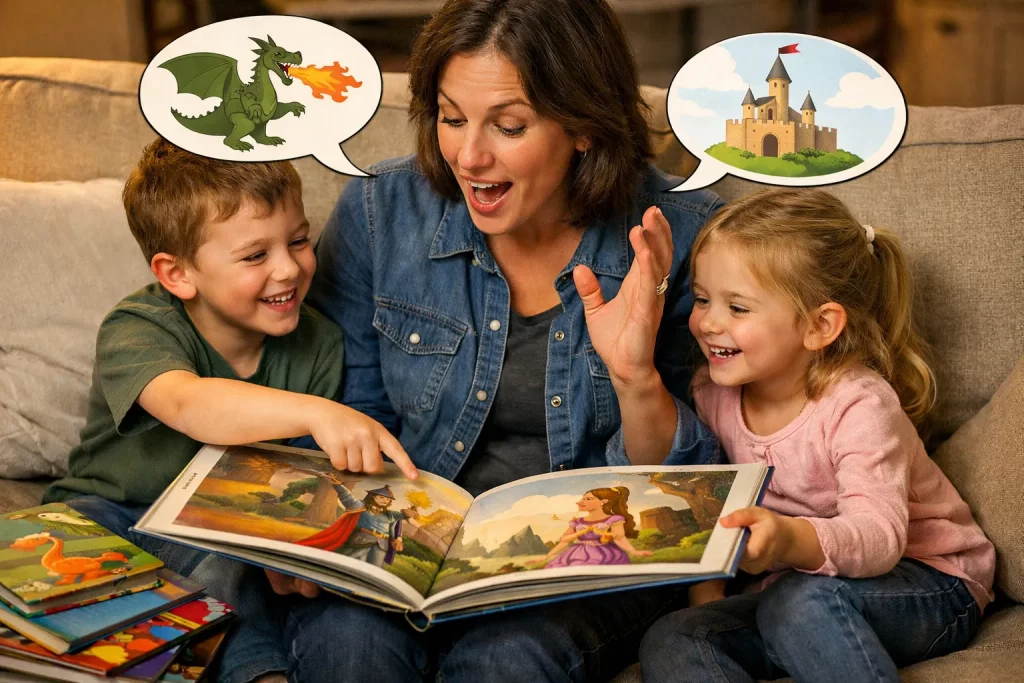
Storytelling remains one of the most powerful Reading Activities for Kids. When adults read aloud, children hear proper pronunciation, sentence structure, and expressive language patterns. Research published by Reading Rockets shows that children who are exposed to daily read-aloud sessions develop vocabulary up to 1,000 words larger by age 6.
Read-aloud time also strengthens listening skills and imagination. Children learn to visualize characters, settings, and emotions while following the story. This process supports comprehension and narrative understanding.
Parents should pause during stories and ask questions such as:
- What do you think happens next?
- Why did the character make that decision?
- How would you solve this problem?
These simple questions turn reading into an interactive learning experience.
How to Make Storytelling More Engaging
Storytelling works best when children actively participate. Use different voices, facial expressions, and gestures to bring characters to life. Visual storytelling improves emotional connection with the text.
Helpful storytelling techniques include:
- Using picture books for younger readers
- Acting out scenes from the story
- Allowing children to predict endings
- Encouraging them to retell the story afterward
Phonics Games and Word Building
Why Phonics Matters in Early Reading
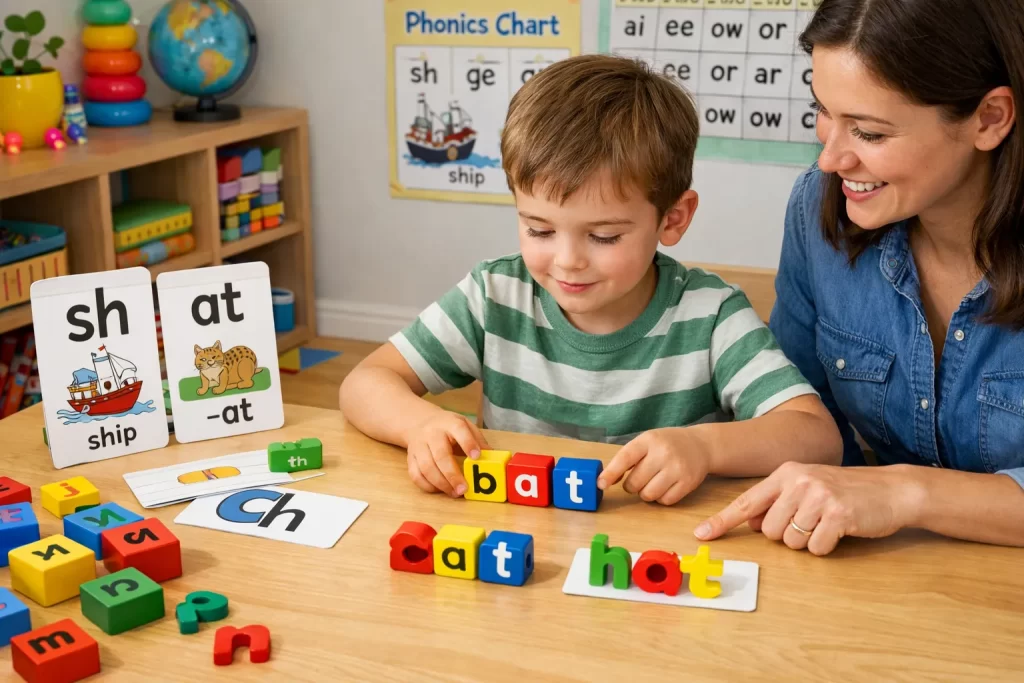
Phonics-based Reading Activities for Kids teach children how letters connect to sounds. This skill forms the foundation of independent reading. Systematic phonics instruction improves reading accuracy by up to 26% in early learners.
Phonics games help children decode unfamiliar words by sounding them out. Instead of memorizing entire words, children learn patterns and letter combinations.
Examples include:
- Letter-sound matching games
- Word-building blocks
- Alphabet flashcard challenges
- Rhyming word puzzles
These activities improve decoding speed and reading fluency.
Fun Phonics Activities at Home
Parents can easily introduce phonics practice using everyday objects and simple games.
Effective phonics activities include:
- Word Family Sorting
Group words such as cat, bat, and hat by similar endings. - Sound Treasure Hunt
Ask children to find objects beginning with a specific sound. - Build-a-Word Game
Use letter magnets to form new words on the refrigerator. - Rhyming Challenges
Encourage children to find rhymes for common words.
Interactive Reading Games
Gamified Reading Builds Motivation
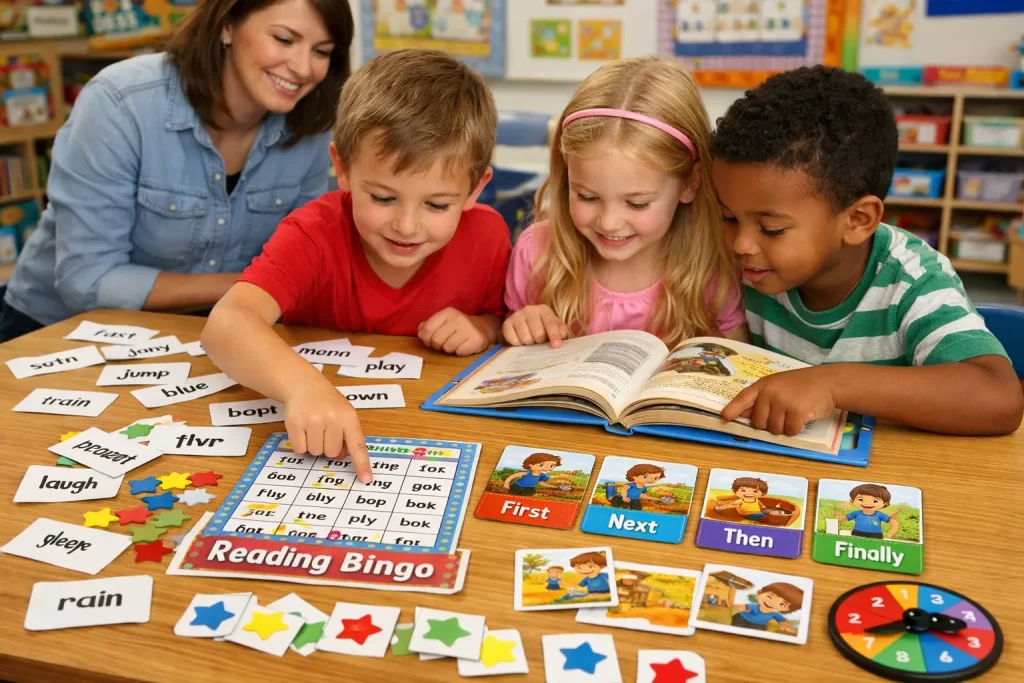
Interactive games transform reading into an active learning experience. When children play while learning, engagement increases significantly. A 2025 literacy engagement study found that gamified learning improved reading participation by 35% among children aged 6–10.
Games also support comprehension, memory retention, and critical thinking.
Popular reading games include:
- Word scavenger hunts
- Sentence-building challenges
- Reading bingo
- Story sequencing puzzles
Each activity encourages children to analyze text while having fun.
Examples of Interactive Reading Activities
Below are practical game ideas families can try immediately.
| Activity | Skill Developed | Age Group |
|---|---|---|
| Reading Bingo | Vocabulary recognition | 5–8 |
| Story Sequencing | Comprehension and logic | 6–10 |
| Word Hunt | Spelling and scanning | 6–9 |
| Sentence Builder | Grammar and fluency | 7–10 |
These games keep children curious and motivated. They also strengthen literacy skills without feeling like homework.
Creative Reading and Writing Activities
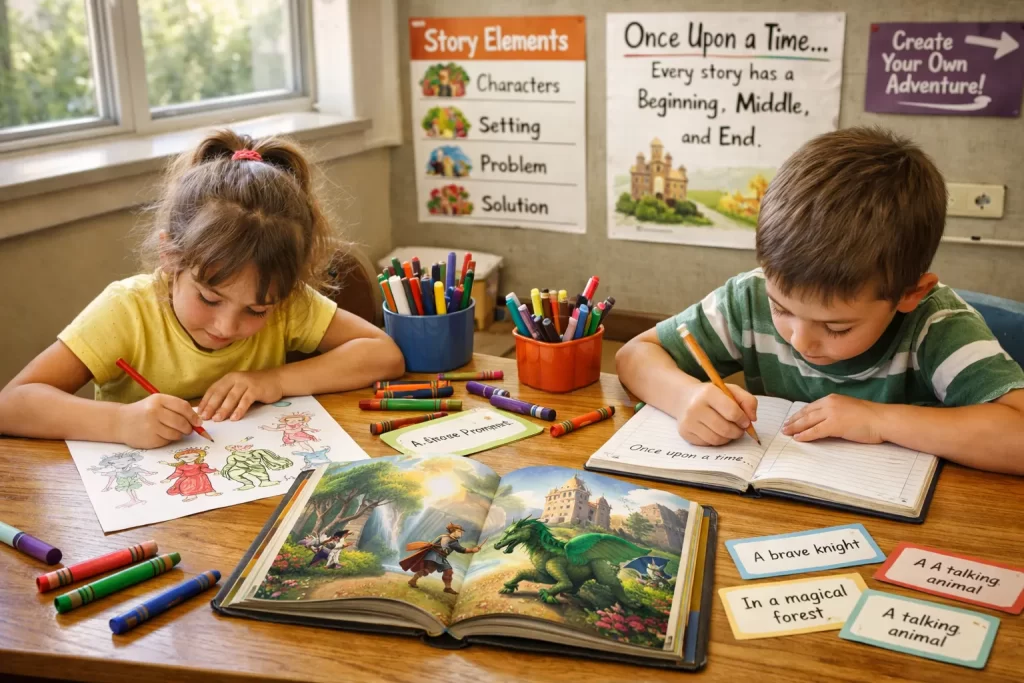
Connecting Reading With Creativity
Creative expression deepens literacy development. When children connect reading with drawing or writing, comprehension improves significantly. Research from the International Literacy Association reported in 2024 that students who combine reading and writing activities show 20% higher comprehension scores.
Creative Reading Activities for Kids encourage children to analyze stories and express their interpretations.
Examples include:
- Drawing scenes from a book
- Writing alternate endings
- Creating character diaries
- Designing comic strips based on stories
These activities strengthen both reading comprehension and writing confidence.
Encourage Story Creation
Story creation is particularly powerful for literacy growth. Children who invent their own stories understand narrative structure more clearly.
Helpful story-building prompts include:
- What happens after the story ends?
- How would you change the main character?
- Can you create a new adventure?
Creative storytelling allows children to become both readers and authors. This dual role strengthens language skills and fosters deeper engagement with books.
Daily Reading Routines and Book Exploration

Building Consistent Reading Habits
Consistency remains the most effective literacy strategy. Regular Reading Activities for Kids build fluency through repetition and practice. Studies from the National Literacy Trust in 2025 show that children who read daily are twice as likely to achieve advanced reading levels by age 11.
Creating a reading routine does not require long hours. Even 15–20 minutes of reading daily significantly improves vocabulary exposure.
Simple routine ideas include:
- Bedtime reading sessions
- Morning story time
- Weekend library visits
- Family reading challenges
These habits create a positive reading culture at home.
Choosing the Right Books
Selecting engaging books increases reading motivation. Children read more when they enjoy the content.
Good book selection strategies include:
- Allow children to choose their own books
- Provide books at slightly higher reading levels
- Include nonfiction topics they enjoy
- Rotate books regularly to maintain curiosity
Bottom Line
Reading Activities for Kids remain one of the most effective ways to strengthen literacy development during early childhood. Storytelling, phonics games, and interactive reading exercises all support vocabulary growth and comprehension. Research consistently shows that children exposed to structured reading activities perform better academically and develop stronger communication skills.
Parents and educators can start with simple methods such as read-aloud sessions, word games, and creative storytelling exercises. These activities require minimal resources yet produce measurable improvements in literacy development. The key is consistency, encouragement, and making reading enjoyable rather than mandatory.