

Table of Contents
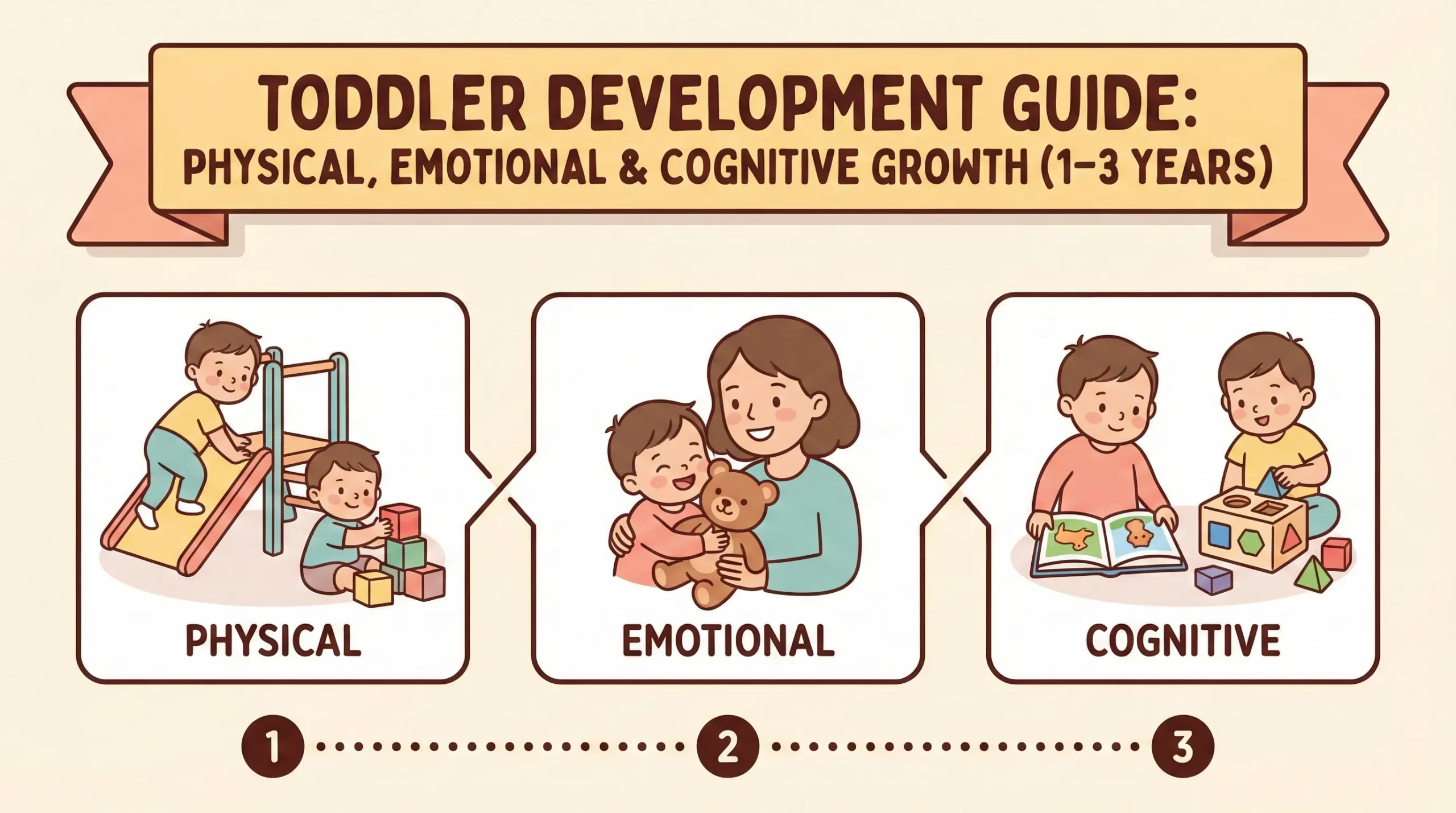
Toddler Development between ages one and three shapes how children move, think, and connect with others. This period brings rapid physical growth, emotional awareness, and early problem-solving skills.
According to the Cleveland Clinic, most toddlers triple their birth weight by age one and grow about 4 to 5 inches per year through age three. Brain volume also reaches nearly 80 percent of adult size by age three. These changes explain why daily progress feels dramatic.
We see new milestones almost every month. Walking becomes running. Babbling becomes simple sentences. Curiosity becomes purposeful exploration. Each stage builds on the last, making consistent support essential. Parents often ask what growth looks like and when to worry.
This guide explains Toddler Development using updated clinical ranges and practical examples. We cover physical, emotional, and cognitive growth. We also include guidance on nutrition, sleep, and safety. Our goal is to help you support healthy growth with evidence and calm assurance.
Physical Growth in Toddler Development
Gross Motor Skills
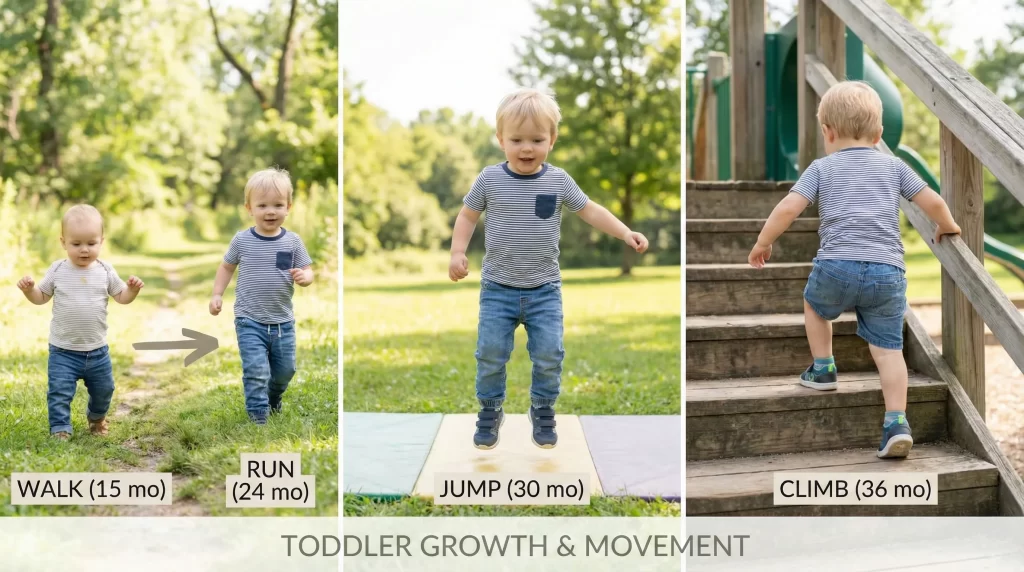
Physical growth leads to Toddler Development from shaky steps to confident movement. Most toddlers walk alone by 15 months. Many run steadily for 24 months. By 36 months, they can climb stairs using alternating feet. The Cleveland Clinic lists jumping in place as common by 30 months.
Strong muscles support independence. Toddlers begin pushing toys, kicking balls, and climbing furniture. These actions build coordination and balance. Outdoor play supports bone density and heart health. The American Academy of Pediatrics recommends at least 180 minutes of physical activity per day for children under 5.
Fine Motor Skills
Fine motor growth also defines Toddler Development. By 18 months, many toddlers stack three blocks. By 24 months, they stack six blocks. By 36 months, they draw simple circles and turn book pages one at a time.
Hand strength improves daily. Toddlers learn to feed themselves with spoons by 20 months. They begin using forks at 30 months. These skills support independence and self-esteem. Occupational therapists note that repeated grasping strengthens neural connections.
Emotional Growth in Toddler Development
Self-Awareness and Independence
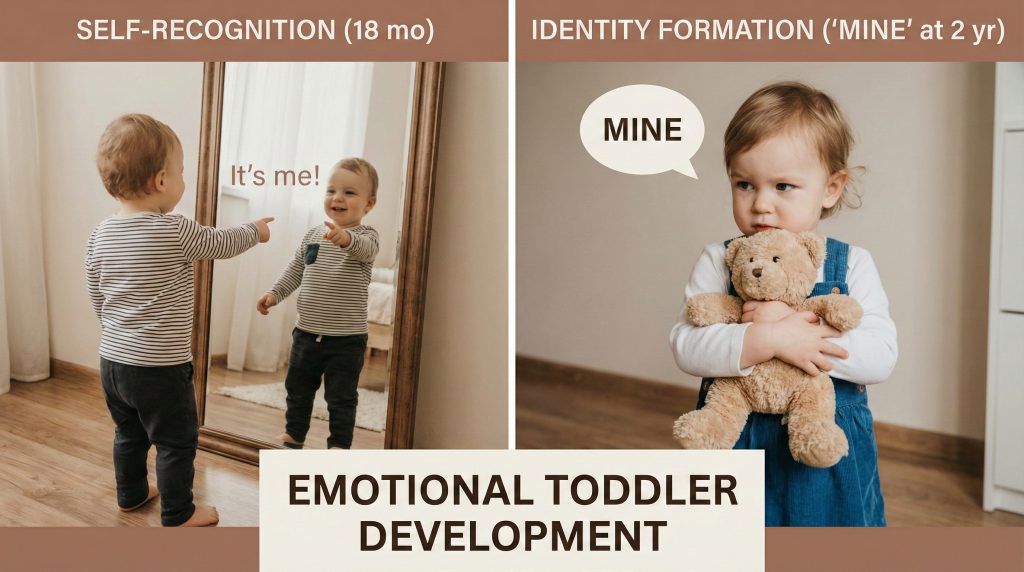
Emotional Toddler Development begins with self-recognition. Most toddlers recognize themselves in mirrors by 18 months. They say “mine” frequently by age two. This behavior reflects identity formation, not selfishness.
Toddlers show frustration when blocked. Tantrums peak between 18 and 36 months. Research from Johns Hopkins Medicine links tantrums to immature emotional regulation systems. Calm responses teach coping skills.
Attachment and Empathy
Attachment strengthens emotional Toddler Development. Toddlers seek comfort from familiar caregivers. Separation anxiety peaks around 18 months and fades by age three. This pattern reflects secure bonding.
Empathy emerges early. By 24 months, many toddlers offer toys to crying peers. They also imitate comforting gestures. These actions show early social understanding.
Cognitive Growth in Toddler Development
Language Development
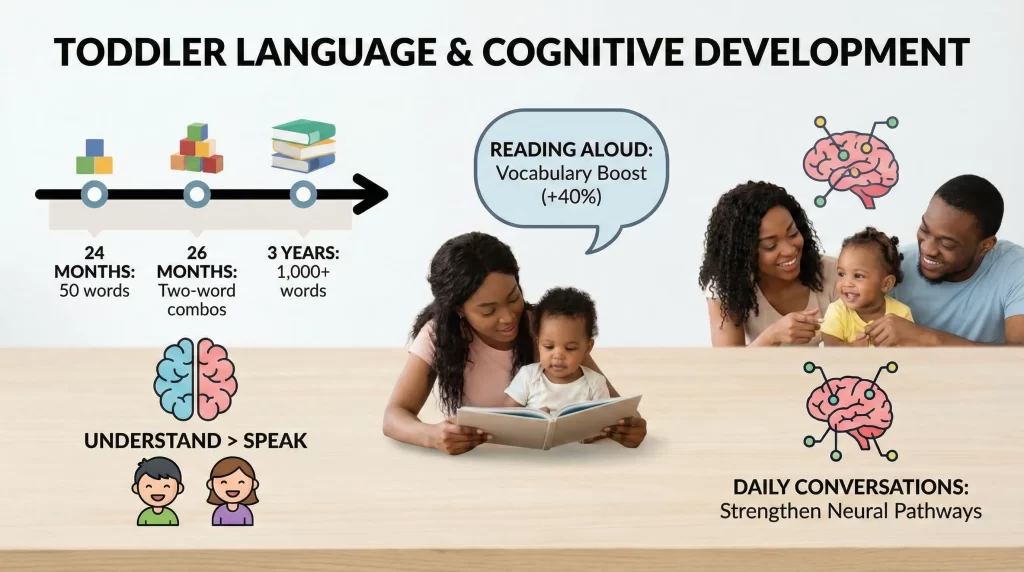
Language drives cognitive Toddler Development. Most toddlers speak 50 words by 24 months. Many combine two words by the age of 26 months. By age three, vocabulary often exceeds 1,000 words.
The Raising Children Network reports that toddlers understand far more words than they speak. Reading aloud boosts vocabulary growth by 40 percent by age three. Daily conversations strengthen neural pathways.
Problem Solving and Memory
Problem-solving defines cognitive Toddler Development. By 18 months, toddlers solve simple puzzles. By 30 months, they sort shapes and colors. Memory improves rapidly during this period.
Object permanence is strengthened by 24 months. Toddlers remember routines and favorite songs. These skills support learning readiness.
Nutrition and Toddler Development
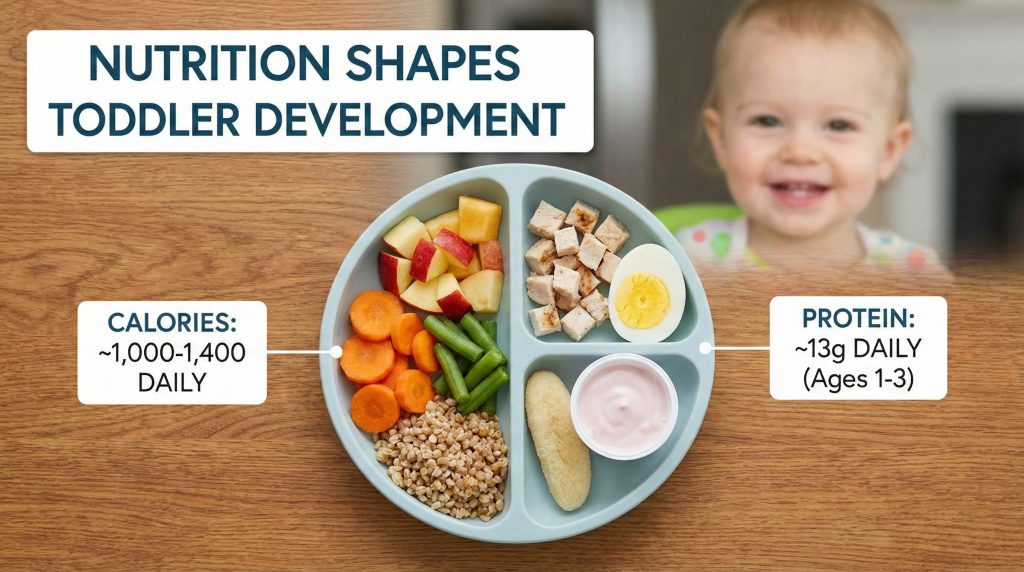
Daily Nutrient Needs
Nutrition directly shapes Toddler Development. Toddlers need about 1,000 to 1,400 calories daily, depending on activity. Protein needs average 13 grams per day for ages 1 to 3.
Iron remains critical. The CDC recommends 7 milligrams daily for toddlers. Low iron levels are linked to delayed cognitive development. Calcium needs reach 700 milligrams daily for bone health.
Hydration and Feeding Skills
Hydration supports Toddler Development. Toddlers need about 4 cups of fluids daily. Water should replace sugary drinks. The American Heart Association recommends limiting added sugar to 25 grams or less per day for children.
Self-feeding skills grow quickly. Toddlers should use open cups by 24 months. This practice strengthens coordination and reduces bottle dependence. Discover everything you need to know about Toddlers.
Sleep and Toddler Development
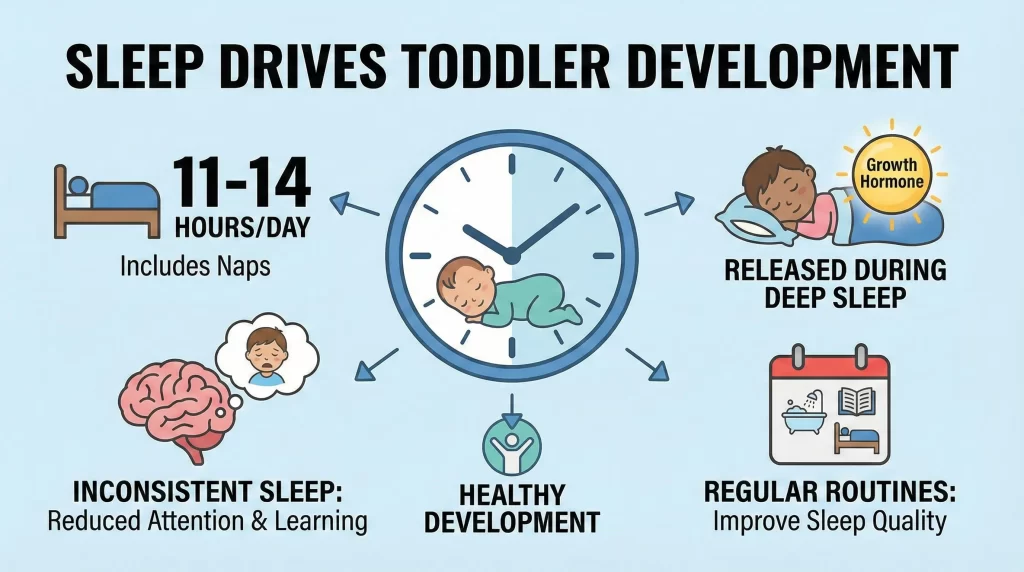
Sleep Duration
Sleep drives Toddler Development. The National Sleep Foundation recommends 11 to 14 hours of sleep per day for toddlers. This total includes naps.
Growth hormone is released mostly during deep sleep. Inconsistent sleep reduces attention and learning capacity. Regular routines improve sleep quality.
Bedtime Routines
Consistent routines support Toddler Development. Bath, story, and quiet time signal sleep readiness. Screens should be turned off 1 hour before bedtime.
Blue light delays melatonin release. Research from Harvard Medical School shows blue light reduces melatonin by 23 percent.
Safety and Toddler Development
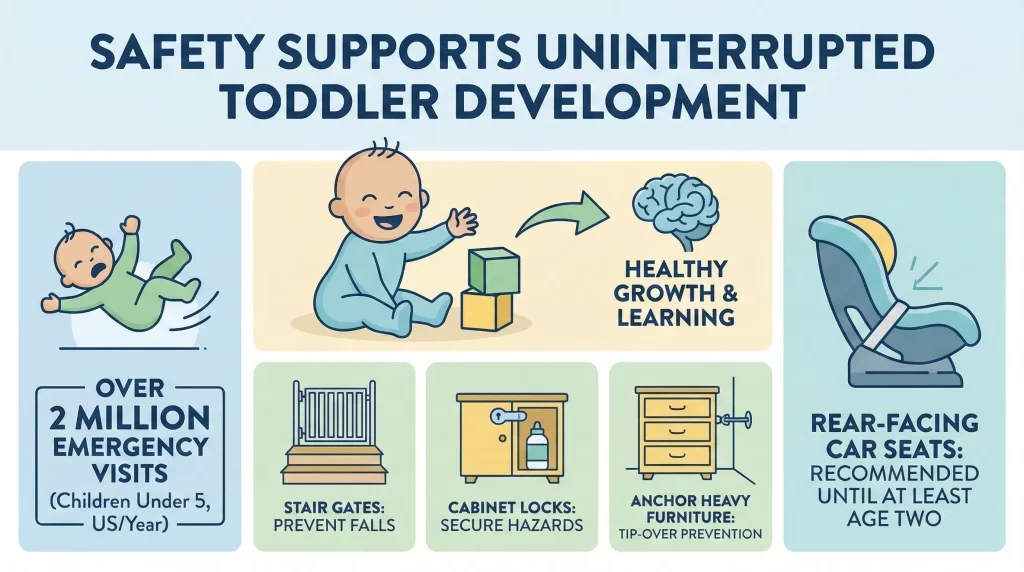
Injury Prevention
Safety supports uninterrupted Toddler Development. Falls cause over 2 million emergency visits among children under five in the United States each year.
Use stair gates and cabinet locks anchor heavy furniture. Rear-facing car seats remain recommended until at least age two.
Digital Safety
Digital exposure affects Toddler Development. The World Health Organization recommends no screen time for children under age 2. For ages 2 to 3, limit to 1 hour daily.
Excess screen time links to delayed speech and poor sleep. Interactive play remains superior.
Key Toddler Development Milestones Table
| Age (Months) | Physical Skills | Emotional Skills | Cognitive Skills |
|---|---|---|---|
| 12–18 | Walks alone, stacks 3 blocks | Separation anxiety | Points to objects |
| 18–24 | Runs, uses spoon | Says “mine,” tantrums | 50 words, simple puzzles |
| 24–30 | Jumps, stacks 6 blocks | Empathy appears | Two-word phrases |
| 30–36 | Pedals tricycle, draws lines | Shares with guidance | Sorts shapes, 1,000 words |
Practical Tips for Supporting Toddler Development
- Read aloud daily for at least 15 minutes.
- Offer three balanced meals and two snacks daily.
- Encourage outdoor play every day.
- Maintain consistent sleep routines.
- Respond calmly to emotional outbursts.
Bottom Line
Toddler Development from one to three years defines lifelong health and learning patterns. Physical strength, emotional security, and cognitive skills grow together during this stage. Exact milestones vary, but predictable trends guide expectations. Nutrition, sleep, safety, and play shape every outcome. Daily reading, balanced meals, and outdoor activity strengthen growth. Calm emotional responses teach regulation skills. Consistent routines protect sleep quality. Evidence-based support ensures steady progress. When concerns arise, early evaluation improves outcomes.
FAQs
1. What defines healthy Toddler Development?
Steady growth in movement, speech, emotions, and thinking skills.
2. When should toddlers start talking?
Most speak 50 words by 24 months.
3. How much sleep do toddlers need?
Eleven to fourteen hours daily, including naps.
4. Are tantrums normal in Toddler Development?
Yes. They peak between 18 and 36 months.
5. When should I seek professional advice?
If major milestones are missed by six months.
Disclaimer
This article is for informational purposes only and does not replace professional medical advice. Always consult a qualified pediatrician for concerns about your child’s development.