

Table of Contents
Toddler Development Milestones guides parents through the most important growth years, from 12 to 36 months. These milestones describe typical skills in movement, speech, learning, and social behavior. As of today, 2026-01-22, pediatric guidelines still rely on evidence-based ranges rather than fixed ages.
The Centers for Disease Control and Prevention last updated its milestone checklists in 2022 to reflect earlier language and social markers. This update improved early identification of developmental delays.
During toddlerhood, the brain forms over one million neural connections every second. This pace shapes walking, talking, and emotional control. According to Johns Hopkins Medicine, most toddlers triple their vocabulary between 18 and 30 months.
These changes feel sudden, yet they follow predictable developmental sequences. Tracking Toddler Development Milestones helps parents notice progress and address concerns early. This chart-based approach supports healthier long-term outcomes.
Why Toddler Development Milestones Matter
Early Detection Supports Better Outcomes
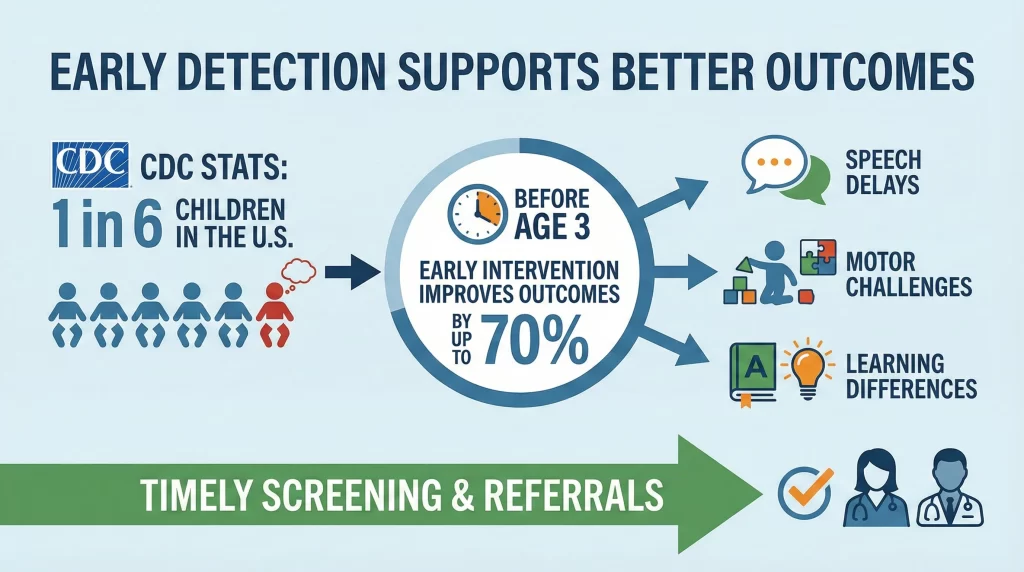
Toddler Development Milestones provide a practical framework for monitoring growth patterns. The CDC reports that one in six children in the United States has a developmental disability. Early intervention before age three improves outcomes by up to 70 percent. These results apply to speech delays, motor challenges, and learning differences. Clear milestone tracking allows timely screening and referrals.
Parents often sense that something feels off, but lack measurable guidance. Milestone charts convert observations into actionable information. Pediatricians use these benchmarks during routine visits. Consistent tracking reduces anxiety and replaces guesswork with evidence-based monitoring. This structure helps families act early and confidently.
Development Follows Predictable Domains
Toddler Development Milestones cluster into four major domains: physical, language, cognitive, and social-emotional. Each domain builds upon earlier skills. For example, standing supports walking, and babbling supports word formation. According to the Cleveland Clinic, most toddlers take independent steps by 15 months. These sequences explain why missing one skill can delay others.
Understanding domains prevents unrealistic expectations. It also reduces pressure on children developing within normal ranges. Growth does not follow a straight line. Each child advances at a unique pace. Milestones define healthy ranges, not deadlines. Learn about toddler physical milestones and how to track your child’s growth.
Month-by-Month Toddler Development Milestones Chart
12 to 18 Months
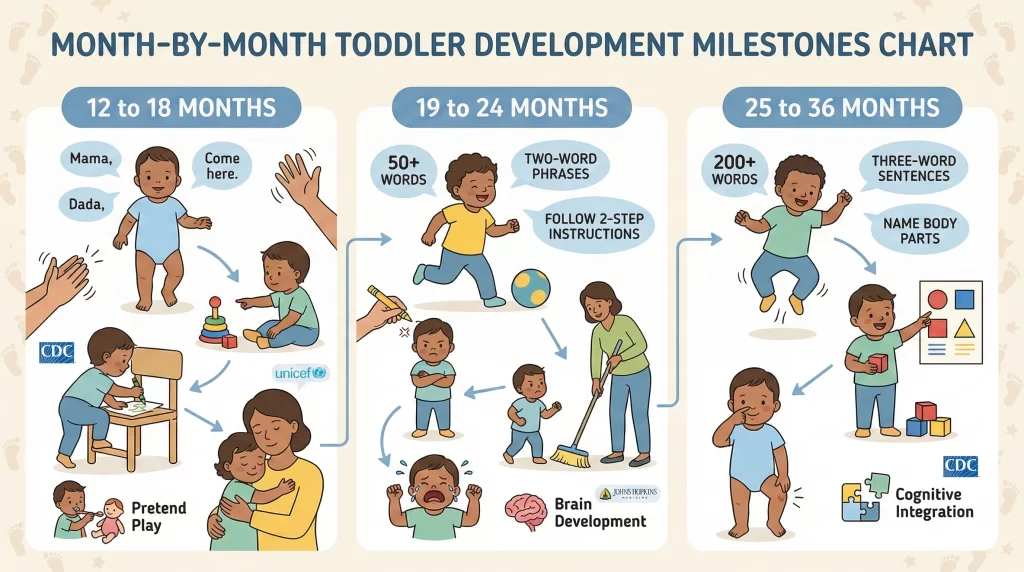
By 12 months, most toddlers stand alone and take a few steps. They say one to three meaningful words. They follow simple directions, such as “come here.” They point to show interest. The CDC lists waving and clapping as social milestones by 15 months. These early gestures reflect growing communication skills.
By 18 months, toddlers walk independently and climb low furniture. They say at least ten words. They scribble with crayons. They show affection toward caregivers. UNICEF reports that 18-month-olds begin pretend play, like feeding a doll. These behaviors show expanding imagination and emotional awareness.
19 to 24 Months
Between 19 and 24 months, vocabulary growth accelerates rapidly. Most toddlers use 50 or more words by 24 months. They combine two words into short phrases. They follow two-step instructions. They run and kick a ball. Johns Hopkins Medicine notes improved hand coordination during this stage.
Socially, toddlers show defiant behavior. They also imitate adult actions. This reflects increasing independence. Emotional outbursts remain common. Self-regulation skills are still immature. These patterns align with normal brain development.
25 to 36 Months
By 30 months, most toddlers use 200 words. They speak in three-word sentences. They identify colors and shapes. They jump with both feet. The CDC lists naming body parts as a key milestone. These abilities reflect strong cognitive integration.
By 36 months, toddlers engage in cooperative play. They tell short stories. They climb stairs alternating feet. They show empathy toward peers. Understand toddler physical milestones and support early communication skills.
Toddler Development Milestones Chart Table
| Age Range | Physical Skills | Language Skills | Cognitive Skills | Social Skills |
|---|---|---|---|---|
| 12–15 months | Stands alone, takes steps | Says 1–3 words | Follows simple commands | Waves, claps |
| 16–18 months | Walks independently | Says 10+ words | Scribbles | Shows affection |
| 19–24 months | Runs, kicks ball | Uses 50+ words | Sorts shapes | Imitates adults |
| 25–30 months | Jumps, climbs | Uses 200 words | Names objects | Shows defiance |
| 31–36 months | Alternates feet on stairs | Speaks sentences | Identifies colors | Plays cooperatively |
This table summarizes Toddler Development Milestones across all major domains. It highlights progressive skill layering over time. Understand speech development in toddlers and support early communication skills.
When to Seek Professional Guidance
Warning Signs That Need Attention
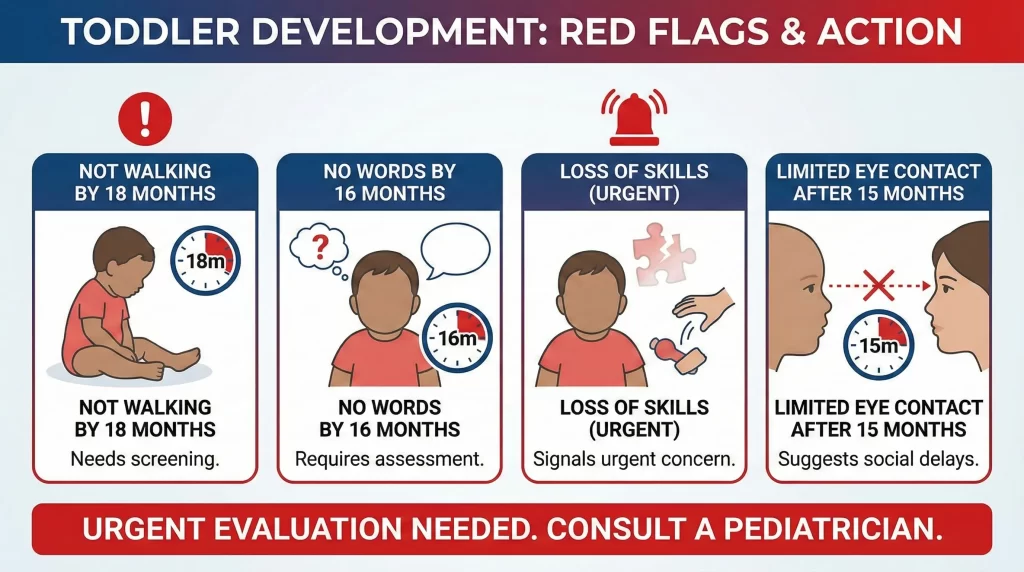
Toddler Development Milestones include red flags that warrant evaluation. A toddler not walking by 18 months needs screening. No words by 16 months requires assessment. Loss of previously acquired skills signals urgent concern. Limited eye contact after 15 months suggests social delays.
The CDC recommends developmental screening at 9, 18, and 30 months. Autism-specific screening occurs at 18 and 24 months. These schedules improve detection accuracy. They reduce long-term learning difficulties.
How Pediatricians Evaluate Delays
Pediatricians use standardized tools, such as the Ages and Stages Questionnaire. These tools compare Toddler Development Milestones against population norms. Referrals may follow for speech therapy or occupational therapy. Early therapy improves language skills by an average of 40 percent.
Parents play a key role in accurate reporting. Daily observations provide critical insight. Honest communication strengthens diagnostic accuracy. Professional support transforms concern into progress. Discover how emotional growth in toddlers helps them handle tantrums and moods.
Practical Tips to Support Healthy Development
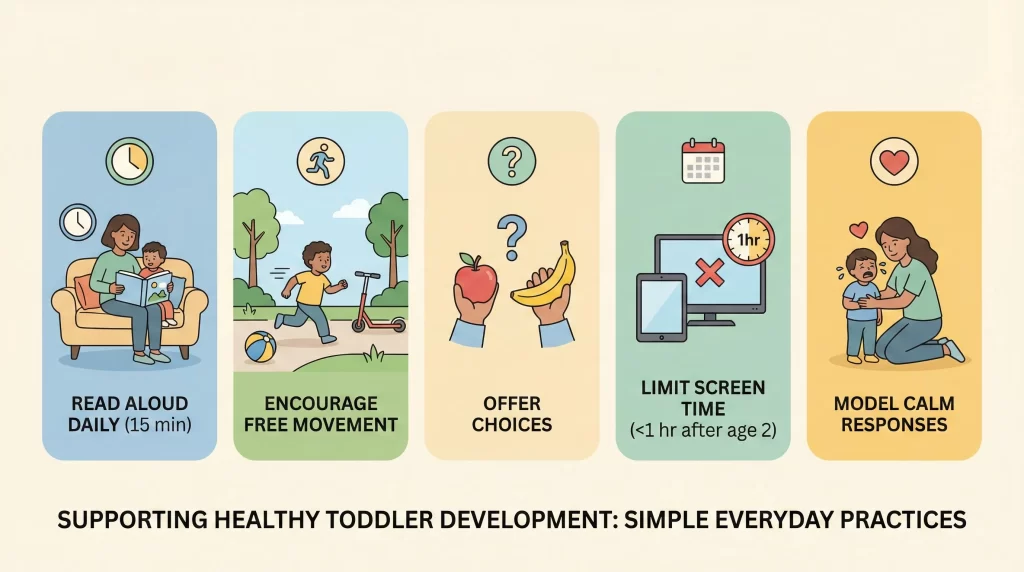
- Read aloud for 15 minutes daily to boost vocabulary growth.
- Encourage free movement to build motor coordination.
- Offer choices to promote decision-making skills.
- Limit screen time to under one hour daily after age two.
- Model calm emotional responses during tantrums.
These actions reinforce Toddler Development Milestones through daily routines. Consistency matters more than intensity. Small habits yield measurable gains. Supportive environments accelerate learning. Balanced stimulation prevents burnout and frustration. Boost toddler brain development with fun learning activities.
Bottom Line
Toddler Development Milestones offer a clear roadmap for tracking growth from 12 to 36 months. These milestones reflect predictable patterns of brain and body development. Evidence from the CDC, Cleveland Clinic, and Johns Hopkins confirms their reliability. Monitoring progress supports early detection and timely intervention. Parents should use milestone charts during routine pediatric visits. Daily engagement, structured play, and responsive communication strengthen outcomes.
Disclaimer
This article provides general educational information on toddler development. It does not replace professional medical advice, diagnosis, or treatment.