

Table of Contents
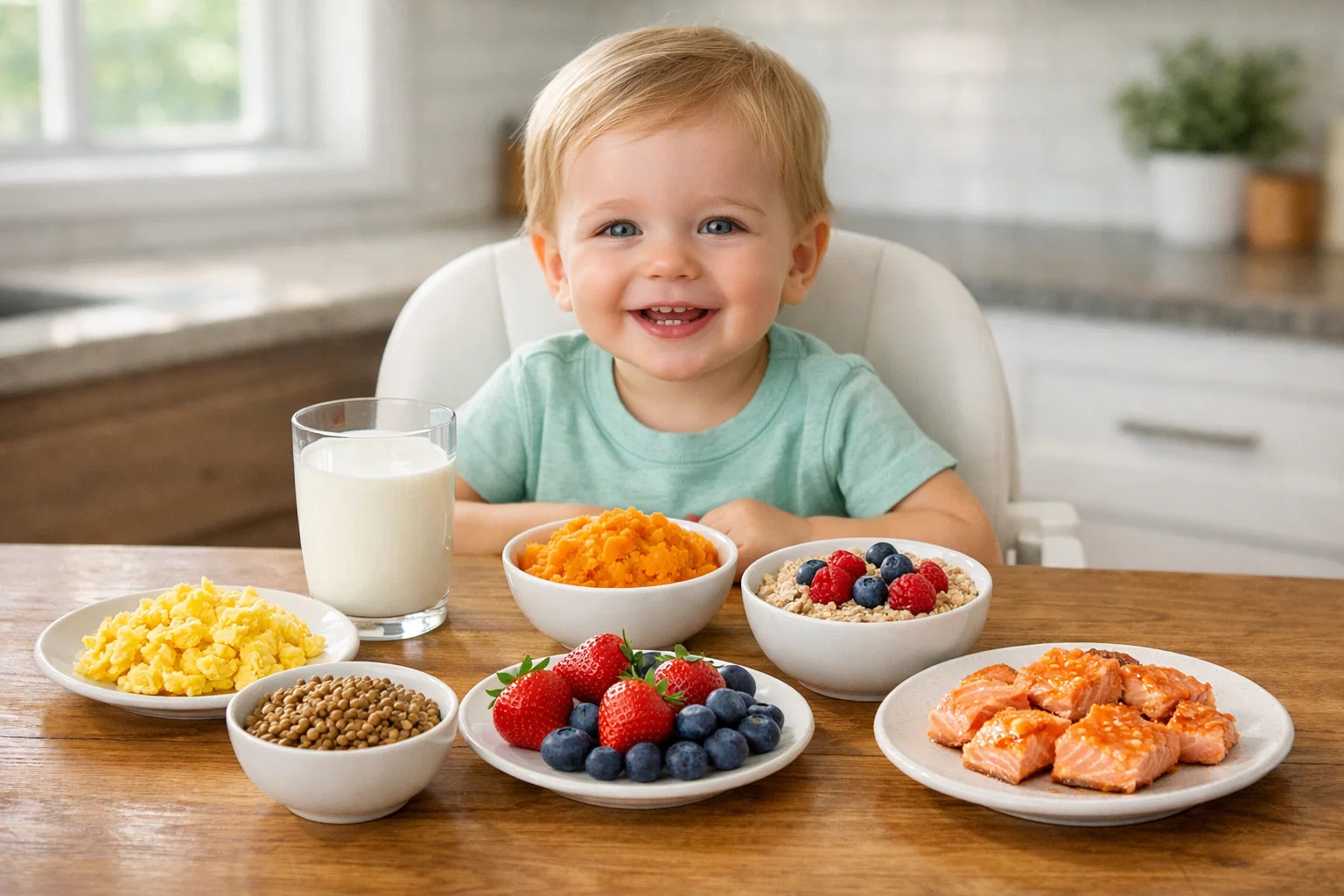
Toddler Nutrition shapes growth, brain development, and lifelong eating habits. Between ages 1 and 3, children grow nearly 3 inches per year and gain about 4 to 6 pounds annually. Their brains also reach nearly 80% of adult size by age 3. These rapid changes demand balanced, nutrient-dense meals every day.
We know toddlers often eat small portions and prefer familiar foods. That makes food quality more important than quantity. According to the CDC, iron deficiency affects about 8% of U.S. toddlers aged 1–3. Meanwhile, nearly 14% of children ages 2–5 lived with obesity in 2026. Smart Toddler Nutrition choices help prevent both undernutrition and excess weight gain.
1. Eggs: A Brain-Boosting Protein
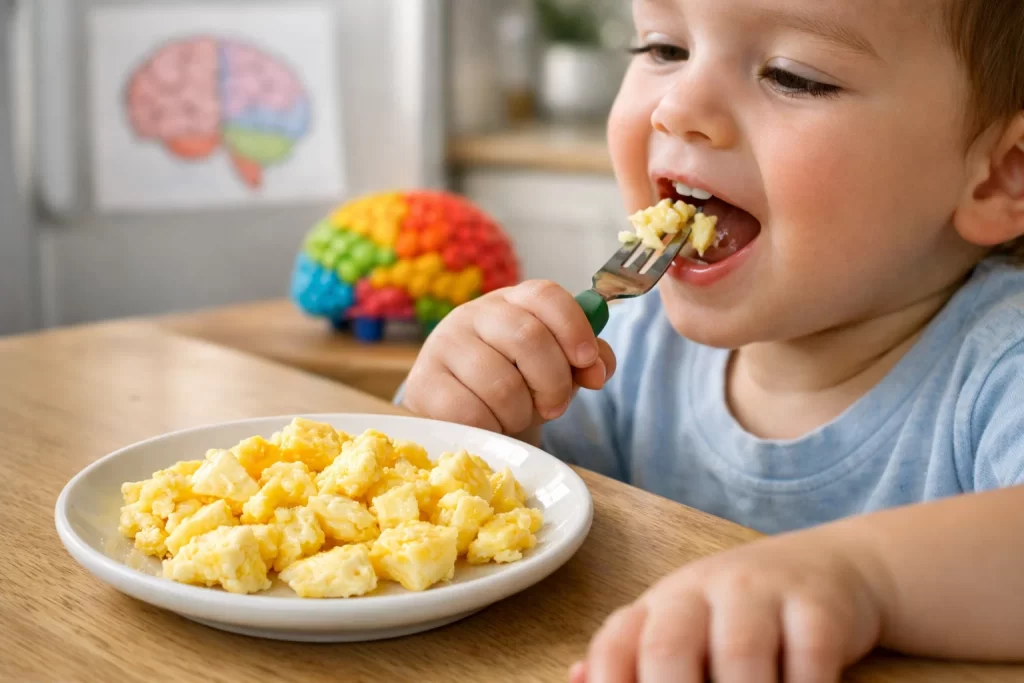
Eggs deliver complete protein, choline, and vitamin D in one small serving. One large egg provides 6 grams of protein and 147 milligrams of choline. Choline supports memory and brain cell development during early childhood.
Why Eggs Support Toddler Nutrition
Choline intake remains low in many young children. The National Institutes of Health lists 200 milligrams daily as the adequate intake for ages 1–3. One egg covers nearly 74% of that target. That makes eggs a powerful Toddler Nutrition staple.
Scrambled, boiled, or mashed into vegetables, eggs fit easily into small meals. Always cook eggs fully to reduce the risk of foodborne illness. Safe preparation ensures nutritional benefits without health risks. For a complete roadmap to raising strong and healthy kids, explore our child health and nutrition pillar guide.
2. Whole Milk and Yogurt: Calcium for Growing Bones
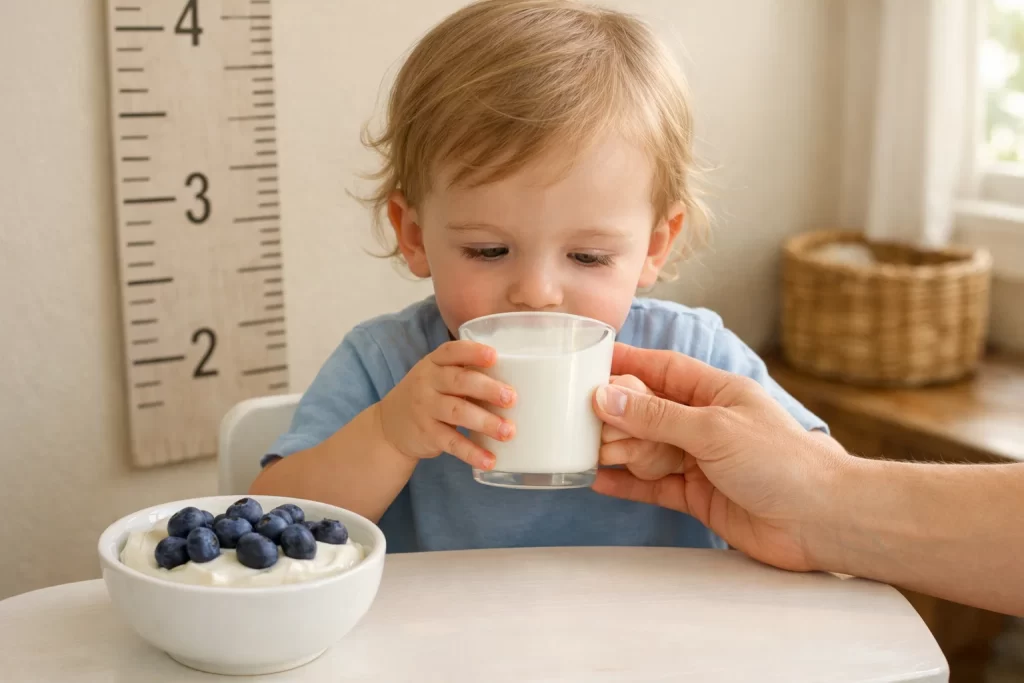
Dairy products strengthen bones and teeth during rapid growth. Children ages 1–3 need 700 milligrams of calcium daily. One cup of whole milk provides about 276 milligrams.
How Dairy Builds Strong Foundations
Whole milk also supplies healthy fats needed for brain development. The American Academy of Pediatrics recommends whole milk until age 2 unless advised otherwise. Yogurt adds probiotics that support gut health.
Choose plain yogurt to limit added sugar. The American Heart Association recommends less than 25 grams of added sugar daily for children over age 2. Balanced dairy intake protects bone density and supports steady development.
3. Sweet Potatoes: Vitamin A Powerhouse

Sweet potatoes deliver beta-carotene, fiber, and potassium. One-half cup of cooked sweet potato contains over 950 micrograms of vitamin A. Toddlers need 300 micrograms daily.
Why Orange Vegetables Matter
Vitamin A supports immune function and eye health. Fiber also helps prevent constipation, a common toddler concern. The Mayo Clinic advises offering fiber-rich vegetables daily for digestive health at mayoclinic.org.
Roasted cubes or mashed sweet potatoes blend well with proteins. This vegetable supports strong Toddler Nutrition through both immunity and digestion benefits. Make sure your child stays protected by reviewing the recommended vaccine schedule for kids.
4. Oatmeal: Energy That Lasts
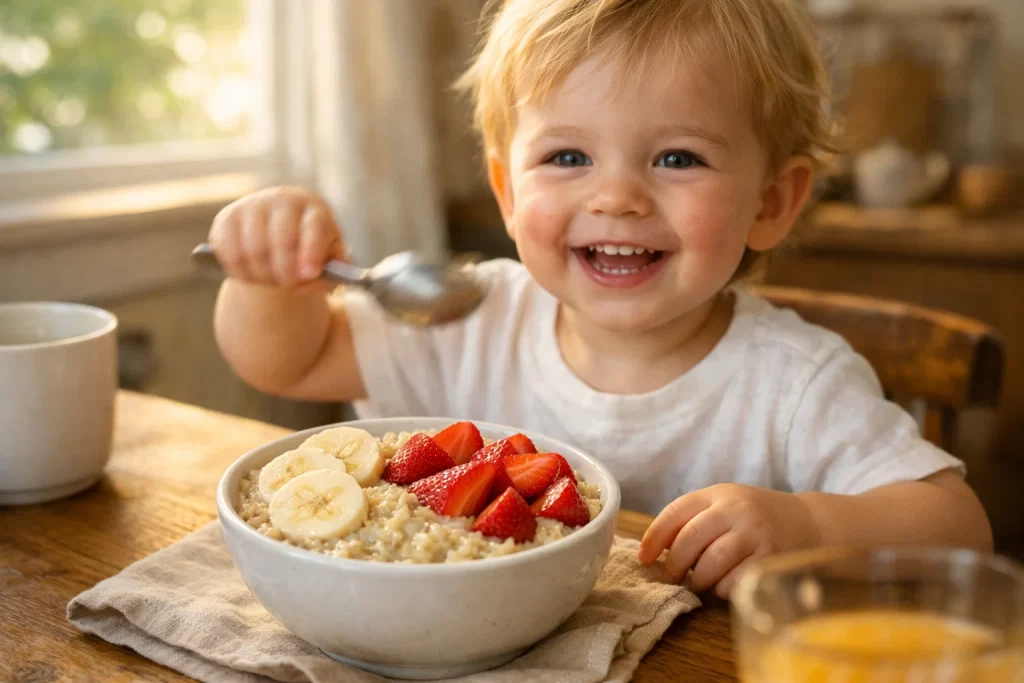
Whole grains supply steady energy for active toddlers. Half a cup of cooked oatmeal contains 2 grams of fiber and iron. Iron supports oxygen transport and prevents anemia.
The Iron Connection in Toddler Nutrition
Iron deficiency can affect attention and learning. Toddlers require 7 milligrams daily. Pair oatmeal with vitamin C–rich fruit to improve iron absorption.
Avoid flavored packets high in added sugar. Choose plain oats and add mashed banana or berries instead. Balanced grains help stabilize blood sugar and sustain energy throughout the day.
5. Lentils and Beans: Plant-Based Protein
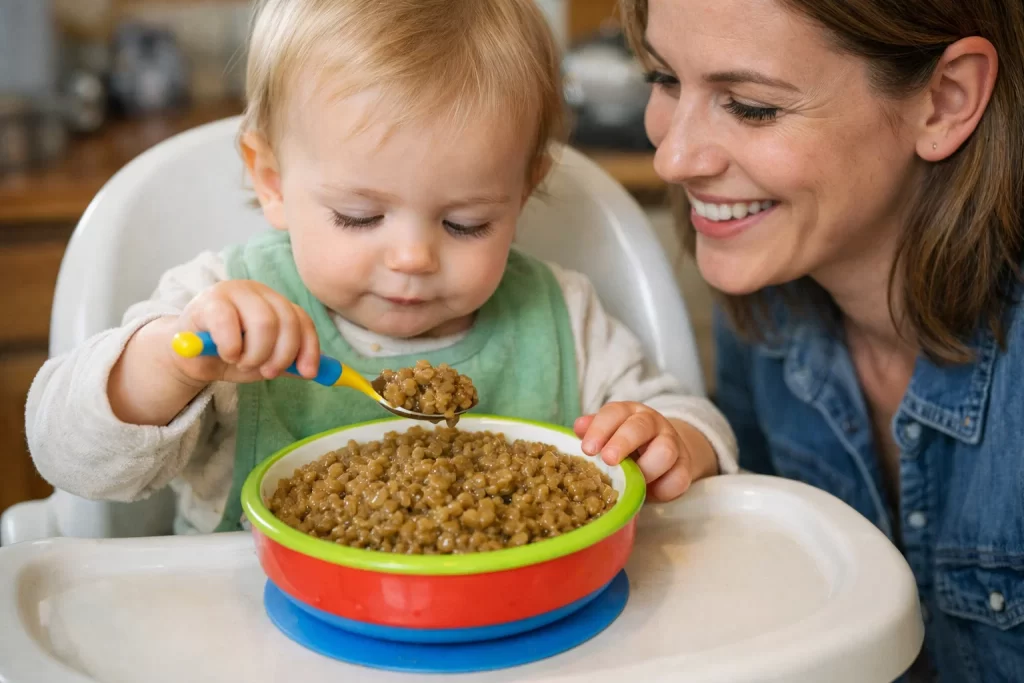
Lentils provide protein, iron, and folate in a small serving. Half a cup of cooked lentils offers 9 grams of protein and 3 milligrams of iron.
Affordable and Nutrient-Dense
Beans support heart health and digestion due to their high fiber content. According to Healthy Eating Research guidelines at healthyeatingresearch.org, plant proteins should appear several times weekly in toddler meals.
Mash beans for easier chewing and digestion. Including legumes strengthens Toddler Nutrition while keeping meals budget-friendly and nutrient-rich.
6. Berries: Antioxidant Protection
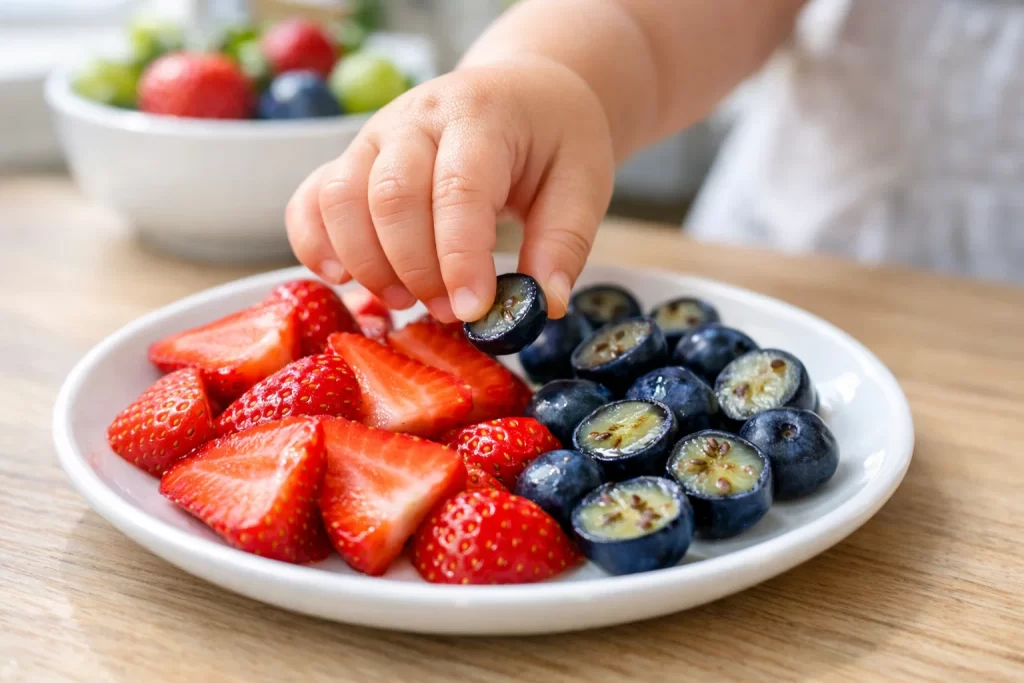
Blueberries and strawberries contain vitamin C and antioxidants. One-half cup of strawberries provides about 49 milligrams of vitamin C. Toddlers need 15 milligrams daily.
Supporting Immunity Naturally
Vitamin C boosts immune defense and enhances iron absorption. Berries also contain phytonutrients linked to cognitive health.
Serve fresh or frozen without added sugar. Cut small berries into safe pieces to prevent choking. Adding colorful fruit improves nutrient diversity and meal appeal.
7. Salmon: Omega-3 for Brain Growth
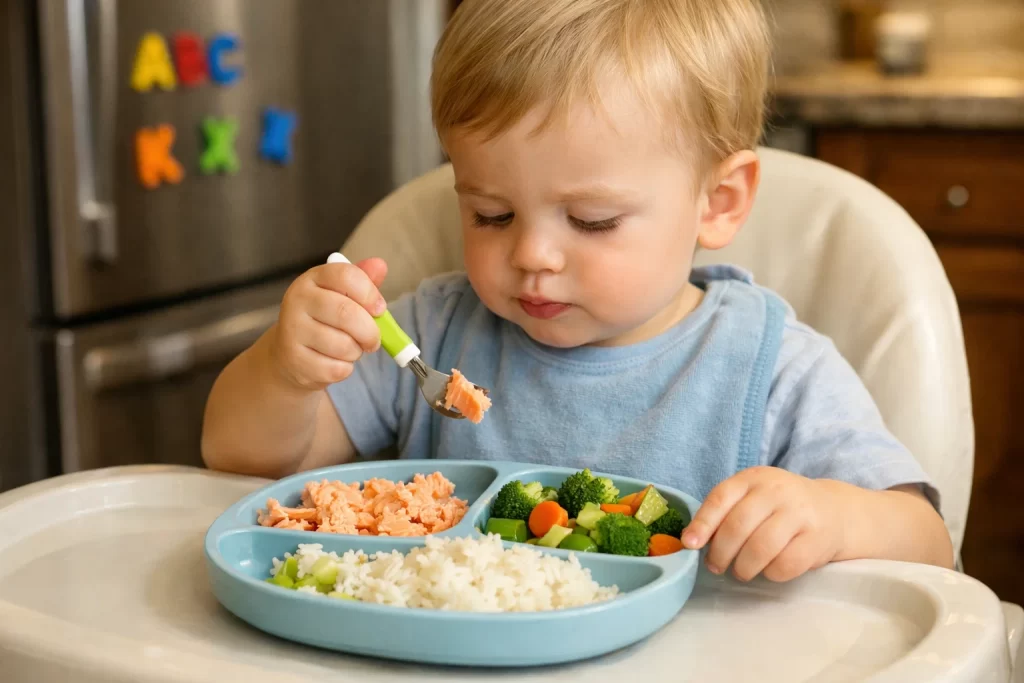
Salmon delivers omega-3 fatty acids, which are essential for cognitive development. A 2-ounce serving provides over 1,000 milligrams of DHA and EPA combined.
Why Healthy Fats Matter
Omega-3 fats support learning and emotional regulation. The Dietary Guidelines encourage seafood twice weekly for children. Choose low-mercury options like salmon or sardines.
Bake or flake salmon into rice or vegetables. Including fatty fish enhances Toddler Nutrition by supporting brain and heart health simultaneously.
Daily Toddler Nutrition Targets
Here is a quick reference table for children ages 1–3.
| Nutrient | Daily Requirement | Why It Matters |
|---|---|---|
| Calories | 1,000–1,400 kcal | Growth and energy |
| Protein | 13 grams | Muscle and tissue development |
| Calcium | 700 mg | Bone strength |
| Iron | 7 mg | Brain and oxygen transport |
| Vitamin A | 300 mcg | Immunity and vision |
| Vitamin C | 15 mg | Immune support |
These numbers align with the 2025–2030 federal dietary guidance. Meeting these targets supports balanced Toddler Nutrition every day.
Smart Toddler Nutrition Tips
- Offer three meals and two small snacks daily.
- Serve small portions and allow seconds if needed.
- Introduce new foods alongside favorites.
- Avoid juice before age 1 and limit to 4 ounces daily after.
- Encourage water between meals.
Consistency builds healthy eating habits. Repeated exposure often increases acceptance of new foods.