

Table of Contents
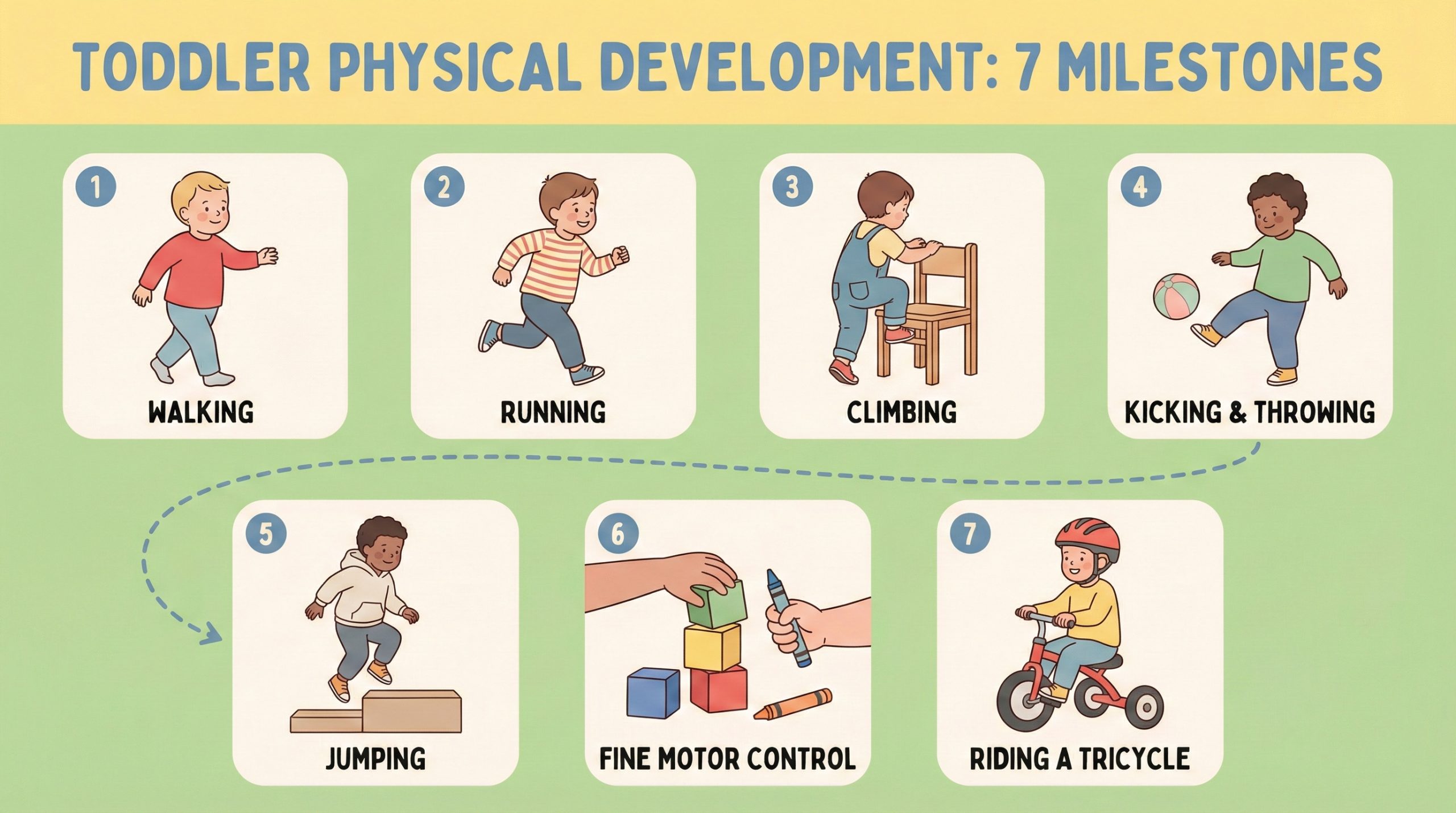
Toddler Physical Development shapes how children move, explore, and gain independence between 12 and 36 months. During this stage, muscles strengthen, balance improves, and coordination becomes more refined. According to MedlinePlus, most toddlers walk alone by 15 months and run by 24 months.
These physical gains support learning, social skills, and emotional confidence. Tracking clear milestones helps parents notice progress and identify delays early. Toddler Physical Development also follows a predictable pattern, though each child grows at a unique pace. The World Health Organization reports that 90 percent of toddlers walk independently by 18 months. UNICEF notes that two-year-olds often kick a ball and climb furniture.
These benchmarks guide expectations and reduce unnecessary worry. Understanding what matters most keeps parents focused and calm. Every milestone tells a story about healthy growth and developing independence.
Understanding Toddler Physical Development Basics
What Drives Physical Growth Between 1 and 3 Years
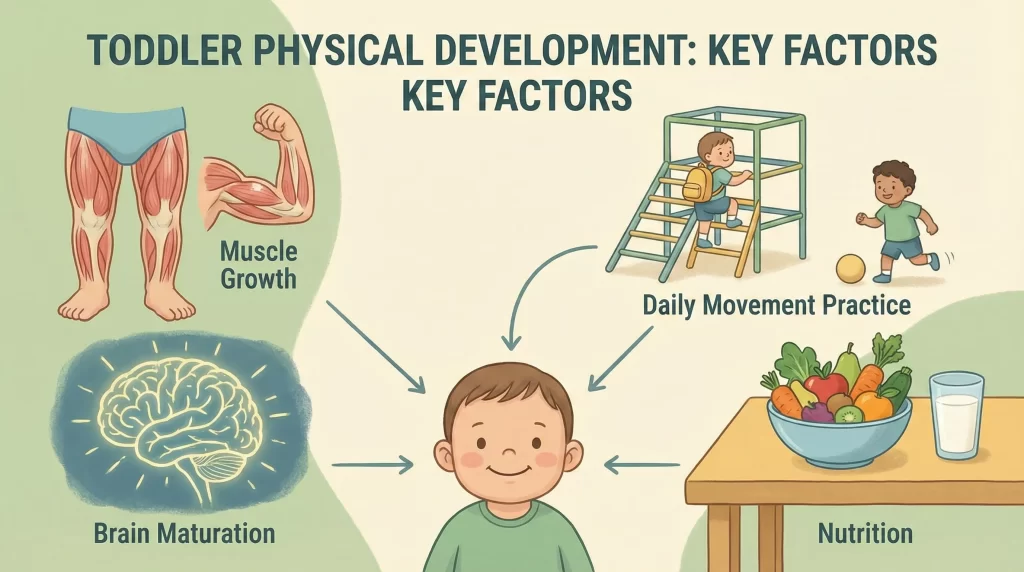
Toddler Physical Development depends on muscle growth, brain maturation, and daily movement practice. The brain builds new motor pathways during repeated actions, such as walking and climbing. By age two, a toddler’s brain reaches 80 percent of adult volume. This rapid growth supports balance, coordination, and strength. Nutrition also plays a major role in physical progress.
Protein needs average 13 grams per day for toddlers aged 1 to 3 years. Calcium needs reach 700 milligrams daily to support bone strength. Sleep also affects growth hormones and muscle repair. Toddlers need 11 to 14 hours of sleep every 24 hours.
Milestone 1: Walking Independently
Typical Age and What to Expect
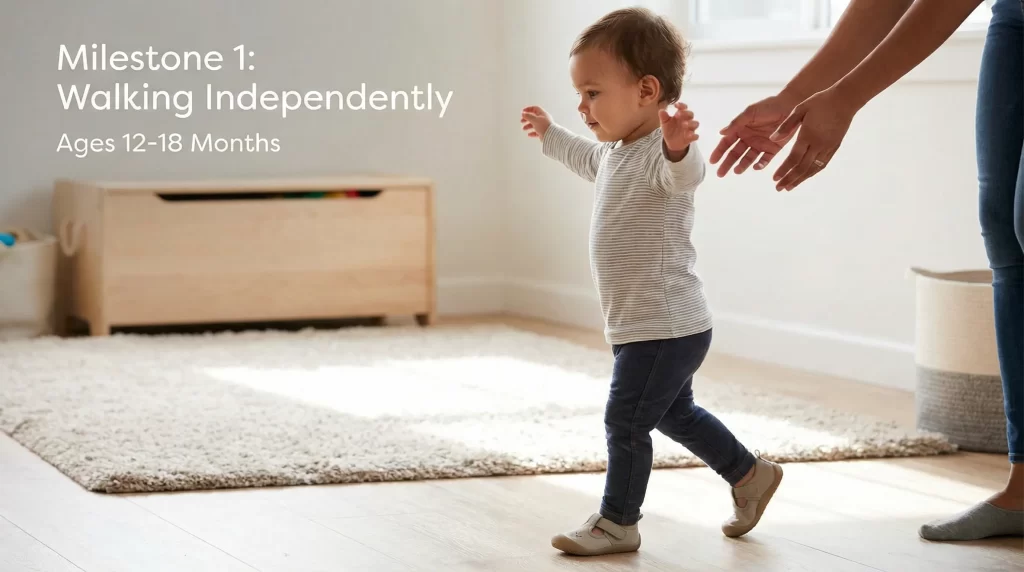
Most toddlers walk alone between 12 and 15 months. MedlinePlus confirms that 90 percent achieve this by 18 months. Early walkers may take wide steps and fall often. Balance improves as leg muscles strengthen. Shoes with flexible soles help improve foot control.
Walking marks a major step in Toddler Physical Development. It allows toddlers to explore freely and build confidence. Parents should watch for steady progress rather than perfection. If a child cannot stand by 18 months of age, consult a pediatrician. Early support improves outcomes and reduces long-term concerns.
Milestone 2: Running and Changing Direction
Building Speed and Balance
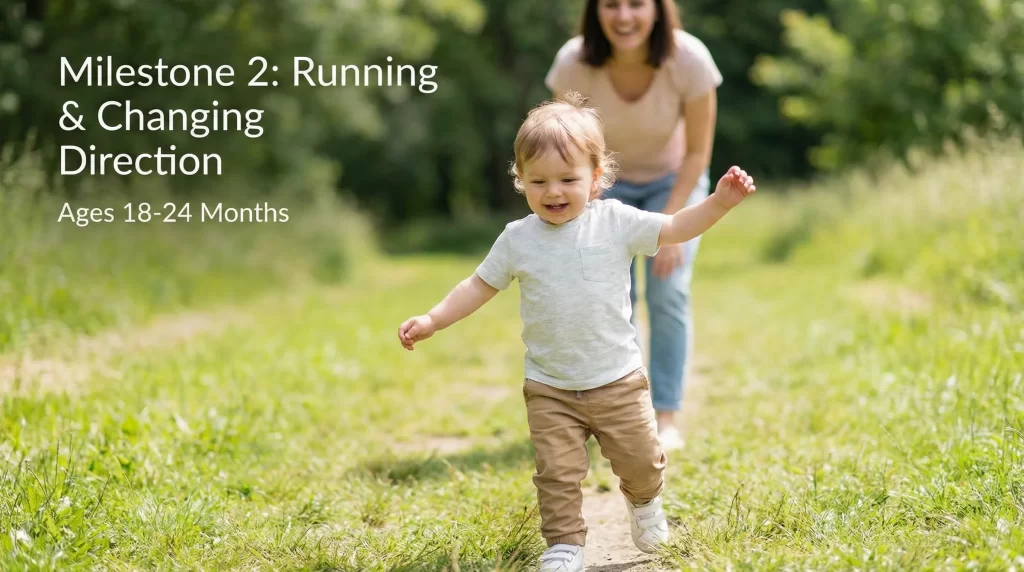
Running usually appears between 18 and 24 months. UNICEF reports that most two-year-olds run without falling often. Arms swing for balance and speed control. Direction changes remain clumsy but improve with practice.
Running reflects strong Toddler Physical Development and growing leg strength. Safe outdoor play encourages this skill. Parents should provide open spaces and avoid hard obstacles. Frequent falls are normal during learning. Each run builds coordination and confidence.
Milestone 3: Climbing Furniture and Stairs
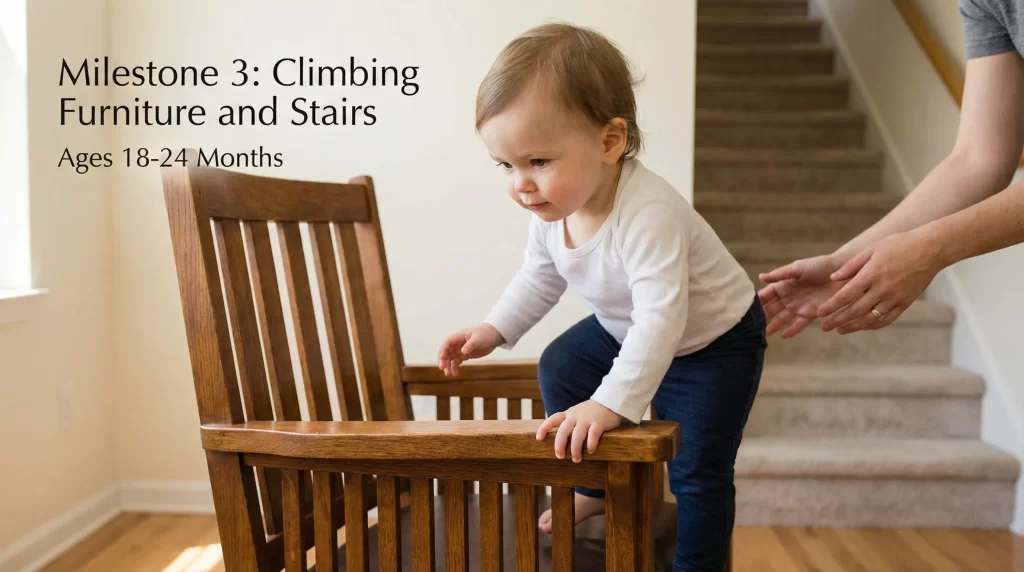
Strength and Problem-Solving Skills
Climbing begins around 18 months and improves by age two. Toddlers climb onto chairs, couches, and low tables. MedlinePlus notes that many toddlers walk upstairs with help by 24 months. Leg strength and grip control drive this milestone.
Climbing supports Toddler Physical Development and spatial awareness. Parents should install safety gates at the top and bottom of stairs. Supervision remains essential during this phase. Each climb teaches problem-solving and body awareness. Safe challenges promote healthy physical growth.
Milestone 4: Kicking and Throwing a Ball

Coordination and Muscle Control
Kicking a ball usually appears by 24 months. Throwing overhead develops between 18 and 30 months. UNICEF confirms that two-year-olds often kick forward without losing balance. Hand-eye coordination improves through repeated play.
Ball skills show advancing Toddler Physical Development and coordination. Parents can encourage simple games outdoors. Soft balls reduce injury risk. These actions build core strength and timing. Playful practice strengthens both body and confidence.
Milestone 5: Jumping with Both Feet
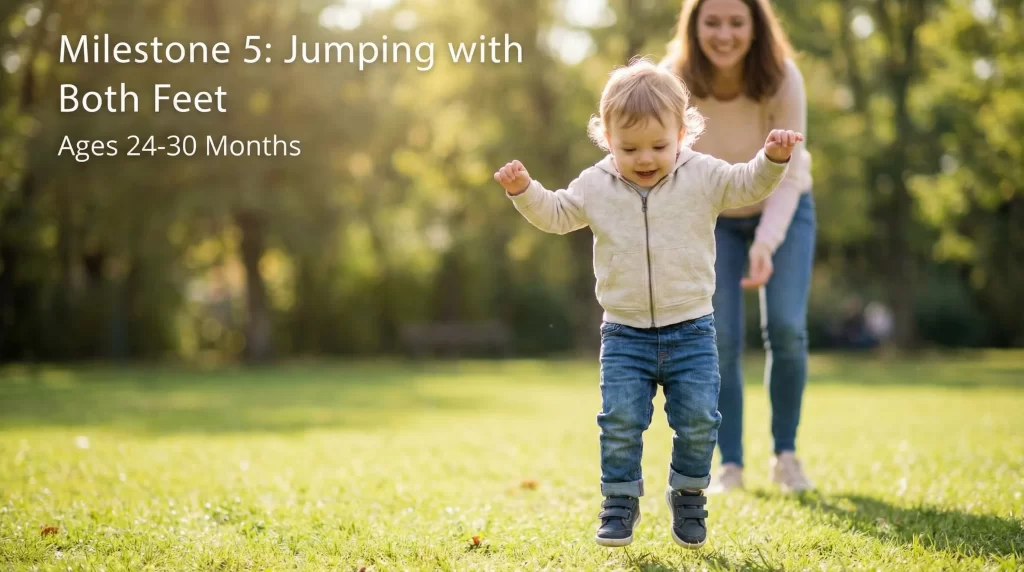
Power and Balance Gains
Jumping starts between 24 and 30 months. Toddlers lift both feet briefly off the ground. Balance remains unstable at first. MedlinePlus reports that most toddlers jump by age three.
Jumping reflects strong Toddler Physical Development and leg power. Parents can model small jumps. Soft surfaces reduce fall risks. Each jump builds muscle strength and coordination. Repetition improves control and stability.
Milestone 6: Fine Motor Control Improvements
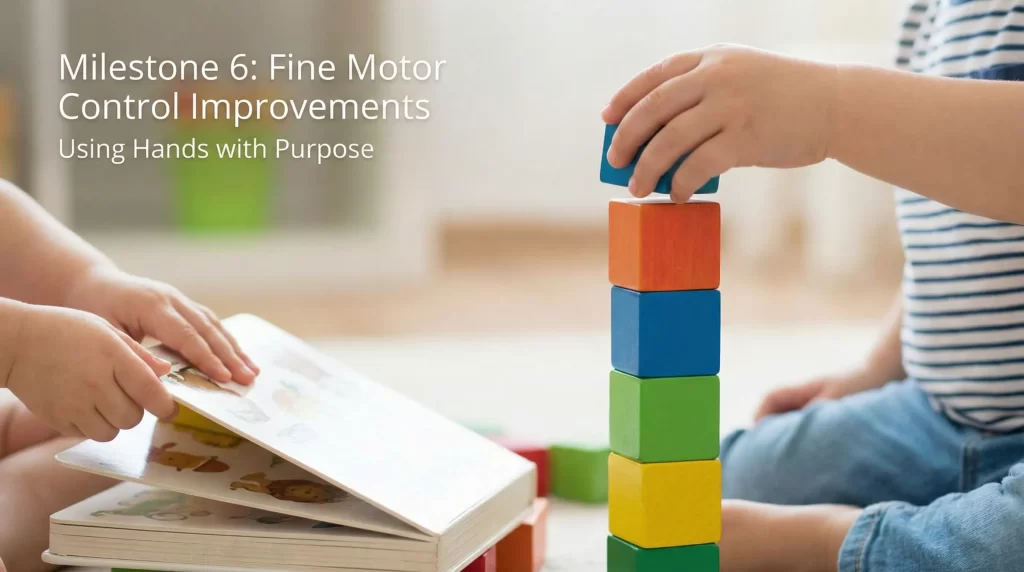
Using Hands with Purpose
Fine motor skills include stacking blocks and turning pages. By 24 months, toddlers stack six blocks. By 36 months, they stack ten blocks. These actions require finger strength and coordination.
Fine motor growth supports Toddler Physical Development and daily independence. Parents can offer puzzles and crayons. These activities improve grip and precision. Each small success builds confidence. Fine motor skills prepare toddlers for writing later.
Milestone 7: Riding a Tricycle
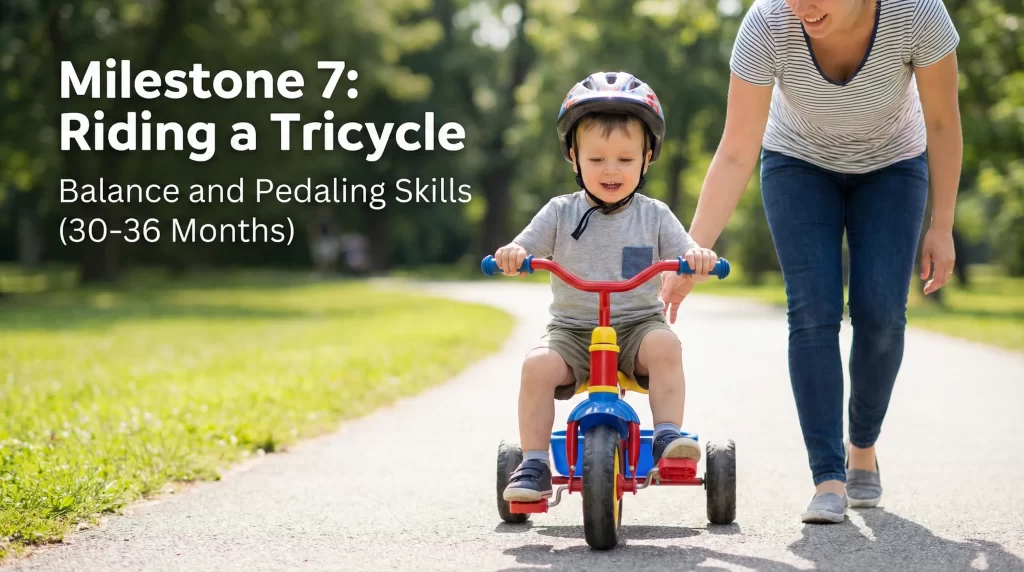
Balance and Pedaling Skills
Tricycle riding usually appears between 30 and 36 months. Toddlers learn to pedal and steer. Balance and leg strength drive this skill. UNICEF confirms that three-year-olds often pedal independently.
Tricycle riding reflects advanced Toddler Physical Development and coordination. Parents should choose stable tricycles. Helmets improve safety during outdoor play. Each ride builds endurance and confidence. Movement skills continue to strengthen through play. For a complete guide on toddler growth, check our main Toddler Development Guide for physical, emotional, and cognitive milestones.
Key Toddler Physical Development Milestones Table
| Milestone | Typical Age Range | What to Look For | How to Support |
|---|---|---|---|
| Walking alone | 12–15 months | Steady steps, fewer falls | Barefoot practice indoors |
| Running | 18–24 months | Faster movement, arm swinging | Open spaces, safe shoes |
| Climbing | 18–24 months | Pulling up, stair attempts | Safety gates, supervision |
| Kicking a ball | 24 months | Forward kick, balance maintained | Soft balls, outdoor play |
| Jumping | 24–30 months | Both feet leave ground | Soft mats, modeling |
| Fine motor stacking | 24–36 months | Six to ten blocks stacked | Puzzles, crayons |
| Tricycle riding | 30–36 months | Pedaling, basic steering | Stable tricycle, helmet |
Practical Tips to Support Toddler Physical Development
- Provide at least 60 minutes of active play daily.
- Limit screen time to under one hour daily for toddlers.
- Offer balanced meals with 13 grams of protein daily.
- Ensure 11 to 14 hours of sleep every 24 hours.
- Use safe playgrounds and soft surfaces for play.
Each tip supports steady Toddler Physical Development and healthy habits.
Bottom Line
Toddler Physical Development follows clear milestones that guide healthy growth. Walking, running, climbing, and jumping reflect gains in strength and coordination. Fine motor skills and tricycle riding show growing independence. Parents should track progress without pressure. Every child grows at a unique pace. Safe play, good nutrition, and enough sleep support steady development.
Early awareness helps identify delays and encourages timely support. Use milestones as guides, not strict rules. Celebrate each new skill as progress.
FAQs
1. When should toddlers start walking?
Most toddlers walk between 12 and 15 months independently.
2. How much sleep supports physical growth?
Toddlers need 11 to 14 hours of sleep daily.
3. When do toddlers start running?
Running usually appears between 18 and 24 months.
4. What fine motor skills develop by age two?
Stacking six blocks and turning pages appear by 24 months.
5. When can toddlers ride a tricycle?
Most toddlers pedal a tricycle between 30 and 36 months.
Disclaimer
This article is for educational purposes only. It does not replace professional medical advice, diagnosis, or treatment. Always consult a qualified pediatrician with developmental concerns.