

- The Origins of Texas Ware
- The Magic of Confetti Patterns
- Why Texas Ware Confetti Bowls Became Collectible
- How to Identify Authentic Texas Ware
- Why Uniqueness Matters
- Collector Stories & Nostalgia Factor
- Care & Maintenance for Vintage Melamine
- Where to Find Texas Ware Confetti Bowls Today
- Knock-Offs & Modern Copies
- Sustainability Factor
- Why Collectors Will Keep Paying More
- Final Thoughts
- FAQs
These once-affordable melamine mixing bowls, sold for uVintage kitchenware has become a treasure trove for collectors, and few items embody mid-century charm like Texas Ware Confetti bowls.
Once sold for under $2 in the 1950s, these speckled melamine mixing bowls now command $50–$100 or more on resale markets. What makes these bowls so valuable today? Their history, quirky production methods, nostalgic appeal, and collector demand all play a role.
The Origins of Texas Ware
After World War II, America faced shortages in traditional kitchen materials like ceramics and metals. Melamine, a durable plastic developed in the 1930s, became a solution.
In 1946, the Plastics Manufacturing Company (PMC) was founded in Dallas, Texas. They branded their colorful line of melamine kitchenware as Texas Ware, and by the 1950s, these pieces were a household staple. Lightweight, stackable, and almost unbreakable, Texas Ware quickly became the go-to choice for busy families.
The Magic of Confetti Patterns

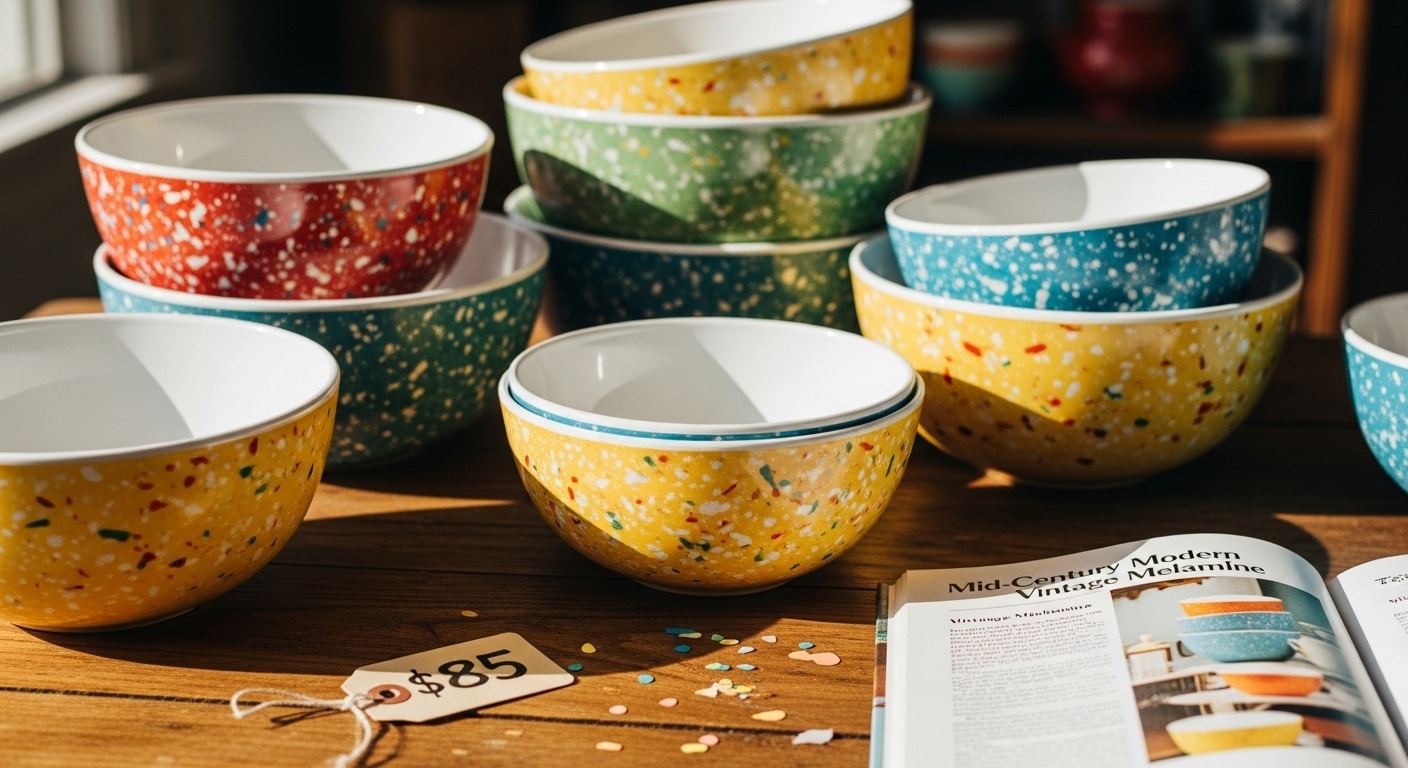
Among PMC’s many designs, none captured the imagination quite like the Confetti pattern (also called spatterware). These bowls were created by recycling leftover melamine scraps from other products. Workers blended colorful flecks into the base plastic, ensuring no two bowls were exactly alike.
This quirk of production turned into a major selling point decades later: each Confetti bowl is unique, making them highly collectible.
Why Texas Ware Confetti Bowls Became Collectible
Several factors explain why Texas Ware Confetti bowls cost so much today:
1. Rarity
Although Texas Ware was mass-produced, not every piece survived the decades. Complete sets, vibrant colors, and bowls in mint condition are now much harder to find.
2. Pattern Popularity
The playful, colorful confetti specks fit seamlessly into both retro and modern kitchens. This timeless versatility keeps demand strong.
3. Resale Market
Originally $1.99 for a nested set of three, these bowls now sell for:
- 8-inch bowls: $20–40
- 10-inch bowls: $40–75
- Rare colors (cobalt, turquoise, black/red): $80–120+
One 10-inch cobalt bowl even sold for $104 on eBay.
4. Pop Culture Influence
Celebrity chef Rachael Ray showcased Texas Ware on her cooking show in the early 2010s. Her endorsement sparked a surge in demand, driving up prices. She later released her own “Garbage Bowl” line inspired by Confetti designs, though collectors still prefer authentic vintage Texas Ware for its durability and charm.
How to Identify Authentic Texas Ware
Because knock-offs exist, spotting genuine Texas Ware is essential.
- Backstamp: Look for raised lettering that reads “Texas Ware – Plastics Manufacturing Co. Dallas, Texas, USA.”
- Size Numbers: Older bowls often include numbers like 111 (8-inch), 118 (10-inch), or 125 (11-inch).
- Weight & Feel: Authentic pieces feel sturdy and heavier compared to modern melamine copies.
Why Uniqueness Matters
Why are texas ware bowls so expensive?, Unlike mass-produced dinnerware, Confetti bowls are one-of-a-kind. The randomness of recycled melamine scraps ensured endless variations in color and pattern. Collectors especially prize bowls with:
- High-contrast colors (black with red, bright yellow with green)
- Rare hues (cobalt blue, turquoise, emerald green)
- Balanced speckle distribution across the surface
This uniqueness means owning a Confetti bowl is like owning a piece of art.
Collector Stories & Nostalgia Factor
Beyond price tags, collectors often share emotional connections with Texas Ware:
- Family Heirloom: One collector inherited her grandmother’s three-bowl set, still used today for popcorn nights and bread dough.
- Lucky Find: Another enthusiast scored a robin’s egg blue bowl for just $1 at a garage sale, later discovering its $60 value online.
These stories add to the bowls’ allure they’re not just kitchenware, but vessels of memory and heritage.

Care & Maintenance for Vintage Melamine
Keeping bowls in good shape helps preserve their value:
- Handwash Only: Use mild soap and avoid dishwashers, which dull melamine’s glossy finish.
- Avoid Abrasives: Soft sponges prevent scratches.
- No Microwave Use: High heat can damage or shatter melamine.
- Watch Acidic Foods: Citrus or vinegar may etch the surface over time.
Where to Find Texas Ware Confetti Bowls Today
Hunting for these bowls is part of the fun. Popular spots include:
- Antique Malls & Flea Markets: Often the best place for unique finds at reasonable prices.
- Estate & Garage Sales: Some collectors have flipped $2 bowls for $40+.
- Online Marketplaces: Etsy and eBay offer the widest selection, though prices vary.
For enthusiasts, Retro Chalet – MelMac Central and dedicated Flickr groups also provide history, collector tips, and community discussions.
Knock-Offs & Modern Copies

Not all Confetti-style bowls are authentic Texas Ware:
- Rachael Ray “Garbage Bowls” mimic the look but are thinner and less durable.
- Zak! Designs “Confetti” Line offers recycled melamine bowls but lacks vintage charm.
- Generic Amazon Sellers produce colorful spatterware, but without the Texas Ware backstamp, they hold no collectible value.
Sustainability Factor
Buying vintage isn’t just about nostalgia — it’s sustainable. These durable bowls can last decades when properly cared for, reducing waste and embracing the eco-friendly practice of reusing.
Why Collectors Will Keep Paying More
The combination of nostalgia, durability, and one-of-a-kind design ensures that Texas Ware Confetti bowls will remain highly collectible. With supply dwindling and demand growing, their prices are unlikely to drop anytime soon.
Final Thoughts
Texas Ware Confetti bowls represent more than just retro kitchenware. They embody mid-century innovation, quirky design, and cherished family memories. Their rising resale value is a testament to their enduring appeal.
So whether you’re searching antique malls, scouring eBay, or treasuring your grandmother’s set, one thing is clear: owning a Texas Ware Confetti bowl means holding a colorful piece of American history and that’s why they cost so much today.
FAQs
Why are Texas Ware bowls so expensive?
Because they’re rare, unique in design, and highly collectible, with demand outpacing the limited supply.
How do I identify real Texas Ware bowls?
Look for the Texas Ware backstamp with “Plastics Manufacturing Co. Dallas, Texas, USA” and size numbers like 111 or 118.
What makes Confetti bowls special?
Each was made with recycled melamine scraps, so no two are alike. Collectors prize vibrant and rare color combinations.
How much are Texas Ware bowls worth?
Common bowls fetch $20–$40, while rare colors like cobalt or turquoise can sell for $80–$120 or more.
Can Texas Ware bowls go in the dishwasher?
Handwashing is best. Dishwashers dull the finish and reduce value, so always clean gently with mild soap.